Operational
Mechanism.
Technical details of field integration, data flow, and autonomous decision algorithms.
Edge Hardware
Artificial Intelligence
Navigation (SLAM)
RTK-GPS assisted autonomous row-by-row driving between panel rows
Perception & Analysis
Thermal Anomaly Segmentation and PV Cell Hotspot Classification (YOLOv8-thermal)
Autonomous Workflow
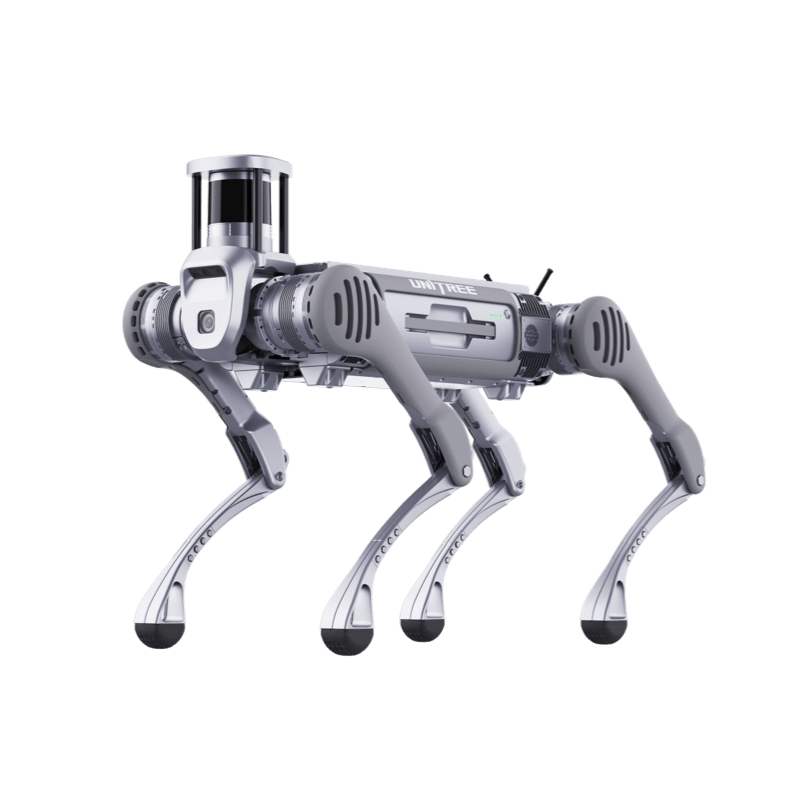
The robot patrols autonomously along panel rows in the solar farm; positioned with centimeter precision via RTK-GPS.
The FLIR thermal camera scans each panel, segmenting hotspots, diode failures, and overheating zones caused by micro-cracks.
Detected anomalies are instantly transmitted to the SCADA system via API with panel coordinates, risk score, and thermal imagery.
Automatic work orders are opened for maintenance teams; yield loss (in kWh) of faulty panels is reported for prioritization.
Operational ROI.
Strategic Decision.
Annual $58,000 energy yield gain and maintenance optimization. ROI: 2.9x
Reduces the average 3-week late detection of faulty panels to hours; decreases yield loss by 12%.
Example modelling — not realised customer data. Calculated assuming roughly $20,000 total investment (robot, integration and commissioning); actual results vary by facility, shift count and configuration. Request a quote for a calculation specific to your organisation.
Review Your Custom
Autonomous Operation
Plan On-Site.
Our engineers are ready to present this robotic integration plan, specially simulated for your facility, to your team. Let's confidently launch your business's digital transformation.