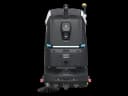

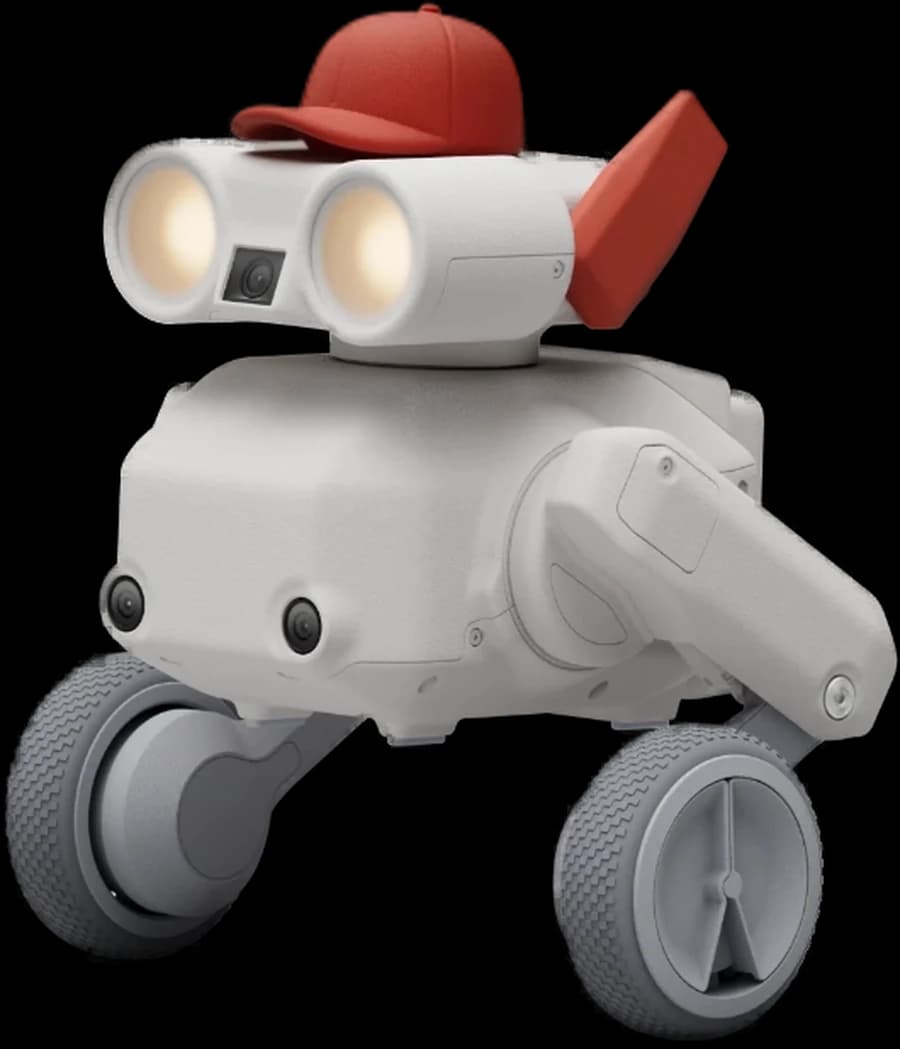
An Industrial Cleaning Robot Is Not a Household Vacuum
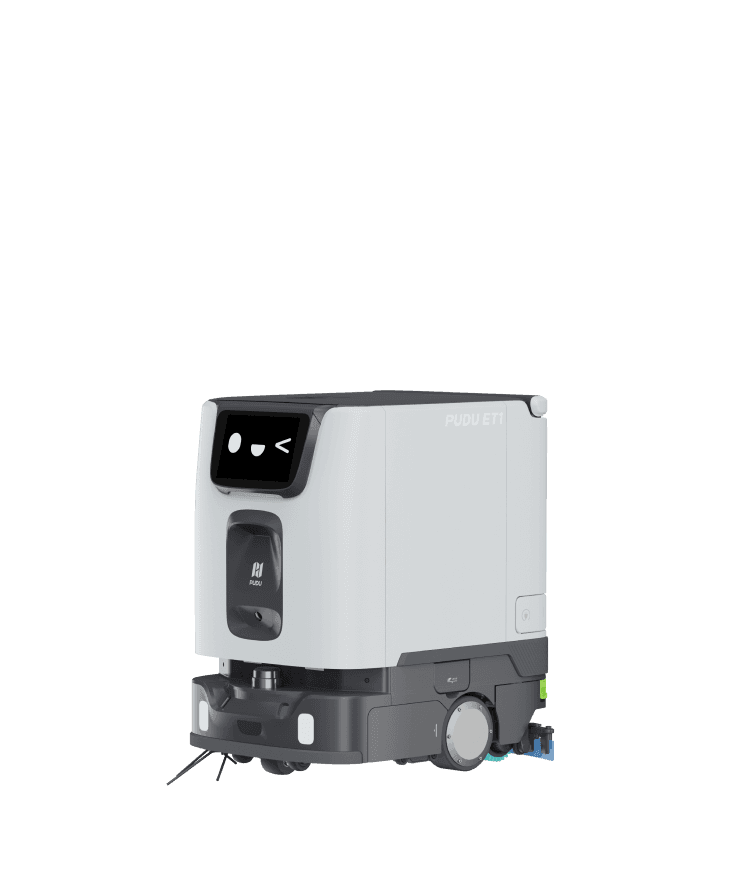
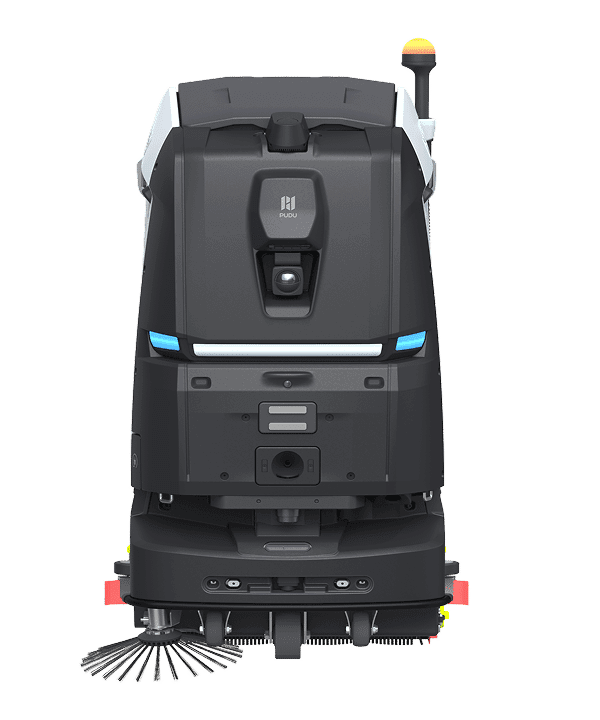
The difference shows up in the measurements. A household robot vacuum is built for an apartment; industrial-class machines cover between 1,000 and 6,000 m² per hour, carry 4 to 75 litres of clean water and come in bodies from 17 kg to 344 kg. This is not a convenience device but equipment that goes into the shift plan.
Three measurements decide the choice, not the size of the facility. First, what is on the floor: metal swarf and dry dust need sweeping, while oil and sticky residue need scrubbing and extraction. Second, whether the tank carries a full shift; a machine with 15 litres cannot clean 3,000 m² without stopping, and refill breaks eat into throughput. Third, the narrowest passage: a machine with a 1,195 mm body will not enter a tight aisle, and those areas keep being cleaned by hand.
We put the measured data for each model side by side, along with which facility buys which, on the industrial cleaning robot selection page. Deployment starts with mapping, with routes and no-go zones defined; installation, operator training and commissioning are included in the price, and service is handled across all 81 provinces. Send us your floor plan and your three narrowest passages and we will work out unit count and model together.
FREQUENTLY ASKED QUESTIONS
Industrial Cleaning things people ask.
For questions you can't find answers to, contact us directly. Our engineering team responds specifically to your project.
The difference shows up in the measurements. A household robot vacuum is built for an apartment; industrial-class machines cover 1,000 to 6,000 m² per hour, carry 4 to 75 litres of clean water and come in bodies from 17 kg to 344 kg. Industrial models also combine sweeping, scrubbing, vacuuming and drying in a single pass, run on a mapped route and fit into a shift plan.
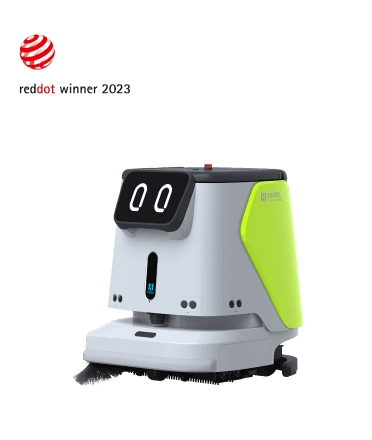
It ranges from 1,000 to 6,000 m² per hour depending on model class. The BG1 Pro runs at 6,000 m²/h, CC1 Pro at 3,000, MT1 Max at 2,200, MT1 at 1,800, MT1 Vac at 1,400, SH1 at 1,100-1,600 and CC1 at 1,000 m²/h. These are the manufacturer's catalogue figures and assume uninterrupted, unobstructed operation; furniture, racking, heavy soil and charging breaks push real results below them.
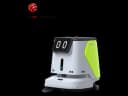
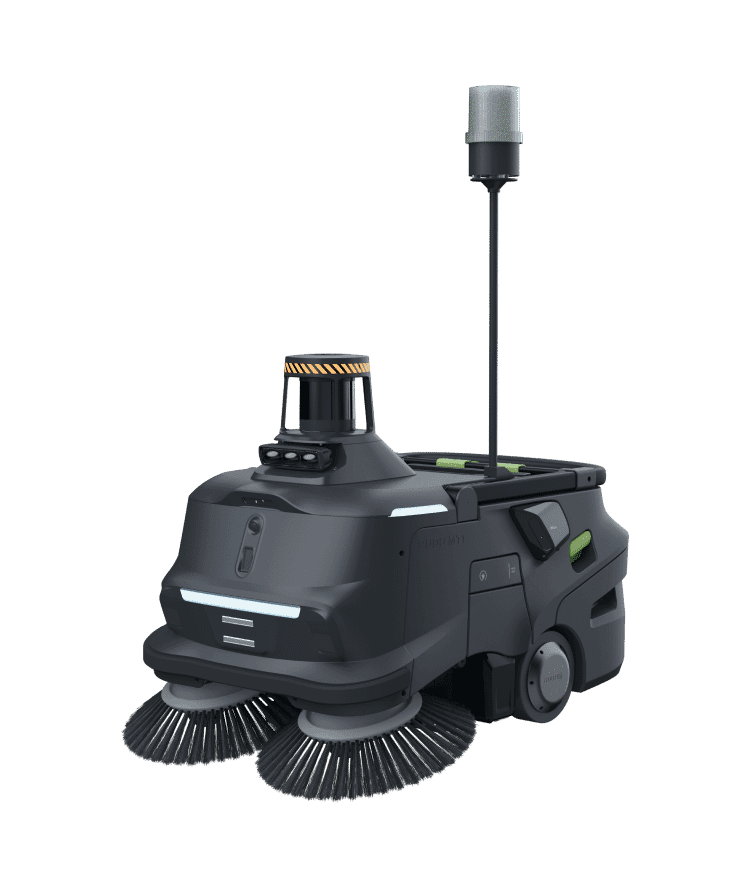
No. The catalogue square-metre figure tells you the area a machine can cover in an hour, not that it can clean that area without stopping. On a scrubbing robot the limit is usually the water tank: the CC1 Pro runs at 3,000 m²/h with 15 litres of clean water, while the BG1 Pro runs at 6,000 m²/h with 75 litres. That is not two times the throughput but five times fewer refill and drain stops. In a large facility with a narrow shift window, tank capacity decides more than throughput.
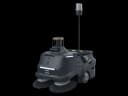
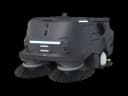
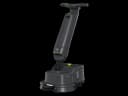
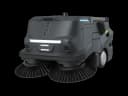
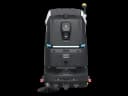
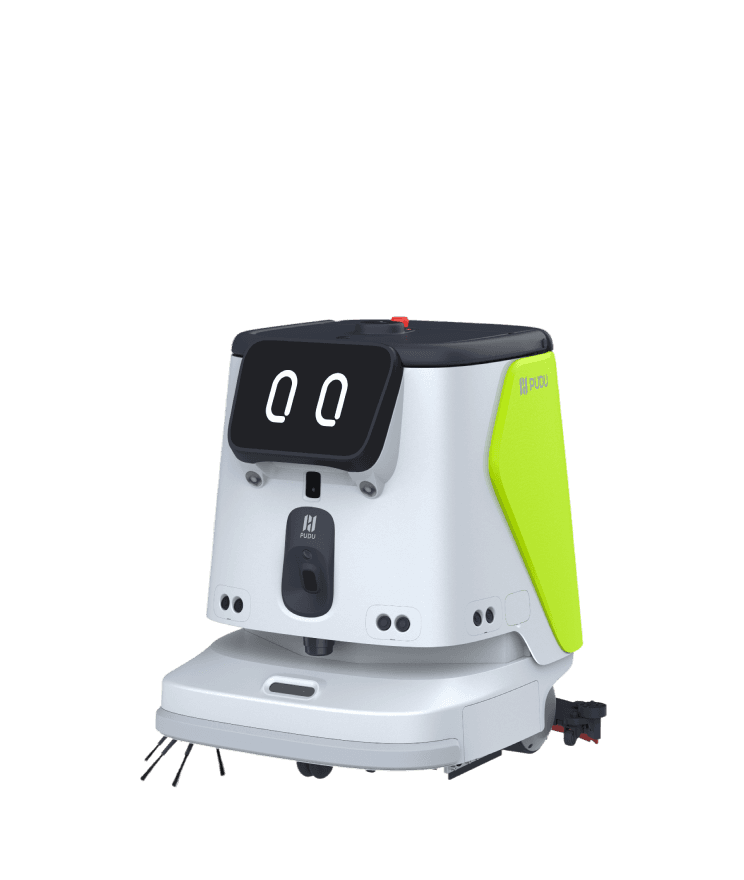
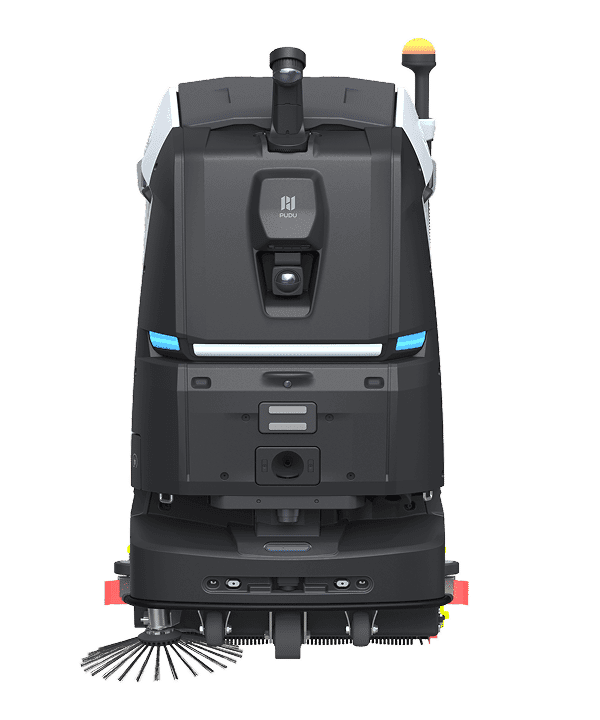
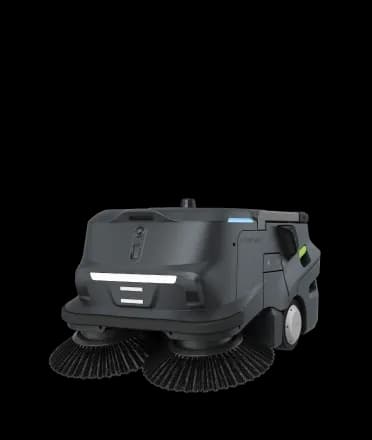
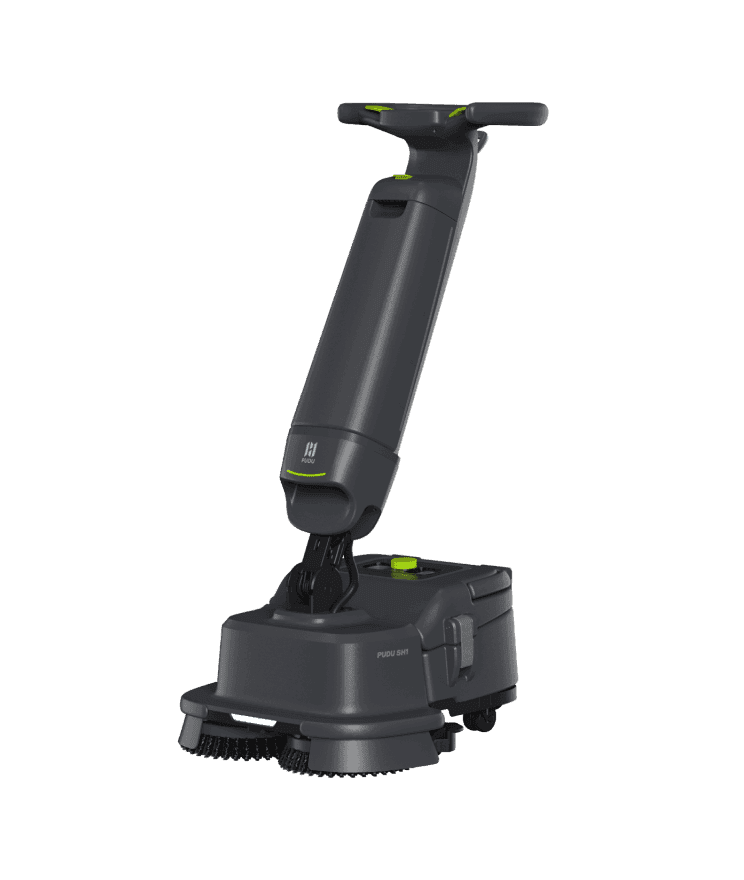
What is on the floor decides the model. Metal swarf, packaging debris and dry dust need sweeping and dust collection: the MT1 Max and MT1. In production areas with fine dust where air quality matters, the HEPA-filtered MT1 Vac is used. Oil, liquid spills and sticky residue need scrubbing and extraction: the CC1 Pro and BG1 Pro. On wide open floors carrying both dry debris and wet stains, the BG1 Pro sweeps and scrubs in one pass. For tight areas, rack aisles and machine surrounds, the hand-guided upright SH1 fits.
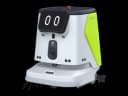
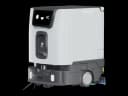
It depends on the model, and this measurement usually decides. The BG1 Pro body is 1,195 mm wide with the squeegee fitted and will not enter a narrow aisle. The SH1 at 490 mm and the CC1 at 463 mm work between racks and around machinery. Measuring the three narrowest passages in the facility halves the model list at the first step; if a machine that does not fit is bought, those areas keep being cleaned by hand and the saving leaks away there.
The calculation takes three rows: net area to clean (m²), shift window (hours) and narrowest passage (cm). Dividing net area by the shift window gives the hourly throughput required; compare it with the catalogue figures and leave margin for site conditions. The narrowest passage then eliminates models. Mixed floors commonly run two machines: the BG1 Pro takes the open area while the SH1 or CC1 Pro covers aisles and machine surrounds.
Pricing follows model class, unit count and deployment complexity; a facility with floor changes needs lift integration, a single-storey one does not. Models with a published starting price are the Pudu CC1 (from $14,200) and Pudu MT1 (from $10,800). For the other models price varies significantly by configuration, so the quote is prepared once floor area and use case are settled. Installation, operator training and commissioning are included, and all models carry a 1-year official warranty.
Deployment starts with mapping: the robot scans the area once, routes and no-go zones are defined, and the charging and water station locations are fixed. The shift plan is built around that. What the facility needs is not physical infrastructure but a fixed power point and corridor widths the robot can pass. Installation, operator training and commissioning are included in the price; service and maintenance are handled by Robotlar.org across all 81 provinces.
Buy Robots.
Get a quote now with official Unitree distributor and Pudu partner warranty and start your project.