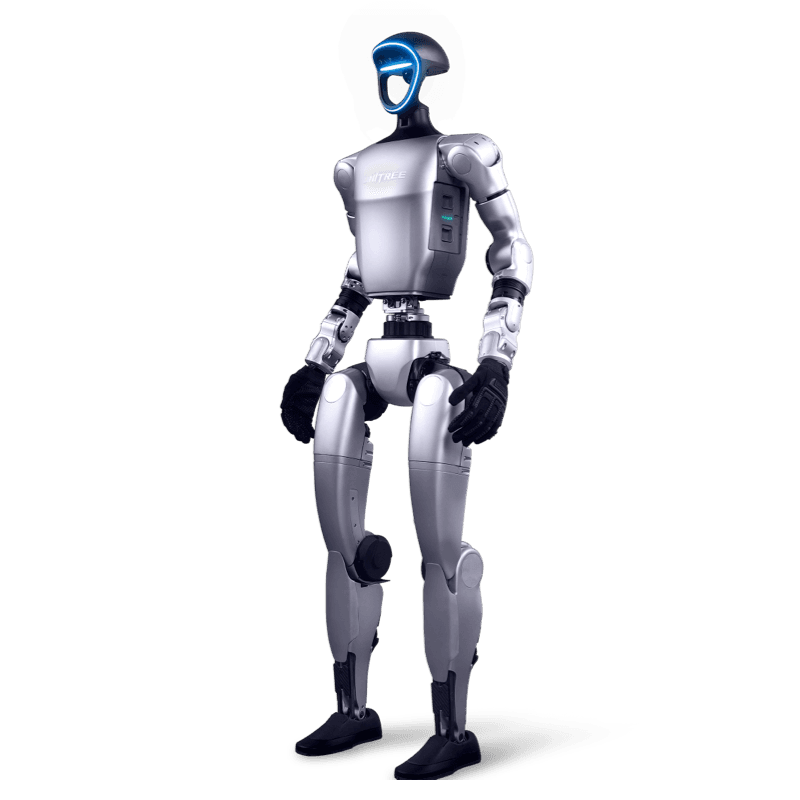
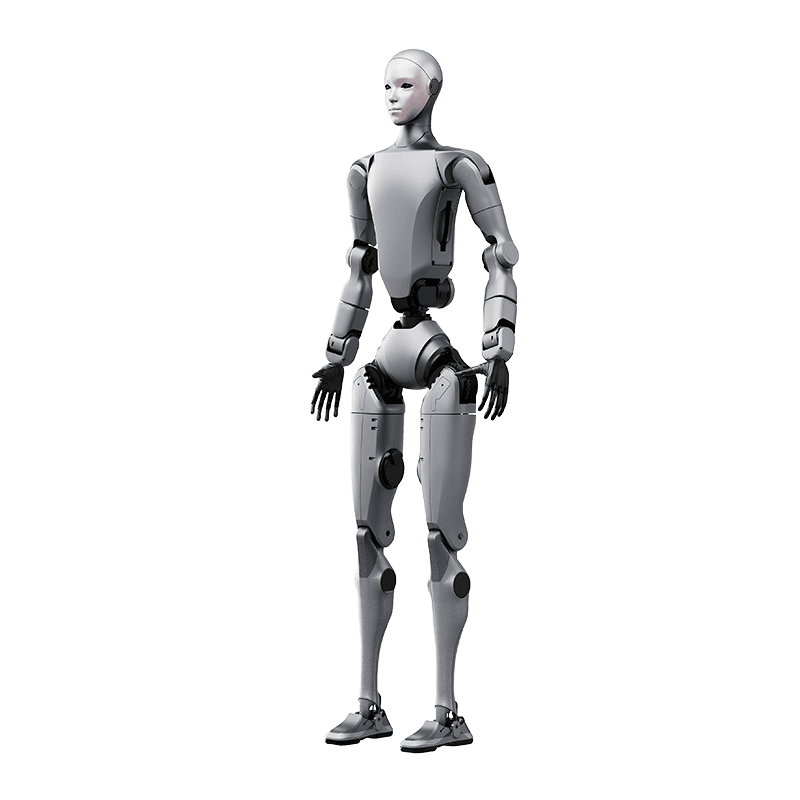
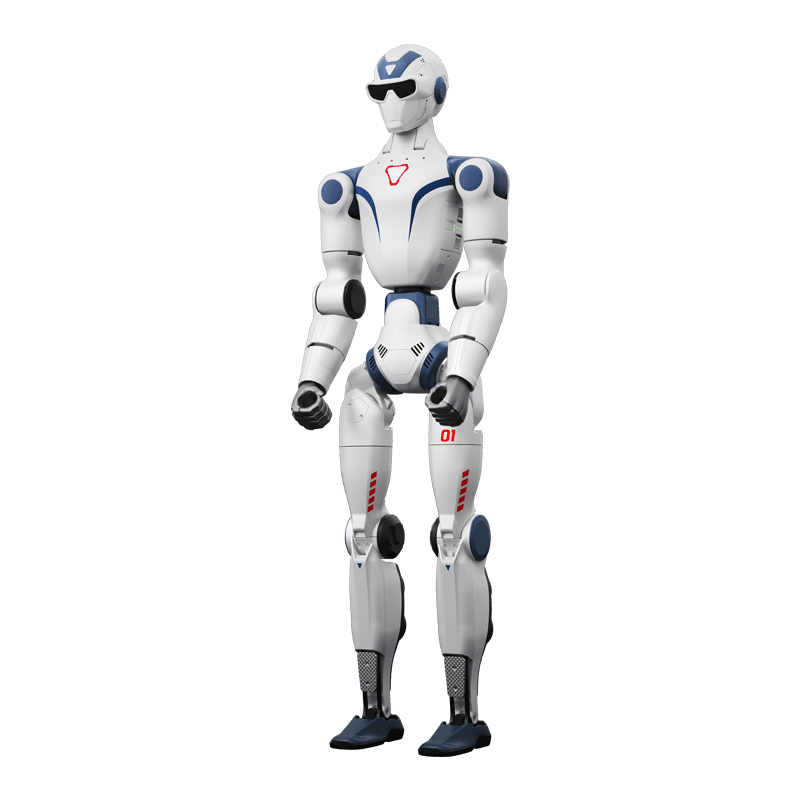
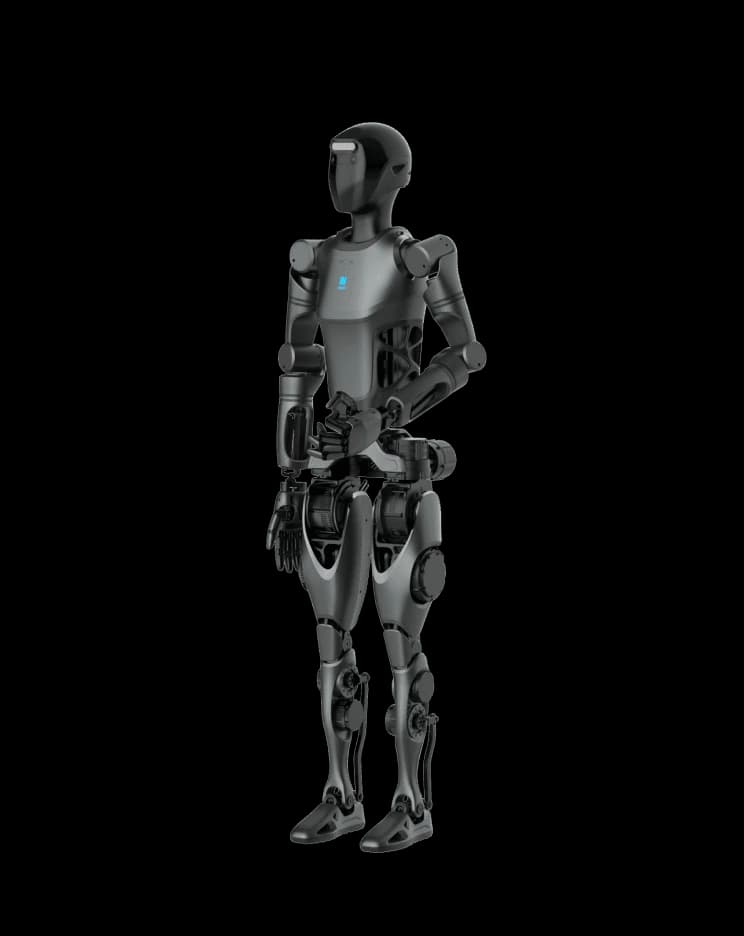
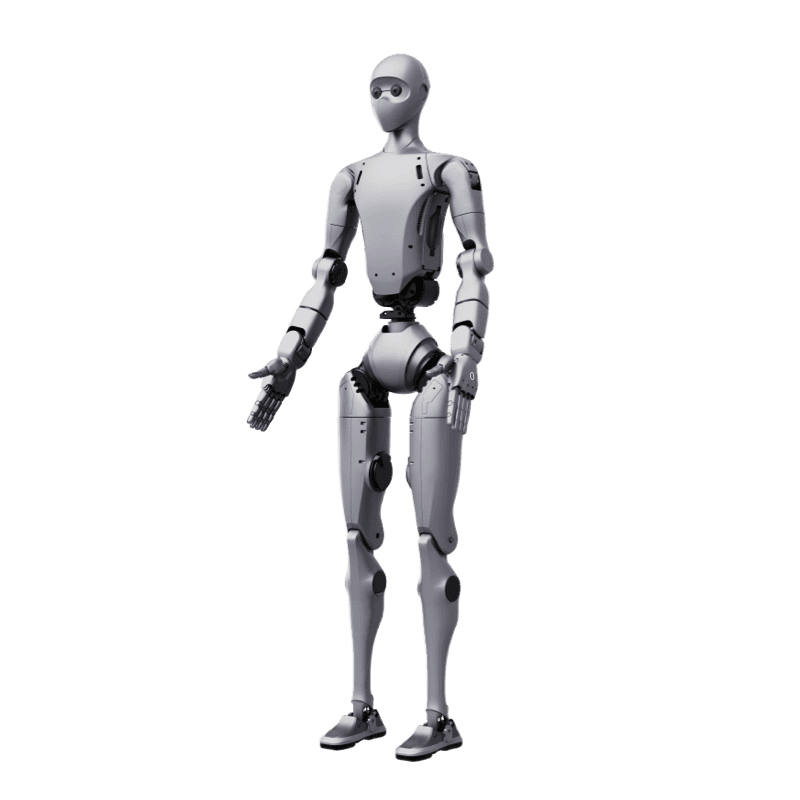
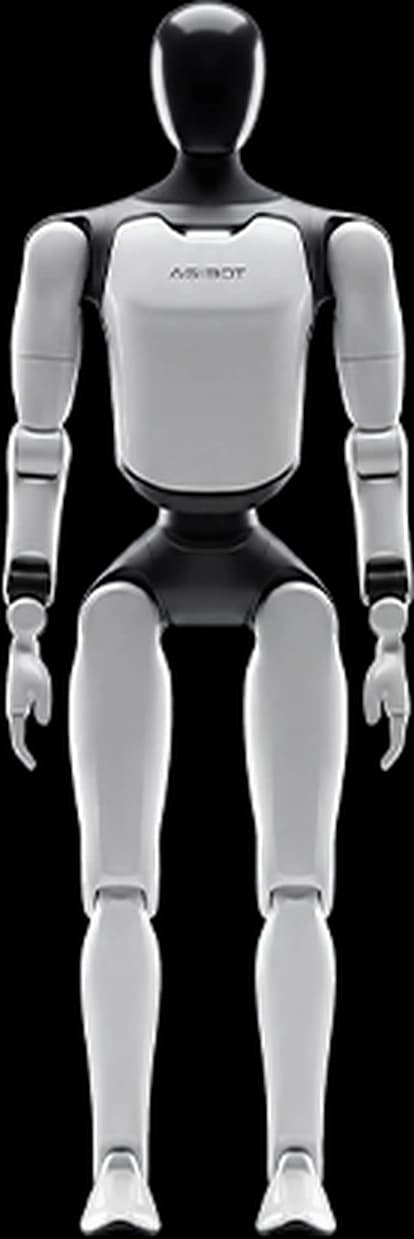
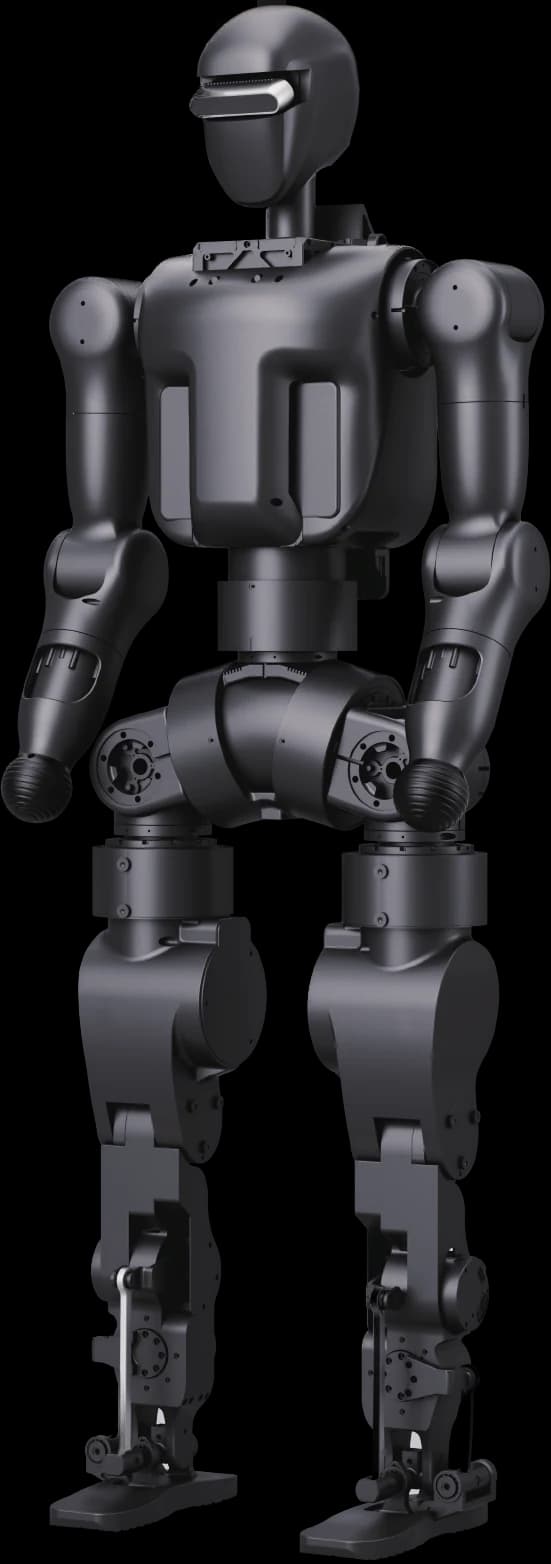
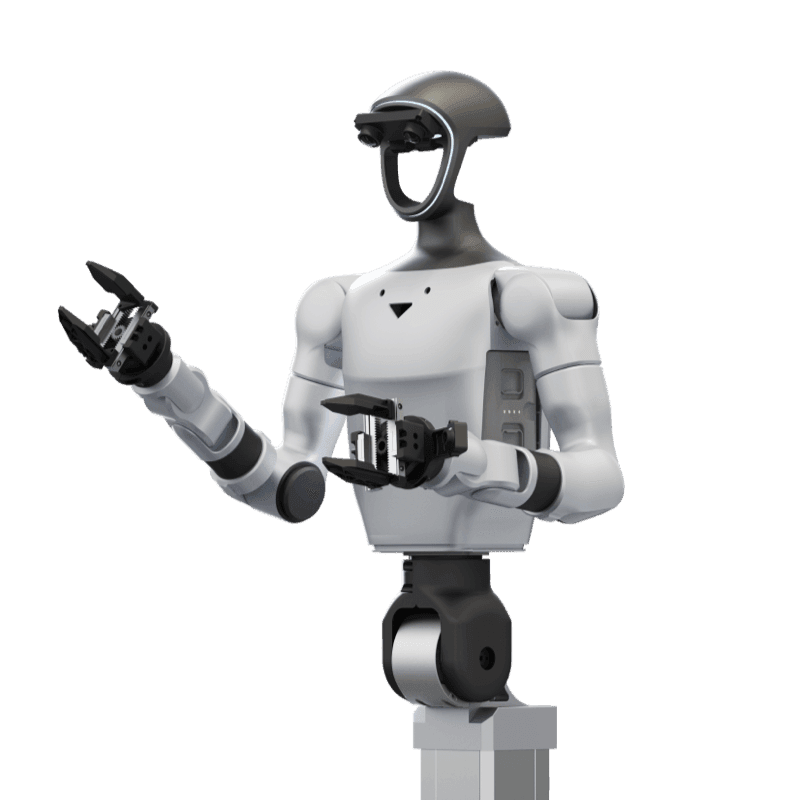
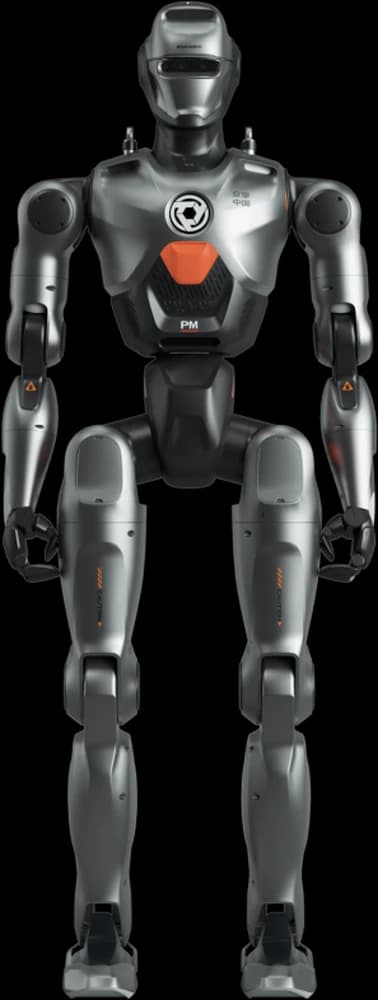
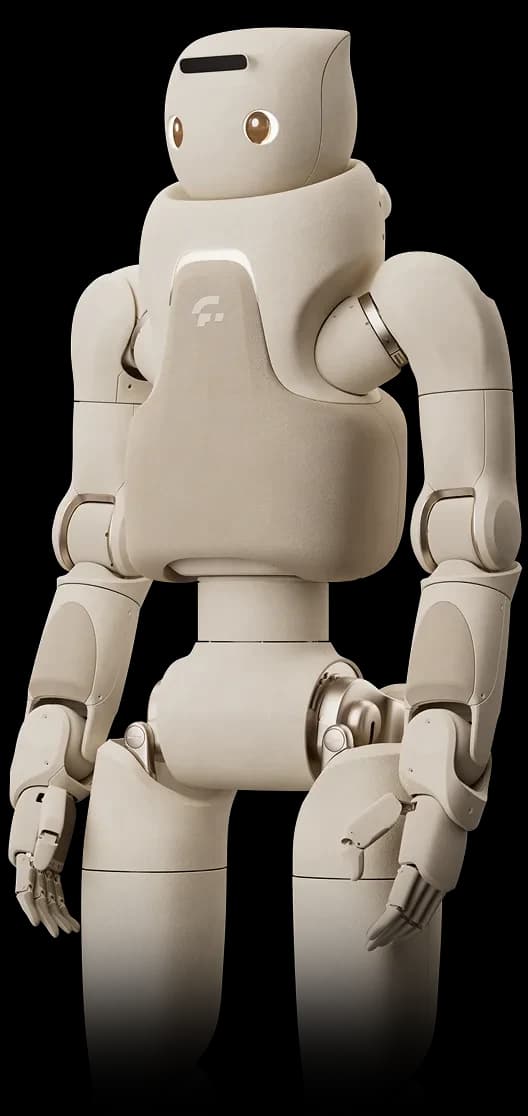
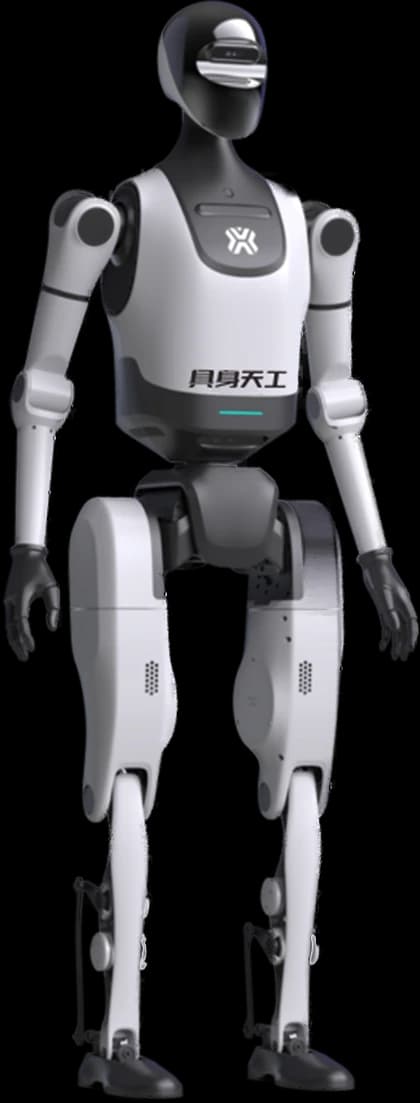
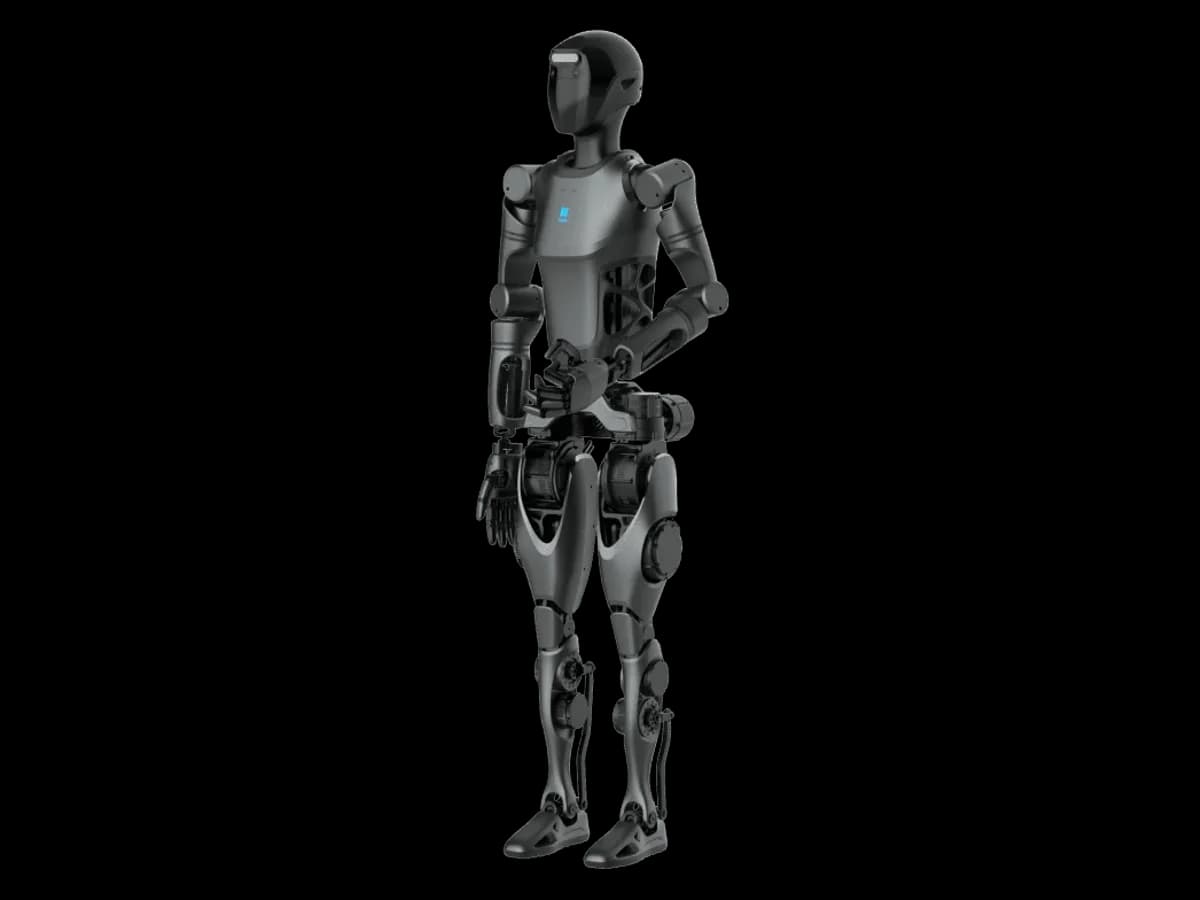
The AgiBot A3, introduced as the "Brilliant Master", is a full-size humanoid positioned for stage performance, interactive entertainment and research.
Read moreShow less
It stands 173 cm, weighs 55 kg and has 31 active degrees of freedom (excluding hands); 150 A peak current and 12 kW peak power give a 0.218 kW/kg power-to-weight ratio, enough for somersaults. Dual battery packs (1152 Wh) deliver up to 10 hours of runtime and hot-swap in 10 seconds. Standard UWB positioning allows synchronized swarm control of 100+ units; dual-module 5G, shoulder touch sensors and a 360-degree microphone array are built for interaction. Robotlar.org assesses sourcing and alternatives together with organizations that have an A3 requirement.
Enterprise supply · specification support · integration engineering
1/10
Overview
AgiBot (AGIBOT Innovation (Shanghai) Technology Co., Ltd.) is a Shanghai-based Chinese company developing general-purpose humanoid robots. The A3 is the stage- and interaction-focused member of the company's A series of full-size humanoids; it is the "Brilliant Master", a silicon-based star born for the stage.
Hardware highlights: 173 cm tall, 55 kg, 31 active degrees of freedom (excluding hands), 150 A peak current and 12 kW peak power for a 0.218 kW/kg power-to-weight ratio, and 320 Nm of peak torque at the knee. Daily walking at 1.8 m/s, running at 5 m/s, 5 kg single-arm payload. Dual battery packs (1152 Wh) provide up to 10 hours of runtime and hot-swap in 10 seconds. Standard UWB positioning allows synchronized swarm control of 100+ units; dual-module 5G, shoulder touch sensors and a 360-degree microphone array are built for interaction. The body is magnesium alloy, titanium alloy and TPU; the robot loads itself into its foldable case and is deployed by one person.
Three use areas: commercial performance (dancers, martial artists, brand ambassadors, kinetic art installations), interactive entertainment (posing characters, live streams, theme park guides) and embodied AI research. Motions are built with LinkCraft and characters with LinkSoul; 92 automotive-grade tests before delivery and a designed lifespan of up to 3 years are stated. The quick start guide, user manual and tutorial videos are in AgiBot's document centre.
For organizations with an A3 requirement we assess sourcing, timing and the humanoid alternatives deliverable today (Unitree H2 and G1) transparently.
Tap the cover to play; sound and loading start only on click.
AgiBot A3 product video
Use Cases
The use cases the manufacturer defines for the AgiBot A3.
01Education and research
02Performance and events
Key Advantages
Born for the Stage: Launch Video
The A3 is the "Brilliant Master", a silicon-based star born for the stage.
The three-minute launch video walks through the robot's design story, from 150 A peak current and 12 kW instantaneous power to the magnesium alloy body and the dual-battery architecture with full-tab cells, all the way to the stage show.
Exceptional Performance, Extreme Lightweight
150 A maximum current, 12 kW power and a 0.218 kW/kg power-to-weight ratio, the level of million-dollar supercars.
The robot can perform not only somersaults but also aerial walking.
The body is built from magnesium alloy, titanium alloy and TPU flexible materials, bringing it down to 55 kg.
Natively compatible with LinkCraft, so anyone can freely create motions, with a rich content ecosystem for easy uploading and downloading.
Extended Endurance, Instant Battery Swap
Innovative dual-battery and full-tab cell technology, with industry-leading power management, delivers up to 10 hours of endurance.
The redundant dual-battery design means a more stable and safer power supply.
Fast hot-swappable replacement allows 24-hour continuous operation; a 10-second battery swap makes range anxiety a thing of the past.
Striking Design, Fully Customizable
A 173 cm golden ratio with model-grade head-to-body proportions: powerful on the inside, refined and elegant on the outside.
Slender limbs and a graceful posture suit any outfit: a "walking wardrobe".
Customization runs from colour film application to full housing customization, and character design is possible via LinkSoul.
Superior Swarm Control, Hundreds in Sync
The standard UWB centimetre-level fusion positioning solution enables coordinated swarm operation of hundreds of units out of the box, with no modifications required.
Single-unit accuracy is under ±10 cm; precise coordination of 100+ units is supported.
Enhanced Interaction, Seamless Communication
Shoulder touch sensing, an industry first combines with voice and multimodal interaction for barrier-free communication and strong user affinity.
360-degree omnidirectional pickup with multi-array microphones ensures clear recognition even in high-noise environments.
Standard 5G global connectivity: eSIM + SIM card, with a domestic LGA module and overseas M.2 modules for connectivity without limits.
Reliable Platform, Easy Deployment
A full-size humanoid that one person can carry: foldable packaging, autonomous case loading and unloading, and easy transport in an SUV.
It inherits the DNA of the AgiBot A2, passing 92 rigorous automotive-grade tests before delivery, with a designed lifespan of up to 3 years.
Fully open interfaces support secondary development and are compatible with entertainment, commercial performance, scientific research and education scenarios.
In short: one base, endless possibilities.
The AgiBot A3 up close
2 images; tap to enlarge.
Technical Specifications
36 values in 6 categories; data published by the manufacturer.
Size and weight
Dimensions (standing)
173 × 52 × 30 cm (H × W × D)
Weight
55 kg
Motion and performance
Arm payload
5 kg (single arm)
Maximum speed
1.8 m/s daily walking / 2.5 m/s laboratory / 5 m/s running
Joint torque
Knee joint peak torque 320 Nm
Positioning accuracy
Standard UWB, single-unit accuracy <±10 cm
Navigation
Standard UWB centimeter-level fusion positioning
Power and runtime
Battery capacity
1152 Wh
Battery
Dual battery packs with full-tab cells; redundant supply, 10-second hot swap
Runtime
Up to 10 hours (6 hours standing operation + over 4 hours of continuous walking)
Charging time
2 hours for a full charge
Operating power
12 kW peak power, 150 A peak current, 0.218 kW/kg power-to-weight ratio
Operating voltage
Charging input 110-220 V; charging time 2 hours or less
General structure
Mobility form
Bipedal full-size humanoid; 31 active degrees of freedom (excluding hands)
Degrees of freedom
31 active degrees of freedom (excluding hands): 2 in the neck, 7 per arm, 3 in the waist, 6 per leg
Arm DoF
7 per arm
Leg DoF
6 DoF
Waist DoF
3 DoF
End effector
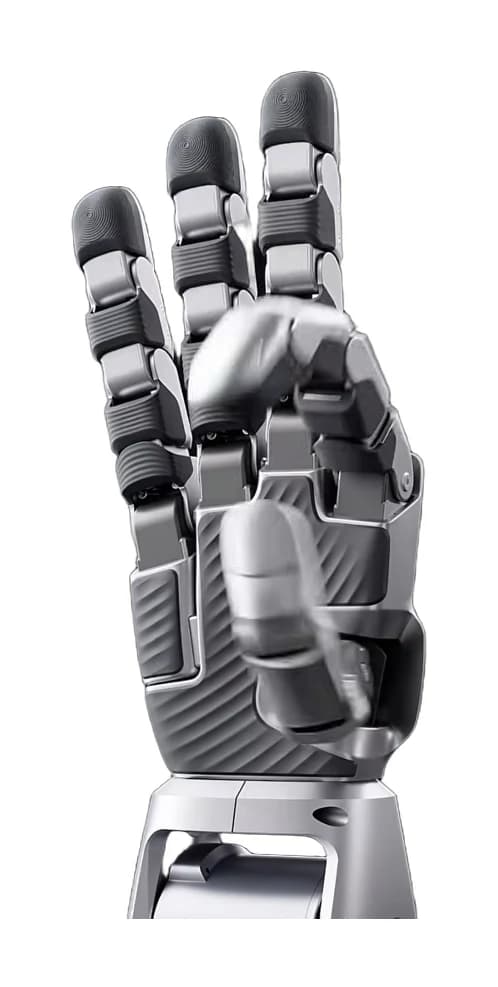
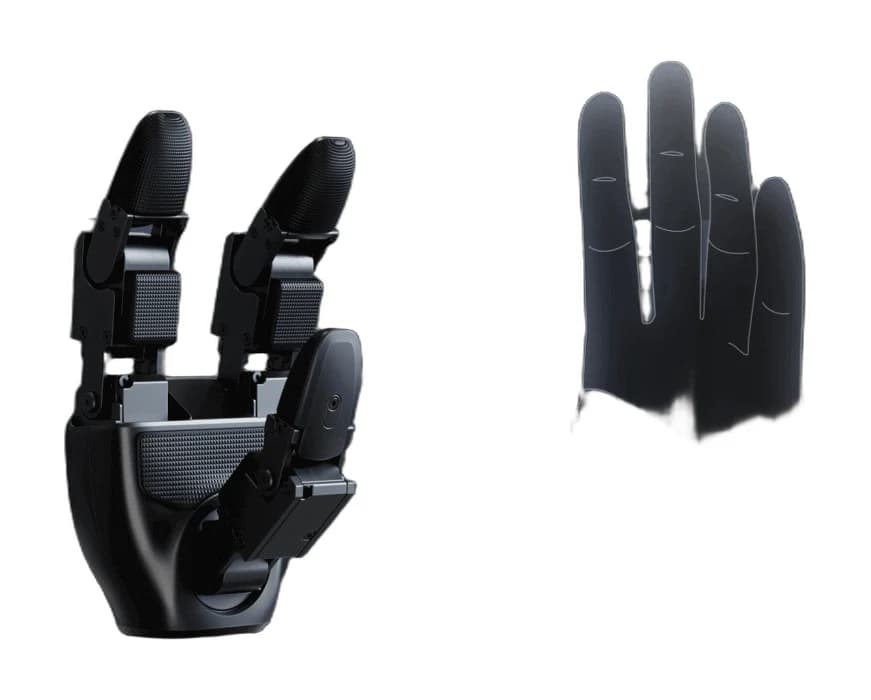
Silicone hands and silicone fists
Torque density
Knee peak torque 320 Nm; 12 kW peak power and 0.218 kW/kg power-to-weight ratio
Materials
Magnesium alloy and titanium alloy skeleton with a TPU flexible covering; 55 kg body
Material
Magnesium alloy, titanium alloy and TPU flexible covering
Total DoF
31 active degrees of freedom (excluding hands)
DoF layout
Neck 2, 7 per arm, waist 3, 6 per leg
Knee torque
Knee joint peak torque 320 Nm
Body material
Magnesium alloy, titanium alloy and TPU flexible material; 55 kg body
Packaging
Autonomous case loading and unloading; foldable packaging; deployable by one person, transportable in an SUV
Lifecycle and testing
92 automotive-grade tests before delivery; designed lifespan of up to 3 years (inherited from AgiBot A2)
Size and weight
Dimensions (standing)
173 × 52 × 30 cm (H × W × D)
Weight
55 kg
Motion and performance
Arm payload
5 kg (single arm)
Maximum speed
1.8 m/s daily walking / 2.5 m/s laboratory / 5 m/s running
Joint torque
Knee joint peak torque 320 Nm
Positioning accuracy
Standard UWB, single-unit accuracy <±10 cm
Navigation
Standard UWB centimeter-level fusion positioning
Power and runtime
Battery capacity
1152 Wh
Battery
Dual battery packs with full-tab cells; redundant supply, 10-second hot swap
Runtime
Up to 10 hours (6 hours standing operation + over 4 hours of continuous walking)
Charging time
2 hours for a full charge
Operating power
12 kW peak power, 150 A peak current, 0.218 kW/kg power-to-weight ratio
Operating voltage
Charging input 110-220 V; charging time 2 hours or less
Motion creation and content ecosystem with LinkCraft (upload/download), character design with LinkSoul, synchronized swarm control of 100+ units over UWB, fully open interfaces
Sources and documents
Verified on the manufacturer page on 18 September 2026.
Technical Analysis of the Stage RobotDesign decisions, comparison table and evaluation
What the Power-to-Weight Ratio Tells You
Dividing 12 kW of peak power by a 55 kg body gives 0.218 kW/kg. This ratio describes explosive motion capacity rather than sustained load carrying: stage moves such as somersaults, jumps and aerial walking demand high current for fractions of a second, and 150 A peak current with 320 Nm of knee torque is the hardware behind that. Building the body from magnesium and titanium alloys and TPU means the same motor power accelerates a lighter mass.
A Battery Architecture Built for the Stage
Dual battery packs and 1152 Wh do not add up to 10 hours by themselves; the breakdown is 6 hours of standing operation and over 4 hours of continuous walking. For stage use the real value is the 10-second hot swap: batteries change between acts without shutting the robot down, and the redundant pair keeps power flowing while one pack is out. This amounts to 24-hour continuous operation; charging takes 2 hours or less at 110-220 V input.
Swarm Control and Positioning
Standard UWB positioning gives under ±10 cm accuracy per unit; on that basis 100+ units can be coordinated in sync. Because no extra hardware is needed, setting up a multi-robot show reduces to each robot knowing its own position and following the central choreography. Dual-module 5G with dual SIM cuts dependence on venue Wi-Fi.
A3 Versus the Unitree Models Deliverable Today
Feature
AgiBot A3
Unitree H2
Unitree G1
Height
173 cm
182 cm
132 cm
Weight
55 kg
70 kg
35 kg
Degrees of freedom
31 (excluding hands)
31
23 (EDU: 43)
Compute
2 × RK3588
Intel Core i5 + development PCs
8-core CPU + Jetson Orin
Positioning
Stage, interaction, research
Full-size research and development
Compact research and education
Status in Turkey
Sourcing enquiry
Orderable
Orderable
Engineering Assessment
What sets the A3 apart is not raw power but a package designed for stage operation: a 10-second battery swap, a foldable case one person can deploy, and UWB swarm control that works out of the box. Together these let the robot be run more like show equipment than a lab platform. The trade-off is compute, limited to two RK3588 boards; for heavy perception and learning workloads the Jetson Orin-equipped Unitree G1 or the multi-PC H2 remain the better fit.
Purchasing support
Supply model
Supply to Turkey is planned per project; import, delivery and commissioning scope are itemised in the quote.
Pre-sales assessment
Site and mission focused technical feasibility; specification and administrative process support.
Robotic system costs are optimised according to the selected hardware platform, additional sensor and payload configurations, and the integration scenarios specific to your site. Share your requirements and our engineering team will prepare a feasibility report and a pro forma quotation tailored to your organisation.
Supply and delivery scheduling backed directly by the manufacturer
Site- and mission-focused technical feasibility and simulation
Turnkey hardware, software and mission integration
Advisory on corporate tenders, specifications and administrative processes
Sourcing, delivery schedule and investment for the A3 are settled per project. If you have a corporate requirement you can talk to Robotlar.org: we assess the sourcing process, a realistic timeline and the alternatives deliverable today.
What are the A3's specifications?
173 × 52 × 30 cm, 55 kg, 31 active degrees of freedom (neck 2, 7 per arm, waist 3, 6 per leg), knee peak torque 320 Nm, daily walking 1.8 m/s, 2.5 m/s in the lab, 5 m/s running, 5 kg single-arm payload, 1152 Wh dual battery, 10 hours of runtime, charging in 2 hours or less, 2 × RK3588 processors, RGB binocular camera, GPS, UWB and shoulder touch sensors.
How long does the A3 run and how is the battery swapped?
Dual battery packs give up to 10 hours of runtime; the breakdown is 6 hours of standing operation and over 4 hours of continuous walking. The battery hot-swaps in 10 seconds and the redundant design keeps the robot running meanwhile, which amounts to 24-hour continuous operation. Charging takes 2 hours or less.
What is the A3 suited for?
Three use areas: commercial performance (top-tier dancers and martial artists, brand ambassadors, kinetic art installations), interactive entertainment (self-posing cosplayers, tech influencers in live streams, theme park guides) and research and education (cutting-edge embodied AI research). Fully open interfaces allow secondary development.
How does the A3 differ from the Unitree H2?
At 173 cm and 55 kg the A3 is designed for stage, interaction and shows; the 10-second battery swap, UWB swarm control and one-person deployment point that way. The Unitree H2, at 182 cm and 70 kg, is a full-size research and development platform that can be ordered in Turkey today, with 4-6 week delivery, a 1-year official warranty, on-site commissioning and engineering support across Turkey.