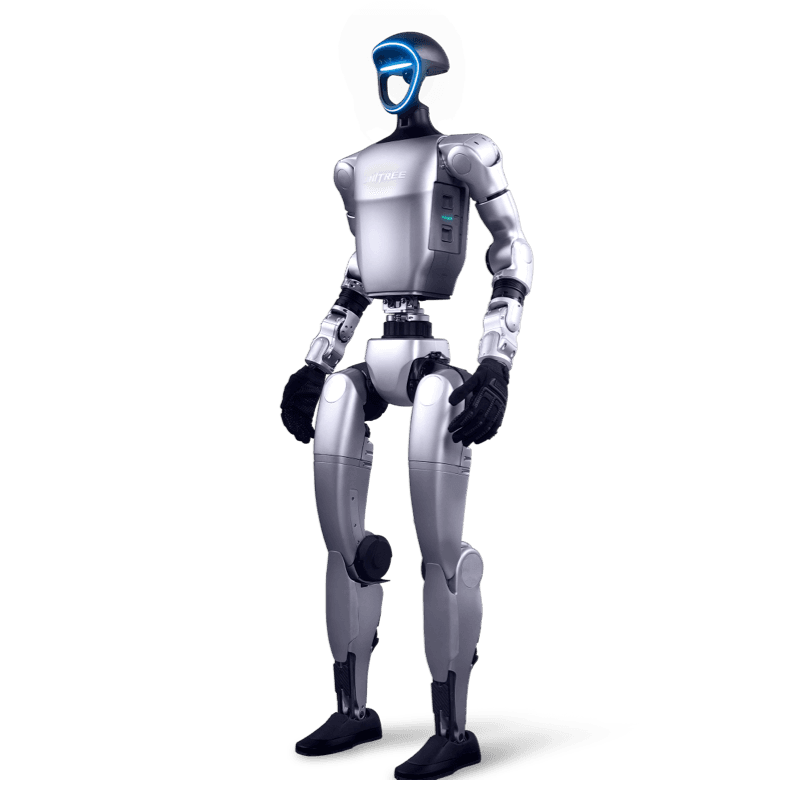
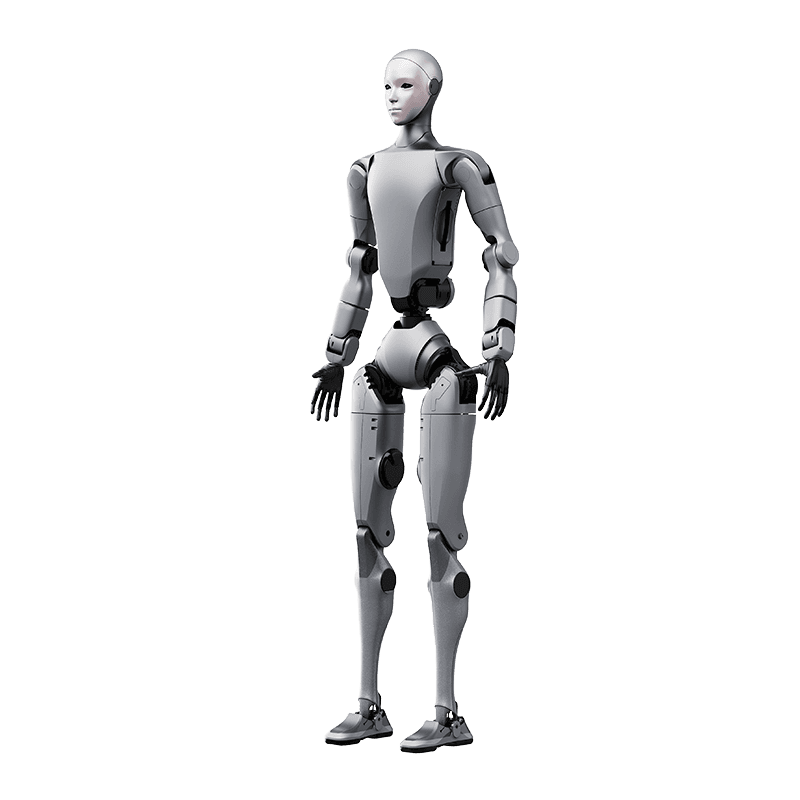
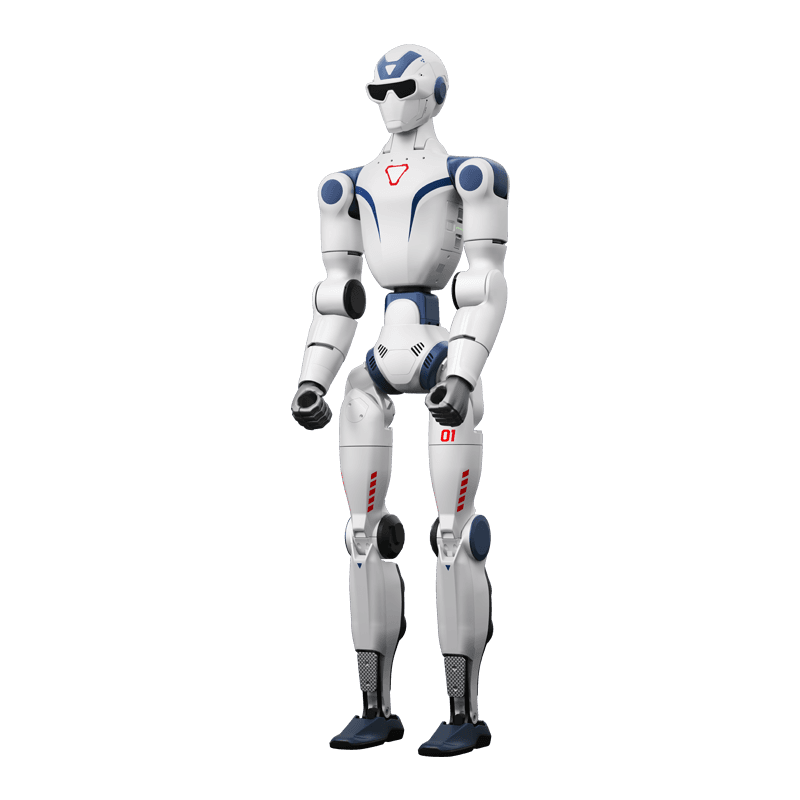
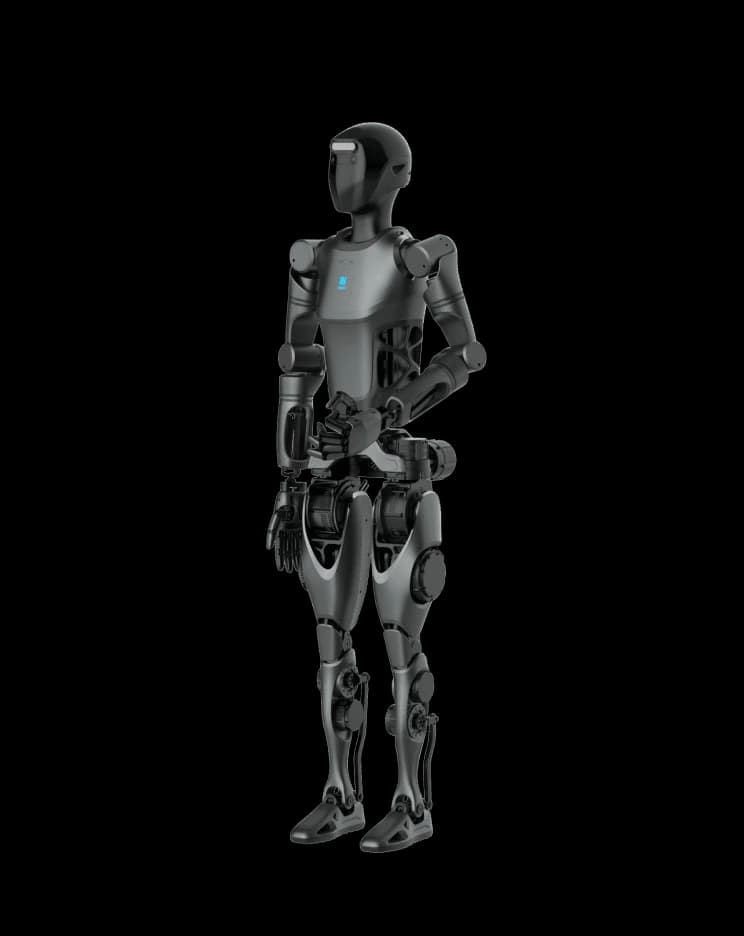
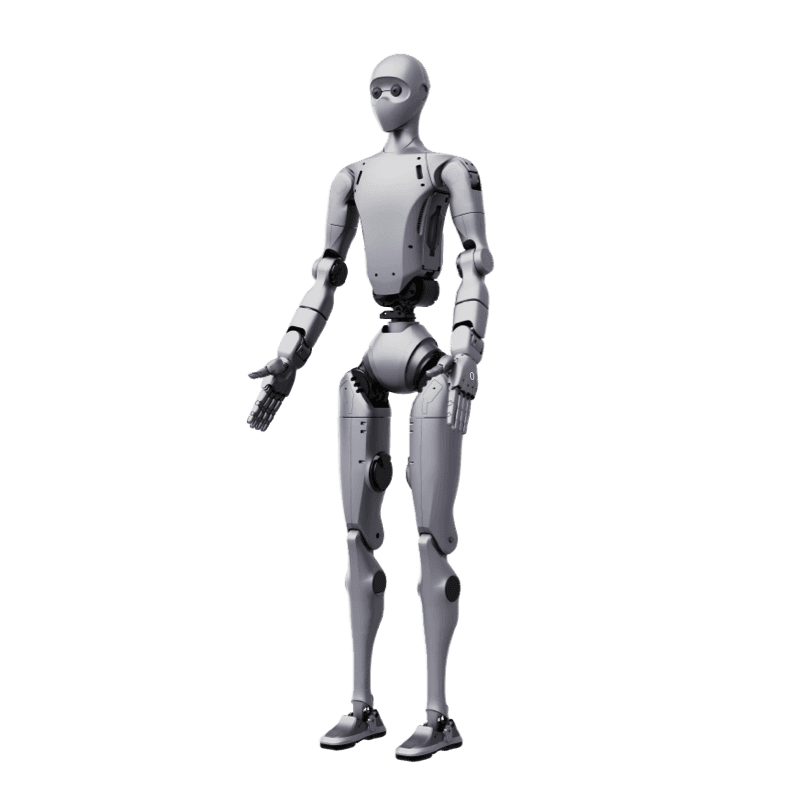
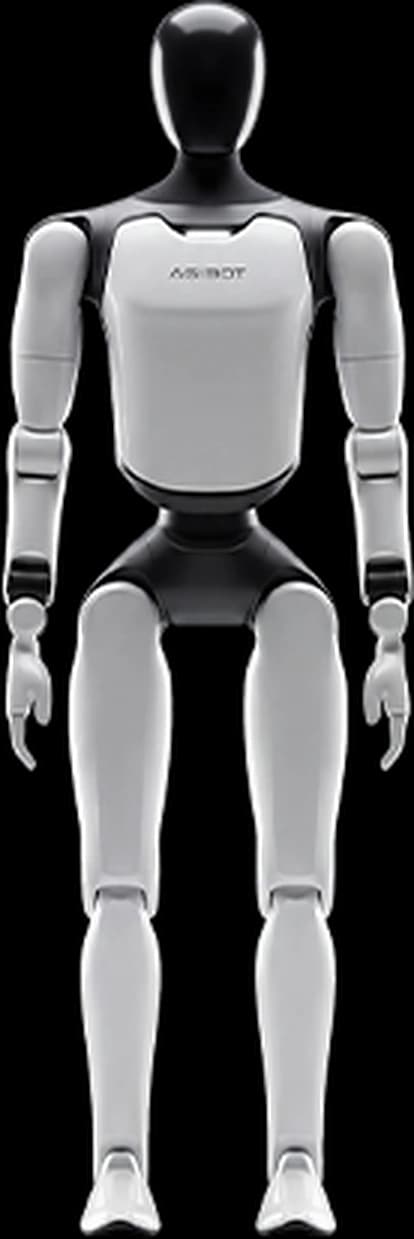
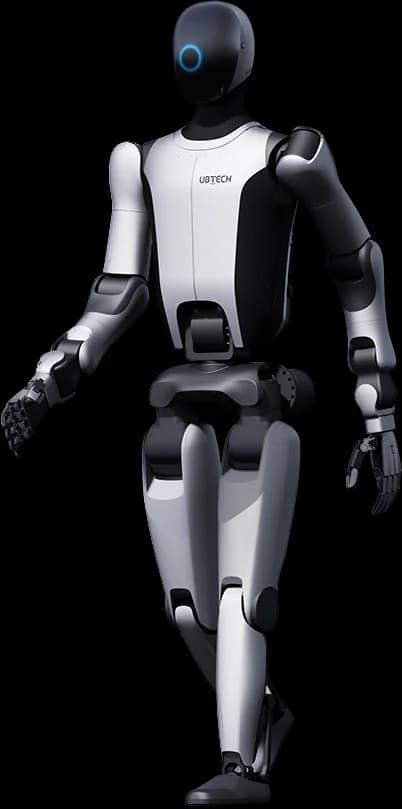
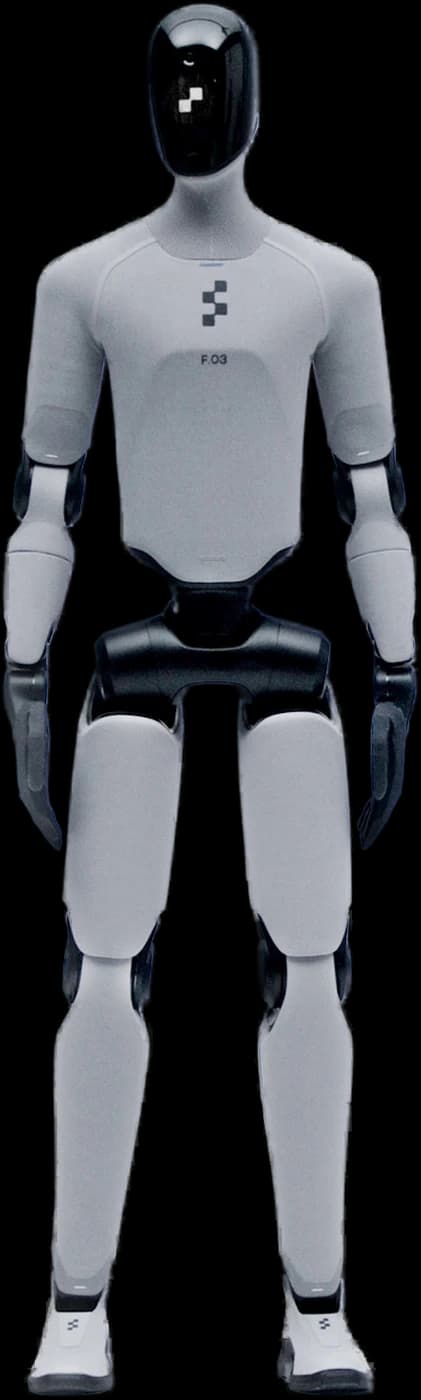
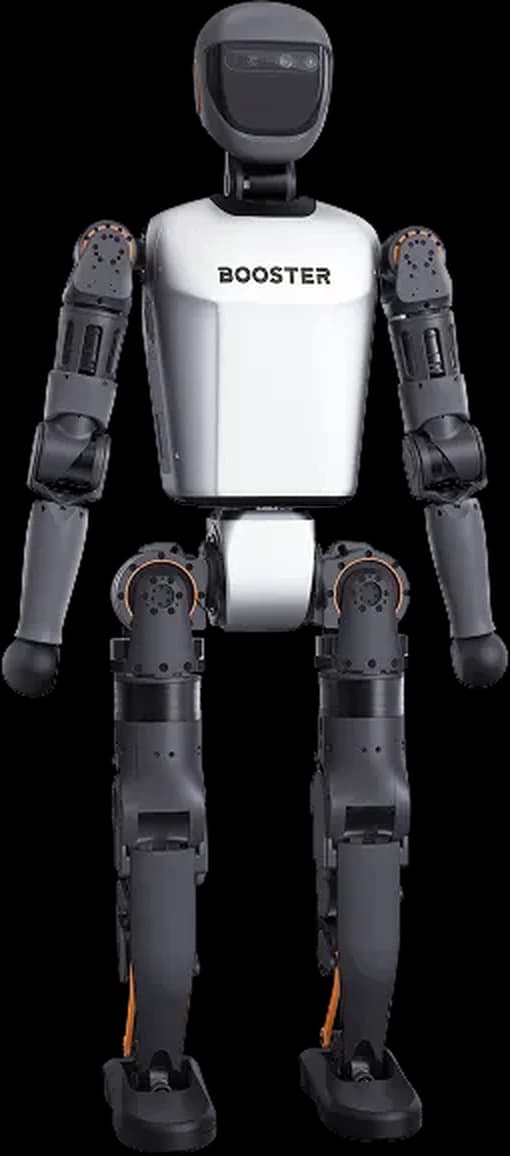
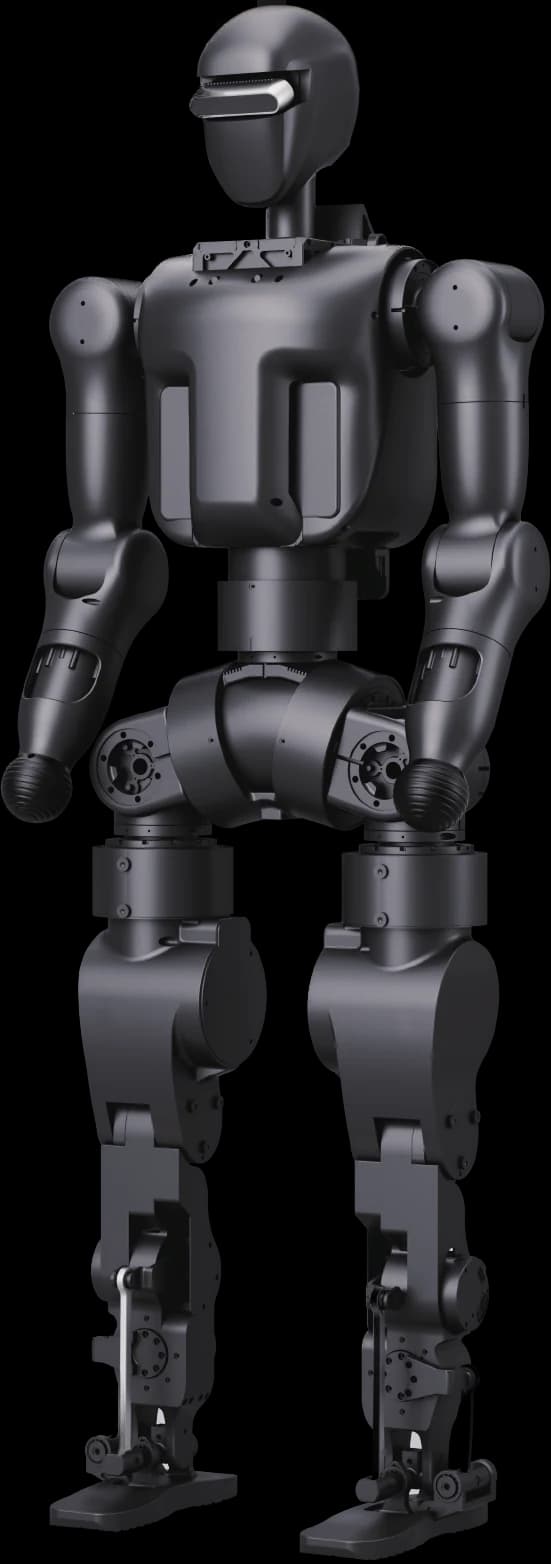
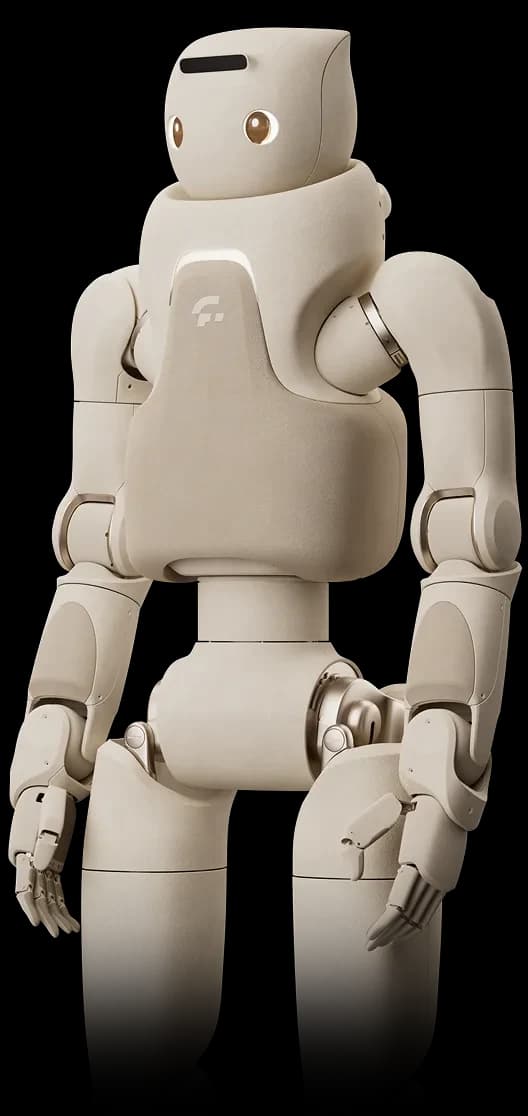
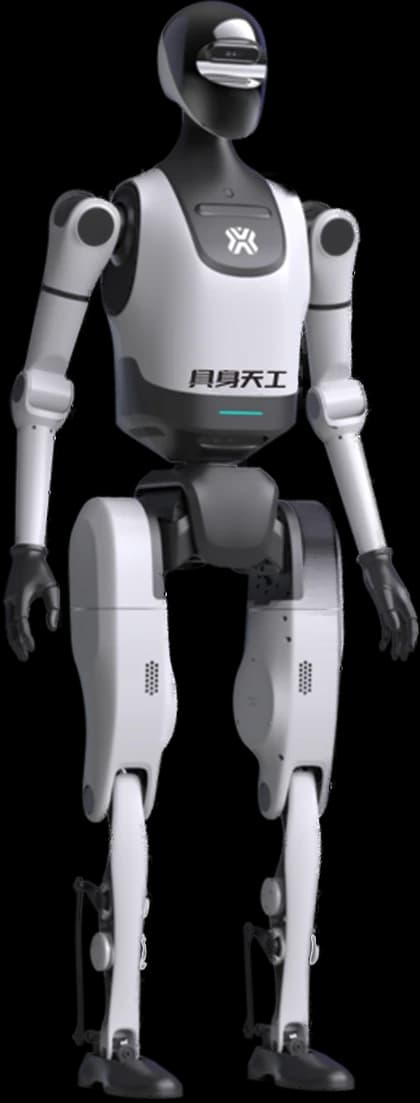
The Fourier N1 is Fourier's open-source humanoid robot, built for embodied AI research. The product page states 130 cm in height, 38 kg in weight, a maximum speed of 3.5 m/s, a two-hour battery and 23 degrees of freedom.
Read moreShow less
It supports dynamic movements including fast walking, running and stair climbing, aiming to let research teams validate algorithms quickly on a real body. It handles 15 to 20 degree slopes, climbs 20 cm stairs and performs moves such as single-leg balancing and ground push-ups. The frame is lightweight aluminium alloy with engineering plastic. A complete hardware resource package is published: design schematics, a bill of materials, assembly manuals and basic operating software code. Robotlar.org assesses sourcing and alternatives together with organizations that have an N1 requirement.
Enterprise supply · specification support · integration engineering
1/7
Overview
The Fourier N1 is Fourier's open-source humanoid robot, built for frontier embodied AI research. Versatile motion control, multimodal integration and exploration of future robot form factors are its focus areas.
The figures stated on the product page: 130 cm in height, 38 kg in weight, a maximum speed of 3.5 m/s, a two-hour battery and 23 degrees of freedom. The product brochure gives, for the same body, dimensions of 1245 × 441 × 202 mm, a net weight under 39 kg, a 1240 mm arm span, a 2.7 km/h walking speed and a 10.8 km/h running speed. The degree-of-freedom breakdown is legs 6+6, waist 1, arms 5+5 and head 0.
On the joint side, maximum peak torque is 144 N·m, peak current 70 A, operating voltage 24-60 V, gear backlash under 10 arcmin and dual encoders at 16-bit and 14-bit resolution; communication runs over Ethernet. The battery is 475 Wh lithium-ion under 3.2 kg: over two hours of continuous runtime, approximately 3.5 hours of charging and a life of over 800 cycles.
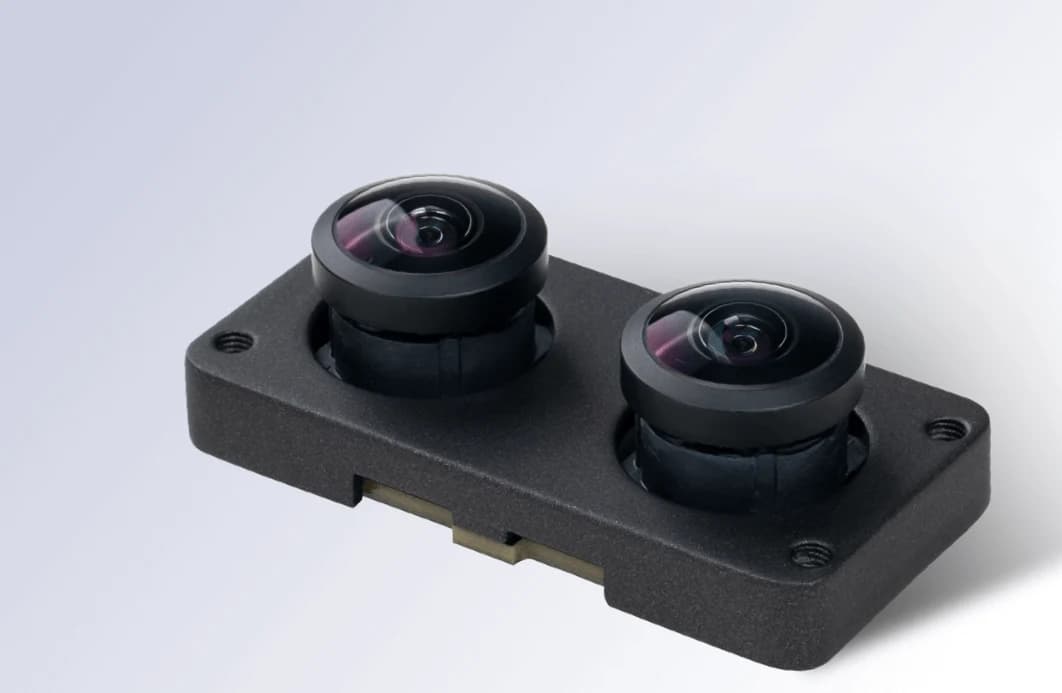
Compute runs on an Intel Core i7-13700H under Ubuntu 20.04, with Intel Iris Xe graphics, 16 GB of memory and 512 GB of NVMe storage. On the network side there is Wi-Fi 6 through an MT7921K module and LAN up to 2500M. Perception includes an optional binocular depth camera and a 6-axis IMU. Remote control is handled with a Bluetooth gamepad.
On mobility it supports 15 to 20 degree slopes, 20 cm stair steps, single-leg balancing and ground push-ups. The frame is lightweight aluminium alloy with engineering plastic.
A complete hardware resource package is published: design schematics, a bill of materials, assembly manuals and basic operating software code. In the software repositories, URDF models ship under Apache-2.0, the SDK documentation under MIT, and the deployment and training frameworks under LGPL-3.0.
For organizations with an N1 requirement we assess sourcing, timing and the alternatives deliverable today (the Unitree G1) transparently.
Tap the cover to play; sound and loading start only on click.
Fourier N1 product video
Use Cases
The use cases the manufacturer defines for the Fourier N1.
01Hospital and healthcare
02Education and research
03Performance and events
Key Advantages
Launch Video
The launch video shows the N1 walking, running and performing dynamic movements.
The robot runs on 23 actuators: six per leg, one at the waist and five per arm.
There is no head joint, a choice that dedicates mass and control complexity to mobility.
Dynamic Response Capabilities
The N1 handles 15 to 20 degree slopes, climbs 20 cm stair steps and performs complex movements such as single-leg balancing and ground push-ups.
A 144 N·m peak joint torque and backlash under 10 arcmin supply the rapid force changes those movements require.
Compact Hardware Design
A lightweight aluminium alloy and engineering plastic frame gives a clean, durable body.
The 475 Wh battery weighs under 3.2 kg and provides over two hours of continuous runtime, a budget designed for multi-scenario research and high-frequency testing.
Charging takes approximately 3.5 hours and battery life exceeds 800 cycles.
Open Technology Foundation
A complete hardware resource package is published: design schematics, a bill of materials, assembly manuals and basic operating software code.
URDF models ship under Apache-2.0, the SDK documentation under MIT, and the deployment and reinforcement learning repositories under LGPL-3.0.
That makes the body usable not only by teams running it but by teams modifying it.
Use in Research and Clinical Settings
The N1 is designed for multi-scenario research and can work in the same environment as Fourier's rehabilitation equipment.
Versatile motion control, multimodal integration and exploration of future robot form factors are its focus areas.
Technical Specifications
The full mechanical, electronic, performance, joint, battery, processor, interaction and sensor headings appear in the published specification table.
The table states dimensions of 1245 × 441 × 202 mm, a net weight under 39 kg, a 1240 mm arm span, a 2.7 km/h walking speed, a 10.8 km/h running speed, 23 total actuators, a maximum peak joint torque of 144 N·m and a 475 Wh battery.
The Fourier N1 up close
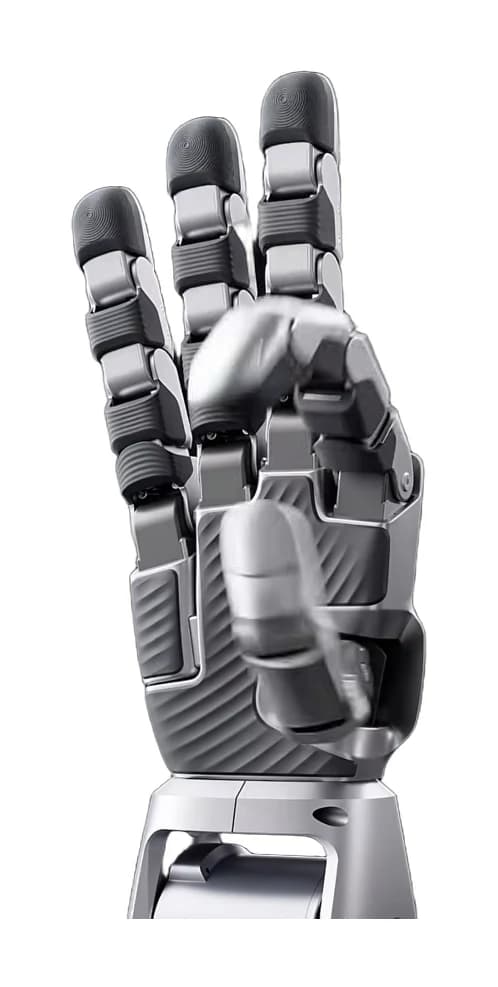
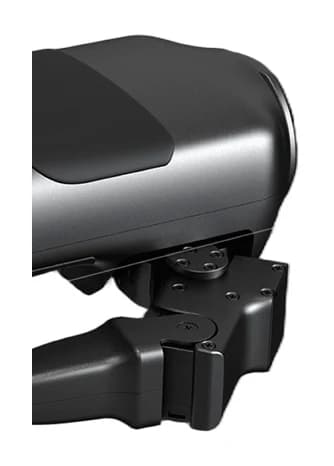
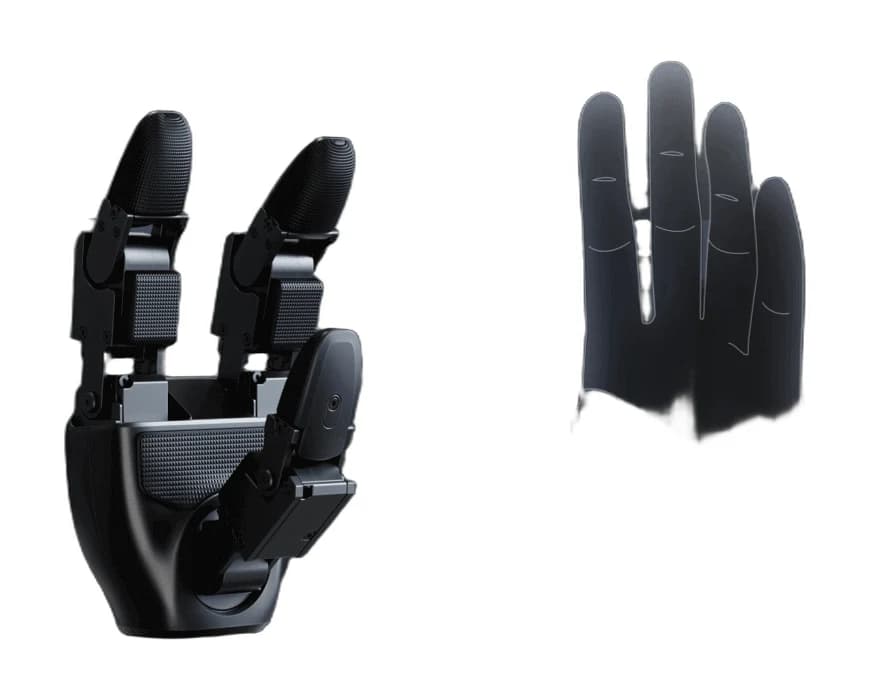
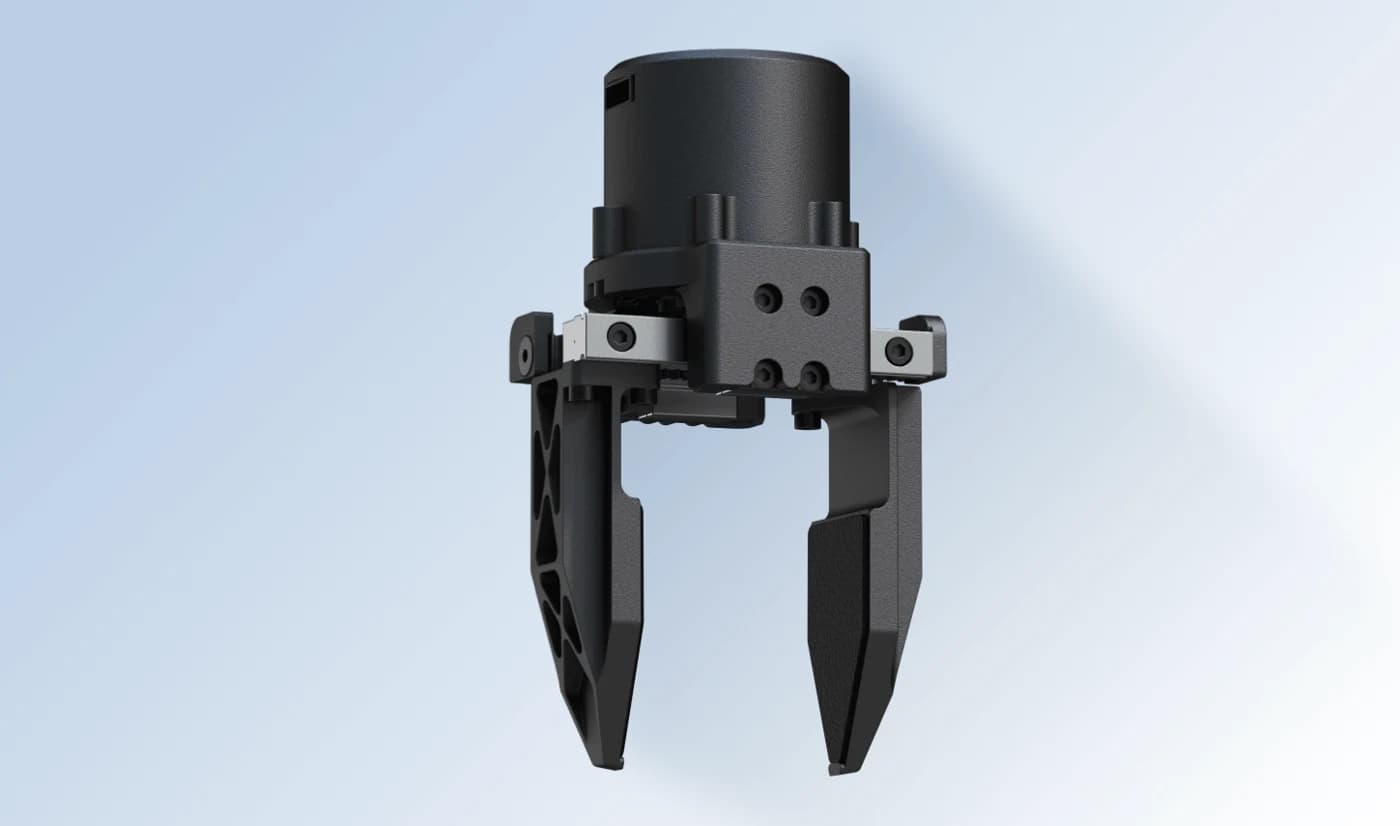
5 images; tap to enlarge.
Technical Specifications
32 values in 6 categories; data published by the manufacturer.
Size and weight
Dimensions (standing)
130 cm tall (product page); the brochure gives 1245 × 441 × 202 mm with a 1240 mm arm span
Weight
38 kg
Arm reach
1240 mm arm span
Motion and performance
Maximum speed
3.5 m/s
Climb angle
15-20 degree slopes
Obstacle and step
20 cm stair steps
Joint torque
144 N·m (peak joint torque)
Joint range of motion
Joint position limits (rad, left side): hip pitch -2.617~2.617; hip roll -0.261~1.57; hip yaw -2.617~2.617; knee pitch -0.0872~2.356; ankle roll -0.436~0.436; ankle pitch -0.436~0.436; waist yaw -2.617~2.617; shoulder pitch -2.966~2.966; shoulder roll -0.174~2.792; shoulder yaw -1.832~1.832; elbow pitch -0.349~1.658; wrist yaw -1.832~1.832
Power and runtime
Battery capacity
475 Wh
Battery
475 Wh lithium-ion under 3.2 kg; 39.6 V nominal, 46.2 V cut-off, life over 800 cycles (25 C, 10 A discharge, 80% SOH); charging approximately 3.5 hours
39.6 V rated voltage; joint operating voltage 24-60 V with 46 V rated; adapter input 100-240 V 50/60 Hz, adapter output 46 V 4 A
General structure
Mobility form
Bipedal humanoid; fast walking, running, stair climbing, single-leg balancing and ground push-ups; 15-20 degree slopes and 20 cm stair steps
Degrees of freedom
23 DoF
Neck DoF
0 DoF
Torque density
Maximum peak joint torque 144 N·m; peak current 70 A, operating voltage 24-60 V, 46 V rated, backlash under 10 arcmin, dual encoders at 16-bit/14-bit; rated power approximately 460 W
Materials
Lightweight aluminium alloy and engineering plastic frame; a clean, durable and stable hardware design
DoF layout
Twenty-three actuators in total: legs 6+6, waist 1, arms 5+5; no head joint
Battery system
A 475 Wh lithium-ion battery under 3.2 kg; over two hours of continuous runtime, approximately 3.5 hours charging and a life of over 800 cycles
Joint module
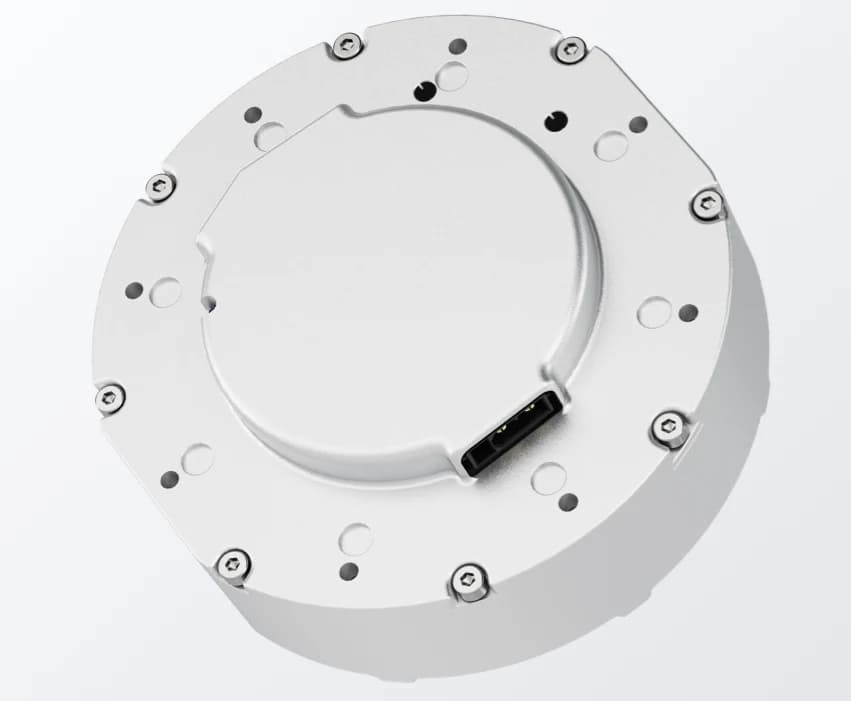
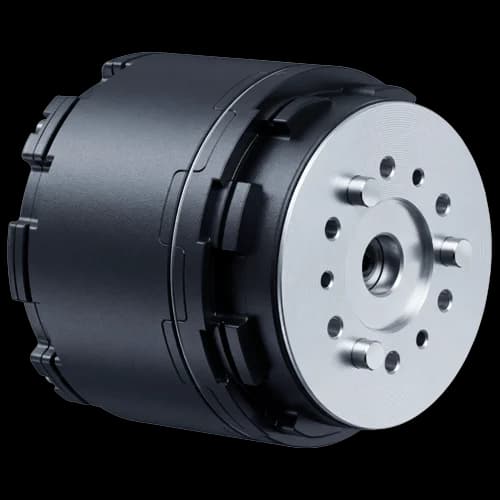
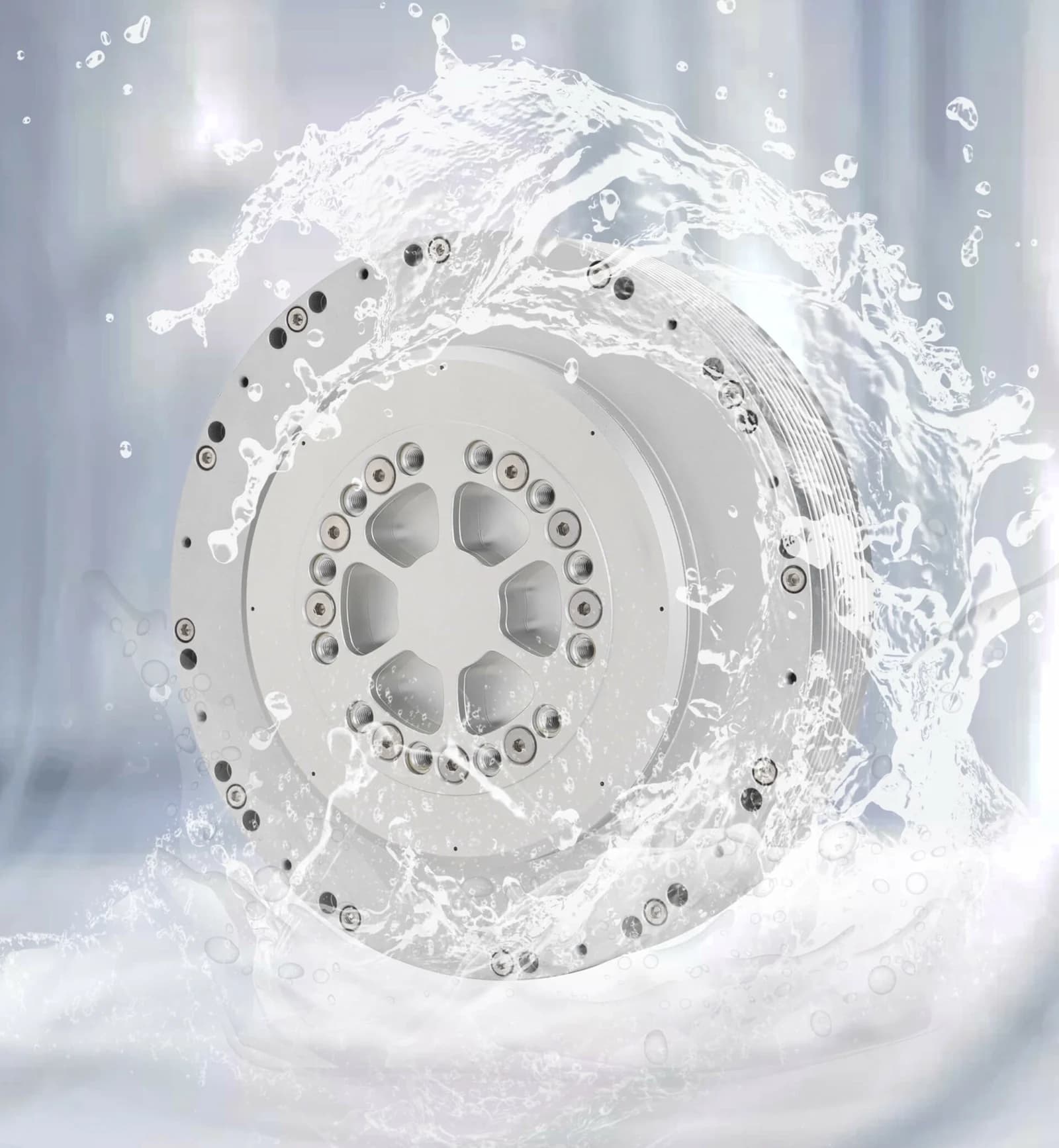
Peak torque 144 N·m, peak current 70 A, operating voltage 24-60 V, backlash under 10 arcmin, dual encoders at 16-bit and 14-bit, Ethernet communication
Structure and materials
Lightweight aluminium alloy and engineering plastic
Size and weight
Dimensions (standing)
130 cm tall (product page); the brochure gives 1245 × 441 × 202 mm with a 1240 mm arm span
Weight
38 kg
Arm reach
1240 mm arm span
Motion and performance
Maximum speed
3.5 m/s
Climb angle
15-20 degree slopes
Obstacle and step
20 cm stair steps
Joint torque
144 N·m (peak joint torque)
Joint range of motion
Joint position limits (rad, left side): hip pitch -2.617~2.617; hip roll -0.261~1.57; hip yaw -2.617~2.617; knee pitch -0.0872~2.356; ankle roll -0.436~0.436; ankle pitch -0.436~0.436; waist yaw -2.617~2.617; shoulder pitch -2.966~2.966; shoulder roll -0.174~2.792; shoulder yaw -1.832~1.832; elbow pitch -0.349~1.658; wrist yaw -1.832~1.832
Power and runtime
Battery capacity
475 Wh
Battery
475 Wh lithium-ion under 3.2 kg; 39.6 V nominal, 46.2 V cut-off, life over 800 cycles (25 C, 10 A discharge, 80% SOH); charging approximately 3.5 hours
A complete hardware resource package is published: design schematics, a bill of materials, assembly manuals and basic operating software code. URDF models are released under Apache-2.0, the SDK documentation under MIT, and the deployment and training repositories under LGPL-3.0
Sources and documents
Verified on the manufacturer page on 18 September 2026.
Technical Analysis of an Open-Source Humanoid BodyDesign decisions, comparison table and evaluation
Where the 23 Degrees of Freedom Were Trimmed
The breakdown is: legs 6+6, waist 1, arms 5+5, head 0. For comparison the same figure is 29 on the GR-2, and the difference lies exactly in the head and the arms. Having no head joint at all means the N1 produces looking behaviour with its body; limiting for an interaction-focused body but irrelevant for locomotion research. Five joints per arm instead of seven narrows the set of poses the arm endpoint can reach: the arm serves more for carrying load and balance than for fine manipulation. The 6+6 leg joints are fully preserved, because the running and stair-climbing budget sits there.
How Open Is the Open Source
The published hardware resource package includes design schematics, a bill of materials, assembly manuals and basic operating software code. On the software side licences differ per repository: URDF simulation models ship under Apache-2.0, the SDK documentation under MIT, and the deployment and reinforcement learning frameworks under LGPL-3.0. That distinction matters in practice: Apache-2.0 permits use of the model inside a closed product, while LGPL-3.0 imposes an obligation to share modifications to the linked code. Teams considering deriving a commercial product need to account for that difference from the start.
144 N·m and 10 Arcmin: Two Numbers Behind Dynamic Motion
Running and stair climbing demand two things: adequate peak torque and low gear backlash. Peak torque is 144 N·m, and for a 39 kg body that is enough to produce the correction needed the moment a foot lands. Keeping backlash under 10 arcmin is the less discussed but more decisive figure: as backlash grows, a dead zone opens between joint command and actual position, and high-frequency balance corrections are lost inside it. Dual encoders at 16-bit and 14-bit make that error measurable.
N1 Versus Research-Class Humanoids
Feature
Fourier N1
Unitree G1
Fourier GR-2
Height
130 cm
132 cm
175 cm
Weight
38 kg
35 kg
Approximately 63 kg
Degrees of freedom
23
23 (EDU: 43)
29
Peak joint torque
144 N·m
Published per joint
436 N·m
Battery
475 Wh, over 2 hours
9000 mAh
Approximately 950 Wh
Open source
Hardware package and URDF published
Open SDK, closed hardware
Open hardware interface
Status in Turkey
Sourcing enquiry
Orderable
Sourcing enquiry
Engineering Assessment
The N1's value comes less from the body itself than from the documentation that ships with it. Publishing design schematics, a bill of materials and assembly manuals lets a university laboratory swap parts, try its own actuator or partly rebuild the body; none of that is possible on a closed platform. Twenty-three degrees of freedom and the absence of a head joint show clearly that the body is focused on locomotion research. On the university and R&D side, the counterpart deliverable in Turkey today is the Unitree G1; the G1 EDU reaches up to 43 degrees of freedom but its hardware package is not open.
Purchasing support
Supply model
Supply to Turkey is planned per project; import, delivery and commissioning scope are itemised in the quote.
Pre-sales assessment
Site and mission focused technical feasibility; specification and administrative process support.
Robotic system costs are optimised according to the selected hardware platform, additional sensor and payload configurations, and the integration scenarios specific to your site. Share your requirements and our engineering team will prepare a feasibility report and a pro forma quotation tailored to your organisation.
Supply and delivery scheduling backed directly by the manufacturer
Site- and mission-focused technical feasibility and simulation
Turnkey hardware, software and mission integration
Advisory on corporate tenders, specifications and administrative processes
Sourcing, delivery schedule and investment for the N1 are settled per project. If you have a corporate or academic requirement you can talk to Robotlar.org: we assess the sourcing process, a realistic timeline and the alternatives deliverable today.
What are the Fourier N1's specifications?
The product page states 130 cm in height, 38 kg in weight, a maximum speed of 3.5 m/s, a two-hour battery and 23 degrees of freedom. The product brochure gives dimensions of 1245 × 441 × 202 mm, a net weight under 39 kg, a 1240 mm arm span, a 2.7 km/h walking speed and a 10.8 km/h running speed. On the joint side, peak torque is 144 N·m, peak current 70 A, backlash under 10 arcmin and dual encoders at 16-bit and 14-bit. The battery is 475 Wh lithium-ion under 3.2 kg, charging in approximately 3.5 hours. The processor is an Intel Core i7-13700H with 16 GB of memory and 512 GB NVMe on Ubuntu 20.04.
What is in the N1's open-source package?
The published hardware resource package includes design schematics, a bill of materials, assembly manuals and basic operating software code. In the software repositories the licence varies with content: URDF simulation models ship under Apache-2.0, the SDK documentation under MIT, and the deployment and reinforcement learning frameworks under LGPL-3.0. Teams considering deriving a commercial product should evaluate that licence difference from the start.
How do you choose between the N1 and the Unitree G1?
Both are research-class bodies of similar size: the N1 at 130 cm and 38 kg, the G1 at 132 cm and 35 kg, both starting at 23 degrees of freedom. The difference sits in two places. The N1's hardware resource package is published, so parts can be swapped and the body rebuilt. The G1 can be ordered in Turkey today, delivered within 4-6 weeks with a 1-year official warranty, central service and a remote/on-site technical support protocol (SLA), and its EDU edition reaches up to 43 degrees of freedom. For a team that will not modify the hardware, deliverability is the deciding factor.