PRICE
Project quote
Configuration, delivery schedule and investment figure are set by project scope. From your specification we prepare the supply plan from the manufacturer line and the integration scope.
Enterprise supply · specification support · integration engineering
Overview
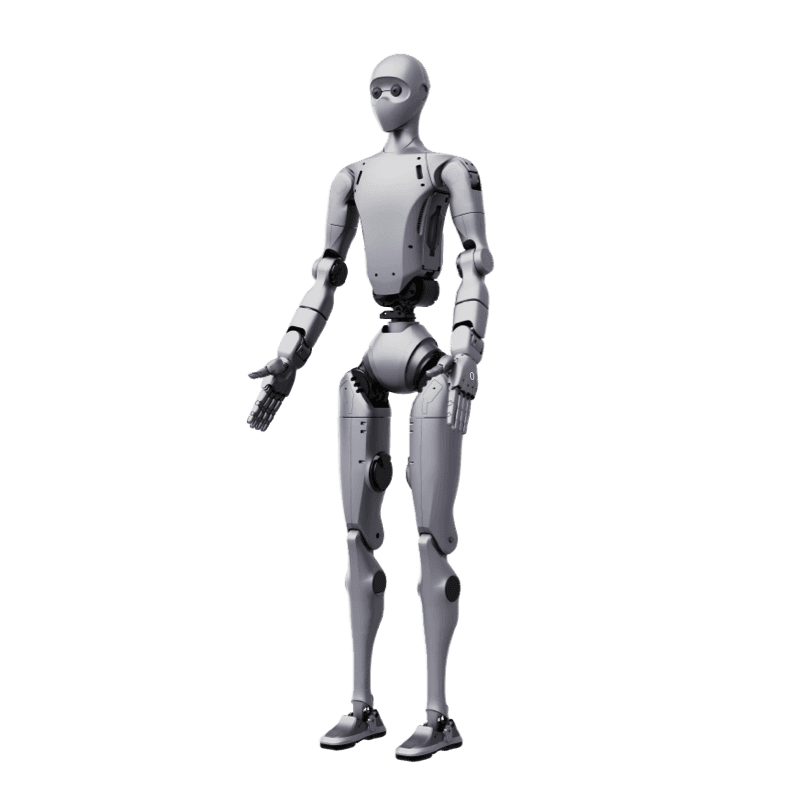
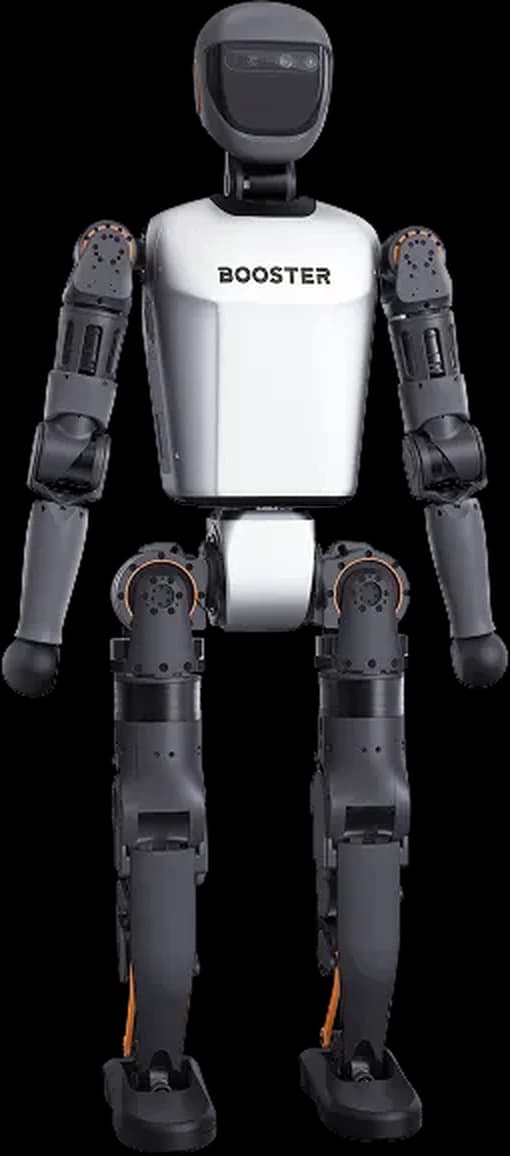
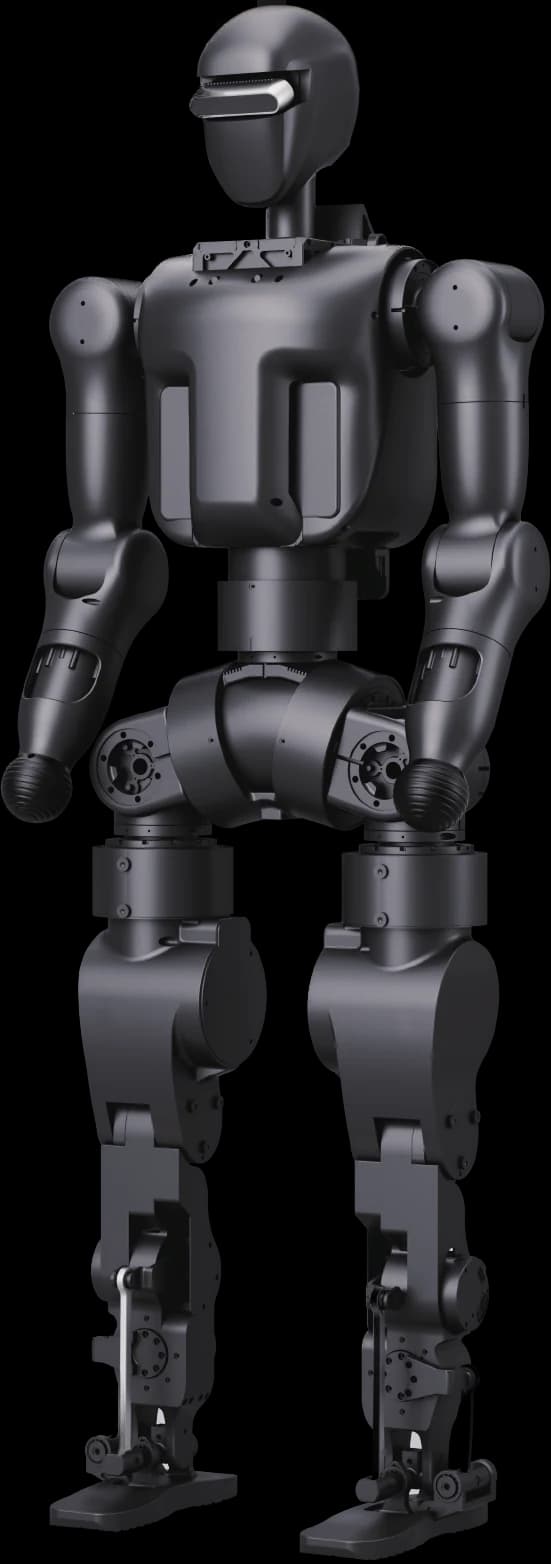
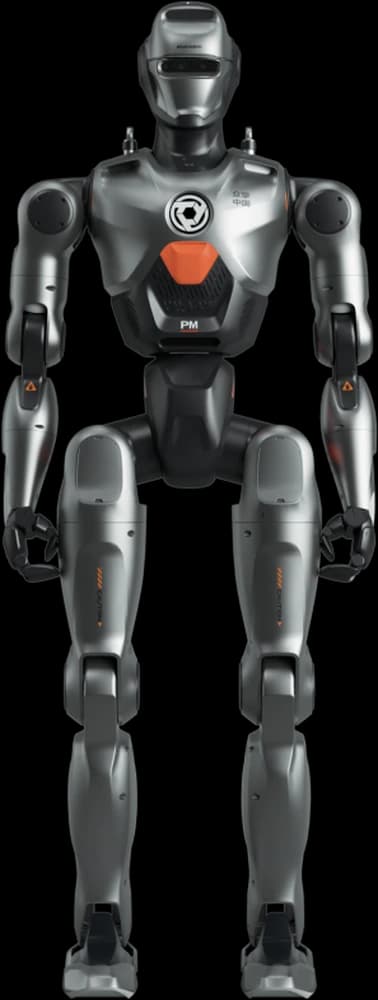
The Booster T1 is Booster Robotics' developer-focused humanoid. The company was founded in 2023 and aimed its early strategy at scientific research and education scenarios; the T1 is the body at the centre of that strategy.
Mechanically: 118 × 47 × 23 cm, approximately 30 kg, with 57 cm legs and 45 cm arms. Degrees of freedom vary by configuration: 23 on the base body (six per leg, one waist, four per arm, two head), 31 with grippers and 41 with six-DoF dexterous hands. Joint ranges run to waist ±58°, hip pitch ±118°, knee 0-123° and ankle pitch -50° to 20°.
On the drive side, maximum peak torque is 130 N·m and every joint carries dual encoders. Dual encoders mean the difference between motor shaft and output shaft can be measured, and that measurement is decisive when transferring a policy learned in simulation onto a real body.
Compute is 200 TOPS on an NVIDIA AGX Orin. The Standard and Customized editions also carry an Intel i7 1370p so that x86-bound vision and ROS stacks can run on the robot itself. Perception includes a depth camera, a 9-axis IMU and a circular six-microphone array with a speaker. A 10.5 Ah battery runs two hours walking and four hours standing. Networking covers Wi-Fi 6 and Bluetooth 5.2, with USB and Ethernet for expansion.
The software side is what sets the platform apart: comprehensive API interfaces, an open-source framework and open-source tools are published, accompanied by the Booster Gym reinforcement learning environment, the Booster SDK and developer documentation.
The T1 is the champion model of the 2025 RoboCup Soccer AdultSize category and the choice of more than 50 robotics teams and research institutes worldwide. Published customer cases include UC Berkeley FastTD3, Carnegie Mellon FALCON, Purdue's table tennis work and the world championship of Tsinghua Hephaestus.
For organizations with a T1 requirement we assess sourcing, timing and the alternatives deliverable today (the Unitree G1 and H2) transparently.
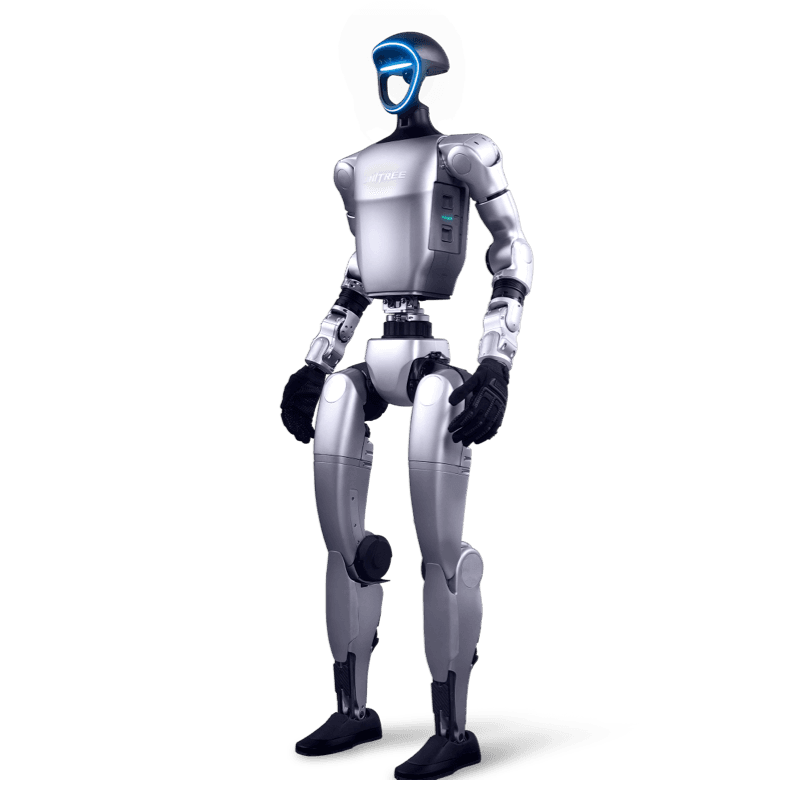
Durability: Breaking Stone on the Chest
On a competition robot, durability is not a marketing line but a condition of use: in RoboCup matches the robot falls, collides and gets back up. The video shows the structure while stone is broken on the body. That same body won the 2025 RoboCup AdultSize category and is the choice of more than 50 robotics teams and research institutes worldwide.
Navigation
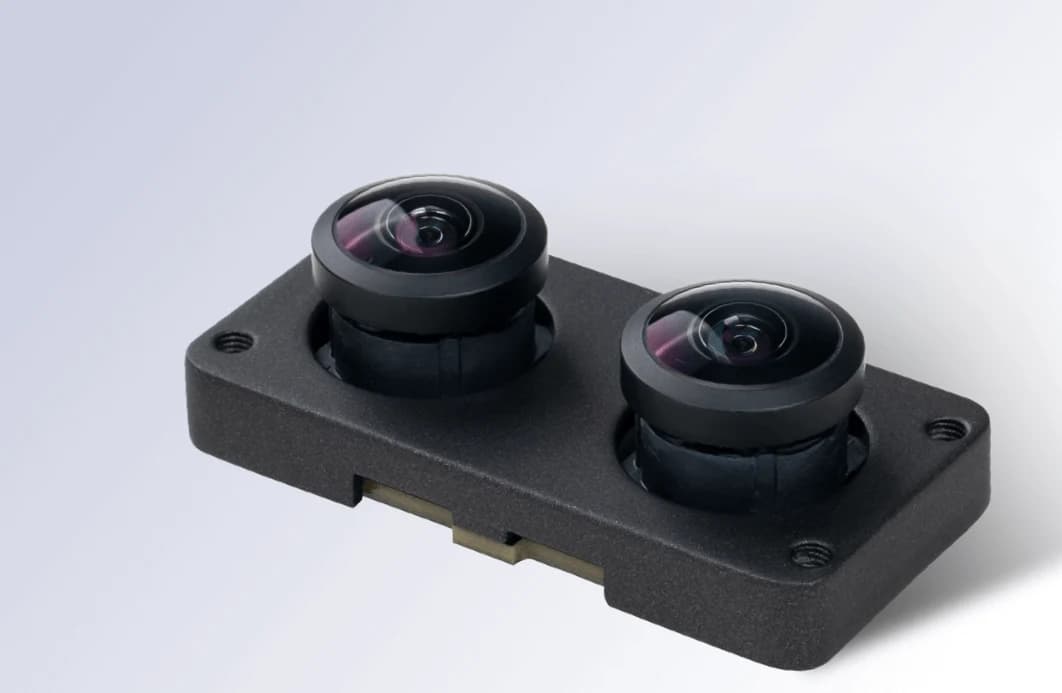
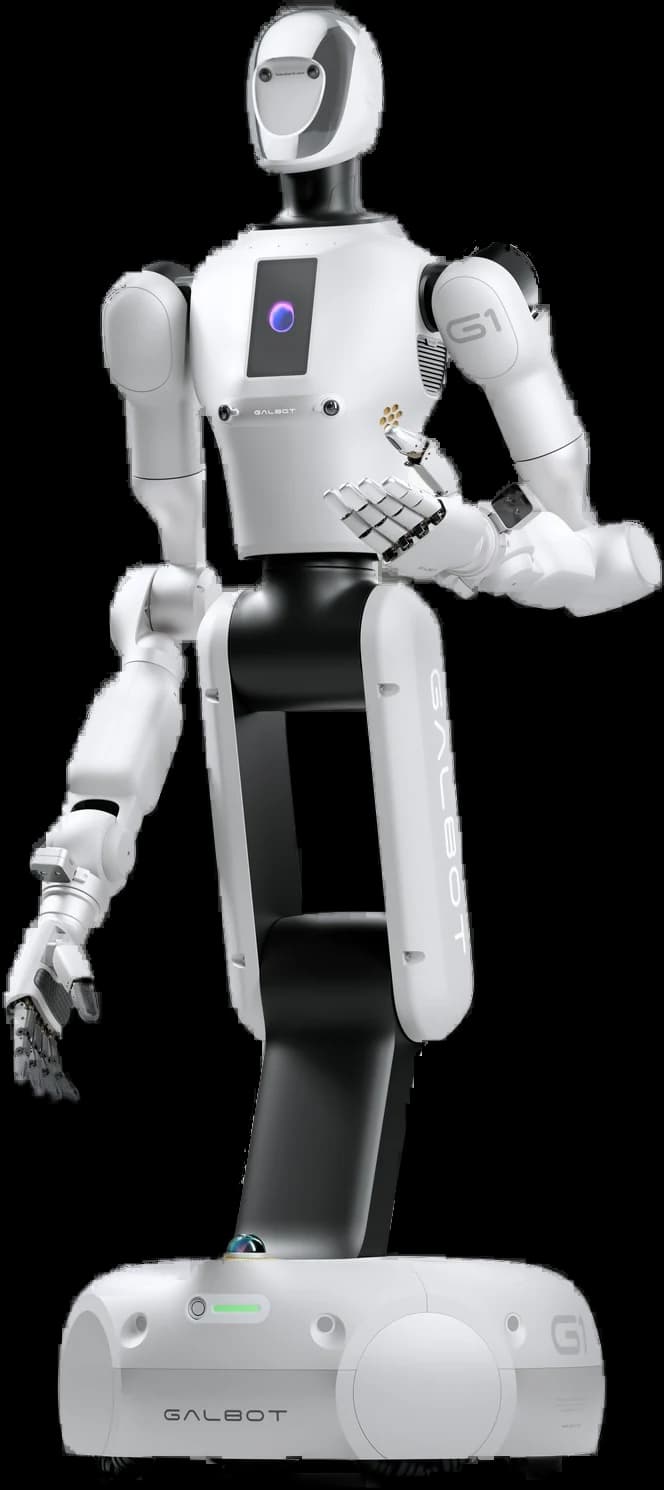
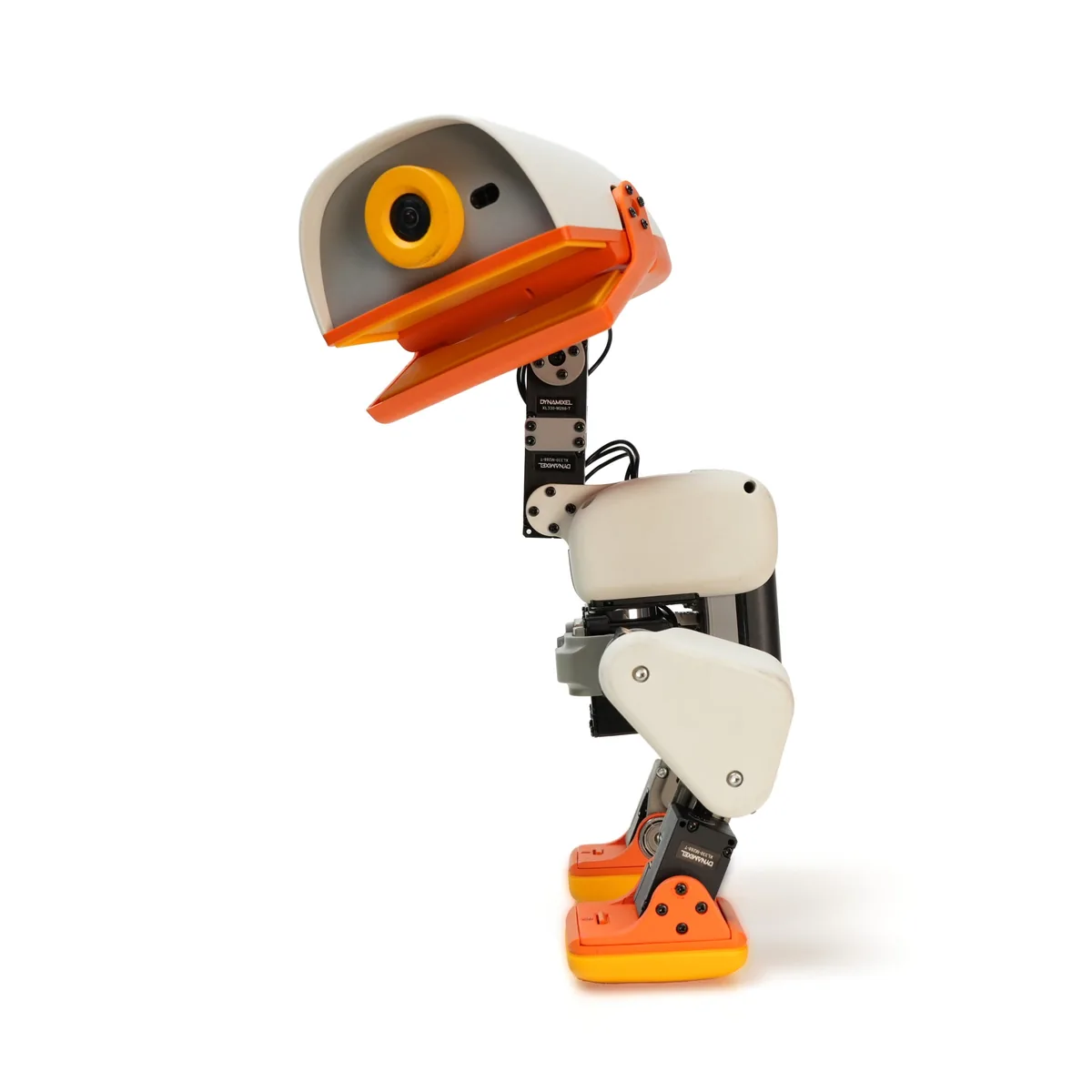
The depth camera and the 9-axis IMU work together so the robot can derive its own position and the obstacles ahead. The 200 TOPS AGX Orin is enough to run the perception and planning loop on the robot itself, removing any need to tether to an external computer.
FastTD3: UC Berkeley Reinforcement Learning Algorithm
One of the customer cases run on the T1. Comprehensive API interfaces, an open-source framework and open-source tools let university laboratories validate their own policies on a real body. The same list includes Purdue University's table tennis work, Carnegie Mellon's FALCON reinforcement learning framework and the world championship of Tsinghua's Hephaestus team.
Standard Edition: Gripper and x86 Compute
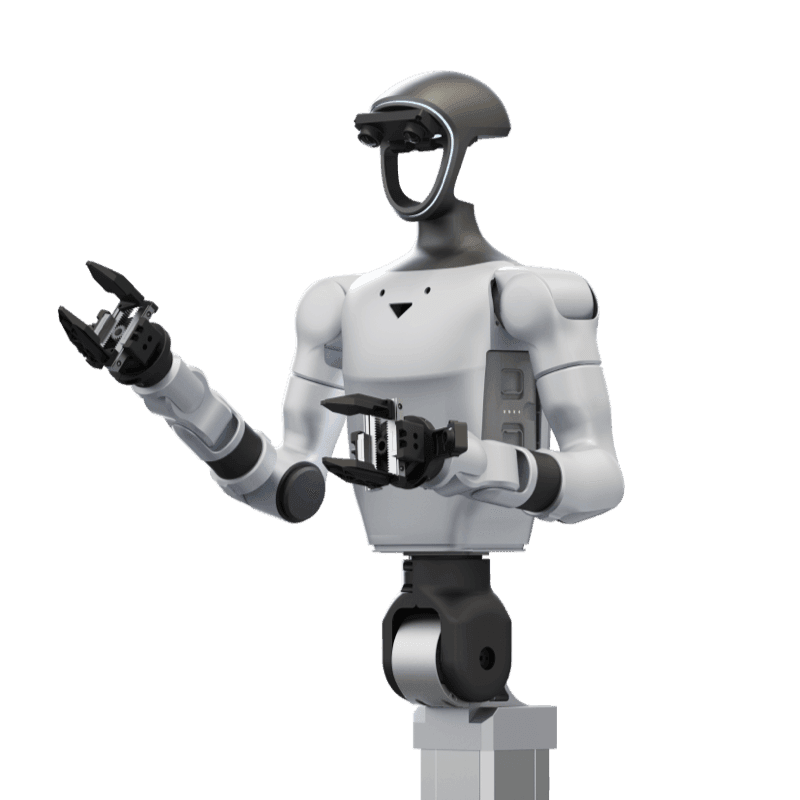
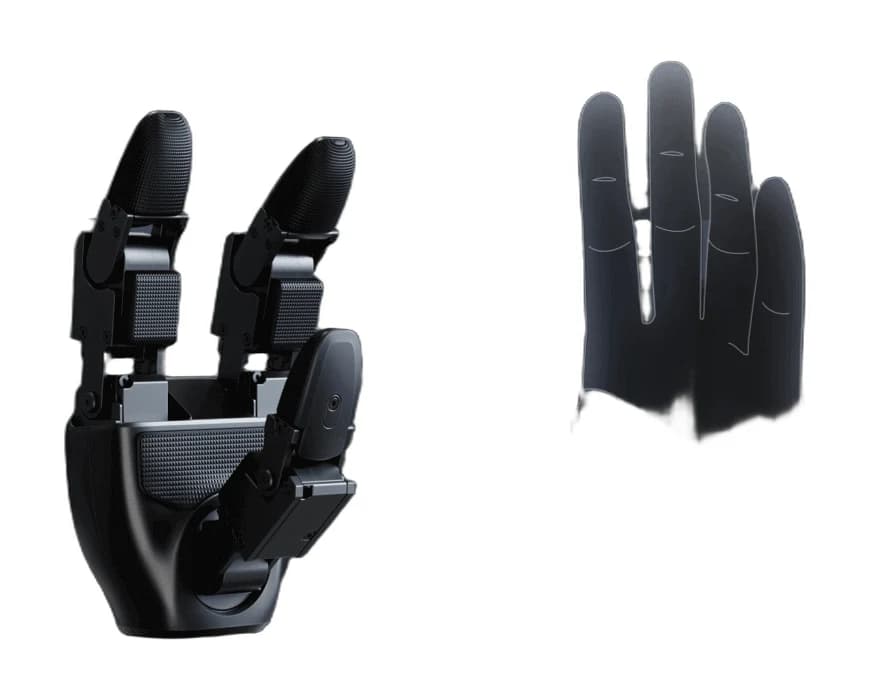
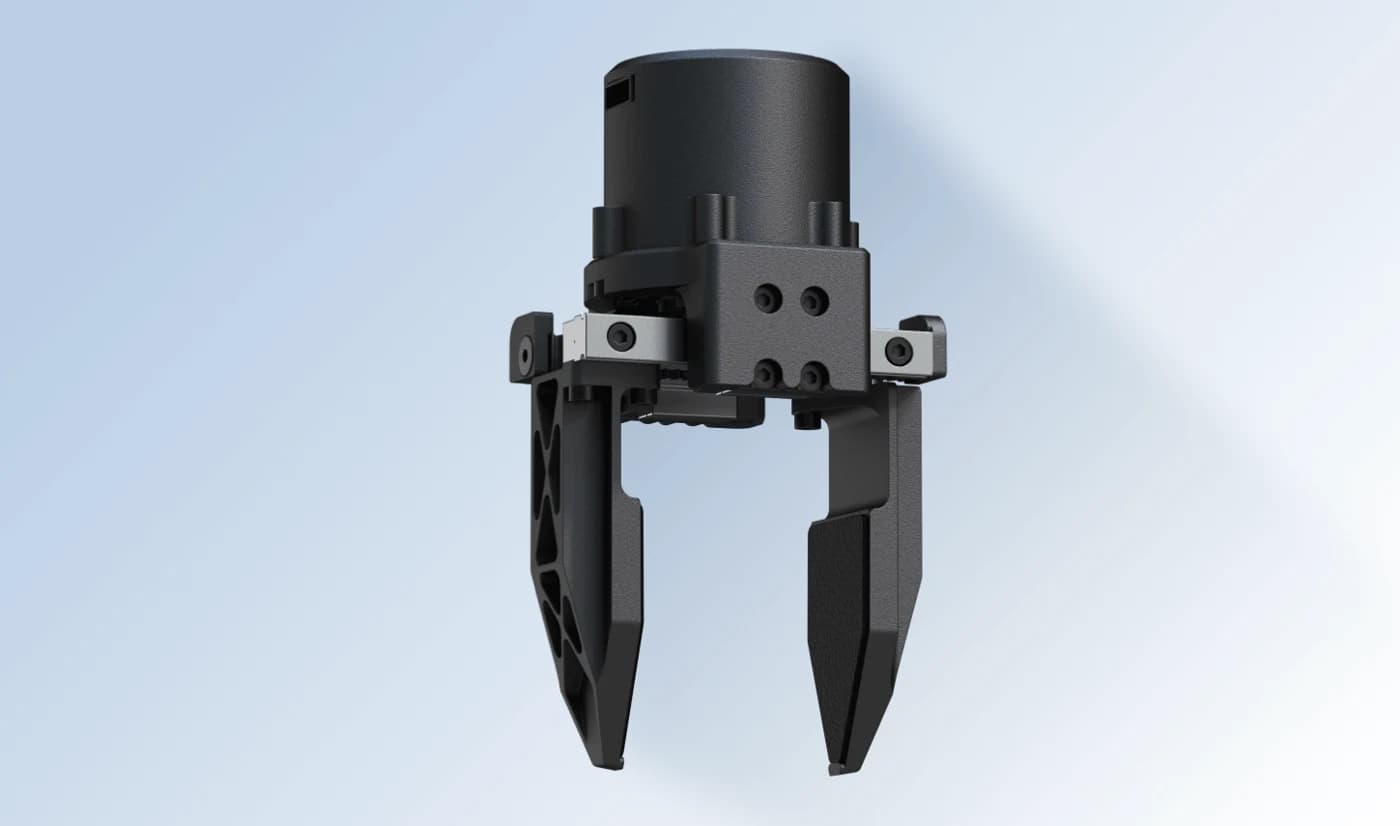
The Standard edition adds seven degrees of freedom per arm and a gripper, bringing the total to 31. The Intel i7 1370p absent from the Basic also arrives here: ROS nodes, vision stacks and x86-bound libraries can run on the robot itself, leaving the AGX Orin for learning and inference.

Basic Edition: The Base for Locomotion Research
The Basic edition is the plainest body at 23 degrees of freedom: six per leg, one waist, four per arm and two head. The arm joints are left extensible, so a gripper or dexterous hand can be added later. Most walking-policy, balance-recovery and reinforcement learning work is done in this configuration.

Customized Edition: 41 Degrees of Freedom
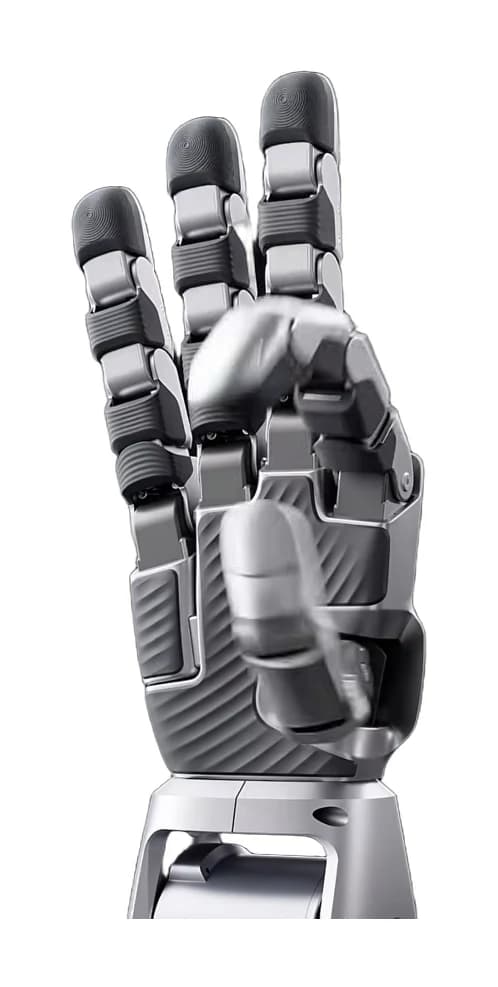
A six-degree-of-freedom dexterous hand brings the total to 41. This is the only configuration where the grasp point can be adjusted at finger level; fine manipulation, in-hand reorientation and tool-use trials are run on this edition.

The RoboCup Platform
Booster Robotics became an official RoboCup Federation partner in December 2024. At RoboCup 2025 in Brazil, teams using Booster robots took the top two places in both the AdultSize and KidSize categories: Tsinghua Hephaestus and China Agricultural University's Mountain & Sea team with the T1 in AdultSize, HTWK and Tsinghua TH-MOS with the K1 in KidSize. At RoboCup 2026, Booster-powered teams competed with 38 entries and swept every bipedal humanoid division.

T1; Live Demonstration
Technical Analysis of a Competition Body as a Research Platform
Why 30 kg and 118 cm
These dimensions come from the RoboCup AdultSize rule set, not from a marketing choice. At 118 cm and 30 kg, one person can carry and set up the robot alone, and the chance of damage to the robot or its surroundings in a fall stays low. On the research side the payoff is concrete: no crane, cage or two-person setup is needed in the lab, so the iteration loop shortens. On a full-size body above 70 kg every fall becomes a maintenance job, while in this class dozens of trials fit into a day.
Dual Encoders and 130 N·m
Dual encoders on the joints mean the difference between the motor shaft and the output shaft can be measured. In a single-encoder arrangement, backlash and flex after the reducer stay invisible to the control loop, and the robot cannot tell whether it actually reached the commanded angle. In reinforcement learning that difference is decisive: when a policy learned in simulation is transferred to a real body, unmodelled joint backlash is one of the largest error sources. A 130 N·m peak torque is a high ratio for a 30 kg body and the source of its dynamic movements, from kicking a ball to push-ups.
Why the Software Side Matters
The T1's spread on the research side comes less from hardware than from software access. Comprehensive API interfaces, an open-source framework and open-source tools are published, alongside the Booster Gym reinforcement learning environment, the Booster SDK and developer documentation. That is why the customer cases come from universities: UC Berkeley FastTD3, Carnegie Mellon FALCON, Purdue table tennis, Tsinghua Hephaestus. On a closed platform none of that work would be publishable.
T1 Versus Research-Class Humanoids
| Feature | Booster T1 | Unitree G1 | Booster K1 |
|---|---|---|---|
| Height | 118 cm | 132 cm | 95 cm |
| Weight | Approximately 30 kg | 35 kg | Approximately 19.5 kg |
| Degrees of freedom | 23-41 | 23 (EDU: 43) | 22 |
| Peak joint torque | 130 N·m | Published per joint | 60 N·m |
| Compute | 200 TOPS (AGX Orin) | Jetson Orin | 48-200 TOPS |
| Runtime | 2 h walking, 4 h standing | Approximately 2 hours | 30-80 minutes |
| Status in Turkey | Sourcing enquiry | Orderable | Sourcing enquiry |
Engineering Assessment
The T1's strength comes not from a single standout figure but from a design that accounts for the whole research loop. A 30 kg body can be carried by one person, 130 N·m of peak torque is enough for dynamic movement, dual encoders make the largest sim-to-real error source measurable, and an open software stack lets results be published. The RoboCup record is the field validation: more than 50 teams compete on the same body and the winners come off this platform. With no protection rating or operating temperature stated either, use should be assumed to be limited to indoor research environments. The counterpart deliverable in Turkey today is the Unitree G1.
Which T1 fits your needs?
| Feature | T1 Basic | T1 Standard | T1 Customized |
|---|---|---|---|
| Dimensions | 118 × 47 × 23 cm | 118 × 47 × 23 cm | 118 × 47 × 23 cm |
| Weight | Yaklaşık 30 kg | Yaklaşık 30 kg | Yaklaşık 30 kg |
| Total DoF | 23 | 31 (tutucu ile) | 41 (becerikli el ile) |
| Arm DoF | 4 (genişletilebilir) | 7 + el 1 | 7 + el 6 |
| CPU | Yok | Intel i7 1370p | Intel i7 1370p |
| GPU | NVIDIA AGX Orin, 200 TOPS | NVIDIA AGX Orin, 200 TOPS | NVIDIA AGX Orin, 200 TOPS |
| End-effector | Yok | Tutucu | Becerikli el |
| Warranty | 1 yıl | 1 yıl | 1 yıl |
All three editions share the same body, the same joint movement ranges and the same 130 N·m peak torque. The difference is the end-effector and compute: the Basic covers walking and locomotion research with 23 degrees of freedom, the Standard rises to 31 with a gripper and the Customized to 41 with a dexterous hand. The Basic has no separate x86 processor; compute runs on the AGX Orin alone.
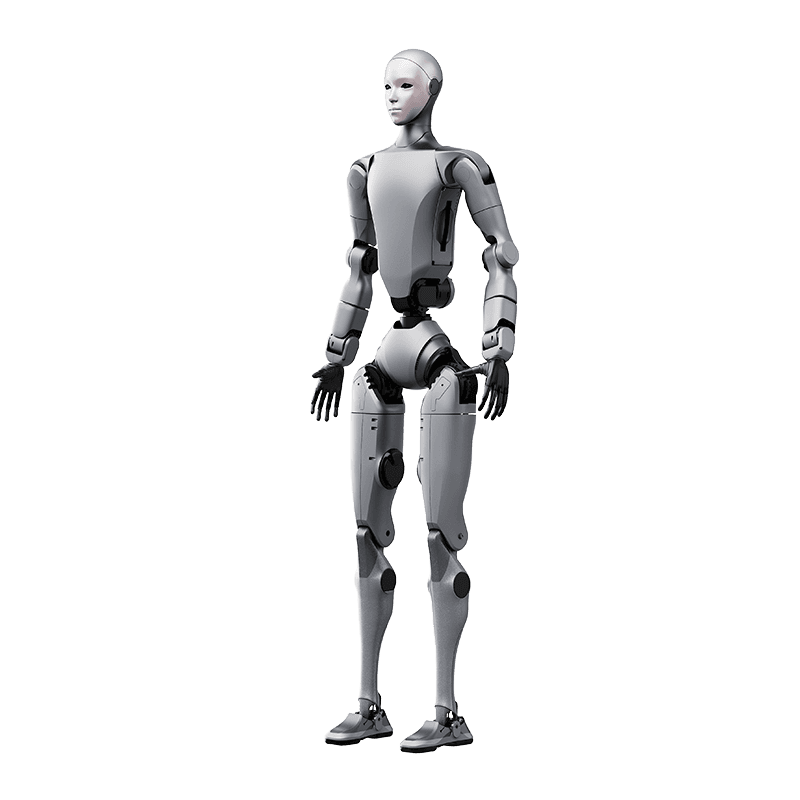
The plainest body for walking, balance and reinforcement learning research; 23 degrees of freedom and 200 TOPS.
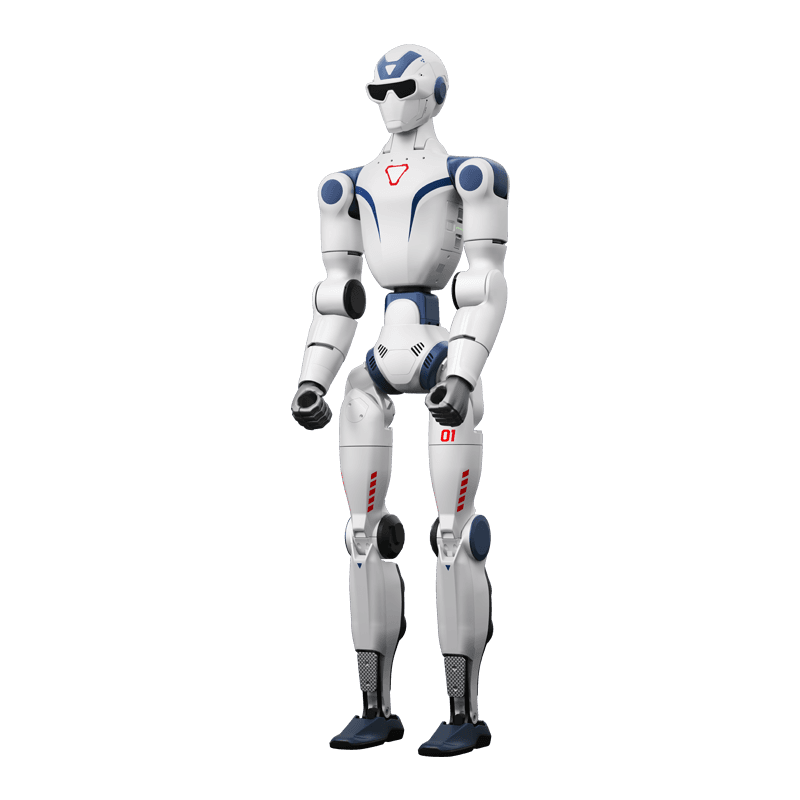
The edition with a gripper and an Intel i7; for grasping trials and perception stacks that run on x86.
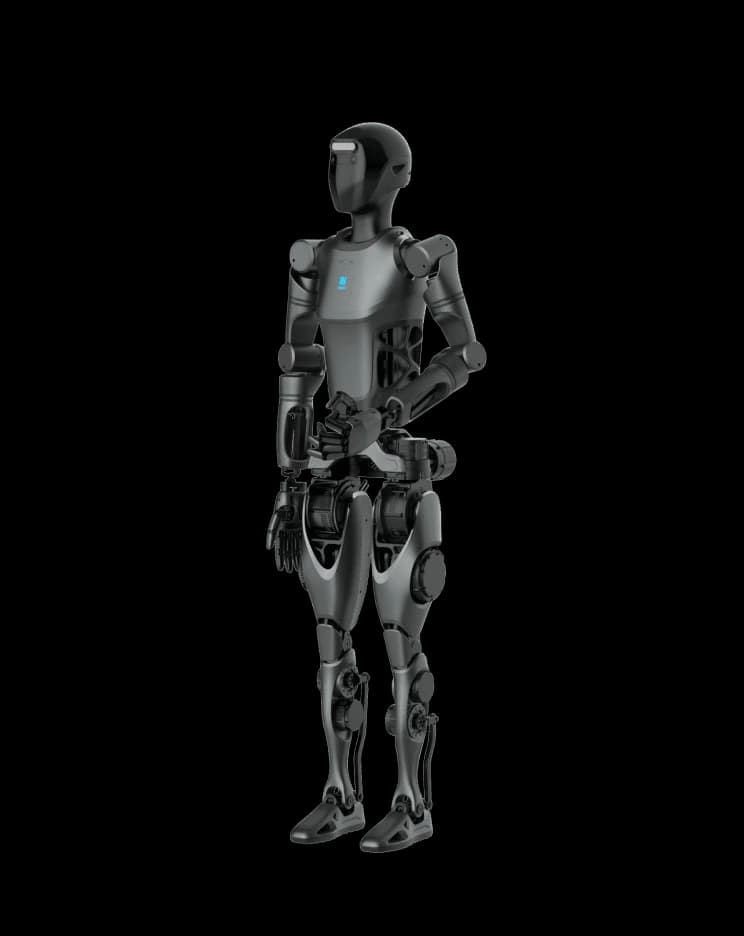
A 6-DoF dexterous hand bringing the total to 41 degrees of freedom; for fine manipulation work.
Details & Performance Parameters.
Physical Architecture
Dynamic Performance
Energy & Protection
Computing & Intelligence
NVIDIA AGX Orin with 200 TOPS of AI performance; the Standard and Customized editions add an Intel i7 1370p
Depth camera; 9-axis IMU
Circular six-microphone array and speaker
Wi-Fi 6 and Bluetooth 5.2; USB and Ethernet expansion ports
Comprehensive API interfaces, an open-source framework and open-source tools; secondary development and firmware upgrades are supported
Mechanical Components
Twenty-three degrees of freedom on the base body: six per leg, one waist, four per arm (extensible), two head. With grippers 31 (seven per arm, one per hand); with dexterous hands 41 (seven per arm, six per hand)
Maximum peak torque 130 N·m; dual encoders on every joint
Waist ±58°; hip pitch ±118°, roll -21° to 88°, yaw ±58°; knee 0° to 123°; ankle pitch -50° to 20°, roll ±25°
A 10.5 Ah battery; two hours walking, four hours standing
A 118 × 47 × 23 cm body at approximately 30 kg; 57 cm legs, 45 cm arms
Hardware & Materials
A lightweight, durable body; the competition model that won the 2025 RoboCup AdultSize category
Maximum peak torque 130 N·m; dual-encoder joint design
The New Intelligence of Operation.
Start your T1 project with our experts now.
Get a T1 Quote
There is no single list price; the investment depends on configuration and use case. Fill in the form and we will return with a clear, tailored quote.
- Supply plan and delivery schedule from the manufacturer line
- Technical feasibility against your project requirements
- Integration scope and engineering support
- Specification and documentation support for corporate procurement
Prefer to talk now: 0850 532 6 777
T1 Frequently Asked Questions
The most commonly asked questions and answers about T1.
Sourcing, delivery schedule and investment for the T1 are settled per project. If you have a corporate or academic requirement you can talk to Robotlar.org: we assess the sourcing process, a realistic timeline and the alternatives deliverable today.
Dimensions 118 × 47 × 23 cm, weight approximately 30 kg, 57 cm legs and 45 cm arms. Degrees of freedom are 23, 31 or 41 by configuration. Joint ranges: waist ±58°, hip pitch ±118°, knee 0-123°, ankle pitch -50° to 20°. Maximum peak torque is 130 N·m with dual encoders on the joints. Compute is 200 TOPS on an NVIDIA AGX Orin, with an Intel i7 1370p on the Standard and Customized editions. Perception covers a depth camera, a 9-axis IMU and a circular six-microphone array. The battery is 10.5 Ah, giving two hours walking and four hours standing. Wi-Fi 6, Bluetooth 5.2, USB and Ethernet.
The body, the joint ranges and the 130 N·m peak torque are identical on all three. The Basic comes with 23 degrees of freedom and runs all compute on the AGX Orin. The Standard adds a gripper for 31 degrees of freedom and gains an Intel i7 1370p. The Customized reaches 41 degrees of freedom with a six-DoF dexterous hand. The choice follows whether the work is locomotion research or manipulation.
Yes. The T1 is the champion model of the 2025 RoboCup Soccer AdultSize category. At RoboCup 2025 in Brazil, teams using Booster robots took the top two places in AdultSize: Tsinghua Hephaestus first and China Agricultural University's Mountain & Sea team second. Booster Robotics has been an official RoboCup Federation partner since December 2024. At RoboCup 2026, 38 Booster-powered teams competed and every bipedal humanoid division was won on a Booster platform.
Comprehensive API interfaces, an open-source framework and open-source tools are published, alongside the Booster Gym reinforcement learning environment, the Booster SDK and developer documentation. Secondary development and firmware upgrades are supported. Published customer cases include UC Berkeley's FastTD3 algorithm, Carnegie Mellon's FALCON reinforcement learning framework and Purdue University's table tennis work.
Yes. The Unitree G1 (132 cm, 35 kg, Jetson Orin) can be ordered in Turkey today, with 4-6 week delivery, a 1-year official warranty, on-site commissioning and engineering support across Turkey. The G1 EDU edition reaches up to 43 degrees of freedom and is widely used in university research. If a full-size body is needed, the Unitree H2 (182 cm, 70 kg, 31 degrees of freedom) is worth evaluating.