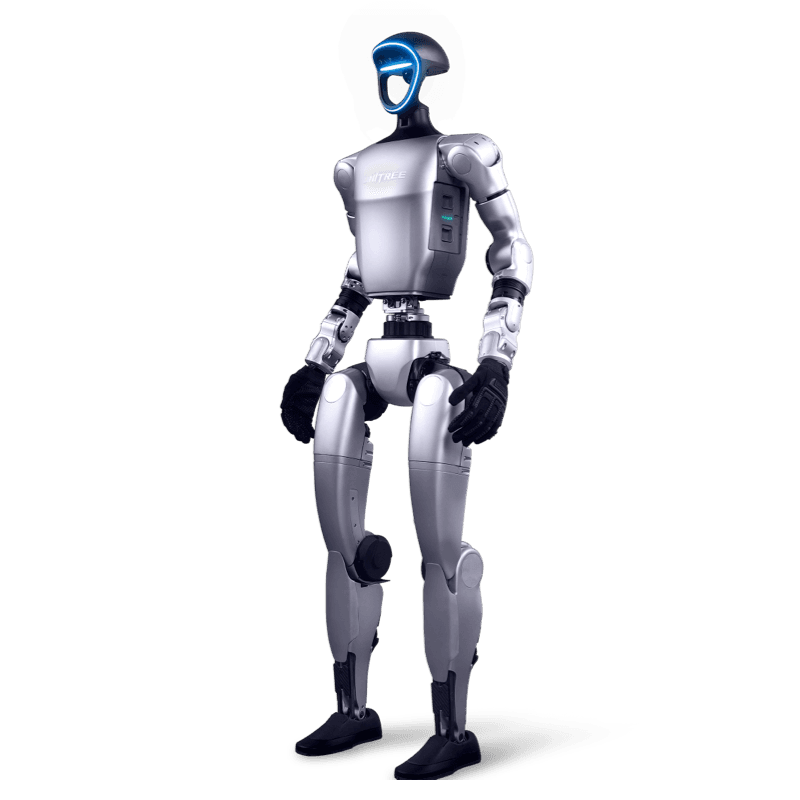
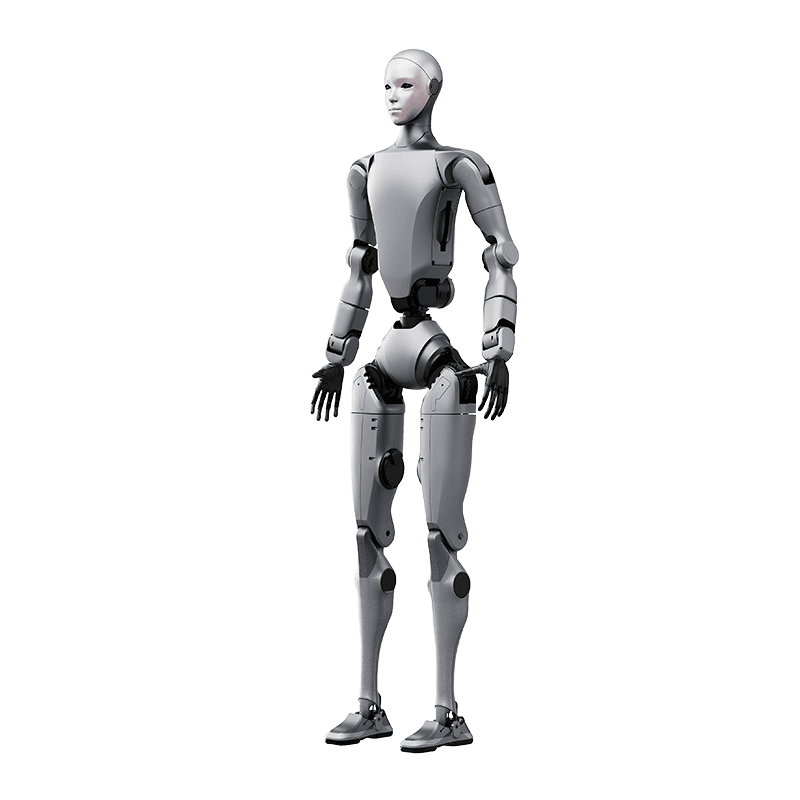
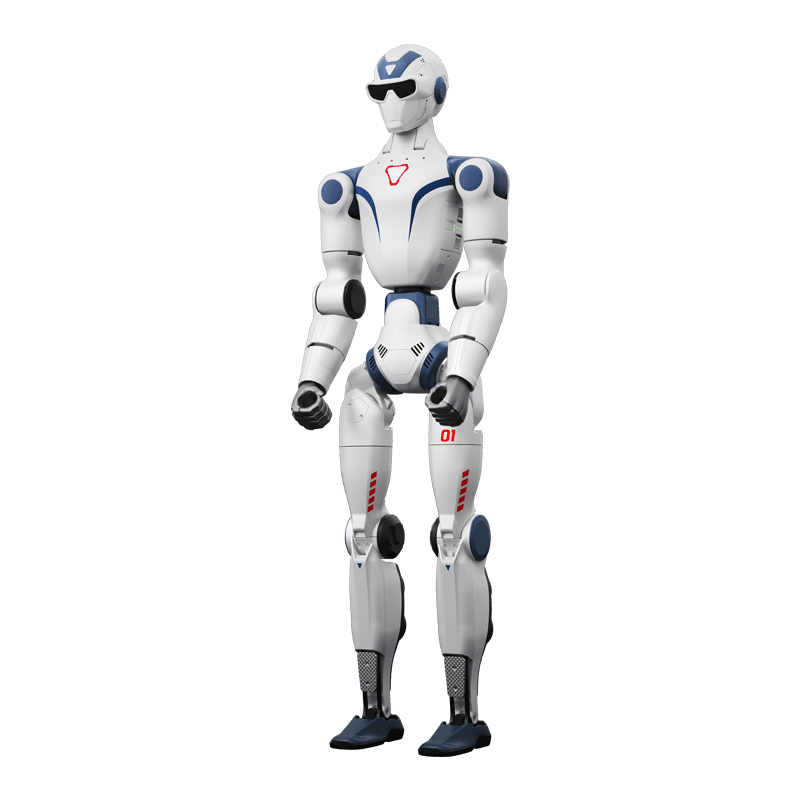
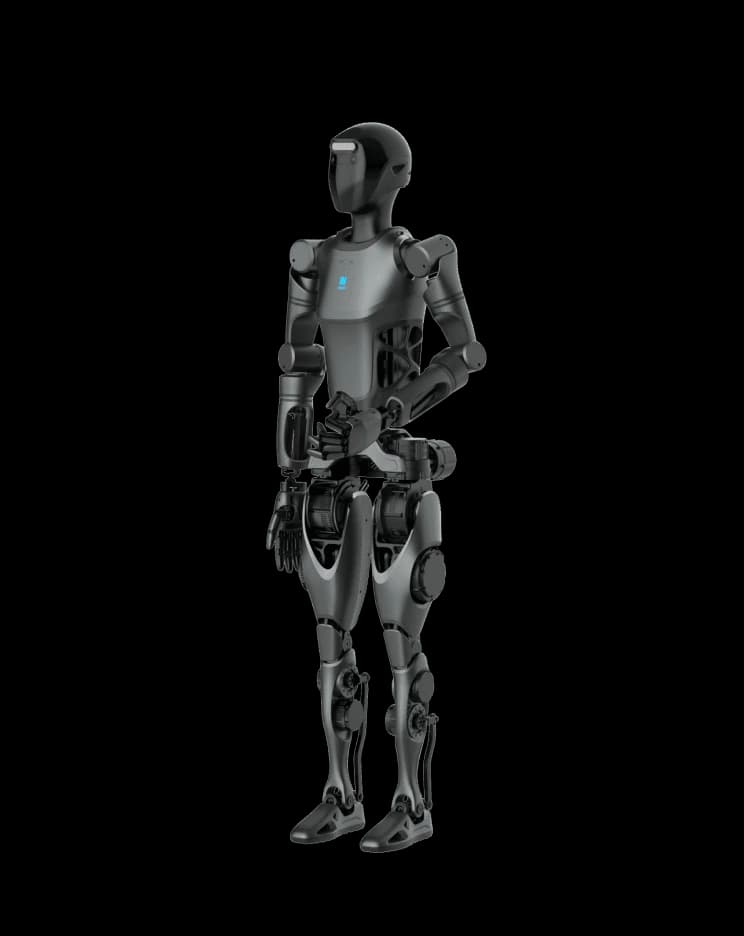
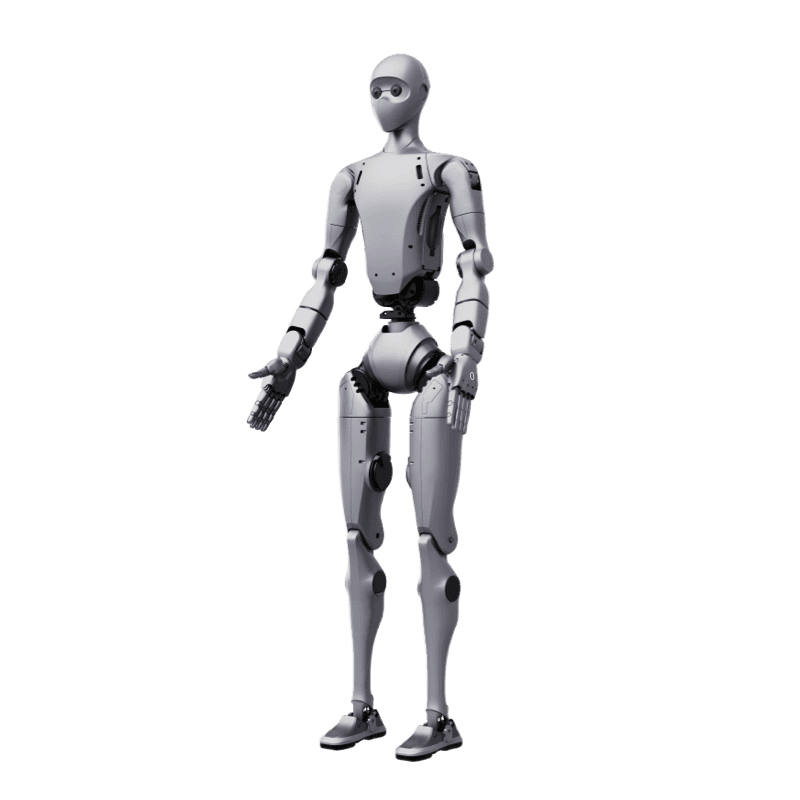
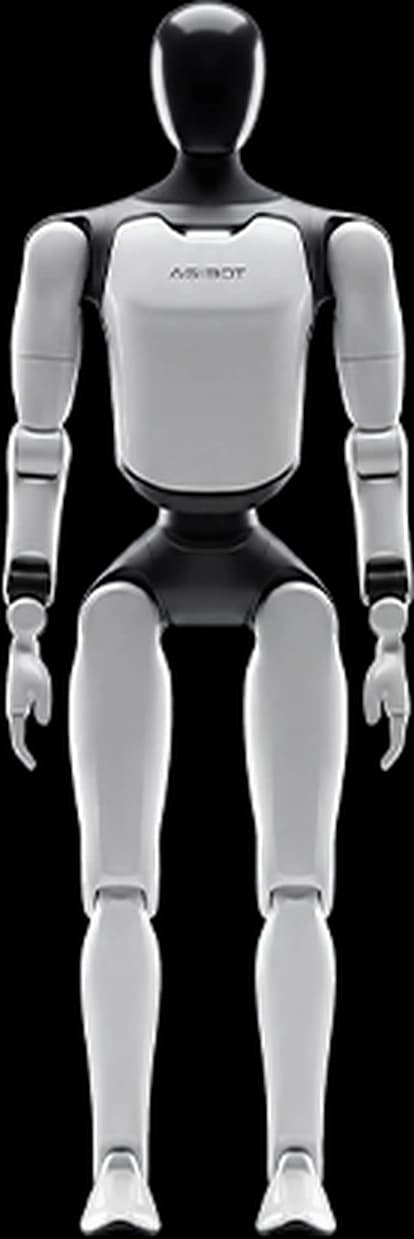
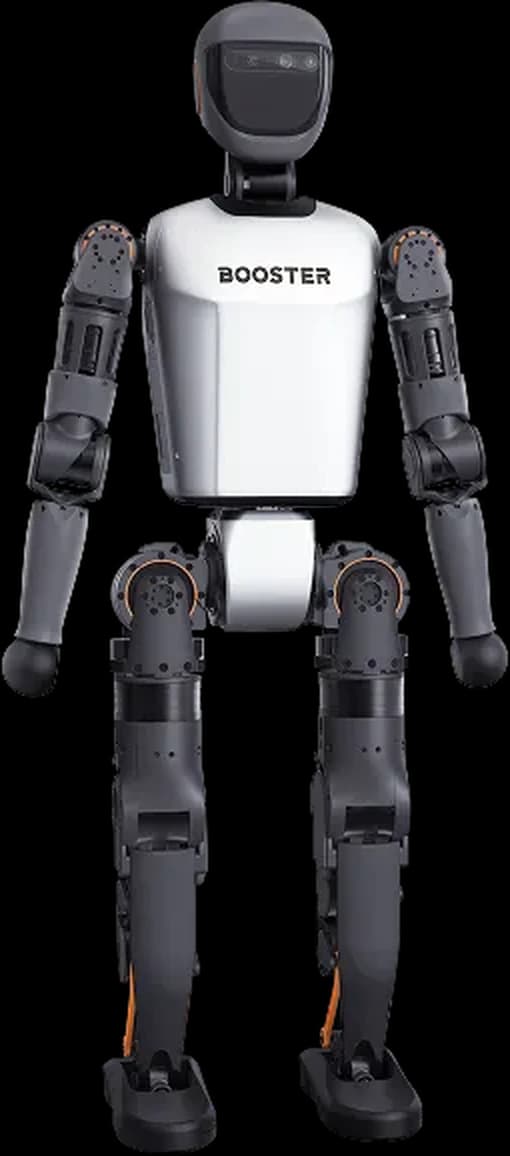
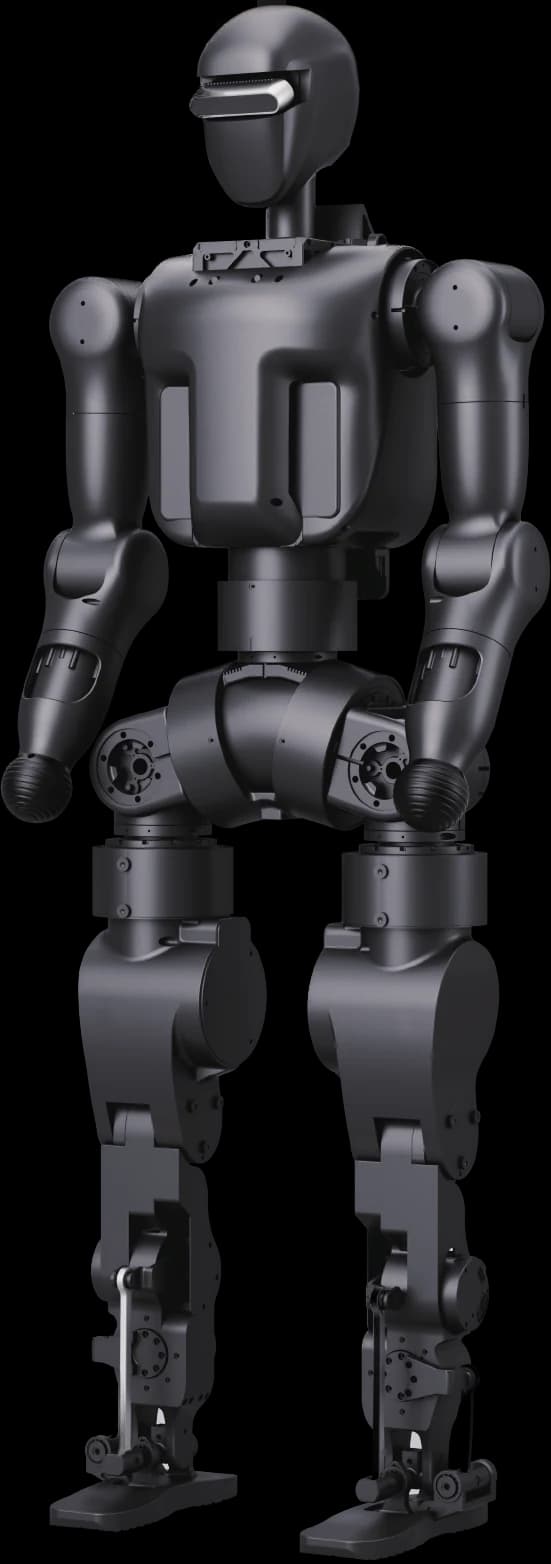
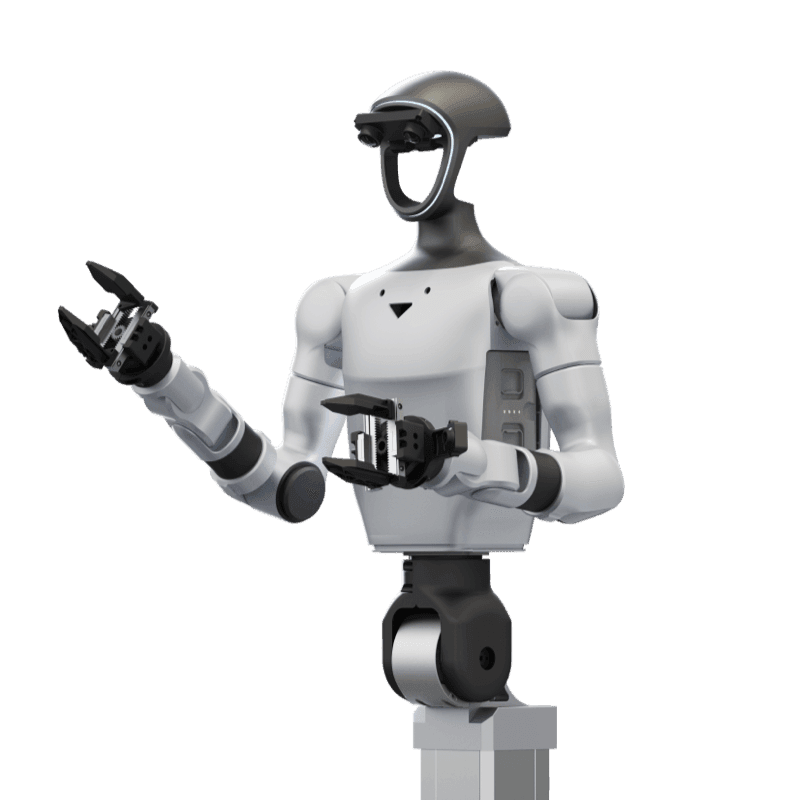
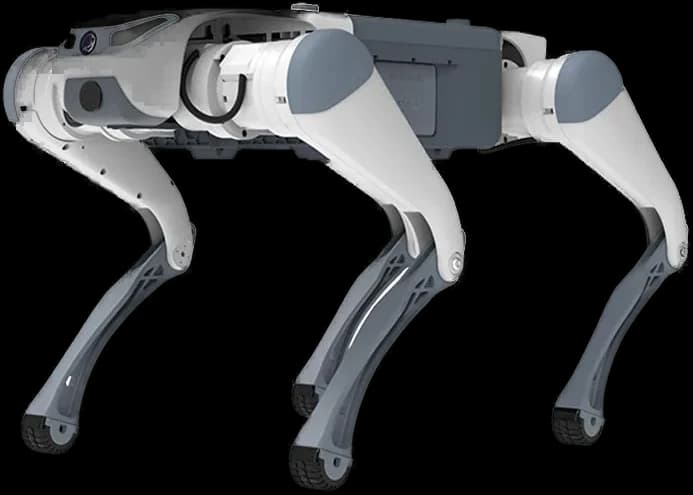
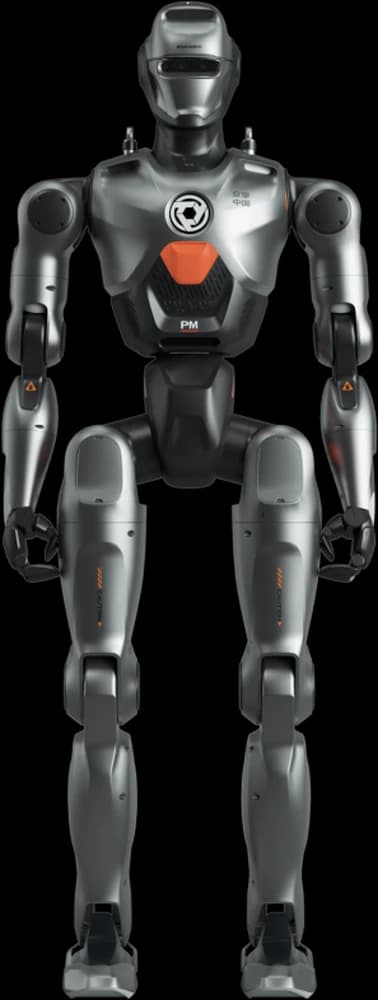
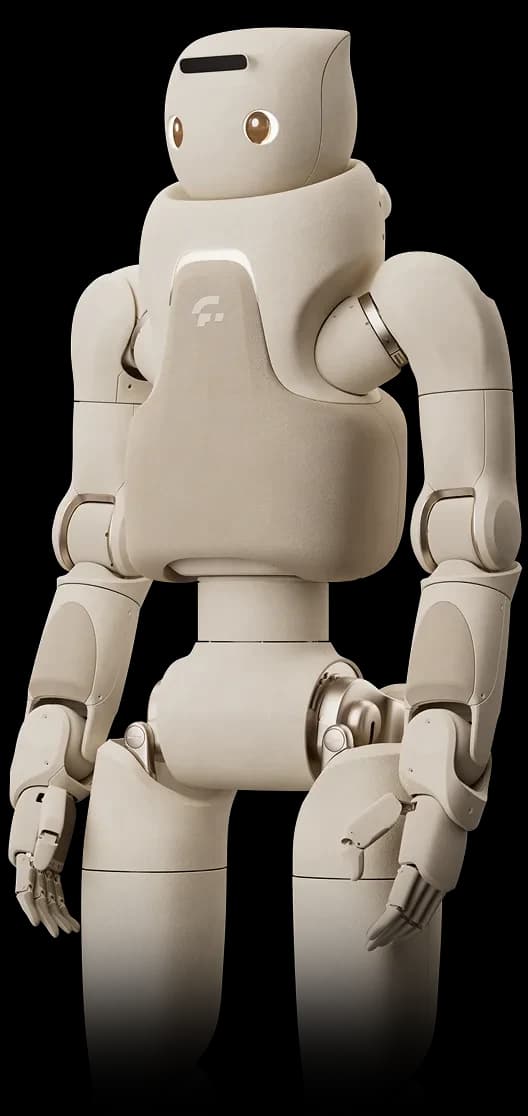
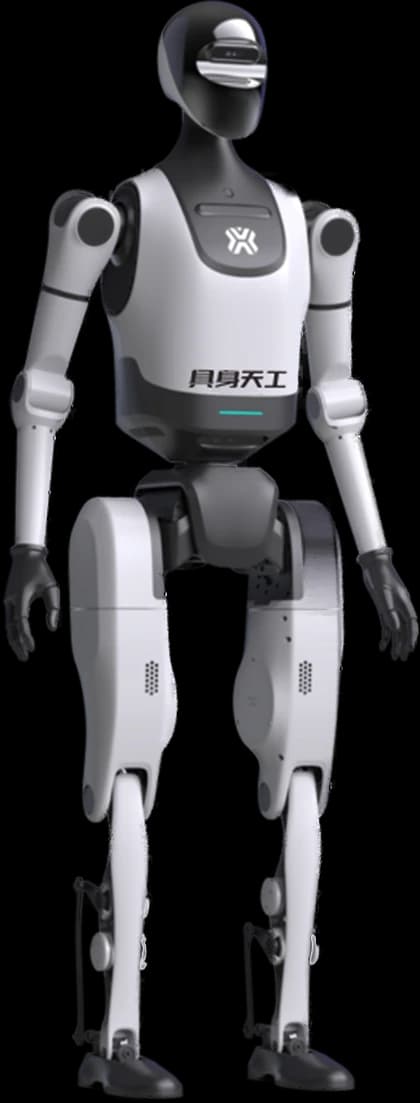
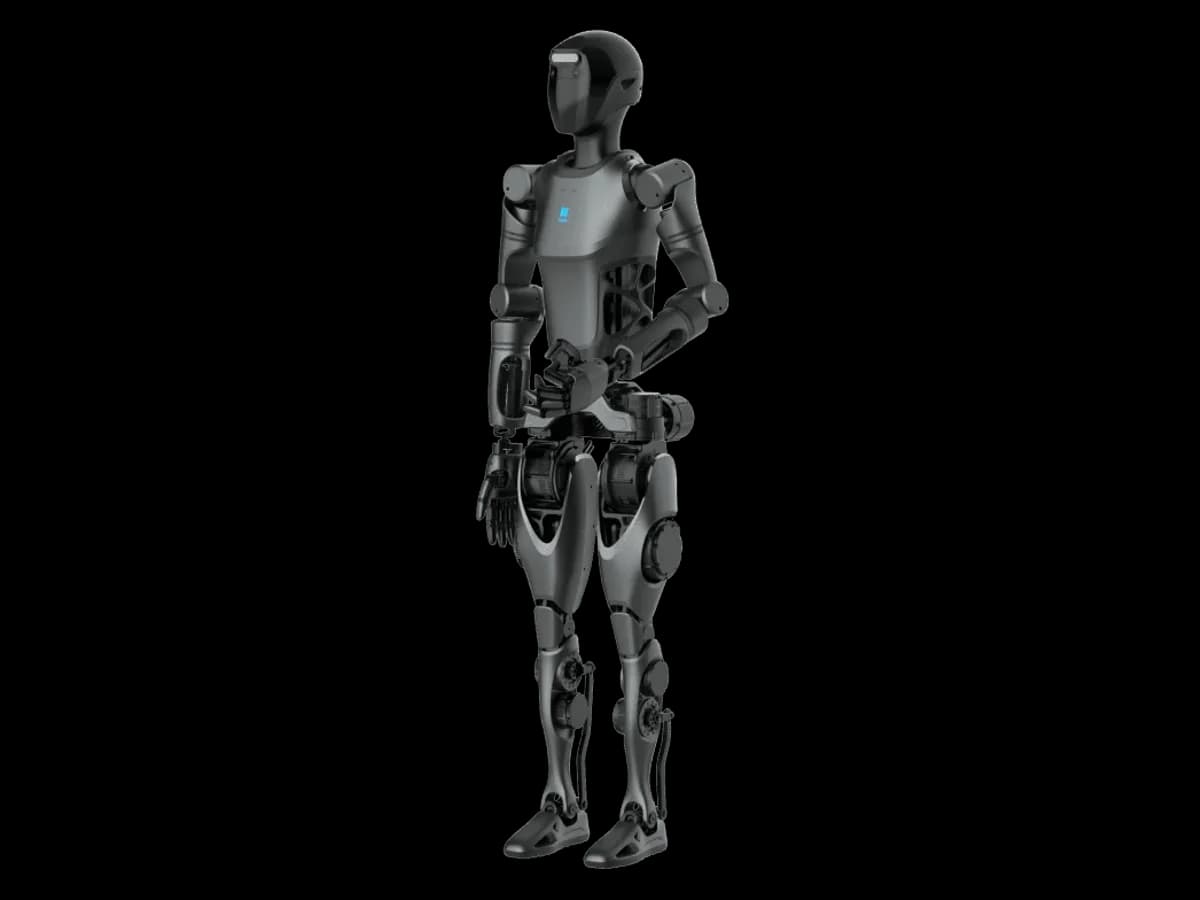
The Booster K1 is Booster Robotics' introductory embodied development platform. It stands 95 cm and weighs approximately 19.5 kg, light enough for one person to carry. It has 22 degrees of freedom in total: six per leg, four per arm and two in the head.
Read moreShow less
The joints produce 60 N·m of peak torque and carry dual encoders. Its three editions differ in compute: Geek at 48 TOPS, Education at 117 TOPS and Professional at 200 TOPS. Perception includes a stereo depth camera, a 9-axis IMU and a circular three-microphone array. The battery is 2 or 5 Ah by edition, giving 30 to 80 minutes at a 0.4 m/s walk. The Doubao large language model is bundled free for six months. The K1 is the model that took both the championship and the runner-up spot in the 2025 RoboCup Soccer KidSize category, and it is used together with Booster GYM 2.0.
Enterprise supply · specification support · integration engineering
1/8
Overview
The Booster K1 is Booster Robotics' introductory embodied development platform. It was launched at the Booster Ecosystem Summit in October 2025 and sits at the centre of the company's programme for the education market.
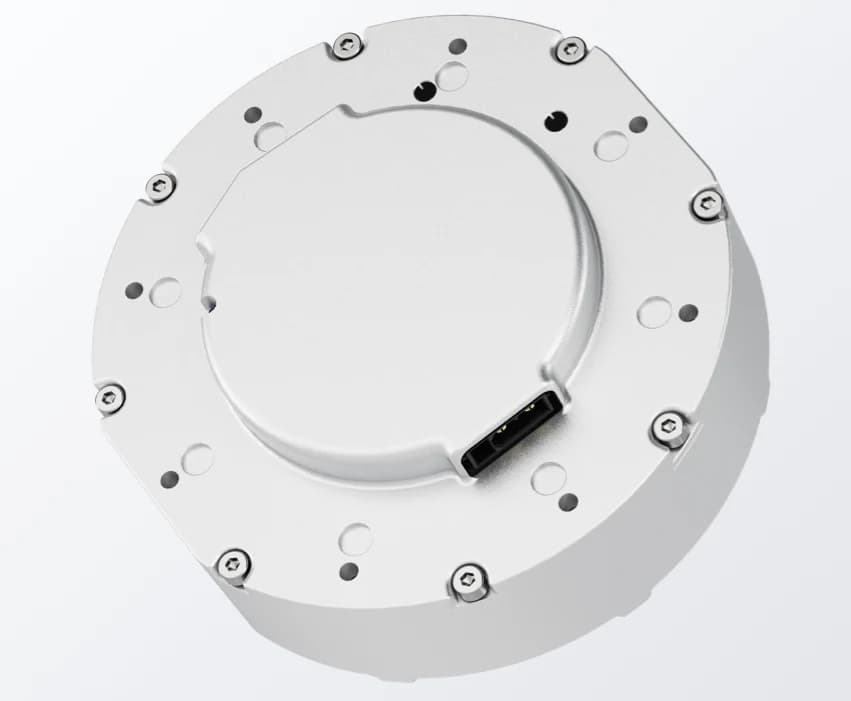
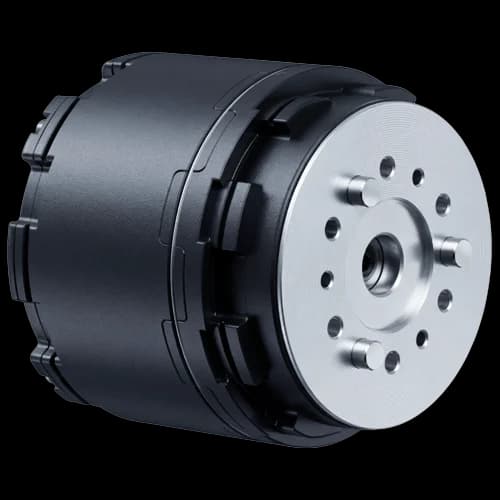
Mechanically: approximately 95 cm tall and 19.5 kg. There are 22 degrees of freedom in total: six per leg, four per arm and two head, with no waist joint. Joint ranges run hip pitch -171° to 126°, roll -22° to 89°, yaw ±59°; knee 0° to 127°; ankle pitch -50° to 20°, roll ±20°. Maximum peak torque is 60 N·m and every joint carries dual encoders.
The three editions differ in compute, battery and warranty. The Geek edition offers 48 TOPS, a 2 Ah battery and three months of warranty; the Education edition 117 TOPS, a 5 Ah battery and one year; the Professional edition 200 TOPS, a 5 Ah battery and one year. Runtime is 30 to 80 minutes at a 0.4 m/s walk.
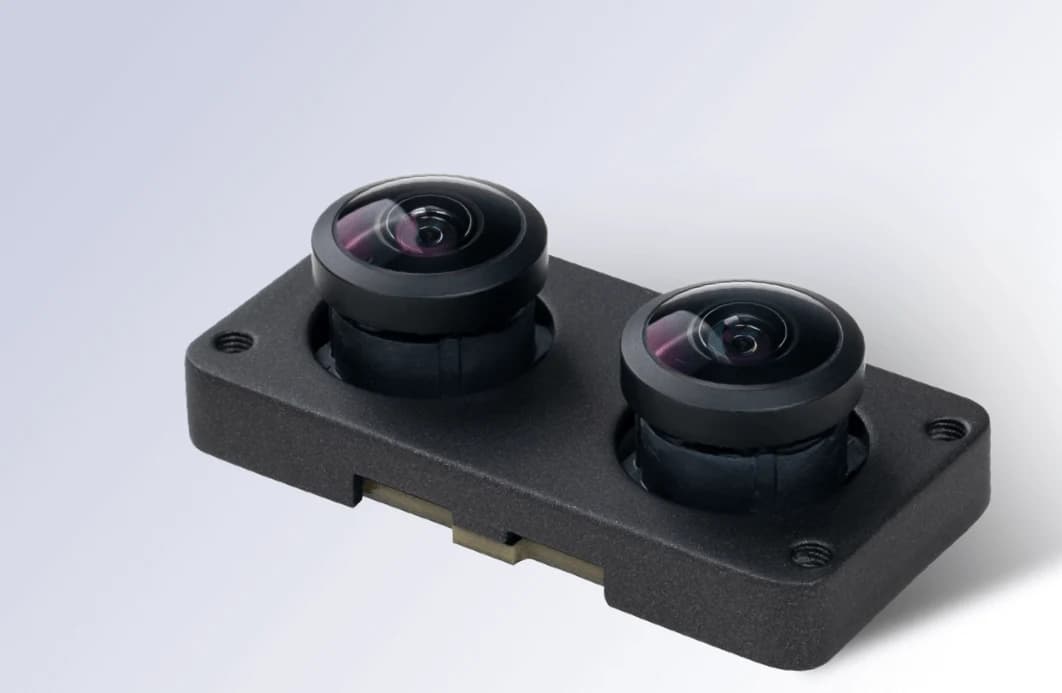
Perception includes a stereo depth camera, a 9-axis IMU and a circular three-microphone array with a speaker. There is one power button and three interaction buttons. Networking covers Wi-Fi (Geek) or Wi-Fi 6, Bluetooth 5.2 and Gigabit Ethernet. The Doubao large language model is bundled free for six months.
On the software side there is the Booster GYM 2.0 motion library, the open-source Booster SDK, deployment tools and developer documentation; secondary development and firmware upgrades are supported.
The K1 is the model that took both first and second place in the 2025 RoboCup Soccer KidSize category: Germany's HTWK team finished first and Tsinghua TH-MOS second. That same year it was the centre stage lead performer at the World Humanoid Robotics Games Federation.
For schools, universities and organizations with a K1 requirement we assess sourcing, timing and the alternatives deliverable today transparently.
All three editions share the same body, the same 22 degrees of freedom and the same 60 N·m peak torque. The difference is only compute, battery and warranty. The Geek edition's 2 Ah battery gives 30 minutes of runtime; the education and professional editions rise to 80 minutes with 5 Ah.
K1 Geek
The most economical entry at 48 TOPS and 2 Ah; for personal development and experimentation in short sessions.
K1 Education
117 TOPS and 5 Ah; 80 minutes of runtime for classroom lessons, workshops and school tournaments.
K1 Professional
The highest compute at 200 TOPS; for research teams running models on the robot itself.
Use Cases
The use cases the manufacturer defines for the Booster K1.
01Education and research
02Performance and events
Key Advantages
The Motion Library with Booster GYM 2.0
With 22 degrees of freedom and Booster GYM 2.0 together, the robot can produce motion at choreography level.
That serves a concrete purpose in education: the student works from an output they can see and reproduce rather than an abstract control problem.
The dance sequence in the video runs from a single motion library.
Stage Performance
The K1 was the centre stage lead performer at the 2025 World Humanoid Robotics Games Federation.
Stage use is a good measure of durability: the robot stays upright for hours, reproduces repeated movements without error, and has zero tolerance for falling in front of an audience.
Choreography on a Single Robot
Sixty newton-metres of peak torque is a high ratio for a 19.5 kg body.
It is the source of movements that require rapid weight transfer, turning and stopping.
A hip pitch range from -171° to 126° lets the leg swing forward and back through a wider angle than a human leg.
Education Edition: Classroom Use
With 117 TOPS of compute and a 5 Ah battery, 80 minutes of runtime covers more than one lesson period.
A 95 cm height and 19.5 kg weight mean a teacher can carry the robot between classrooms alone.
The circular three-microphone array and the Doubao large language model bundled free for six months make voice interaction possible without extra setup.
Professional Edition: 200 TOPS
The Professional edition raises compute to 200 TOPS.
The difference is clear: at 48 TOPS you can run pre-trained policies, while 200 TOPS is enough for vision-based inference and larger models on the robot itself.
Because the body, joints and torque are identical across the three editions, choosing an edition is purely a compute and battery decision.
Booster GYM: An Open Reinforcement Learning Environment
Booster GYM is the published reinforcement learning environment for training a policy in simulation and transferring it to a real robot.
It is offered open source alongside the Booster SDK, deployment tools and developer documentation.
The dual encoders on the joints are critical to that transfer: unmodelled joint backlash is one of the largest sim-to-real error sources, and dual encoders make it measurable.
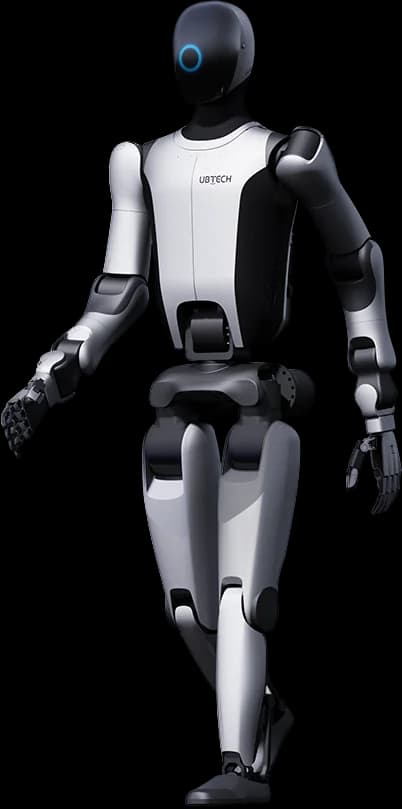
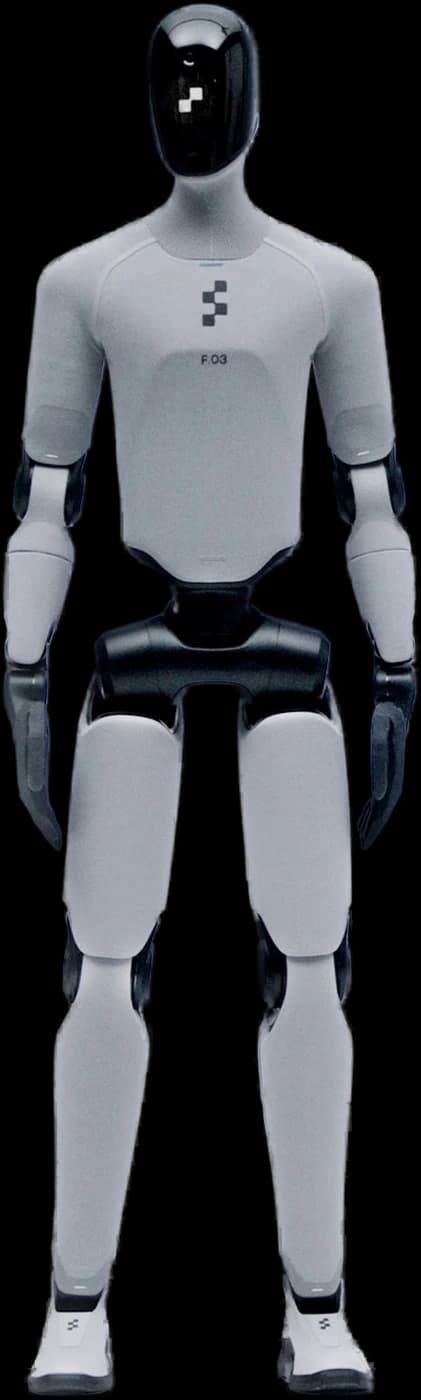
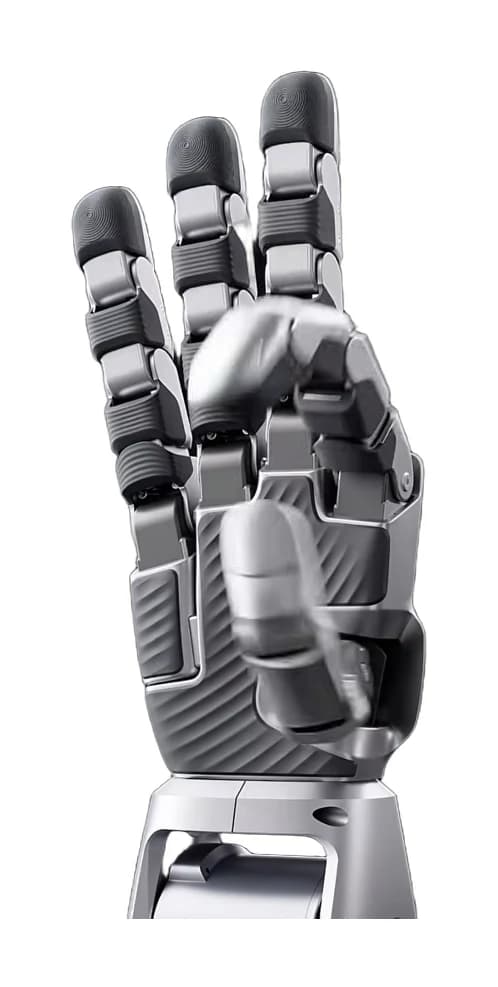
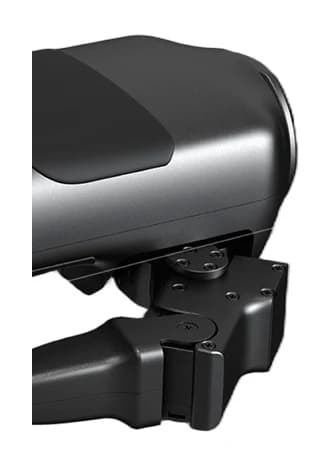
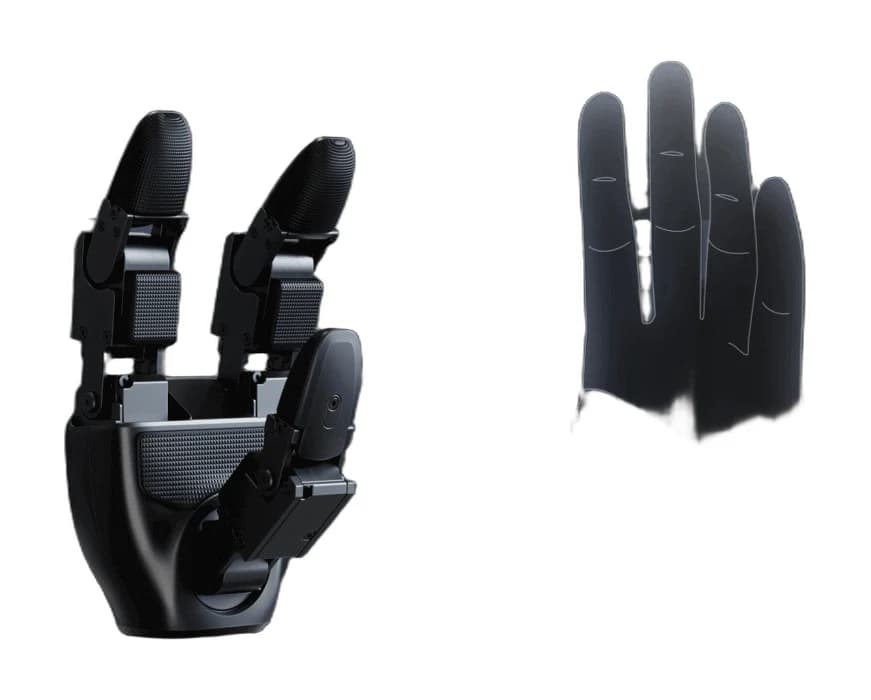
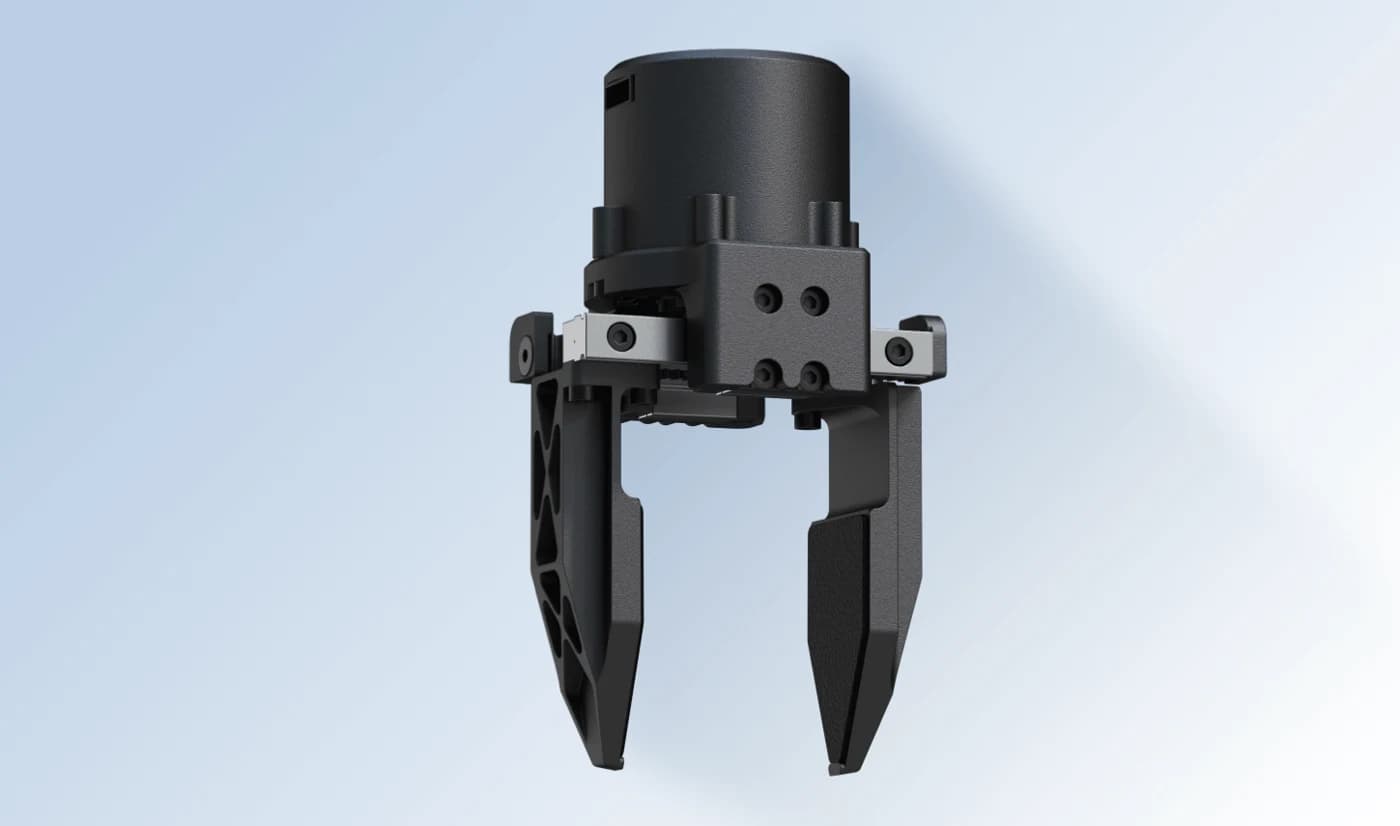
The Booster K1 up close
4 images; tap to enlarge.
Technical Specifications
30 values in 7 categories; data published by the manufacturer.
Size and weight
Dimensions (standing)
Approximately 95 cm tall
Weight
19.5 kg
Motion and performance
Maximum speed
1.1 m/s (turning 1.5 rad/s)
Joint torque
60 N·m peak torque
Joint range of motion
Head: yaw ±59°, pitch -19° to 49°; Shoulder: pitch -169° to 69°, roll ±94°, yaw ±109°; Elbow: -129° to 39°; Hip: pitch -170° to 128°, roll -22° to 89°, yaw ±59°; Knee: 0° to 133°; Ankle: up joint -17° to 38°, down joint -16° to 41° (left-side values, right side mirrored)
Power and runtime
Battery
2 Ah (Geek) or 5 Ah (Education and Professional)
Runtime
30 minutes (Geek) / 80 minutes (Education and Professional); measured at a 0.4 m/s walk
Charging time
≤2 hours
General structure
Mobility form
Bipedal humanoid; walking, dance and football; the Booster GYM 2.0 motion library
Degrees of freedom
22 DoF
Arm DoF
4 DoF
Leg DoF
6 DoF
Neck DoF
2 DoF
Torque density
Maximum peak torque 60 N·m; dual-encoder joint design
Materials
A lightweight 19.5 kg body; the competition model that finished first and second in the 2025 RoboCup KidSize category
Manufacturer note
Turning speed 1.5 rad/s; charging time 2 hours or less; battery cycle life over 500 cycles; walking noise below 70 dB; RGB LED indicator ×1. Joint motion space: hip P -171 to 126, R -22 to 89, Y +-59, knee 0 to 127, ankle P -50 to 20 and R +-20 degrees. The manufacturer document declares CE/FCC product certification.
DoF layout
Twenty-two degrees of freedom in total: six per leg, four per arm and two head. There is no waist joint
Joint module
Maximum peak torque 60 N·m; dual encoders on every joint
Joint range
Hip pitch -171° to 126°, roll -22° to 89°, yaw ±59°; knee 0° to 127°; ankle pitch -50° to 20°, roll ±20°
Battery system
A 2 Ah or 5 Ah battery; 30 to 80 minutes at a 0.4 m/s walk
Structure and materials
95 cm tall at approximately 19.5 kg; can be carried by one person
Size and weight
Dimensions (standing)
Approximately 95 cm tall
Weight
19.5 kg
Motion and performance
Maximum speed
1.1 m/s (turning 1.5 rad/s)
Joint torque
60 N·m peak torque
Joint range of motion
Head: yaw ±59°, pitch -19° to 49°; Shoulder: pitch -169° to 69°, roll ±94°, yaw ±109°; Elbow: -129° to 39°; Hip: pitch -170° to 128°, roll -22° to 89°, yaw ±59°; Knee: 0° to 133°; Ankle: up joint -17° to 38°, down joint -16° to 41° (left-side values, right side mirrored)
Power and runtime
Battery
2 Ah (Geek) or 5 Ah (Education and Professional)
Runtime
30 minutes (Geek) / 80 minutes (Education and Professional); measured at a 0.4 m/s walk
Charging time
≤2 hours
Sensors and connectivity
Sensors
Stereo depth camera; 9-axis IMU
Connectivity
Wi-Fi (Geek) or Wi-Fi 6 (Education and Professional); Bluetooth 5.2; a Gigabit Ethernet expansion port
Interaction
Circular three-microphone array and speaker; one power and three interaction buttons; the Doubao large language model free for six months
Joint encoder
Dual encoder
Software and development
Processor
48 TOPS (Dense), 117 TOPS or 200 TOPS of AI performance by edition
Software features
The Booster GYM 2.0 motion library; secondary development and firmware upgrades are supported
Environmental resilience
Operating temperature
-10 to 45 °C; operating humidity 5-90 percent, non-condensing
Certifications
CE/FCC (manufacturer statement)
Manufacturer warranty
Manufacturer warranty: Geek 3 months, Education 1 year, Professional 1 year
Sources and documents
Verified on the manufacturer page on 18 September 2026.
Technical Analysis of Edition Choice in an Education RobotDesign decisions, comparison table and evaluation
Why 95 cm and 19.5 kg
These dimensions come from the RoboCup KidSize rule set. The education payoff is direct: at 19.5 kg a teacher can carry the robot between classrooms alone, and 95 cm is a band that requires floor rather than desk work while raising no ceiling-height issue. For comparison, the same manufacturer's T1 is 118 cm and 30 kg; that body can be carried by one person but is not practical to move between classrooms. Weight also sets the fall risk: when a 19.5 kg robot tips over, neither it nor its surroundings take serious damage, which is what allows unsupervised student use.
The Real Difference Between the Three Editions
The mechanical base is identical on all three: 22 degrees of freedom, 60 N·m peak torque, the same joint ranges, the same stereo depth camera and 9-axis IMU. The difference gathers in two places. First compute: 48, 117 and 200 TOPS. Forty-eight TOPS is enough to run a pre-trained walking policy but is tight for vision-based inference on the robot. Second the battery: the Geek edition's 2 Ah pack gives 30 minutes while the others reach 80 minutes on 5 Ah. Since a lesson period runs about 40 minutes, the Geek edition means going to charge mid-lesson in classroom use, which may matter more than compute when choosing an edition.
What the Absence of a Waist Joint Means
The K1's 22 degrees of freedom break down as six per leg, four per arm and two head; there is no waist joint. The same manufacturer's T1 has one waist joint. No waist joint means the torso cannot rotate independently of the feet: the robot has to step in order to look at or reach an object beside it. For walking and football that is no loss and in fact simplifies the control problem. For manipulation work it is limiting, and four joints per arm is already narrow for fine grasping. The K1 is deliberately a locomotion and interaction platform, not a manipulation platform.
K1 Versus Education-Class Humanoids
Feature
Booster K1
Booster T1
Unitree G1
Height
95 cm
118 cm
132 cm
Weight
Approximately 19.5 kg
Approximately 30 kg
35 kg
Degrees of freedom
22 (no waist)
23-41
23 (EDU: 43)
Peak joint torque
60 N·m
130 N·m
Published per joint
Compute
48 / 117 / 200 TOPS
200 TOPS
Jetson Orin
Runtime
30-80 minutes
2 h walking
Approximately 2 hours
RoboCup category
KidSize champion
AdultSize champion
Not a competition model
Engineering Assessment
The K1 is a body designed around the constraints of the education scenario, and it solves them well. At 19.5 kg it can be carried by one person, fall damage is low, 60 N·m of peak torque is enough for dynamic movement like dance and football, and three compute tiers leave room to choose by budget. Booster GYM and the open SDK let a student train their own policy and run it on a real body; both first and second place in the 2025 RoboCup KidSize coming off this platform is the field validation. The limits are part of the design: there is no waist joint and only four joints per arm, so it is not suited to manipulation work. The Geek edition's 30 minutes of runtime is short for classroom use, and school projects should prefer the 5 Ah editions.
Purchasing support
Supply model
Supply to Turkey is planned per project; import, delivery and commissioning scope are itemised in the quote.
Pre-sales assessment
Site and mission focused technical feasibility; specification and administrative process support.
Robotic system costs are optimised according to the selected hardware platform, additional sensor and payload configurations, and the integration scenarios specific to your site. Share your requirements and our engineering team will prepare a feasibility report and a pro forma quotation tailored to your organisation.
Supply and delivery scheduling backed directly by the manufacturer
Site- and mission-focused technical feasibility and simulation
Turnkey hardware, software and mission integration
Advisory on corporate tenders, specifications and administrative processes
Sourcing, delivery schedule and investment for the K1 are settled per project. If you have a school, university or corporate requirement you can talk to Robotlar.org: we assess the sourcing process, a realistic timeline and the alternatives deliverable today.
What are the Booster K1's specifications?
Approximately 95 cm tall and 19.5 kg. Twenty-two degrees of freedom in total: six per leg, four per arm and two head, with no waist joint. Joint ranges run hip pitch -171° to 126°, knee 0-127° and ankle pitch -50° to 20°. Maximum peak torque is 60 N·m with dual encoders on the joints. Compute is 48, 117 or 200 TOPS by edition. Perception covers a stereo depth camera, a 9-axis IMU and a circular three-microphone array. The battery is 2 or 5 Ah, giving 30 to 80 minutes at a 0.4 m/s walk. Wi-Fi, Bluetooth 5.2 and Gigabit Ethernet.
Which edition should a school choose?
For classroom use the Education or Professional edition is the sensible choice. The reason is battery rather than compute: the Geek edition's 2 Ah pack gives 30 minutes at a 0.4 m/s walk, meaning a charge stop mid-lesson. The Education and Professional editions reach 80 minutes on 5 Ah and extend the warranty from three months to one year. The compute difference matters if you will run vision-based models on the robot: 48 TOPS suffices for pre-trained policies, 200 TOPS for running your own model.
How do you choose between the K1 and the T1?
If the work is walking, dance, football and interaction, the K1 is sufficient and easier to manage: 19.5 kg, carried by one person, low fall damage. If the work involves manipulation, the T1 is needed: a 118 cm body, 130 N·m peak torque, a waist joint and an arm and hand layout reaching up to 41 degrees of freedom by configuration. Both are RoboCup champion models, the K1 in KidSize and the T1 in AdultSize.
Is there an education robot alternative deliverable today?
Yes. The Unitree G1 (132 cm, 35 kg, Jetson Orin) can be ordered in Turkey today, with 4-6 week delivery, a 1-year official warranty, on-site commissioning and engineering support across Turkey. The G1 EDU edition reaches up to 43 degrees of freedom and is widely used in university research. The G1 is larger and heavier than the K1, which is worth factoring in if portability between classrooms is your priority.