PRICE
Project quote
Configuration, delivery schedule and investment figure are set by project scope. From your specification we prepare the supply plan from the manufacturer line and the integration scope.
Enterprise supply · specification support · integration engineering
Overview
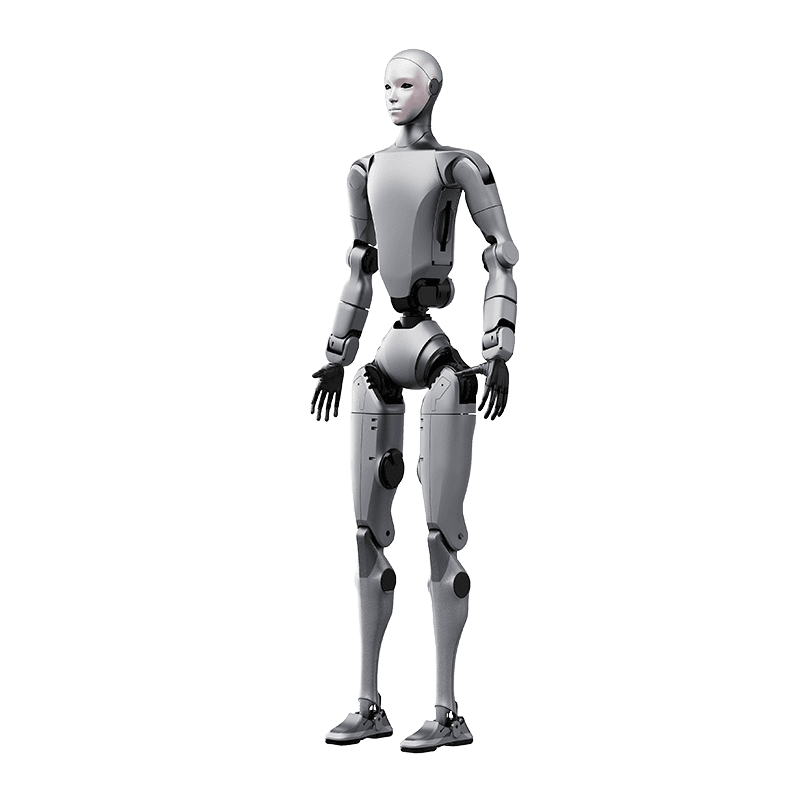
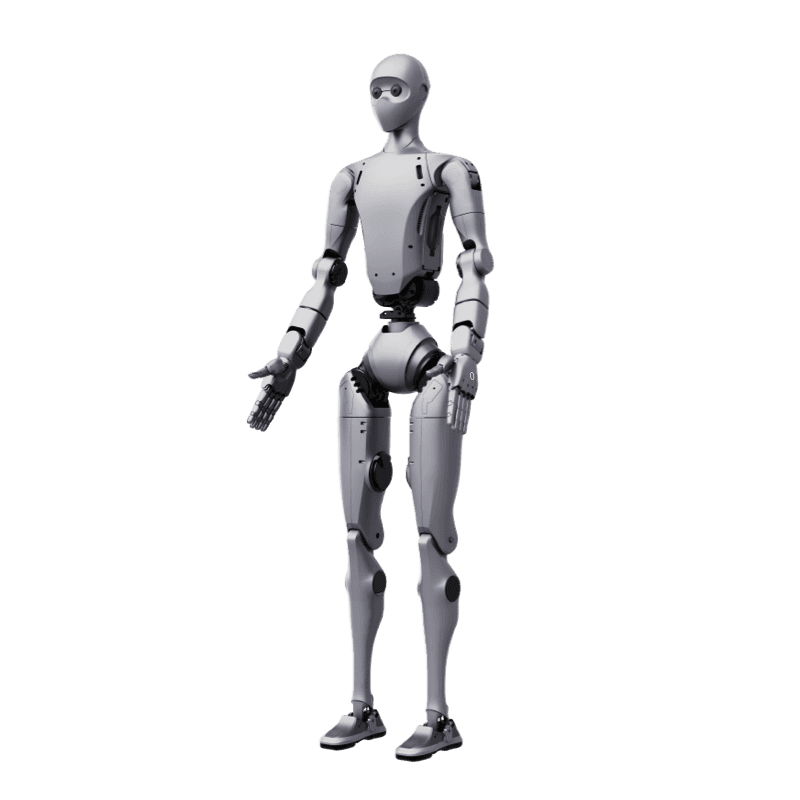
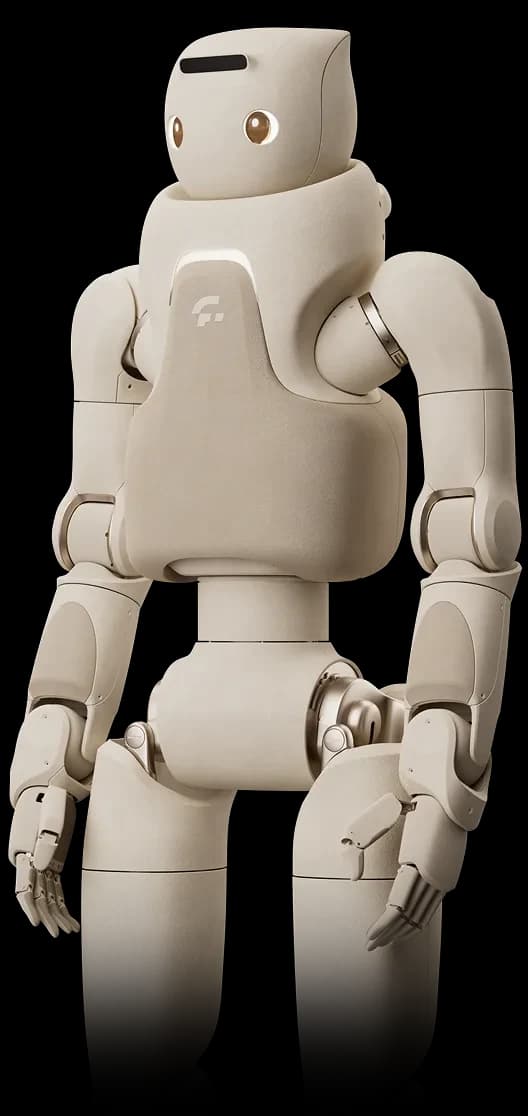
The PrimeBOT Q1 is a compact humanoid robot the Chinese company PrimeBOT designed for developers, educators and technology enthusiasts. We supply PrimeBOT platforms to corporate projects in Turkey through enterprise supply, commissioning and technical integration. Configuration, delivery terms and investment are set by corporate quotation.
The manufacturer publishes two numbers: 88 cm of height and 22 degrees of freedom. The robot is presented as the world's smallest full-body force-controlled humanoid. High-torque QDD actuation is used at the joints in a small body, and more than ten martial arts movements are said to be supported as a result.
Force control is the real technical claim here. A force-controlled joint reacts to the force it meets rather than tracking a position command; the robot does not push when it hits an obstacle or when someone holds it. Doing that in a small, light body is hard, because it requires joints with high torque density.
The Q1 is presented not as a sealed consumer product but as a platform to work on. The SDK and HDK are fully open; users can swap the outer shell with 3D-printed parts and program the voice, personality and behaviours. The body is designed to fit inside a backpack, which makes moving between a lab and a classroom easy.
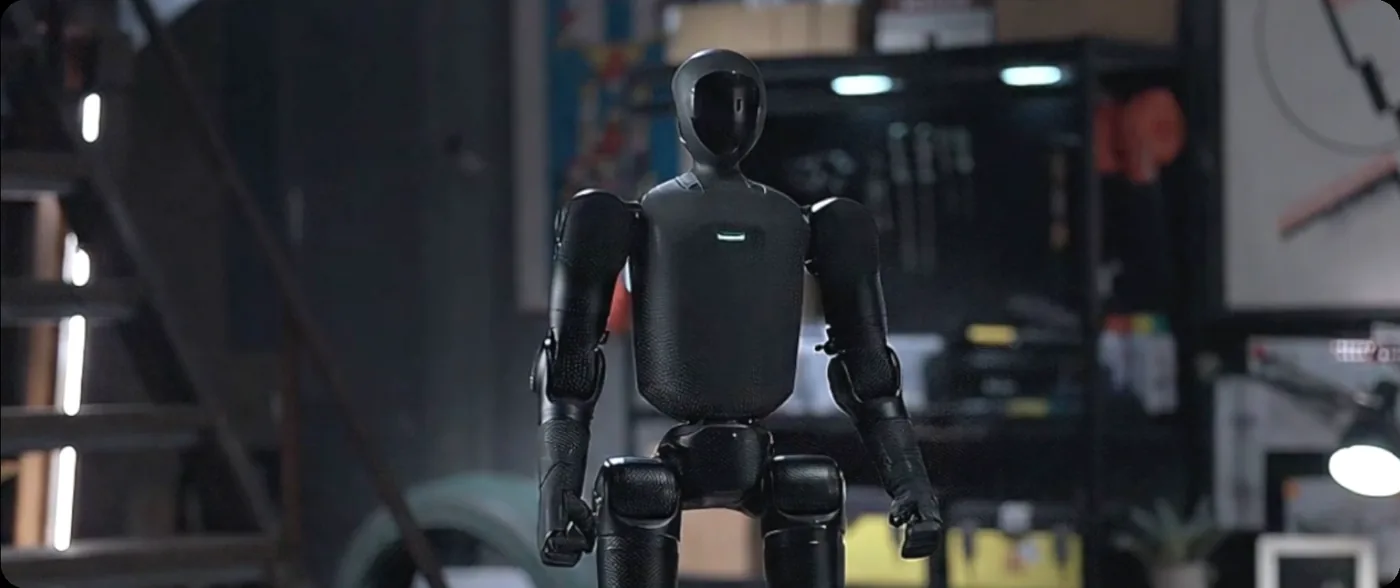
An emotion computing engine runs on the robot, and interaction is framed through voice, gesture, contextual awareness and long-term memory. The three defined scenarios are an embodied intelligence creation platform, an experimental platform for research, and an intelligent companion in everyday life.
Because the Booster K1 in the same class publishes all of them, the comparison stays one-sided.
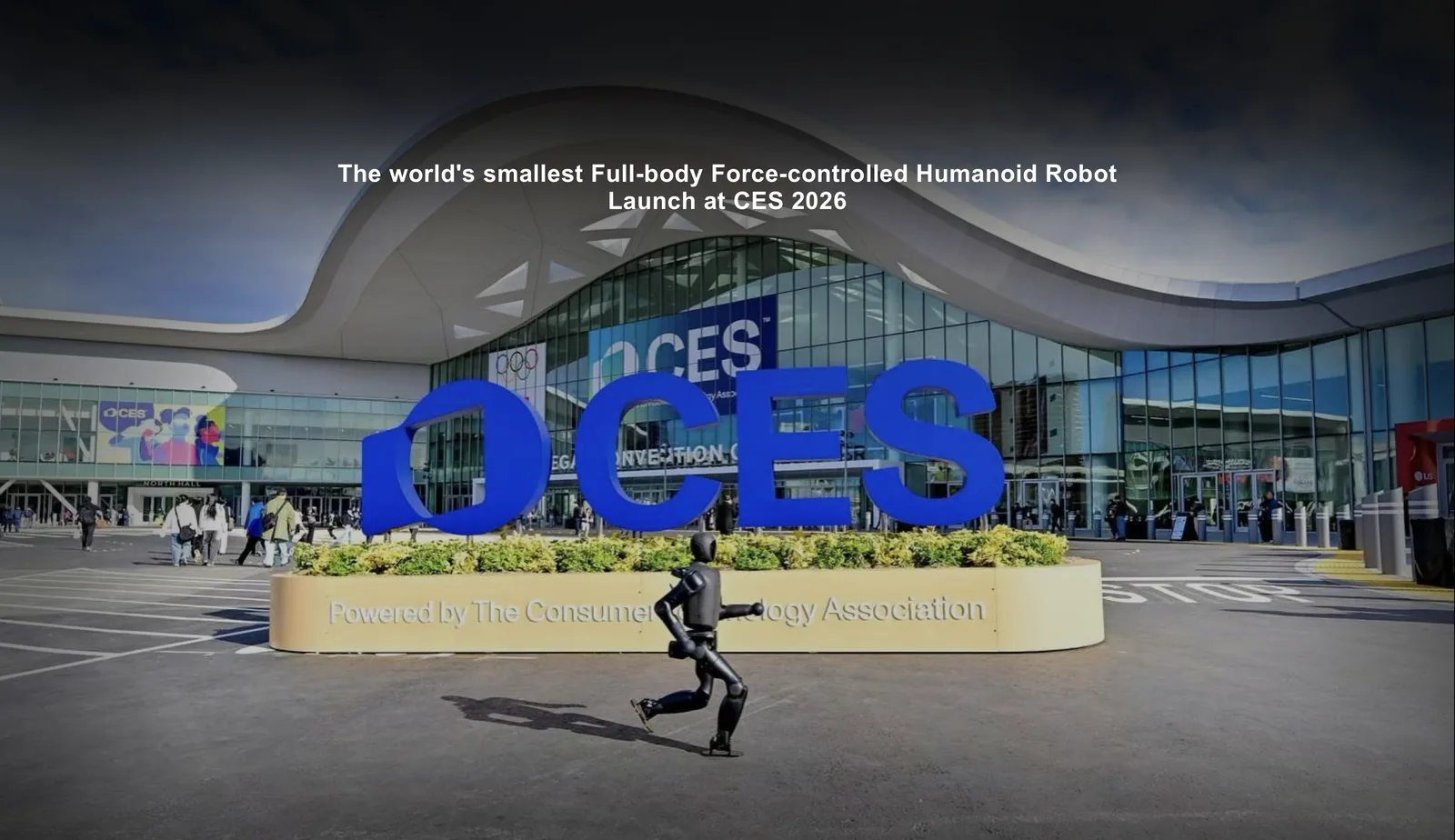
The Q1 was introduced at CES in January 2026 and collected five awards. In the same period PrimeBOT also announced the PrimeBOT T1, which switches between humanoid and quadrupedal modes; that model does not appear on the manufacturer's product page. For organizations needing a compact humanoid today we assess the orderable options.
A Body That Goes in a Backpack
The video shows the robot folded and placed into a backpack. That is the design decision the manufacturer foregrounds: the 88 cm body is kept small enough to carry. For a research platform that has to move between a lab and a classroom, this is a practical difference from full-size humanoids that need a fixed setup.
Close-Up and the Face Display
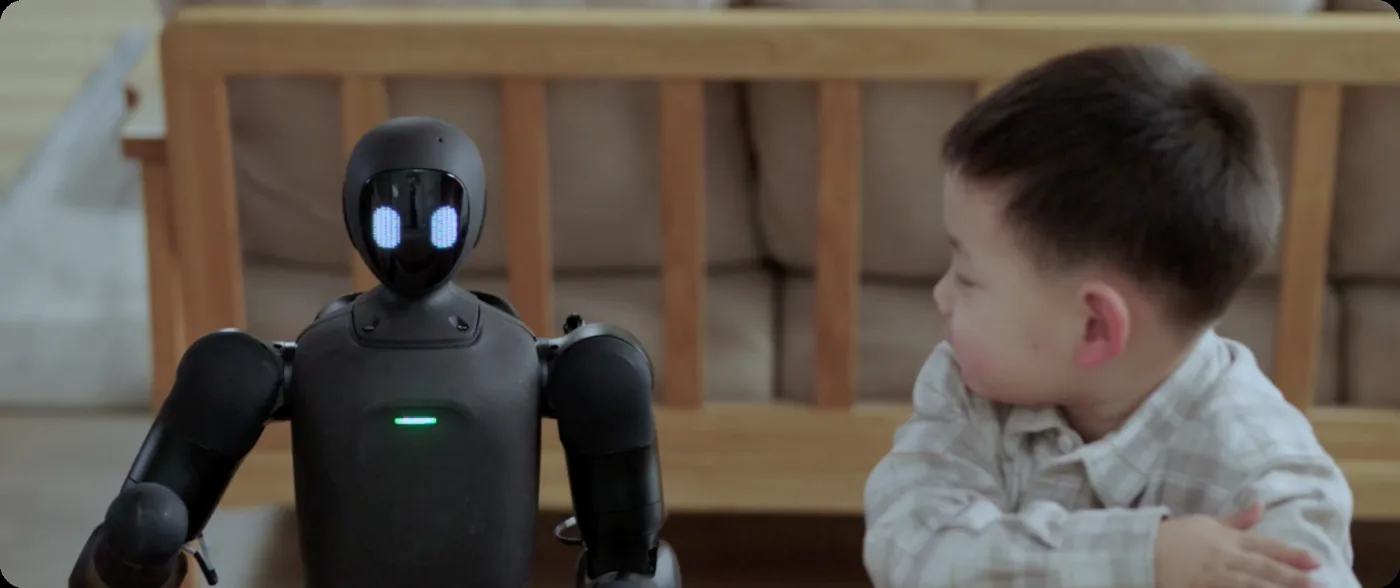
The head carries a dot-matrix face display through which the robot conveys expressions. The manufacturer frames interaction around voice, gesture, contextual awareness and long-term memory, stating that the robot remembers previous conversations and initiates interaction based on context.
Force Control and the QDD Joint
The manufacturer's technical claim is the use of a high-torque QDD joint in a small body. Force control means a joint responds to the force it meets rather than blindly following a position command: the robot does not stiffen when it hits something or is held. That is what matters for extreme movements and for close-range contact with people.

Open SDK and HDK
The Q1 is presented not as a sealed consumer product but as a platform to work on. The SDK is open on the software side and the HDK on the hardware side; the outer shell can be swapped with 3D-printed parts, and voice, personality and behaviours can be programmed. that structural parts can also be replaced.
Three Use Scenarios
Three scenarios are defined: a creation platform for enthusiasts building embodied intelligence, an experimental platform on the research path, and an intelligent companion in everyday life. None of them is industrial work; the robot is not positioned for a production line or a facility duty. No payload is published either.
The CES 2026 Launch
The Q1 was introduced at CES in January 2026 and left the show with five awards: Android Headlines Best of CES 2026, the Suqin Smart Living Showcase Best of CES, the 2026 TWICE Picks Awards, the SPEED Award for Outstanding Engineering and HomeCrux Best Home and Outdoor Innovations. Awards show interest rather than measured performance.
Q1; Live Demonstration
Technical Analysis of a Compact Developer Humanoid
Its Class: Not Desktop, Knee-High
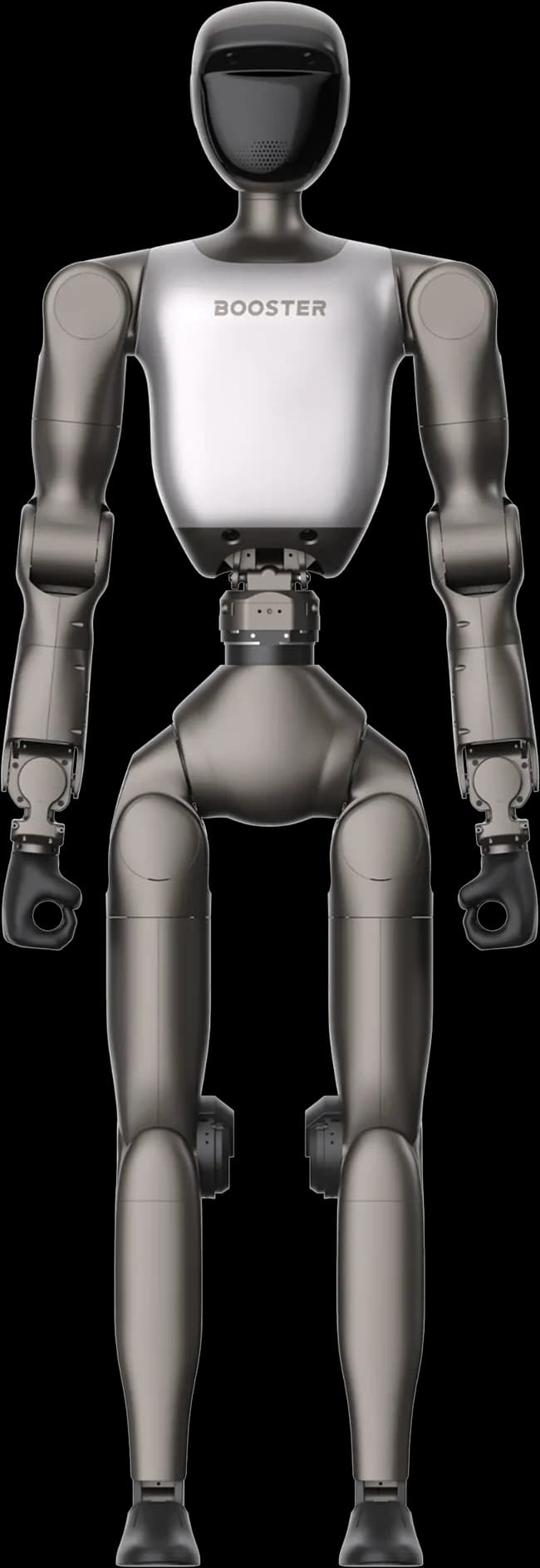
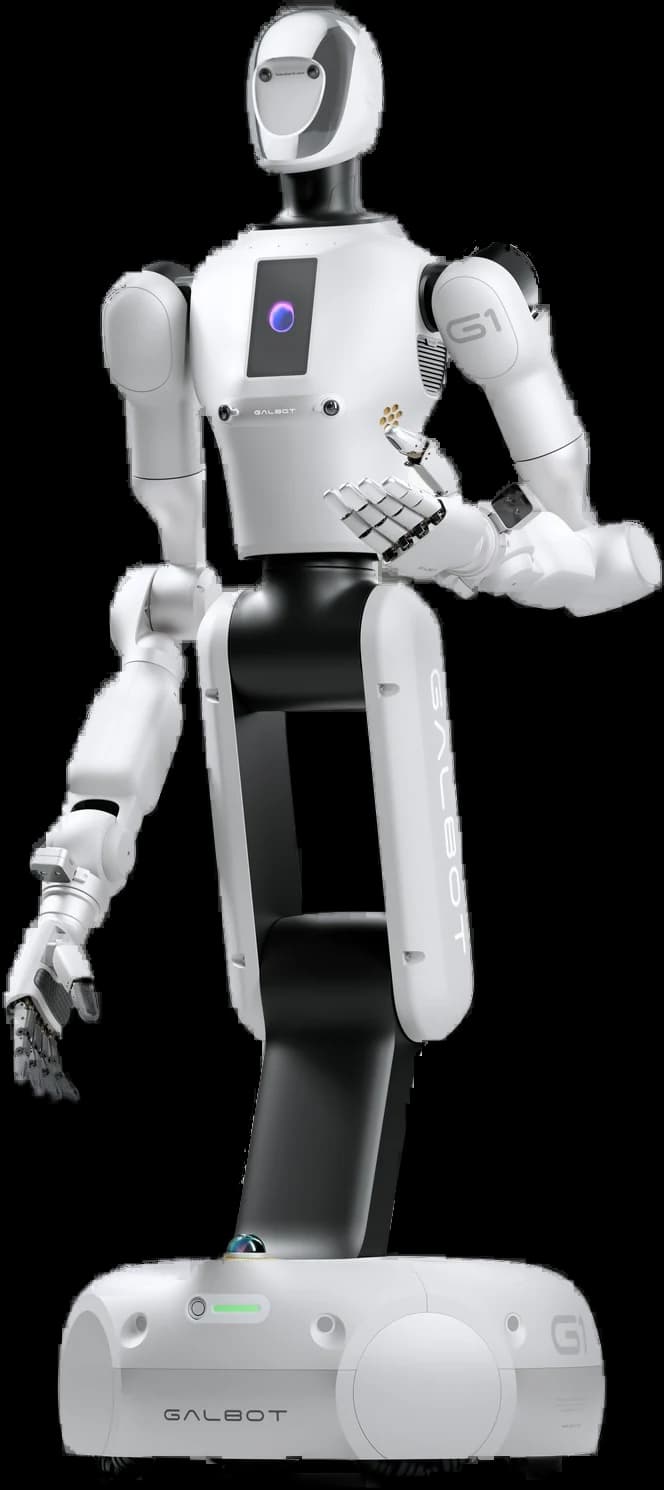
At 88 cm the Q1 sits in a meaningful size class. The closest comparable model in the same frame is the Booster K1: roughly 95 cm and, again, 22 degrees of freedom. The Unitree G1 is a step above at 132 cm and 23 degrees of freedom. What distinguishes the Q1 is not its height but its positioning: the K1 and G1 are sold as research and development platforms, while the Q1 is presented as a consumer-grade personal robot, and the 3D-printable outer shell follows from that choice.
Why Force Control Is Foregrounded
The manufacturer's headline claim is to be the world's smallest full-body force-controlled humanoid. Force control means a joint reacts to the force it encounters rather than tracking a position command; doing that in a small, light body is hard because it requires joints with high torque density, which is why the manufacturer foregrounds QDD actuation. It shows up in two places in practice: extreme movements such as martial arts sequences, and safe contact with people at close range.
The Second Model: T1
Alongside the Q1, PrimeBOT also announced the PrimeBOT T1: a robot that switches between humanoid and quadrupedal modes. intelligent following, autonomous filming and more than fifteen professional camera-movement templates, describing a wheeled humanoid form indoors and a quadruped form that handles stairs and inclines outdoors. No numeric technical data has been published for the T1 either, and the model does not appear on the manufacturer's own product page, only in press announcements. No separate record has been opened for it here.
The Q1 Against Compact Humanoids in the Same Class
| Feature | PrimeBOT Q1 | Booster K1 | Unitree G1 |
|---|---|---|---|
| Height | 88 cm | Approximately 95 cm | 132 cm |
| Weight | - | 19.5 kg | 35 kg |
| Degrees of freedom | 22 | 22 | 23 (up to 43 on the EDU) |
| Runtime | - | 30 to 80 minutes | Approximately 2 hours |
| Speed | - | 0.4 m/s | 2 m/s |
| Compute | Embedded AI chip | 48 to 200 TOPS | Jetson Orin, 100 to 157 TOPS |
| Sourcing in Turkey | Enterprise supply | Sourcing enquiry | Orderable |
Engineering Assessment
The idea behind the Q1 is sound: bring force control down into a small, portable body and put a fully open SDK and HDK on top of it. That combination is genuinely rare for education and embodied intelligence research, since most robots of this height are either position-controlled or closed products. The replaceable outer shell is a useful idea in a classroom too. Against that, the manufacturer has published two numbers, and usability of a platform in research is planned with weight, runtime, joint torque and compute. The Booster K1 in the same class publishes all of them. As it stands the Q1 is an interesting design decision rather than a measurable platform, and it deserves reassessment as technical data is released.
Details & Performance Parameters.
Physical Architecture
Dynamic Performance
Energy & Protection
Computing & Intelligence
An embedded AI system on chip with an on-device emotion computing engine. No compute figure is published
Multimodal interaction spanning voice, gesture, contextual awareness and long-term memory.
Mechanical Components
Twenty-two degrees of freedom in total. Torque figures or ranges of motion.
A compact 88 cm body; designed to fit inside a backpack
A QDD (quasi-direct drive) joint delivering high torque in a small body; what makes extreme movements possible
Hardware & Materials
A replaceable outer shell; users can change the appearance and structural parts with 3D-printed components
The New Intelligence of Operation.
Start your Q1 project with our experts now.
Get a Q1 Quote
There is no single list price; the investment depends on configuration and use case. Fill in the form and we will return with a clear, tailored quote.
- Supply plan and delivery schedule from the manufacturer line
- Technical feasibility against your project requirements
- Integration scope and engineering support
- Specification and documentation support for corporate procurement
Prefer to talk now: 0850 532 6 777
About the PrimeBOT Q1
Q1 Frequently Asked Questions
The most commonly asked questions and answers about Q1.
We deliver PrimeBOT hardware to corporate projects through enterprise supply, commissioning and engineering support. Investment is set by corporate quotation against configuration, quantity and delivery terms. If you have a corporate requirement we can assess the sourcing route, delivery terms and a realistic timeline together. If you are looking for a compact humanoid deliverable today, the Unitree G1 can be ordered in Turkey.
The manufacturer publishes two numbers: 88 cm of height and 22 degrees of freedom. High-torque QDD actuation is used at the joints, full-body force control is described, and more than ten martial arts movements are supported. An emotion computing engine runs on an embedded AI chip, and interaction is framed through voice, gesture, contextual awareness and long-term memory. The SDK and HDK are open and the outer shell can be swapped with 3D-printed parts.
A force-controlled joint reacts to the force it meets instead of blindly tracking a position command. In practice it gives two things: the robot does not stiffen and push when it hits an obstacle or when someone holds it, and it can correct within a motion against a disturbance to its balance. On the Q1 this is presented as the basis for both the extreme movements and close-range contact with people. The hard part in a small body is that it requires joints with sufficient torque density, solved with QDD actuation.
The manufacturer's own press announcement gives 88 cm and 22 degrees of freedom, and that is what is used here. Some robot tracking sites list 50 cm, 4 kg and 20 degrees of freedom, but those sites state themselves that their data is aggregated from public sources and that part of it is estimated.
Yes. The Unitree G1 (132 cm, 35 kg, 23 degrees of freedom, approximately two hours of runtime, Jetson Orin) can be ordered in Turkey today, with 4-6 week delivery, a 1-year official warranty, on-site commissioning and engineering support across Turkey. If you want a smaller, research-focused body, the Booster K1 (approximately 95 cm, 19.5 kg, 22 degrees of freedom) is worth evaluating, though that model requires a sourcing enquiry.