
It maps the floor itself
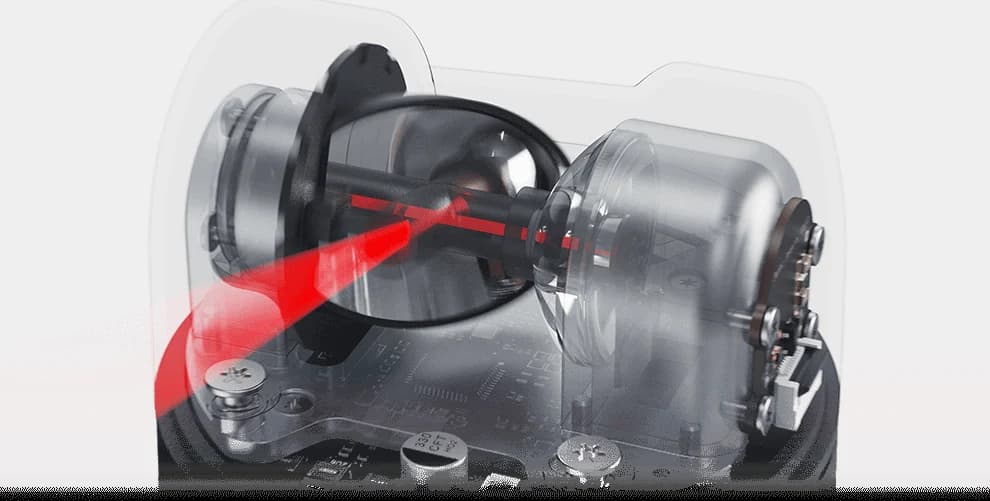
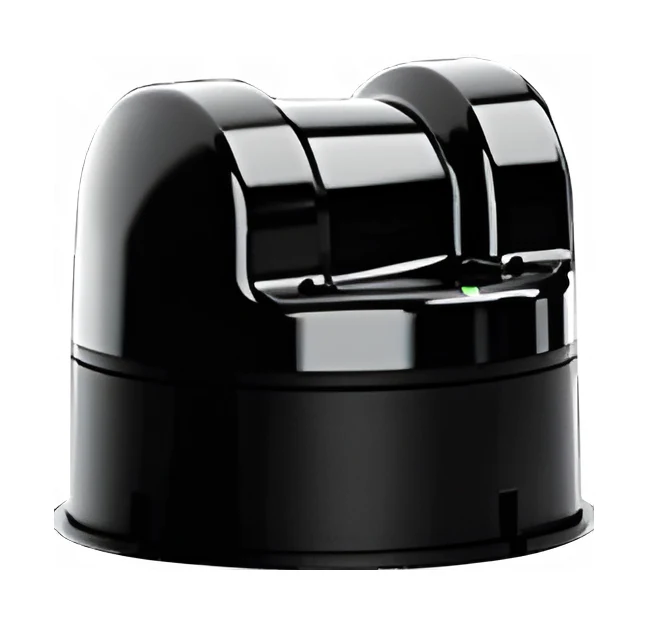
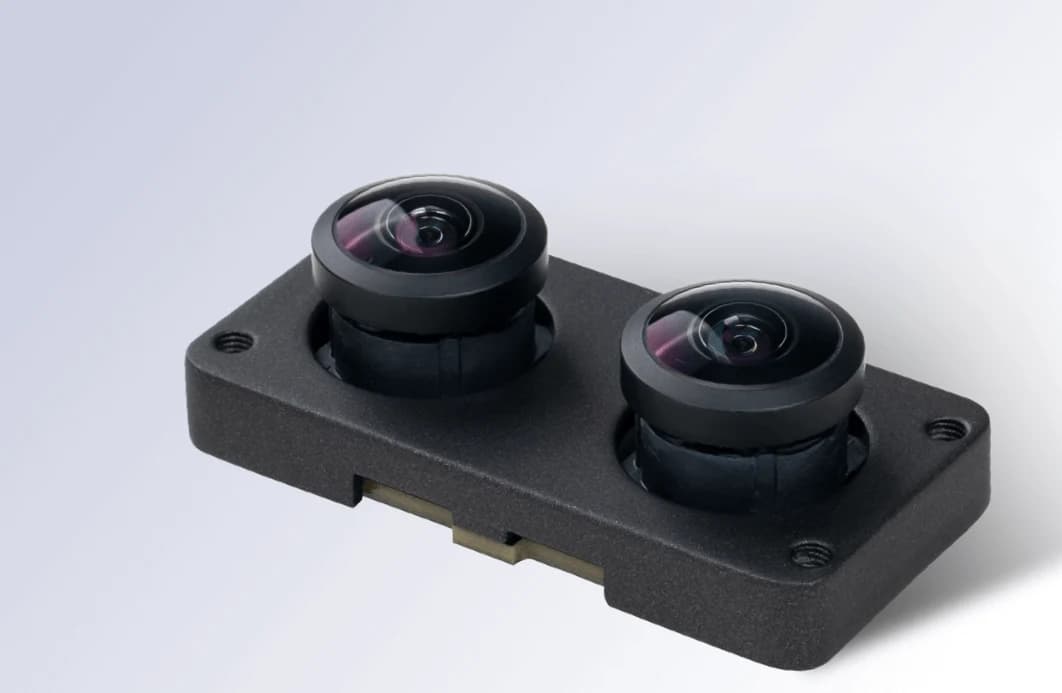
LiDAR scans walls and columns, the robot plans the route and grinds fully automatically at ±5 cm positioning.
- In the manufacturer's film the operator sends the job from a tablet and the robot finishes the car park by itself.
Autonomous Floor Grinding Robot
The BMR Floor Grinding Robot is an autonomous construction robot that removes the laitance layer from concrete with an 18.5 kW planetary disc and prepares epoxy, densifier, terrazzo and mosaic floors for coating.
It scans walls and columns with LiDAR, plans its own route and grinds fully automatically at ±5 cm positioning; the 850M edition has 2.4 kW dust extraction. It is fed from a 380 V mains supply, the 48 V 30 Ah battery gives 9 km of travel; one operator runs two robots and saves 1.5 workers.
Enterprise supply · specification support · integration engineering
The Floor Grinding Robot is the preparation machine of BMR's floor works series and comes in two editions: the 850M with dust extraction and the 850S without. The 850M measures 2030 × 915 × 1275 mm at 754 kg, the 850S 1520 × 866 × 1204 mm at 627 kg. The 18.5 kW grinding motor, fed from a three-phase five-wire 380 V AC (50/60 Hz) mains supply, turns the planetary disc at 400-2000 rpm on the 850M and 0-2000 rpm on the 850S; working width is 850 ± 50 mm and the 850M has 2.4 kW of dust extraction.
The robot recognises wall and column positions by LiDAR scan, plans an intelligent route and grinds fully automatically with real-time positioning and autonomous navigation; positioning accuracy is 5 cm, travel speed 0.5 m/s and climb 15°. The 48 V 30 Ah travel battery gives 9 km of range. Automatic dust extraction, safe stopping at obstacles, disc protection, work data statistics, fault alarms and FMS cloud data management are standard. One operator saves 1 worker with one robot and 1.5 with two; fully automatic grinding works long shifts with multi-machine coordination and output is 1.5 times manual grinding. Because the path is even and continuous there is no over- or under-grinding, and the result is consistent. It is used before epoxy, densifier, quartz hardener, epoxy terrazzo, inorganic terrazzo and mosaic floor applications in underground car parks, factories, laboratories and sports facilities. References: at the Lake City project in Kuala Lumpur (December 2022) the floor grinding robot ground 300 m² per hour per pass in fully automatic mode, worked long hours with several machines, and with the floor coating robot every step of the epoxy floor from base grinding to top coat was done by robot; at the DAMAC Bay project in Dubai three robots, together with the indoor coating and putty grinding robots, were commissioned at the same time.
Tap the cover to play; sound and loading start only on click.
LiDAR scans walls and columns, the robot plans the route and grinds fully automatically at ±5 cm positioning.
Fully automatic grinding works long shifts with multi-machine coordination; output is 1.5 times manual grinding.
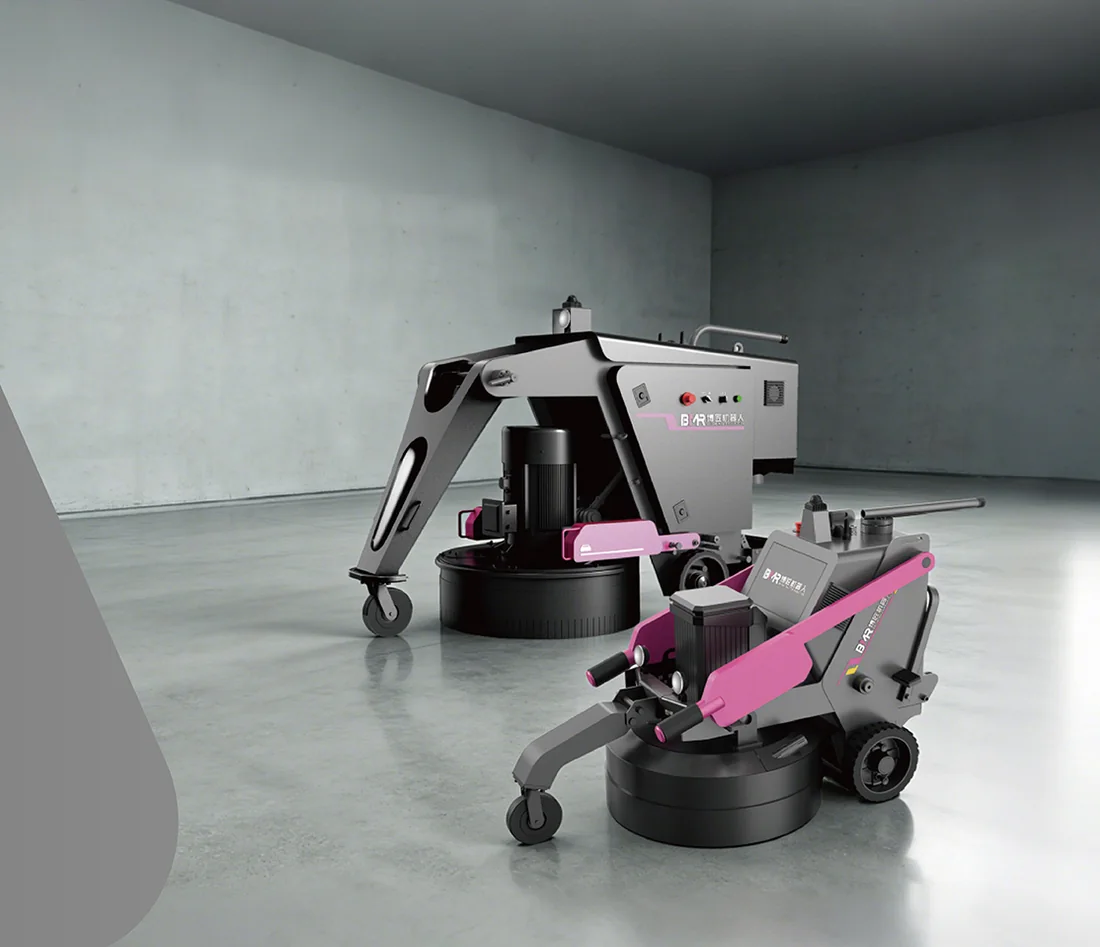
Because the path is even and continuous no area is over- or under-ground; the 18.5 kW planetary disc turns at up to 2000 rpm over an 850 mm width.
On the 850M 2.4 kW automatic dust extraction keeps the work area clean; safe stopping at obstacles, disc protection, fault alarms and FMS cloud data are standard.
2 images; tap to enlarge.
15 values in 7 categories; data published by the manufacturer.
Verified on the manufacturer page on 18 September 2026.
An itemised quote for the BMR Zemin Taşlama Robotu 850M/850S is prepared by configuration, quantity and delivery scope.
On large-area concrete floor grinding a walk-behind machine demands continuous physical control; output and consistency depend on the operator's strength and skill, and the worker stays in dust and vibration for long periods. The Floor Grinding Robot scans walls and columns with LiDAR, plans its route itself and grinds fully automatically with real-time positioning and autonomous navigation. It removes the laitance layer from the concrete surface with an 18.5 kW planetary disc over an 850 mm width; on the 850M a 2.4 kW dust extractor runs, it stops safely at obstacles, has disc protection and fault alarms, and job data goes to FMS cloud management.
The 850M (754 kg, 2030 × 915 × 1275 mm) is the fully equipped edition with 2.4 kW automatic dust extraction and a 400-2000 rpm disc for epoxy and hardener floor preparation. The 850S (627 kg, 1520 × 866 × 1204 mm) carries a more compact body with a 0-2000 rpm disc. Both grind on 380 V AC three-phase five-wire mains, travel 9 km on a 48 V 30 Ah battery, move at 0.5 m/s, climb 15° and work with 5 cm positioning accuracy.
Operation: the robot with automatic navigation and planned routes, the machine by continuous manual pushing. Labour: the robot reduces manual work and operator fatigue, the machine relies on the worker's physical effort. Output: the robot for large-area concrete floors, the machine for small areas and edge work. Consistency: the robot gives a uniform surface, on the machine quality depends on operator skill. Project control: on the robot progress and quality are managed by data. Safety: the robot reduces workers' exposure to dust, vibration and repetitive heavy work. Application: the robot for car parks, factories, warehouses and industrial floors; the machine remains supporting equipment for edge and detail work.
The Zemin Taşlama Robotu is sourced for Turkey on a project basis; import, customs clearance, commissioning and operator training are part of delivery. Investment is set by corporate quotation against edition, configuration, spare and wear-part provisioning, training scope and quantity. The choice is based on project area, floor material, grinding width and speed, dust extraction needs and site conditions. Request a quotation with your project profile.
| Parameter | 850M | 850S |
|---|---|
| Voltage | 380 VAC, three-phase five-wire, 50/60 Hz |
| Grinding power | 18.5 kW |
| Dust collection power | 2.4 kW | - |
| Working width | 850 ± 50 mm |
| Grinding disc | Planetary disc |
| Grinding speed | 400-2000 rpm | 0-2000 rpm |
| Travel speed | 0.5 m/s |
| Battery | 48 V 30 Ah |
| Operating range | 9 km |
| Climbing | 15° |
| Positioning accuracy | 5 cm |
| Dimensions (L × W × H) | 2030 × 915 × 1275 mm | 1520 × 866 × 1204 mm |
| Weight | 754 kg | 627 kg |
The Floor Grinding Robot moves concrete surface preparation from a walk-behind machine to an autonomous LiDAR-mapped process: an 18.5 kW planetary disc, 850 mm width, 300 m² per hour per pass, 2.4 kW dust extraction on the 850M and FMS cloud data management. Every step of an epoxy floor in Kuala Lumpur and the multi-robot site at DAMAC Bay in Dubai are among its references. For contractors and flooring companies doing car park, factory and warehouse floors, request a quotation with your project area and floor system.
Supply model
Supply to Turkey is planned per project; import, delivery and commissioning scope are itemised in the quote.
Pre-sales assessment
Site and mission focused technical feasibility; specification and administrative process support.
Demo and site visit request
Send a demo request; availability and scope are settled in the call.
Manufacturer warranty
1-year warranty for the complete machine; 5-year spare parts supply guarantee. Accessories and consumables are not covered by the warranty.
Source documents
Technical values come from the manufacturer's documents; verified on 18 September 2026. 1 documents at the bottom of the page.
Robotic system costs are optimised according to the selected hardware platform, additional sensor and payload configurations, and the integration scenarios specific to your site. Share your requirements and our engineering team will prepare a feasibility report and a pro forma quotation tailored to your organisation.
Direct contact and advisory line: 0850 532 6 777
The most common questions about the BMR Zemin Taşlama Robotu 850M/850S.
The 850M weighs 754 kg with 2.4 kW automatic dust extraction and a 400-2000 rpm disc; the 850S is more compact at 627 kg without dust extraction and with a 0-2000 rpm disc. Grinding power, working width, battery and navigation are the same on both.
Epoxy floors, sealed hardener (densifier) floors, emery sealed hardener floors, epoxy terrazzo, inorganic terrazzo and classic terrazzo; underground car parks, factory workshops, laboratories and sports venues. It removes the laitance layer from the concrete surface and prepares the base before coating.
The grinding motor runs on 380 V AC three-phase five-wire mains; travel gives a 9 km range on a 48 V 30 Ah battery. Follow-up wire unwinding and one-button wire retraction ease cable management on site.
On large areas the robot gives a uniform surface on a planned route and reduces operator fatigue and exposure to dust and vibration; progress and quality are managed with FMS cloud data. A walk-behind machine remains supporting equipment for edge and detail work.
BMR robots are controlled from a single application (the BMR unified APP); the operator connects to several nearby robots from one device, and robot plug-ins are downloaded in the app. Floor and coating robots report worked area, time and status through FMS cloud data management.
The BMR Zemin Taşlama Robotu is sourced on a project basis: the site schedule, floor area, concrete or coating system and site access are settled at the survey; import, commissioning and operator training are part of delivery. For a quotation, send the project type, total square metres and the works programme.


