What Is NavDP?
NavDP: Learning Sim-to-Real Navigation Diffusion Policy with Privileged Information Guidance is joint work by researchers from Shanghai AI Laboratory, Tsinghua University, Zhejiang University and the University of Hong Kong. It is published as arXiv:2505.08712 and was accepted to ICRA 2026.
The method is end-to-end and mapless: the robot uses no pre-built map and generates trajectories directly from RGB-D observations. The architecture is a single transformer that jointly learns trajectory generation and trajectory evaluation. Depth Anything V2 provides the visual representation.
Training is entirely in simulation: over one million meters of navigation experience across 3,000 scenes. The goal is real-world transfer without collecting real robot data: a critical choice given the cost of field data collection.
Which Tasks Does It Solve?
The repository defines four navigation tasks:
- NoGoal exploration, roaming the environment with no goal given
- PointGoal, navigating to a coordinate
- ImageGoal, finding a location given a photo of the goal
- Start-goal, navigation between a start and a goal
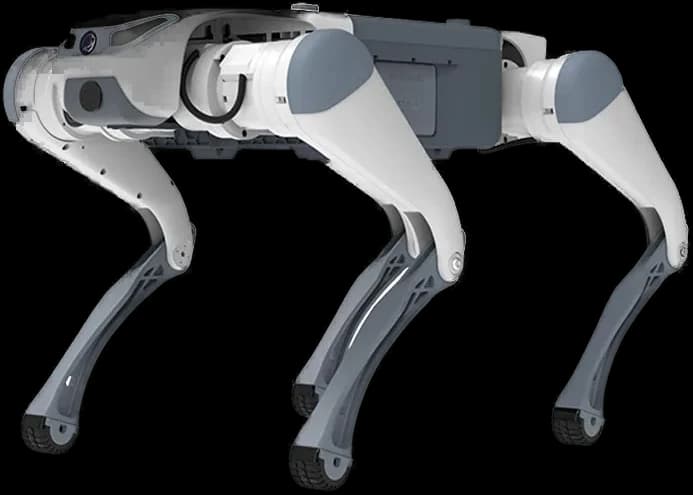
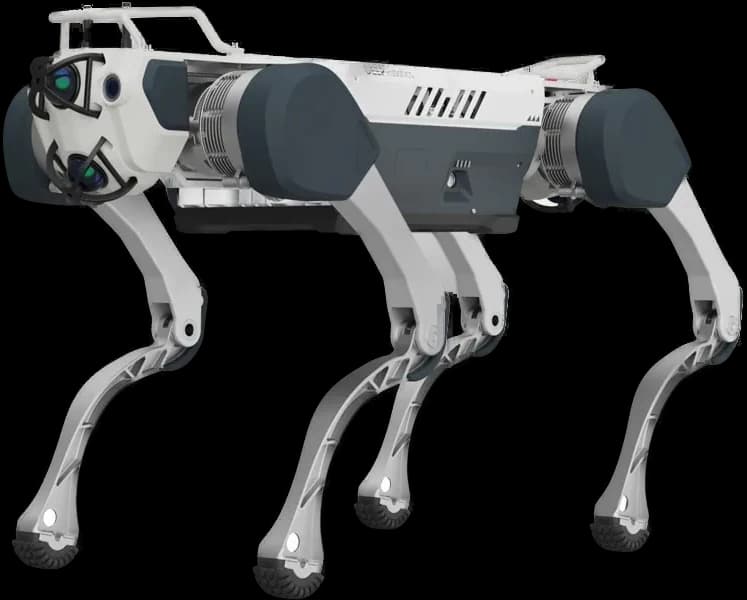
In practice this means a robot dog can patrol a facility that has never been mapped, using only its camera.
X-NavDP: The Step That Brings It to the Go2 and G1
X-NavDP, in the repository's baselines/x-navdp directory, post-trains the pretrained NavDP policy via online reinforcement learning across heterogeneous embodiments. It contributes three things: data-efficient RL post-training, structured exploration through "Group Q-score Reweighted Matching", and cross-robot generalization via lightweight embodiment modulation and temporal consistency guidance.
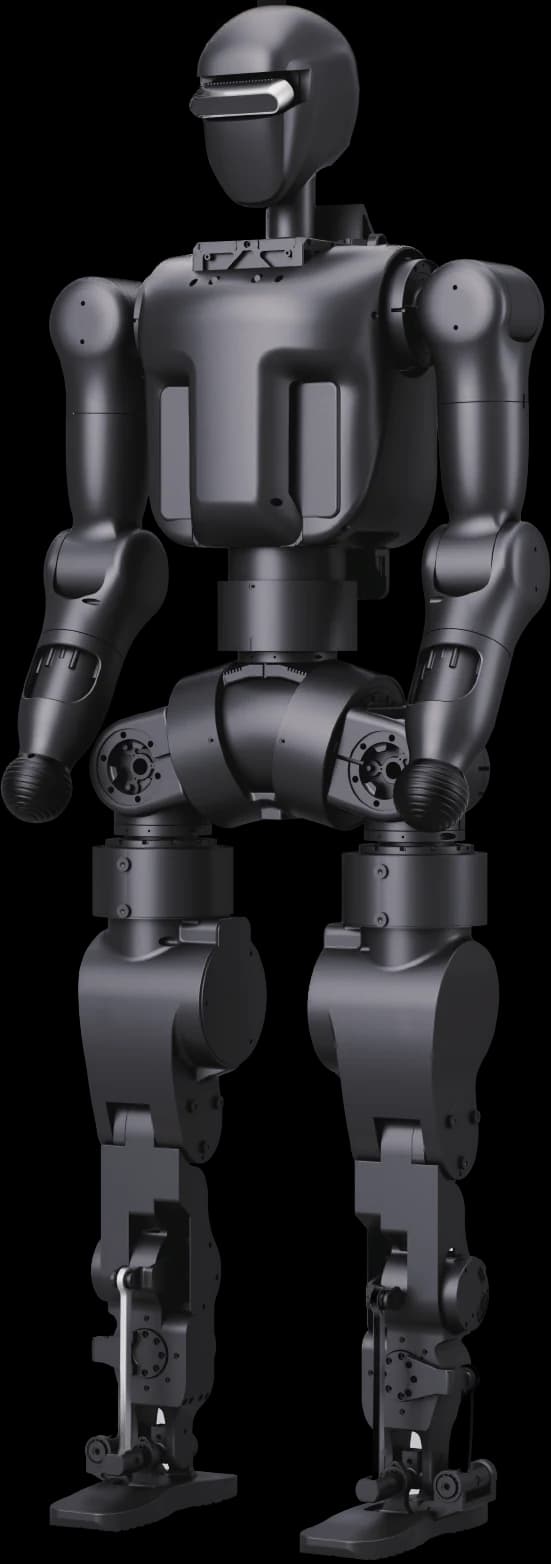
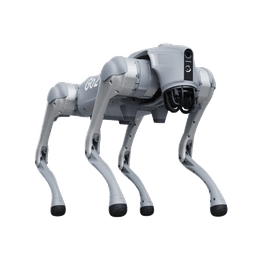
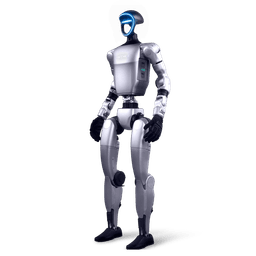
The critical part for us: results are reported on the wheeled Dingo, the quadruped Unitree Go2 and the humanoid Unitree G1. This work directly covers two of the platforms we supply.
The released model was trained for 24,000 steps across 72 scenes, distributed over 8 GPUs.
What Do You Need?
Simulation side: the NavDP evaluation framework is built on IsaacSim 4.2.0 and IsaacLab 1.2.0, shipping with cluttered, home and commercial scene scenarios. X-NavDP requires a newer stack: Python 3.11, Isaac Sim 5.0.0, Isaac Lab 0.46.2, isaaclab-rl==0.4.0 and acados built with CMake.
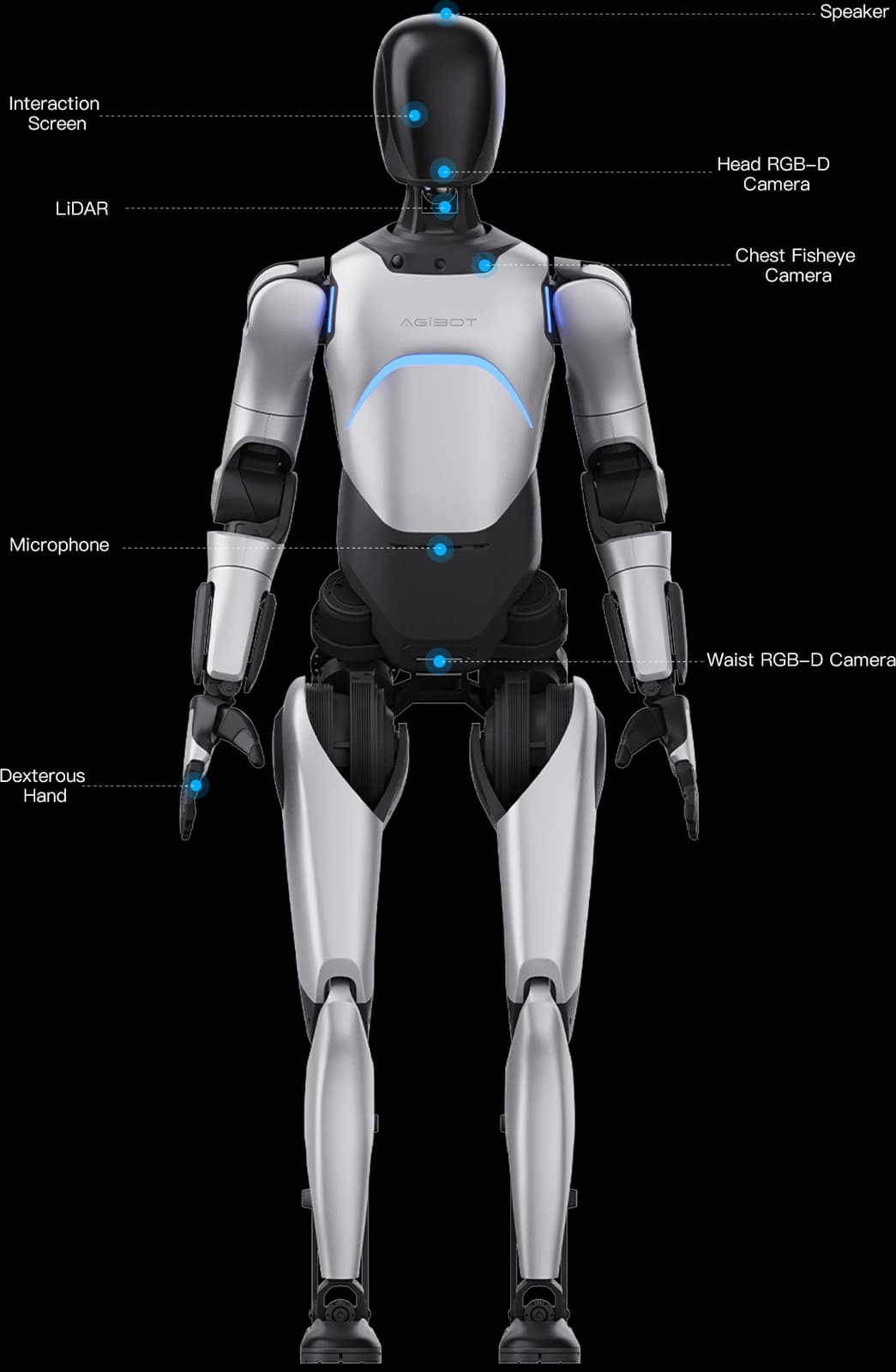
Robot side: the method works from RGB-D input, so a depth-capable camera is required. The developer configurations of the Go2 and G1 suit this workflow; the standard consumer configuration does not.
Version compatibility matters here: NavDP and X-NavDP require different Isaac versions, so do not attempt to run both in one environment.
Licence: Not Open to Commercial Use
This clause must not be skipped. The NavDP repository is published under the Creative Commons Attribution-NonCommercial-ShareAlike 4.0 licence. NonCommercial means you cannot use the work as-is inside a commercial product or a commercial service.
In practice: it can be used for university research, thesis work, R&D prototypes and academic publication; it cannot be embedded in a patrol service sold to a customer. If you plan a commercial deployment you need separate permission from the authors, or you must train your own policy.
The binding text is the repository's own LICENSE file..
Which Configuration Should You Buy in Turkey?
Running this kind of work requires developer access to the robot and a depth-sensing camera.
Quadruped side: the Unitree Go2 EDU offers SDK access and sensor expansion. For the fundamentals of the reinforcement learning workflow on the Go2, see our Go2 reinforcement learning guide.
Humanoid side: the Unitree G1 EDU; X-NavDP's humanoid results come from this class of hardware. Our unitree_lerobot guide complements it for the data collection and policy training workflow.
Robotlar.org is the authorized Unitree Robotics partner in Turkey: official warranty, Turkish technical documentation, on-site commissioning across Turkey and research configuration consulting. Get in touch to determine which camera and compute module fits your research goal.
Note: NavDP and X-NavDP are independent academic works by the InternRobotics team; Robotlar.org has no affiliation with the project or its authors. Sources: the GitHub repository and arXiv:2505.08712.