PRICE
Project quote
Configuration, delivery schedule and investment figure are set by project scope. From your specification we prepare the supply plan from the manufacturer line and the integration scope.
Enterprise supply · specification support · integration engineering
Overview
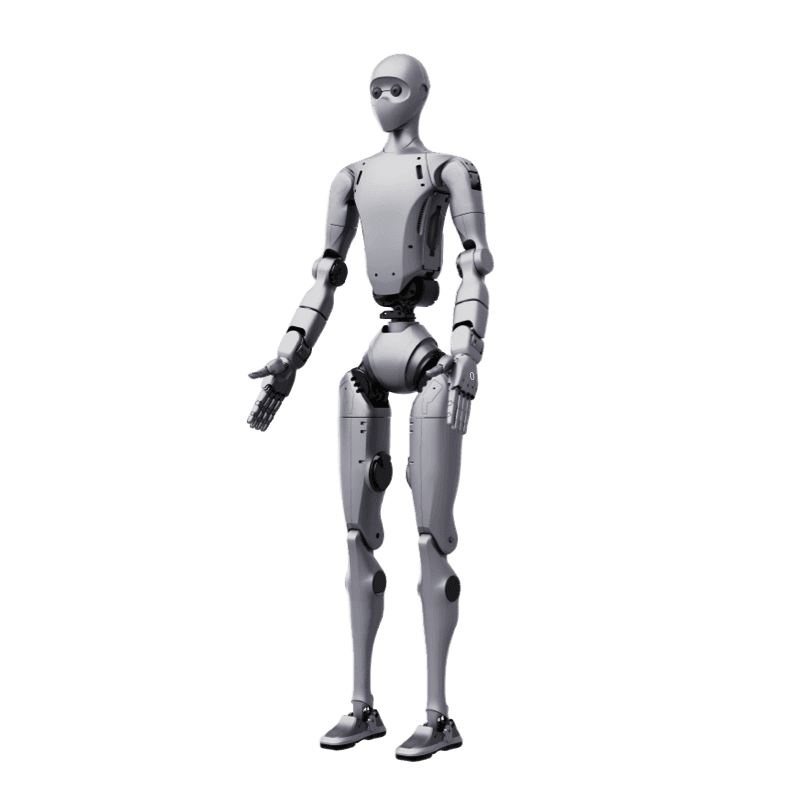
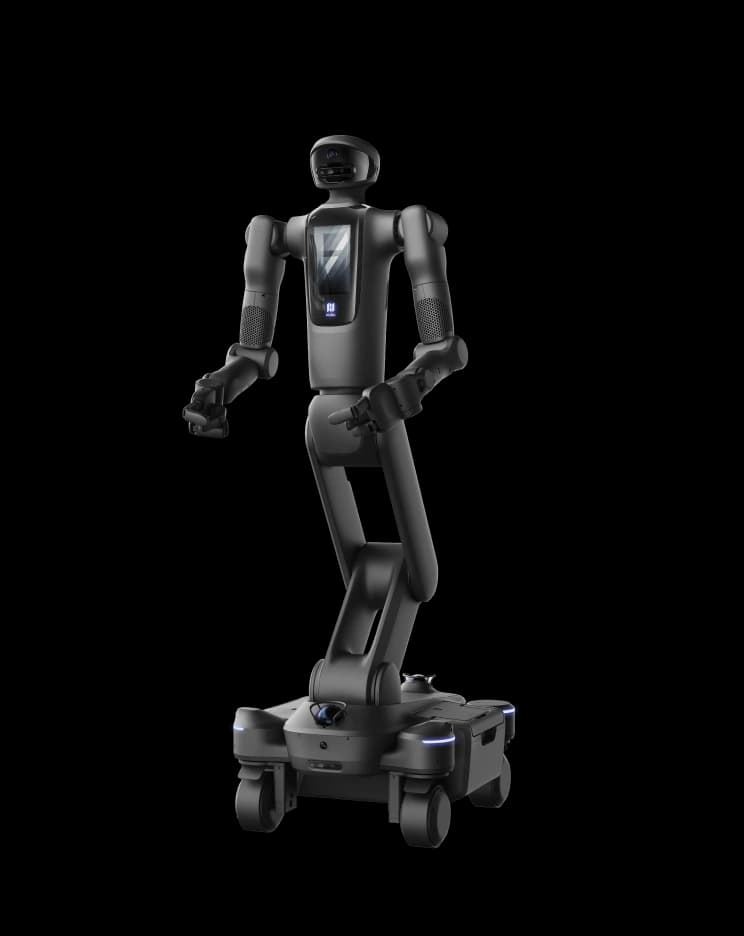
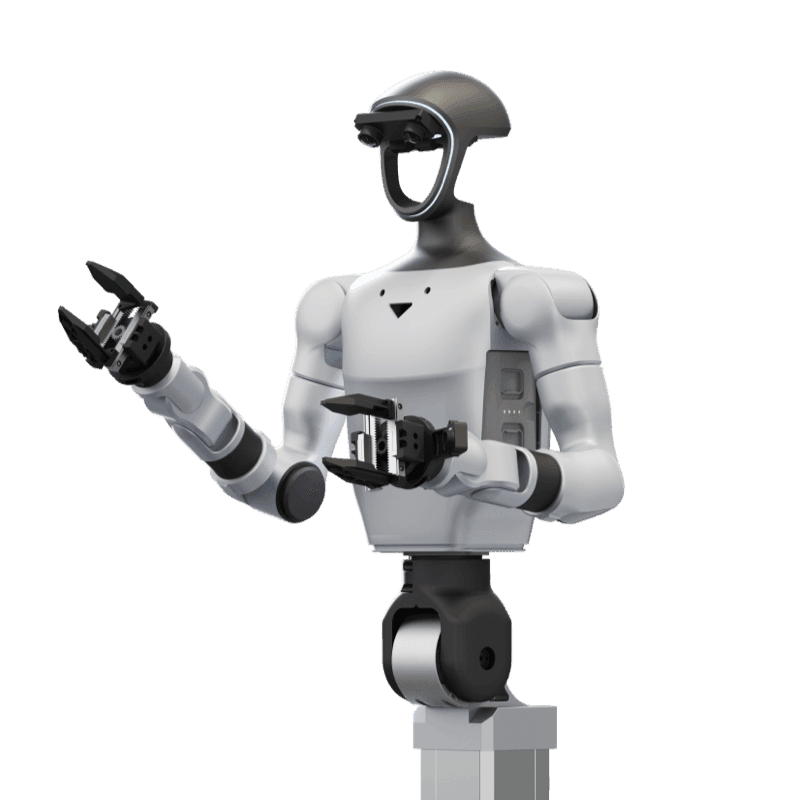
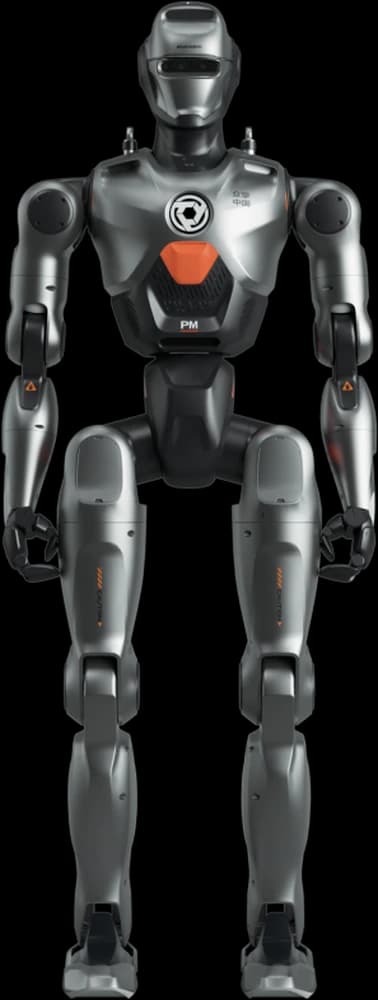
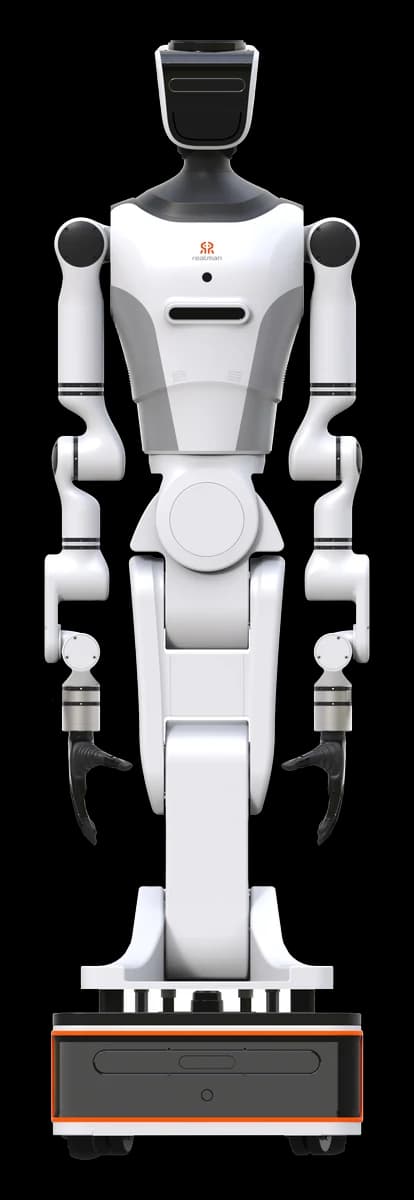
The AgiBot G2 is the industrial-grade interactive operation robot in the Genie series of Shanghai-based AgiBot: a dual-arm humanoid upper body on a wheeled omnidirectional chassis. It rests on three promises: industrial quality, embodied intelligence and a global benchmark.
Hardware highlights: height adjustable from 1225 to 1795 mm, a 185 kg body, 25 active degrees of freedom and 7-DoF arms with torque sensors in every joint. A single arm carries 5 kg, both arms 10 kg rated and 15 kg peak; repeatability is ±0.1 mm and absolute positioning ±1 mm. The chassis rotates in place and crab-walks at 1.5 m/s. Two hot-swappable batteries totalling 1652 Wh give about 4 hours of runtime; with the docking station the robot returns to recharge itself. The perception suite comprises 2 LiDARs, 3 fisheye cameras, a stereo camera, head and wrist RGB-D cameras and 8 ultrasonic sensors; compute is 500 TOPS in the standard version and 2070 TFLOPS with an NVIDIA Jetson T5000 in the high-compute version.
For interaction, a 6.3-inch face display shows expression animations and tracks gaze; a 4-element microphone array localises sound sources and multi-user conversation is supported. Beyond-visual-range teleoperation lets an operator work remotely through stereo vision with VR controllers. The box contains the robot body, charger, certificate of conformity, warranty card, packing list and tool kit; the dexterous hand, OmniPicker and docking station are optional.
For organizations with a G2 requirement we assess sourcing, timing and alternatives transparently.
Hardware Map
AgiBot G2: What It Carries, and Where
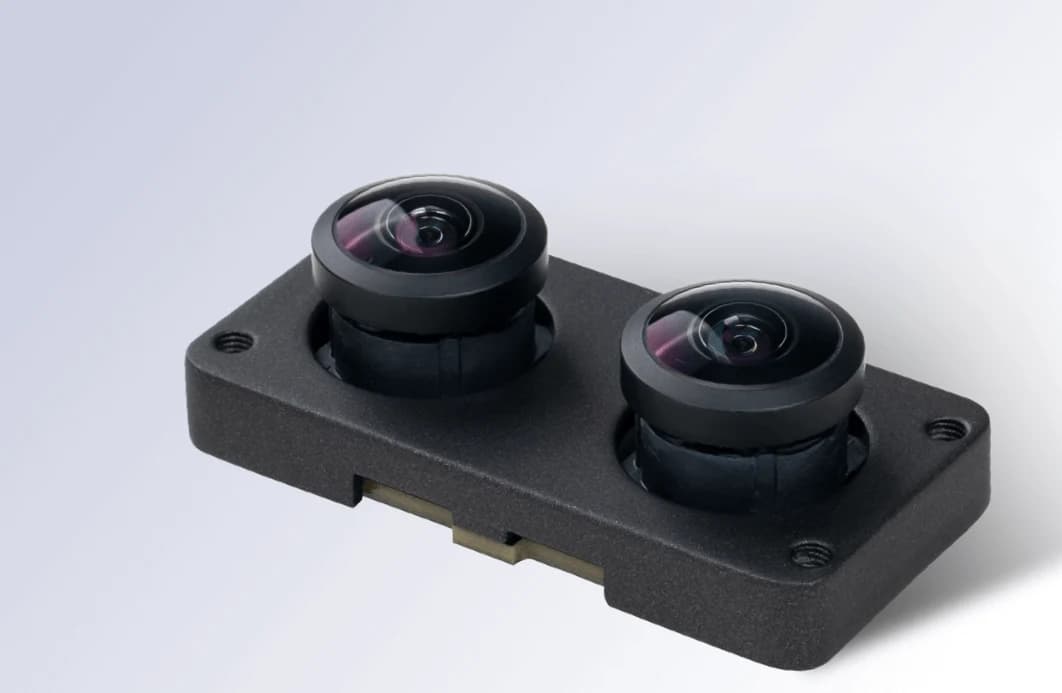
Head RGB-D and stereo camera
Depth perception and depth video; stereo camera 2 × 1920 × 1536, 60 fps, 118° × 92° field of view.
Interactive display
6.3 inch, 500 nit; facial animations and eye-gaze tracking.
Computing board
Standard 500 TOPS (INT8); NVIDIA Jetson T5000 with 2070 TFLOPS (FP4) in the high-compute version.
Wrist RGB-D camera × 2
Close-range depth perception during grasping.
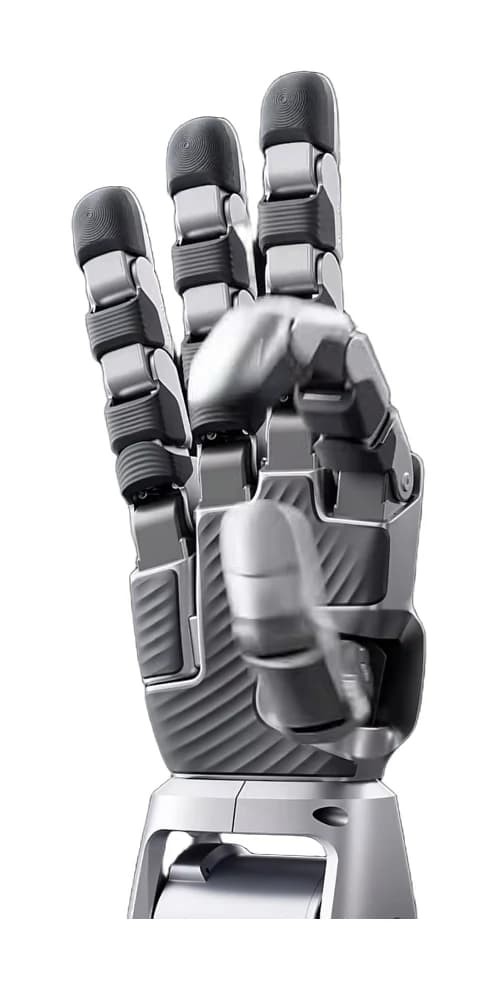
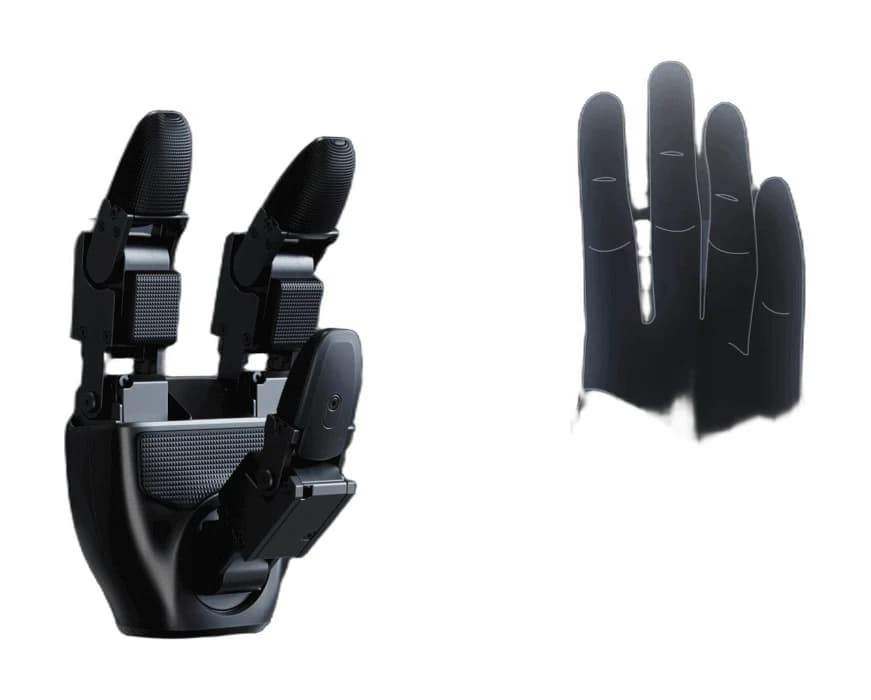
Dexterous hand (optional)
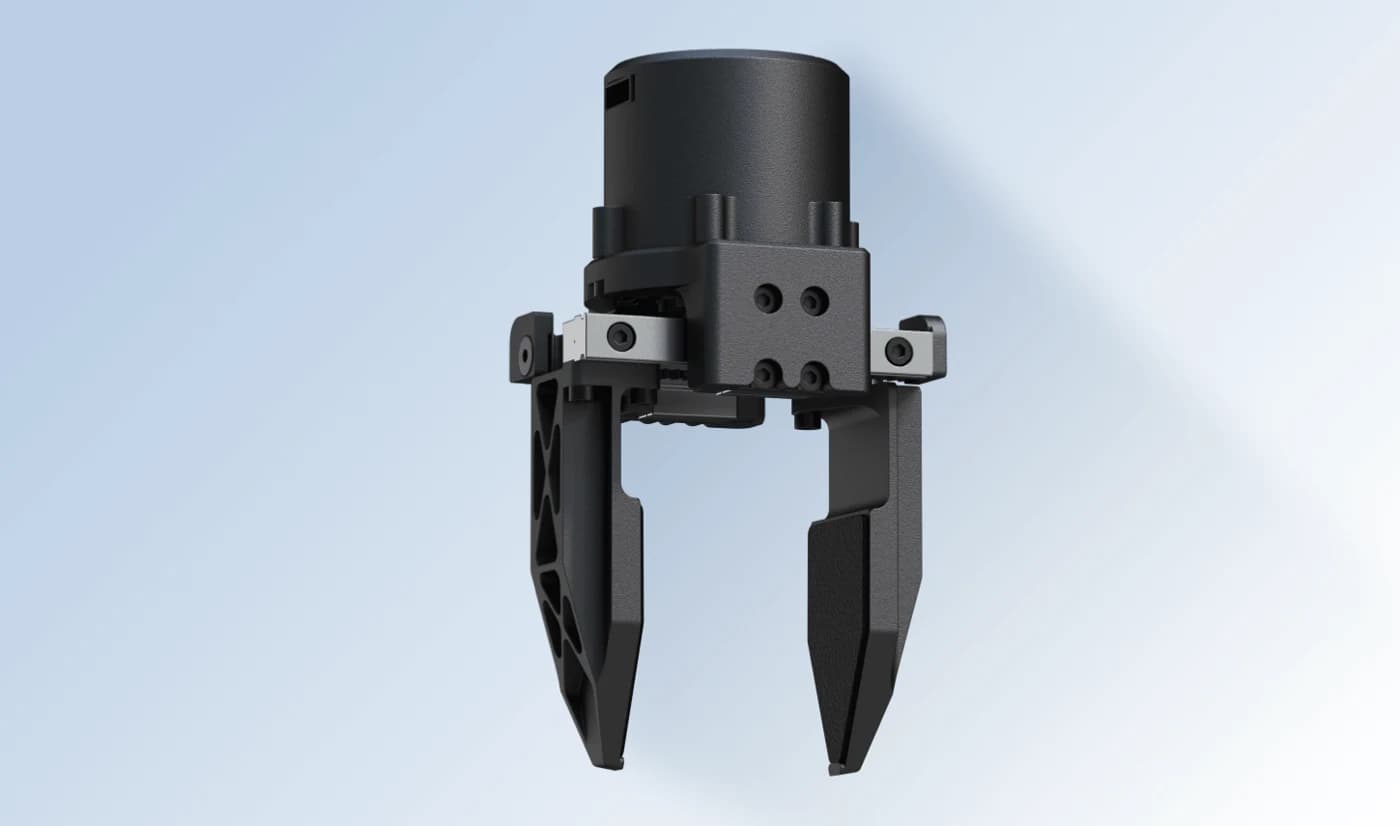
Up to 19 DoF, 3D tactile sensing, quick replacement; OmniPicker also available.
Chassis
1.5 m/s; in-place rotation and omnidirectional movement; 4 steerable wheels.
Ultrasonic sensor × 8
Short-range obstacle detection.

Microphone array and speaker
4-element ring array: sound-source localisation, noise and echo cancellation; 8 W speaker.
Fisheye camera array × 3
360° surround view; 215° × 170° field of view.
3-DoF neck and 3-DoF waist
Roll, pitch and yaw on both; 2-DoF legs fold and lift (1225-1795 mm).
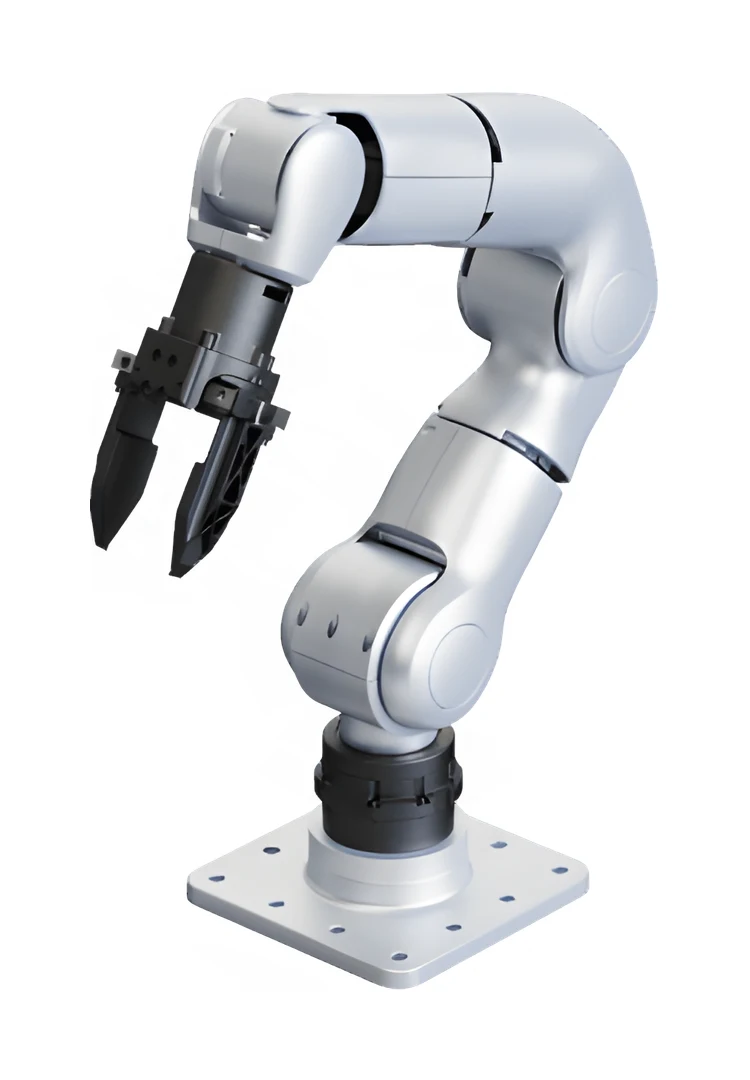
7-DoF force-controlled arm
5 kg payload; torque sensing in every joint; ±0.1 mm repeatability.
Wireless terminal and 10G network port
11.5-inch 2000 × 1200 detachable terminal; 10 Gbps LAN.
LiDAR × 2
360° coverage; 2 cm or better at 10 m; -7° to 52° vertical.
Battery × 2 and charging port
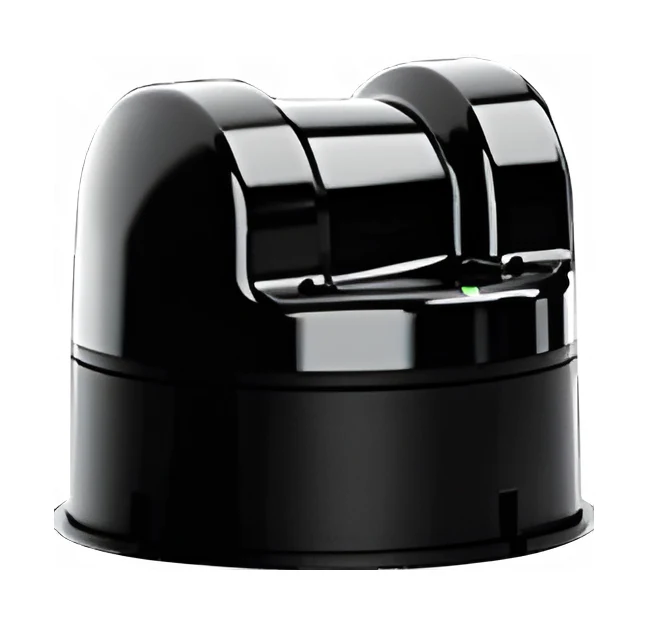
1652 Wh total, hot swap, pass-through charging; automatic recharge with the optional docking station.
Built to Industrial-Grade Standards
The body is built from 100% automotive-grade components with IP42 whole-machine protection. The aim is not a lab prototype but a stable platform that works on site every day: 0 to 45 °C operating, -20 to 60 °C storage, up to 90% relative humidity.

1:1 Human-Like Motion
25 active degrees of freedom across the body: 3 in the neck, 7 per arm, 5 in the waist and legs, 3 in the chassis. This is enough to replicate human operation and interaction postures precisely; the neck and waist each roll, pitch and yaw independently.

7-DoF Force-Control Arm
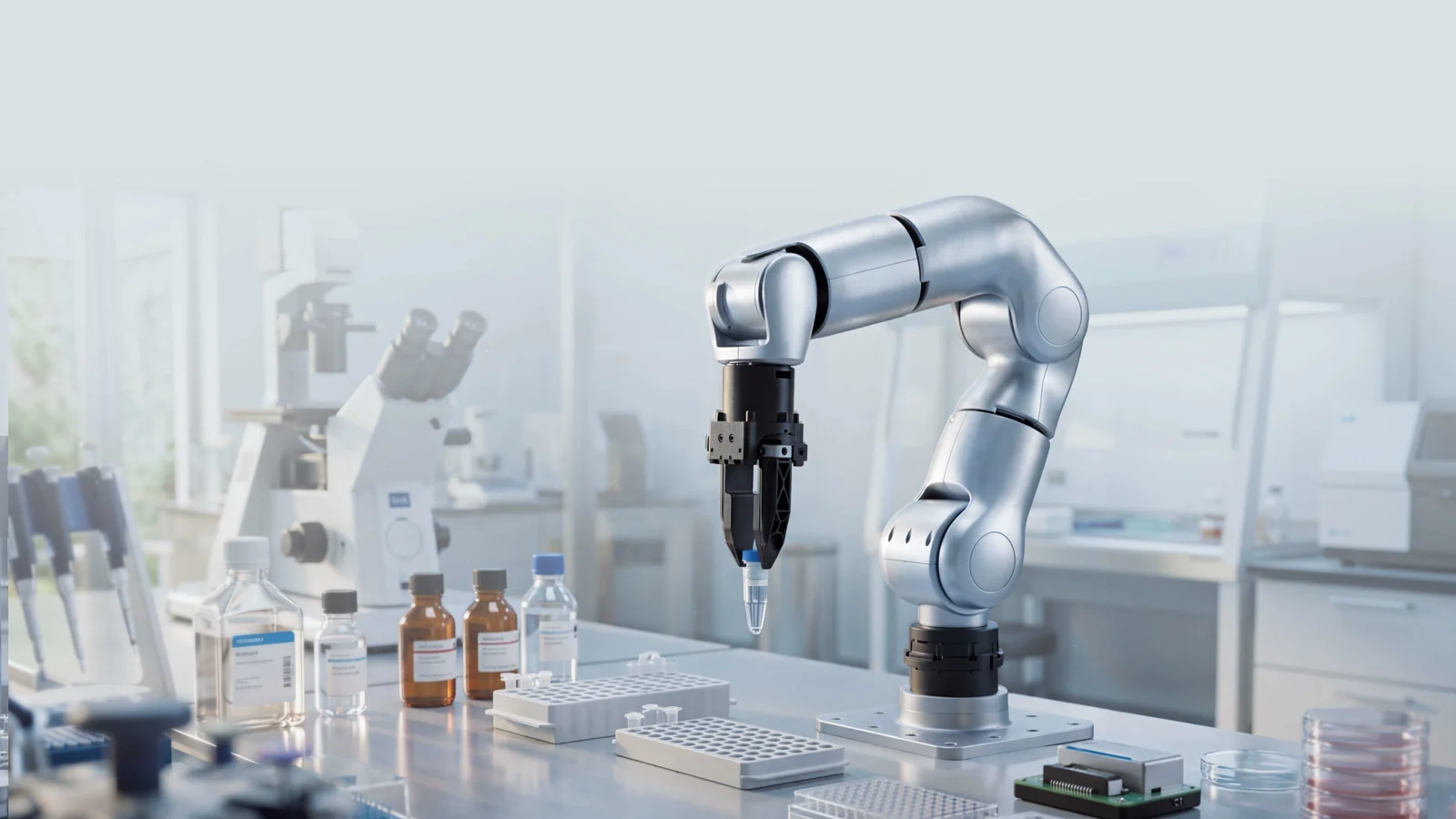
Human-like cross-wrist design with torque sensing in all 7 joints. Absolute force-control accuracy is under 0.5 N; the manual gives force-control resolution of 0.02 Nm or finer at 5 kHz or faster sampling. 5 kg rated payload per arm, 696 mm arm length; ±0.1 mm repeatability, ±1 mm absolute positioning. Sub-millimetre assembly tasks are deployed rapidly with Genie RL.

3-DoF Waist + 2-DoF Legs
The waist handles bending, tilting and twisting while the legs fold and lift, taking body height from 1225 to 1795 mm. That widens the upper-body workspace: 0 to 2.3 m vertically with the O10 hand, and a 2.3 m dual-arm reach.

Omnidirectional Chassis
Four steerable wheels: in-place rotation, crab walk and movement in any direction. 1.5 m/s speed, 1.5 cm obstacle clearance, slopes up to 5 degrees; 850 mm minimum passage width. Navigation accuracy is ±5 cm and ±3° standard, ±3 cm and ±2° in high-precision mode.

7x24h Continuous Operation
Two hot-swappable batteries (1652 Wh, 34 Ah total) give about 4 hours of runtime; pass-through charging keeps the robot on during a swap. It returns to the optional docking station to recharge itself; charging takes 2.5 hours or less on the 54.75 V / 15 A charger.

Active Safety
3 fisheye cameras and 2 LiDARs provide all-round 360-degree safety monitoring; 8 ultrasonic sensors detect obstacles at short range. The LiDARs work with 2 cm or better accuracy at 10 metres.

Passive Safety
High-precision arm collision detection and a physical emergency stop; the hybrid active-passive system protects personnel. Because the arms are force-controlled, contact force with a person is limited.

Beyond-Visual-Range Teleoperation
Ultra-low latency over ultra-long distance: the operator drives the robot intuitively with VR controllers through binocular stereo vision. The body is highly dynamic, moving like a shadow and responding with precision, for tasks such as turning valves in hazardous or remote sites.

G2; Live Demonstration
Technical Analysis of the Industrial Operation Robot
Why Wheels Instead of Legs?
Unlike bipedal humanoids, the G2 sits on a four-wheel-steering chassis and weighs 185 kg. That choice removes the compute and energy spent on balance; the remaining budget goes to the arms and perception. The cost is terrain: a 1.5 cm obstacle and 5-degree slope limit ties the robot to flat-floored factories, warehouses, showrooms and offices. The folding 2-DoF legs keep height adjustment (1225-1795 mm) despite the wheeled base.
Force Control and Sub-Millimetre Assembly
Torque sensors in all seven joints mean the arm can work by measuring contact force: in tasks such as part insertion, connector seating and surface work, force is controlled as much as position. The manual's 0.02 Nm resolution and 5 kHz sampling, combined with ±0.1 mm repeatability, are the hardware behind the sub-millimetre assembly capability. Genie RL is the software layer that carries these capabilities to a new task through reinforcement learning.
Choosing Between the Two Compute Versions
The standard version carries a 24-core Arm board at 500 TOPS (INT8); the high-compute version has an NVIDIA Jetson T5000 with 2070 TFLOPS (FP4) and 128 GB of memory. The standard version suffices for defined assembly and handling tasks; if on-robot large-model inference, heavy multi-camera perception or R&D workloads are planned, choose the high-compute version. Body, arms, sensor suite and battery are identical across both.
G2 Versus AgiBot A3: Operation Robot and Stage Robot
| Feature | AgiBot G2 | AgiBot A3 |
|---|---|---|
| Locomotion | Wheeled omnidirectional chassis, 1.5 m/s | Bipedal, 1.8 m/s walking, 5 m/s running |
| Height / weight | 1225-1795 mm / 185 kg | 173 cm / 55 kg |
| Degrees of freedom | 25 (7 per arm, torque-sensed) | 31 (excluding hands) |
| Arm payload | 5 kg single, 10 kg dual-arm rated | 5 kg single arm |
| Battery / runtime | 1652 Wh, approx. 4 hours, hot swap | 1152 Wh, 10 hours, 10 s hot swap |
| Compute | 500 TOPS or 2070 TFLOPS (Jetson T5000) | 2 × RK3588 |
| Positioning | Assembly, handling, reception, teleoperation | Stage performance, interactive entertainment, research |
Engineering Assessment
The G2's value lies not in a single figure but in the whole being built for the industrial floor: torque-sensed 7-joint arms, 360-degree safety monitoring from two LiDARs and three fisheye cameras, hot-swappable dual batteries and self-return to the docking station. Together these let the robot be run like a shift-based workstation. The limits are equally clear: 185 kg on a wheeled base needs flat floors, and 4 hours of runtime only becomes a continuous shift if battery swaps and a docking station are planned.
Which G2 fits your needs?
| Feature | G2 Standart | G2 Yüksek Hesaplama |
|---|---|---|
| Compute | 500 TOPS (INT8) | 2070 TFLOPS (FP4), NVIDIA Jetson T5000 |
| Processor cores | 24 × Arm Cortex-A78 | 14 × Poseidon-AE |
| Memory | 64 GB | 128 GB |
| Storage | 2 TB SSD | 2 TB SSD |
| Body, arms, sensors, battery | Aynı | Aynı |
The two versions differ only in the computing board; the mechanical body, arms, sensor suite and energy system are shared. Values come from the user manual dated 30 July 2026.
Defined assembly, handling and interaction tasks; 500 TOPS is enough for most sites.
On-robot large-model inference, heavy multi-camera perception and R&D workloads.
Details & Performance Parameters.
Physical Architecture
Dynamic Performance
Energy & Protection
Computing & Intelligence
Standard version: 500 TOPS (INT8), 24 × Arm Cortex-A78, 64 GB RAM, 2 TB SSD. High-compute version: NVIDIA Jetson T5000, 2070 TFLOPS (FP4), 14 × Poseidon-AE, 128 GB RAM, 2 TB SSD
2 × 3D LiDAR (360° horizontal, -7° to 52° vertical, 2 cm or better at 10 m), 1 × stereo camera (2 × 1920 × 1536, 60 fps, 118° × 92°), 3 × fisheye cameras (215° × 170°), 1 × head RGB-D (1280 × 800), 2 × wrist RGB-D, 8 × ultrasonic sensors, IMU; torque sensors in every arm joint (force-control resolution 0.02 Nm or finer, 5 kHz or faster sampling)
6.3-inch, 500-nit interactive display (facial animations, eye-gaze tracking), multi-colour LED strip, 4-element ring microphone array (sound-source localisation, noise and echo cancellation), 8 W speaker, multi-user conversation
Wi-Fi, Bluetooth, 4G/5G card slot; 1 × 10 Gbps and 1 × 1 Gbps LAN, 1 Gbps internet port; USB 3.0 Type-A and Type-C; 11.5-inch 2000 × 1200 detachable wireless terminal
Rapid task deployment with Genie RL, sub-millimetre assembly (±0.1 mm repeatability, ±1 mm absolute positioning), beyond-visual-range teleoperation (stereo vision, low latency), navigation accuracy ±5 cm / ±3° (high precision ±3 cm / ±2°), 850 mm minimum passage width, 0-2.3 m vertical workspace, 2.3 m dual-arm reach, OTA updates, secondary development support
Optional end effectors: O12 dexterous hand (up to 19 DoF, 3D tactile sensing, quick replacement) and OmniPicker; physical emergency stop; force-controlled arms
Mechanical Components
25 active degrees of freedom (excluding end effectors)
Neck 3 (roll, pitch, yaw), 7 per arm (cross-wrist design), waist 3 + legs 2 (folding and lifting), chassis 3
Arm length 696 mm; torque sensors in all 7 joints; 5 kg rated per arm, 10 kg rated and 15 kg peak with both arms
Repeatability ±0.1 mm, absolute positioning ±1 mm; absolute force-control accuracy under 0.5 N
Four steerable wheels, omnidirectional movement, in-place rotation, crab walk; 1.5 m/s; 1.5 cm obstacles; slopes up to 5 degrees
Box contents: robot body, battery charger, certificate of conformity, warranty card, packing list sheet, tool kit (one of each)
Hardware & Materials
100% automotive-grade components; IP42 whole-machine protection
Bring Autonomous Power to the Field.
Start your G2 project with our experts now.
Get a G2 Quote
There is no single list price; the investment depends on configuration and use case. Fill in the form and we will return with a clear, tailored quote.
- Supply plan and delivery schedule from the manufacturer line
- Technical feasibility against your project requirements
- Integration scope and engineering support
- Specification and documentation support for corporate procurement
Prefer to talk now: 0850 532 6 777
G2 Frequently Asked Questions
The most commonly asked questions and answers about G2.
Sourcing, delivery schedule and investment for the G2 are settled per project. If you have a corporate requirement you can talk to Robotlar.org: we assess the sourcing process, a realistic timeline and the alternatives together.
1225-1795 mm adjustable height, 640 × 760 mm footprint, 185 kg, 25 active degrees of freedom (neck 3, 7 per arm, waist and legs 5, chassis 3), 5 kg per arm and 10 kg dual-arm rated payload, ±0.1 mm repeatability, 1.5 m/s chassis speed, about 4 hours of runtime from 1652 Wh dual batteries, charging in 2.5 hours or less, 2 LiDARs, 3 fisheye cameras, a stereo camera, head and wrist RGB-D cameras, 8 ultrasonic sensors; 500 TOPS in the standard version, 2070 TFLOPS in the high-compute version.
Three headings: industrial-grade reliability (automotive-grade components, IP42), high-precision force-controlled operation (sub-millimetre assembly, rapid deployment with Genie RL) and interactive intelligence (facial animations, human-like movements, multi-user conversation, eye-gaze tracking). In practice assembly and material handling, showroom and reception, and remote teleoperation scenarios stand out.
Only the computing board: the standard version has 500 TOPS (INT8), 24 cores and 64 GB of memory; the high-compute version has an NVIDIA Jetson T5000 with 2070 TFLOPS (FP4), 14 cores and 128 GB. Body, arms, sensors and battery are the same. If you will not run large models on the robot, the standard version is enough.
Package contents: robot body, battery charger, certificate of conformity, warranty card, packing list sheet and tool kit. End effectors (O12 dexterous hand, OmniPicker) and the docking station are not standard and are purchased separately.