

Launch Video
The video shows the S1 picking and moving goods along a warehouse aisle.
- A maximum height of 1793 mm and 750 mm of lift travel let a single body work from a box at floor level up to a shelf level at 2.3 metres.
Industrial Heavy-Load Dual-Arm Robot
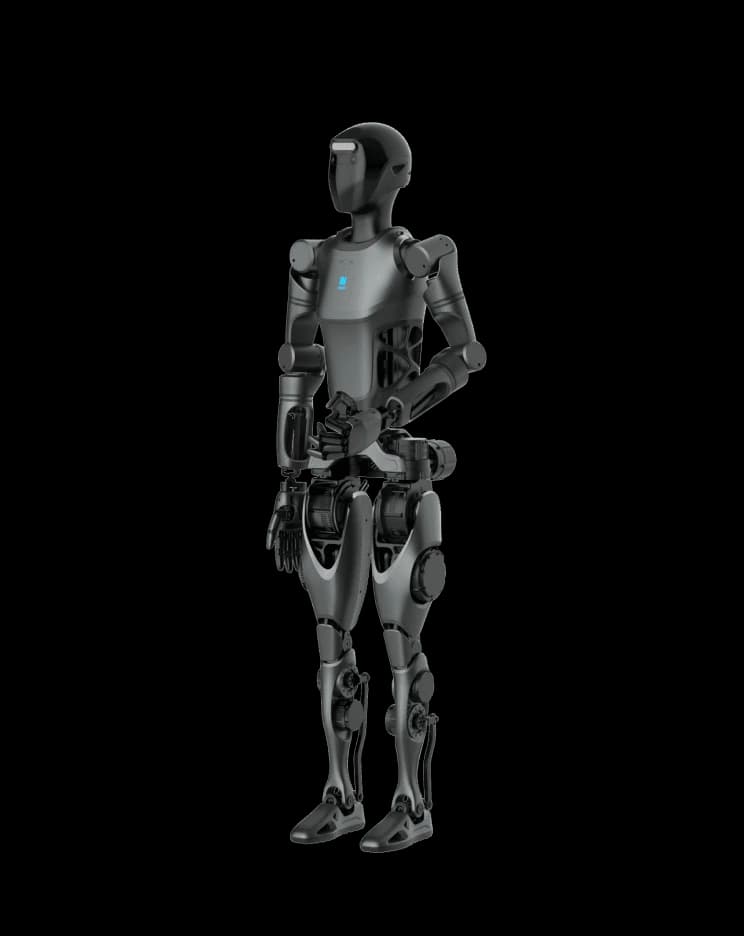
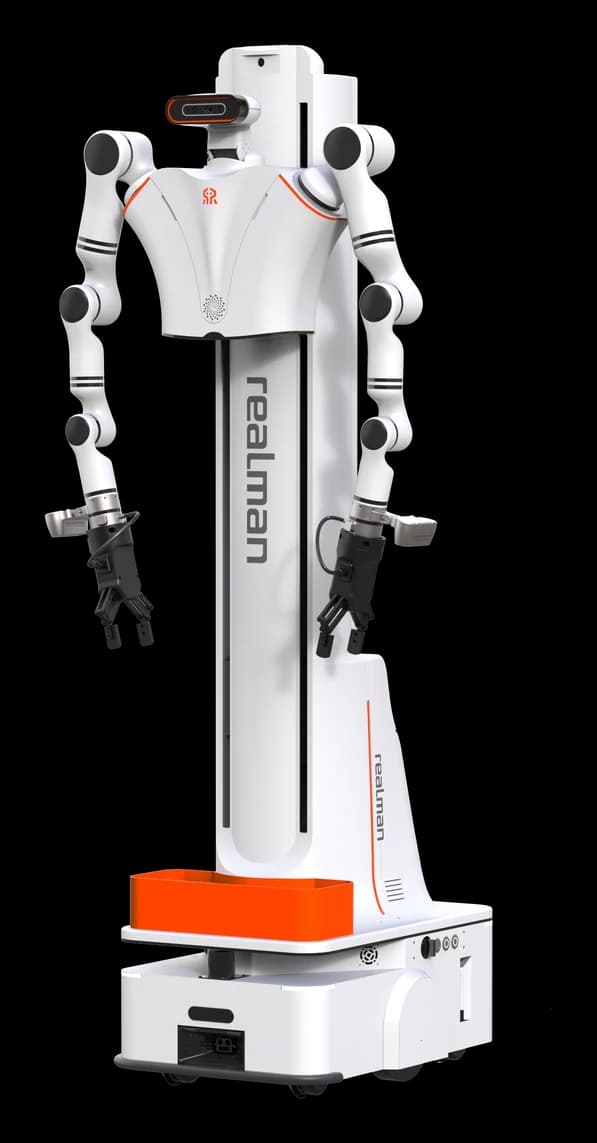
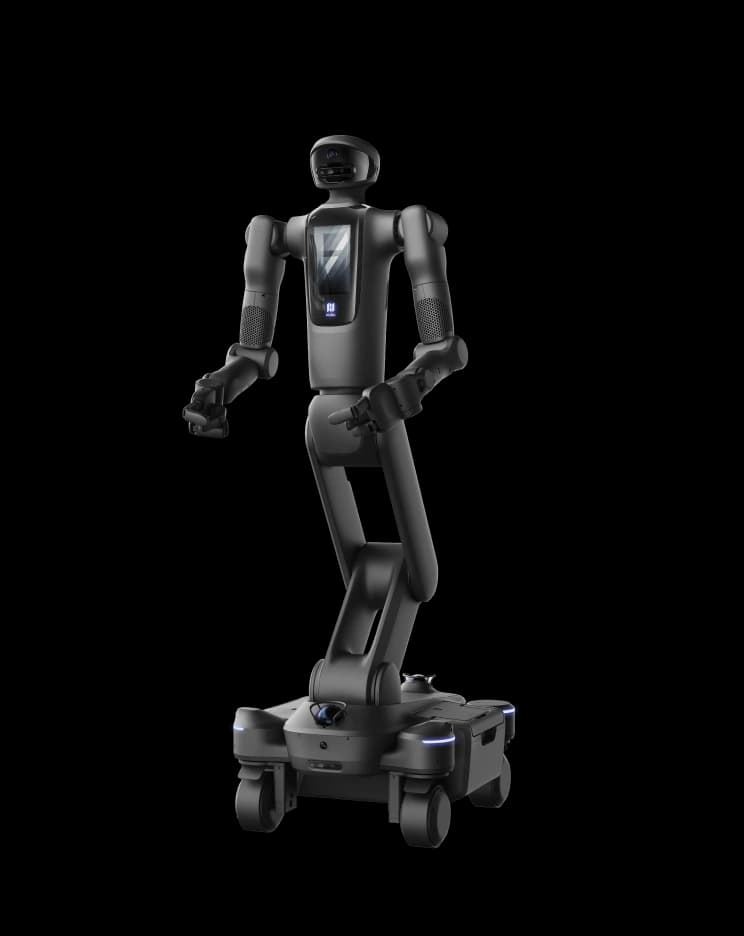
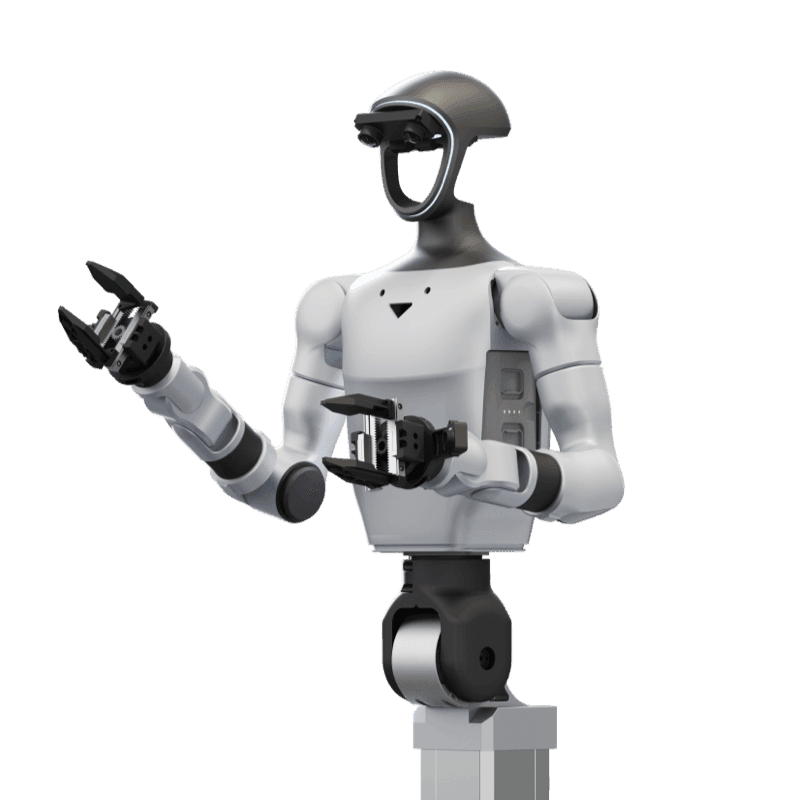
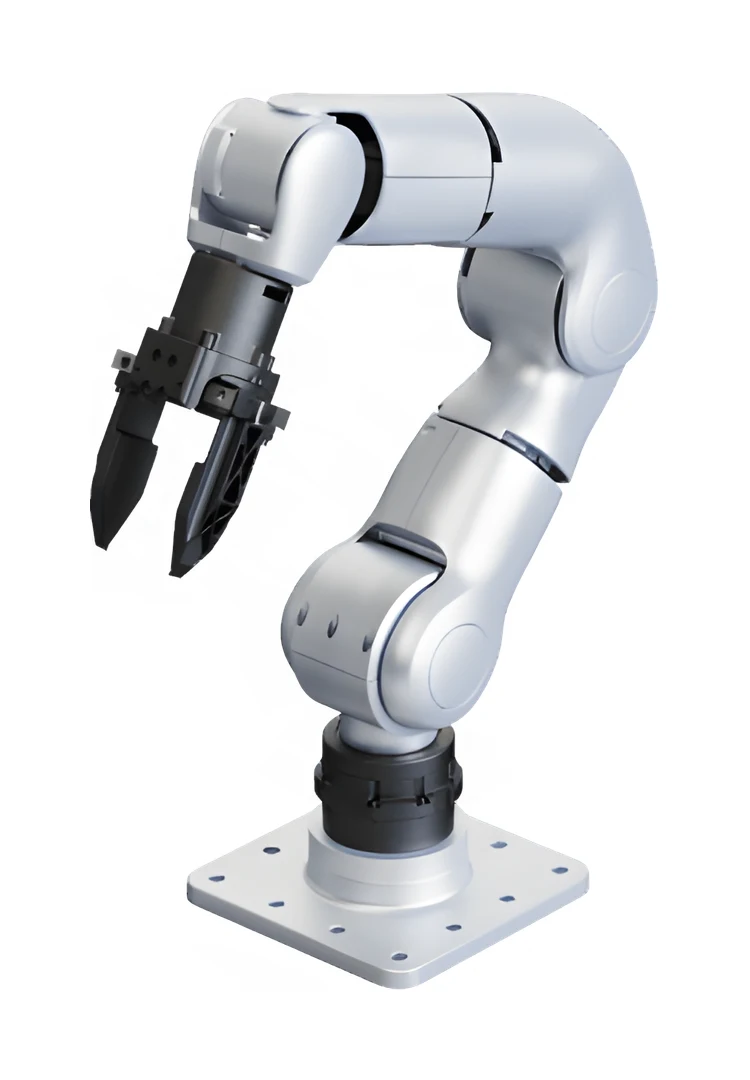
The Galbot S1 is a heavy-load dual-arm robot designed for industrial, warehousing and logistics scenarios. Maximum height is 1793 mm and weight 320 kg. It carries up to 50 kg with both arms; arm length from shoulder to wrist is 920 mm and lift travel 750 mm.
The workspace at the wrist centre spans 0-2400 mm horizontally and 2390 mm vertically, reaching from floor level to a top shelf at 2.3 metres. Degrees of freedom break down as neck 2, seven per arm and lift 1. Perception includes a binocular camera and a 3D LiDAR in the head, two depth cameras and two six-axis force sensors in the chest, and two 3D LiDARs on the chassis. Compute is 275 TOPS on an NVIDIA AGX Orin 64 GB. Two 48 V 30 Ah batteries give eight hours of operation, charge in two hours and hot-swap, so the robot can keep working around the clock. The base is a four-wheel steering omnidirectional type measuring 730 × 730 mm with a maximum speed of 1.5 m/s.
Enterprise supply · specification support · integration engineering
The Galbot S1 is a heavy-load dual-arm robot designed for industrial, warehousing and logistics scenarios. Within Galbot's lineup it is the body that carries the workload.
Mechanically: maximum height 1793 mm, weight 320 kg, arm length 920 mm from shoulder to wrist and 750 mm of lift travel. Degrees of freedom break down as neck 2, seven per arm and lift 1. The base is a four-wheel steering omnidirectional type measuring 730 × 730 mm with a maximum speed of 1.5 m/s.
Payload is up to 50 kg with both arms. The workspace at the wrist centre spans 0-2400 mm horizontally and 2390 mm vertically, reaching from floor level to a top shelf at 2.3 metres.
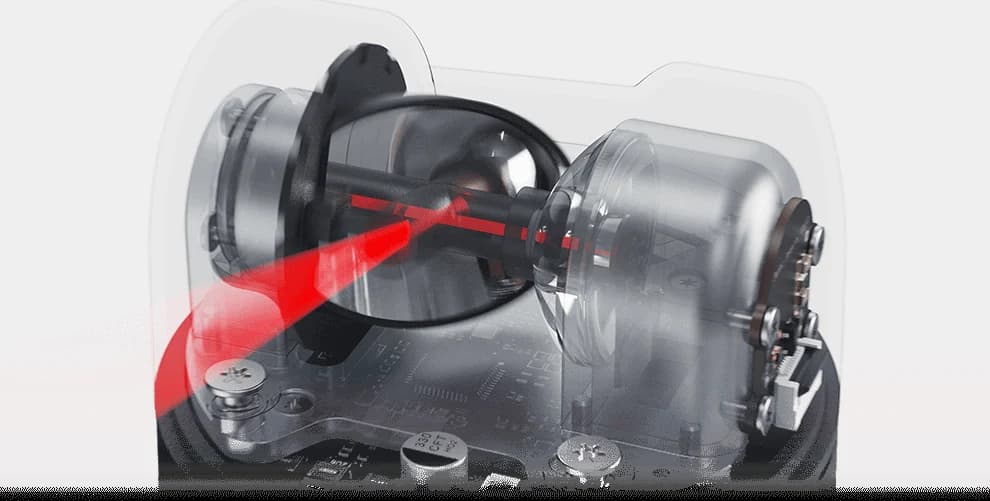
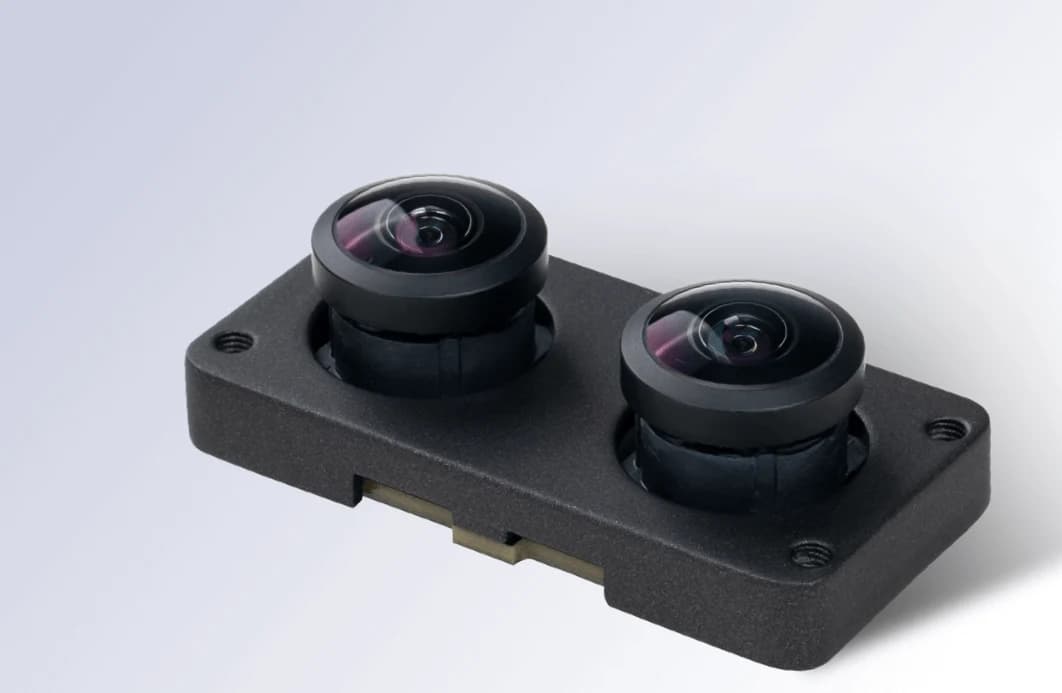
Perception draws on three positions: a binocular camera and 3D LiDAR in the head, two depth cameras and two six-axis force sensors in the chest, and two 3D LiDARs on the chassis. That split is functional; the chassis LiDARs see the ground plane for navigation while the head LiDAR sees the shelf height where the arm will work.
Compute is 275 TOPS on an NVIDIA AGX Orin 64 GB. For interaction there is a 7-inch touchscreen and two 5 W speakers; for networking WiFi 2.4 and 5 GHz with Bluetooth 5.2; for expansion USB 3.0 ×2 and Ethernet.
On energy, two 48 V 30 Ah batteries give eight hours of operation and charge in two. Because the batteries hot-swap, they are renewed without shutting the robot down and round-the-clock operation becomes possible. A wireless remote, a wired charger and a wireless emergency stop are standard equipment.
Operating temperature is 0-40 degrees and relative humidity 0-90% non-condensing. No protection rating is published.
For organizations with an S1 requirement we assess sourcing, timing and the alternatives deliverable today transparently.
2 use casesTap the cover to play; sound and loading start only on click.
The use cases the manufacturer defines for the Galbot S1.
The video shows the S1 picking and moving goods along a warehouse aisle.
A 50 kg dual-arm payload is what separates the S1 from the other two models in the Galbot family: the G1 carries 10 kg with both arms.
The workspace at the wrist centre spans 0-2400 mm horizontally and 2390 mm vertically.
In a warehouse, conditions change mid-task: a box shifts, an aisle closes, the target shelf turns out to be full.
Two 48 V 30 Ah batteries give eight hours of operation and charge in two.

In warehouse racking, height difference is the toughest constraint.
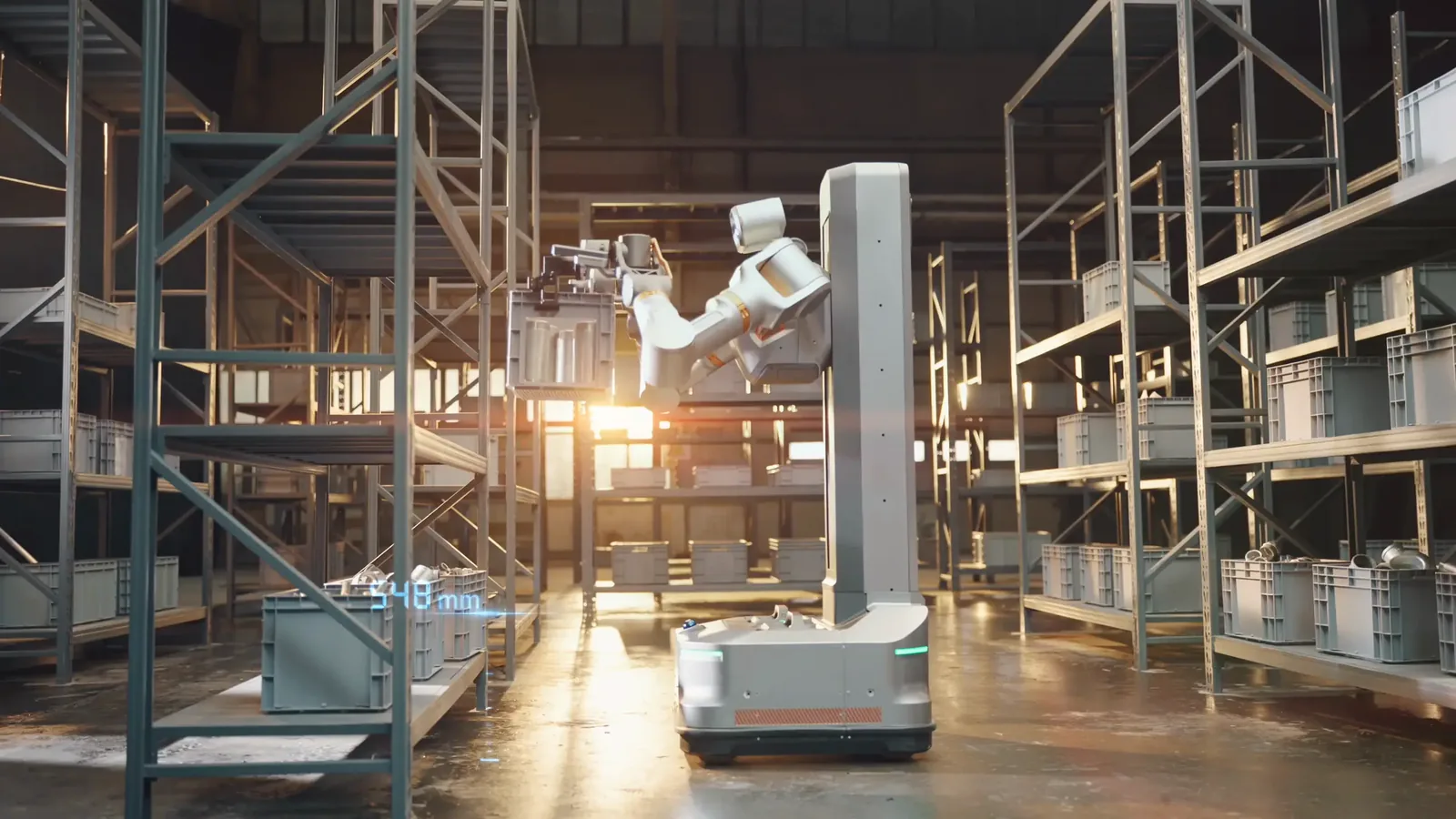
The base is a four-wheel steering omnidirectional type measuring 730 × 730 mm.
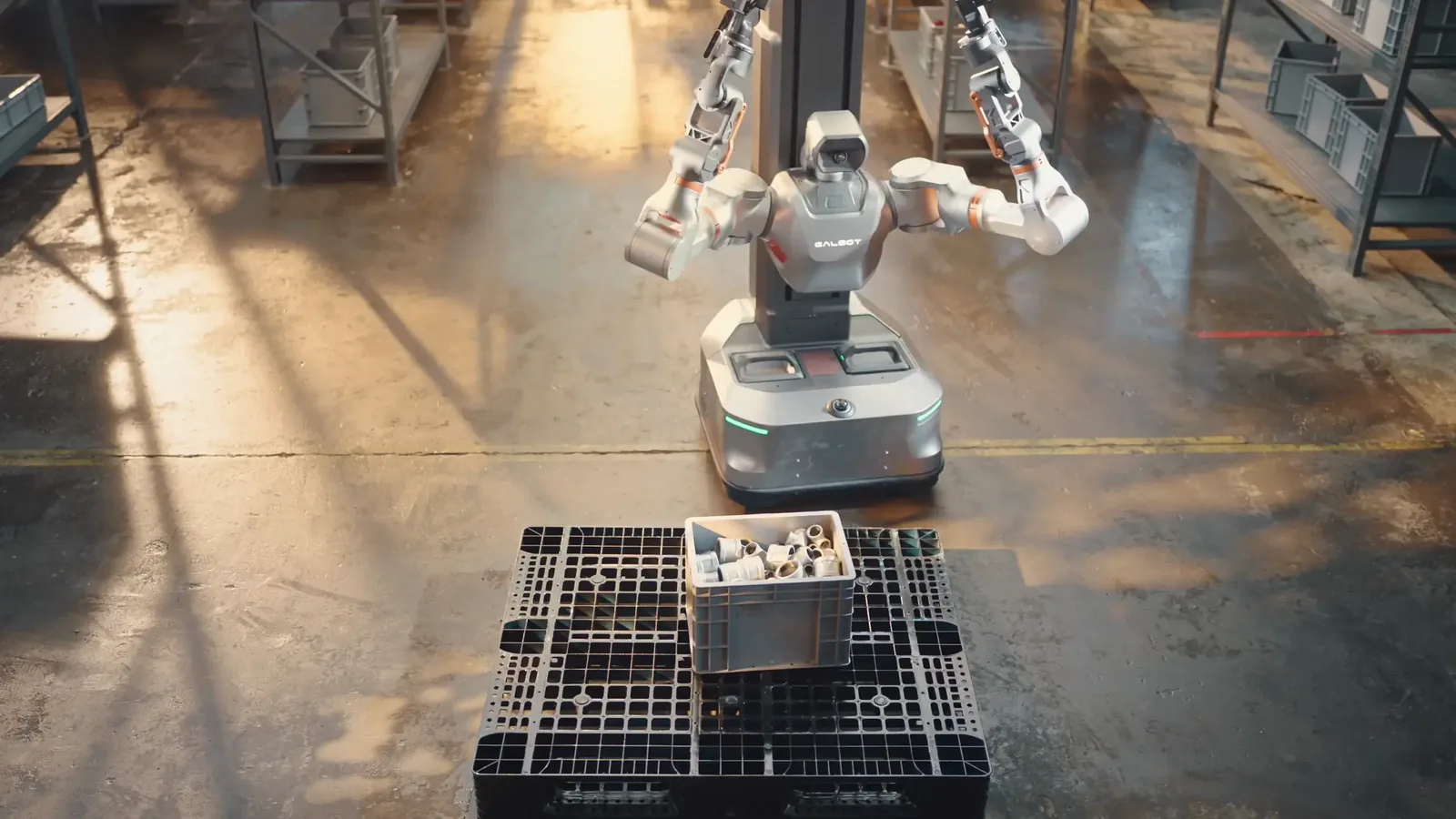
4 images; tap to enlarge.
31 values in 7 categories; data published by the manufacturer.
Verified on the manufacturer page on 18 September 2026.
An itemised quote for the Galbot S1 is prepared by configuration, quantity and delivery scope.
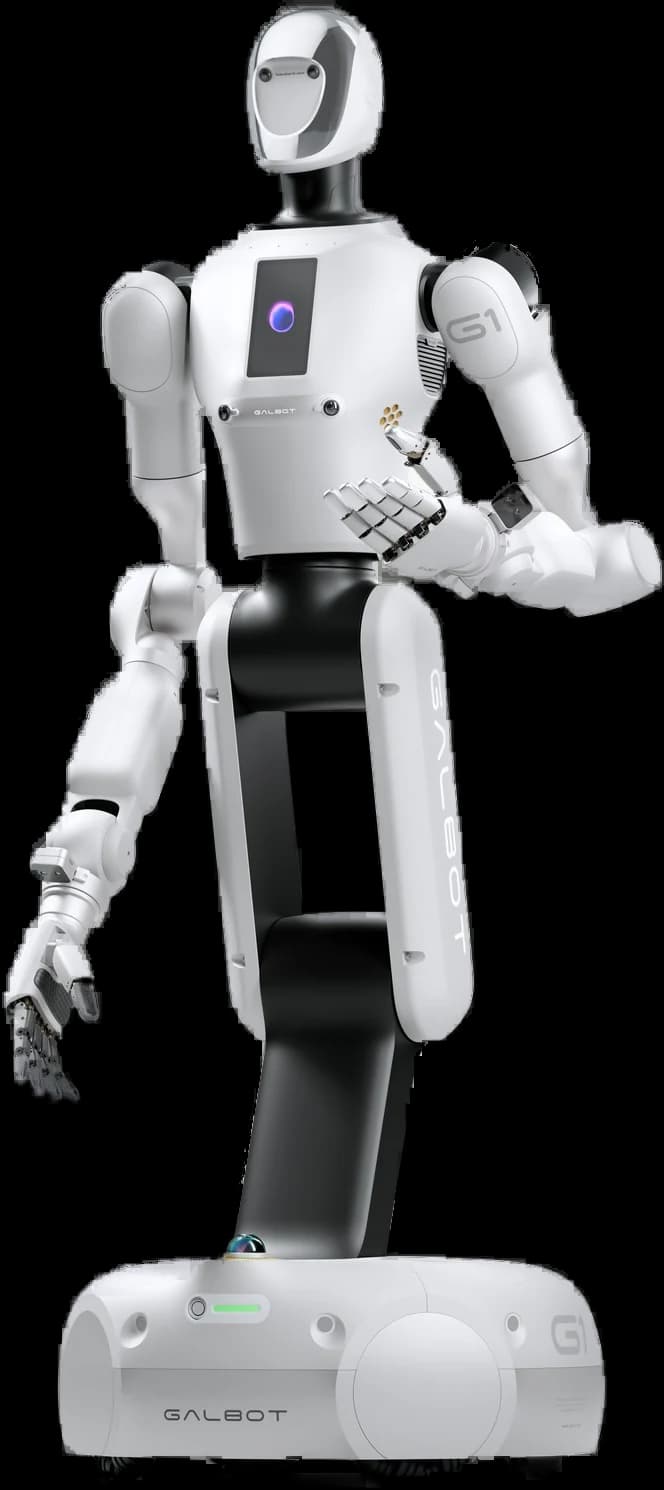
Putting Galbot's two wheeled models side by side makes the relationship clear: the G1 carries 10 kg with both arms on a 92.5 kg body, the S1 carries 50 kg on a 320 kg body. Payload rises fivefold while body weight rises three and a half times. The reason is tipping moment: as an arm extends, the load produces a toppling torque the further it moves from the base centre, and the only things opposing it are the base mass and footprint. On the S1 the base is 730 × 730 mm with a 320 kg body; on the G1 it is 600 × 600 mm and 92.5 kg. In an installation the concrete consequence is a floor loading calculation: a 320 kg machine needs a separate check on a mezzanine or an older warehouse slab.
Two 48 V 30 Ah batteries give eight hours of operation with a two-hour charge. Without hot swapping the duty ratio would be 8/10, that is 80 percent, and covering 24 hours in a three-shift facility would need 25 percent more robots. With hot swapping, downtime falls to the battery change alone. That is the single feature that makes the S1 suitable for round-the-clock operation, and it is the energy architecture rather than capacity or reach.
The S1 carries three 3D LiDARs in total: one in the head and two on the chassis. That split is functional. The two chassis LiDARs scan the ground plane for navigation and obstacle detection, while the head LiDAR sees the height the arm will work at, meaning the shelf level and the objects on it. In an arrangement with LiDAR only on the chassis, the robot knows where to drive but cannot derive the geometry of a box on an upper shelf. The two chest depth cameras then come in at the moment of grasping.
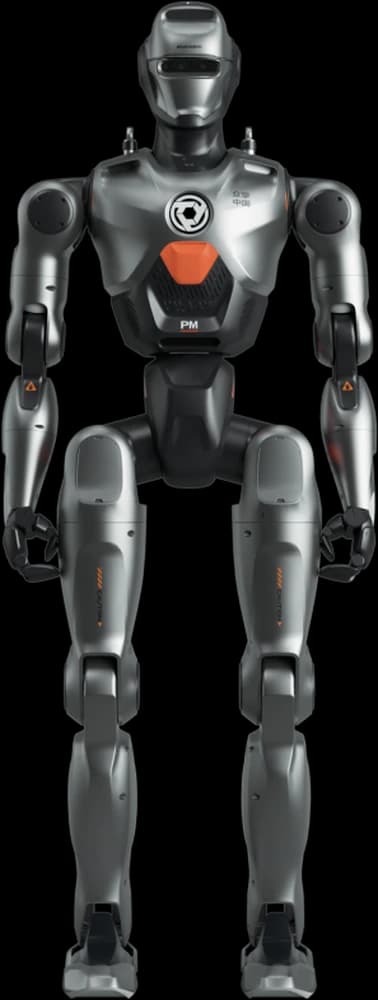
| Feature | Galbot S1 | Fourier GRW | Galbot G1 |
|---|---|---|---|
| Dual-arm payload | 50 kg | 16 kg | 10 kg |
| Height | 1793 mm max | 1160-1650 mm | 1730 mm max |
| Weight | 320 kg | Approximately 160 kg | 92.5 kg |
| Vertical workspace | 2390 mm | 2000 mm | 2100 mm |
| Runtime | 8 hours, 24/7 with hot swap | Up to 4 hours, hot swap | 8 hours |
| Footprint | 730 × 730 mm | 720 × 618 mm | 600 × 600 mm |
| Protection rating | - | - | IP54 |
Its 2390 mm vertical workspace is also the widest, letting one machine work from a floor pallet to a top shelf level. Round-the-clock operation on hot-swappable twin batteries directly reduces the robot count needed in a three-shift facility. Three separate LiDAR positions, in the head and on the chassis, feed navigation and manipulation independently, which is a considered choice. The limits gather under two headings. First installation: a 320 kg body requires a floor loading calculation and the 730 × 730 mm base must be measured against narrow aisles.
Supply model
Supply to Turkey is planned per project; import, delivery and commissioning scope are itemised in the quote.
Pre-sales assessment
Site and mission focused technical feasibility; specification and administrative process support.
Demo and site visit request
Send a demo request; availability and scope are settled in the call.
Source documents
Technical values come from the manufacturer's documents; verified on 18 September 2026. 1 documents at the bottom of the page.
Robotic system costs are optimised according to the selected hardware platform, additional sensor and payload configurations, and the integration scenarios specific to your site. Share your requirements and our engineering team will prepare a feasibility report and a pro forma quotation tailored to your organisation.
Direct contact and advisory line: 0850 532 6 777
The most common questions about the Galbot S1.
Sourcing, delivery schedule and investment for the S1 are settled per project. If you have a corporate requirement you can talk to Robotlar.org: we assess the sourcing process, a realistic timeline and the alternatives deliverable today.
Maximum height 1793 mm, weight 320 kg, arm length 920 mm and lift travel 750 mm. It carries up to 50 kg with both arms. The workspace at the wrist centre spans 0-2400 mm horizontally and 2390 mm vertically. Degrees of freedom are neck 2, seven per arm and lift 1. Compute is 275 TOPS on an NVIDIA AGX Orin 64 GB. The battery is 48 V 30 Ah × 2, giving eight hours of operation with two-hour charging and hot-swap support. The base is four-wheel steering omnidirectional at 730 × 730 mm with a maximum speed of 1.5 m/s. Operating temperature is 0-40 degrees and relative humidity 0-90% non-condensing.
What makes uninterrupted operation possible is the battery architecture. Two 48 V 30 Ah batteries give eight hours of operation and charge in two, and because hot swapping is supported the battery is renewed without shutting the robot down. Without hot swapping the duty ratio would stay at 80 percent and more robots would be needed for 24-hour coverage. In practice the second factor determining continuity is the number of spare batteries and charging station capacity, which should be costed as a separate line in the project plan.
The deciding factor is the load to be carried. The G1 handles 10 kg with both arms on a 92.5 kg body with IP54 protection, suiting retail, pharmacy and light service work. The S1 handles 50 kg with both arms on a 320 kg body and reaches warehouse racking with its 2390 mm vertical workspace. In return the S1's weight requires a floor loading calculation and no protection rating is published. If the load is under 10 kg the G1 is the right body; above that, the S1.
For warehouse and in-facility transport, Pudu Robotics delivery robots can be ordered in Turkey today, with 4-6 week delivery, a 1-year official warranty, on-site commissioning and engineering support across Turkey. If dual-arm manipulation is required, the Fourier GRW (wheeled, 16 kg dual-arm) is worth evaluating too, though it also requires a sourcing enquiry. In the 50 kg class there is no dual-arm counterpart deliverable in Turkey today.


