
First, the Disqualifier: 50 Centimetres
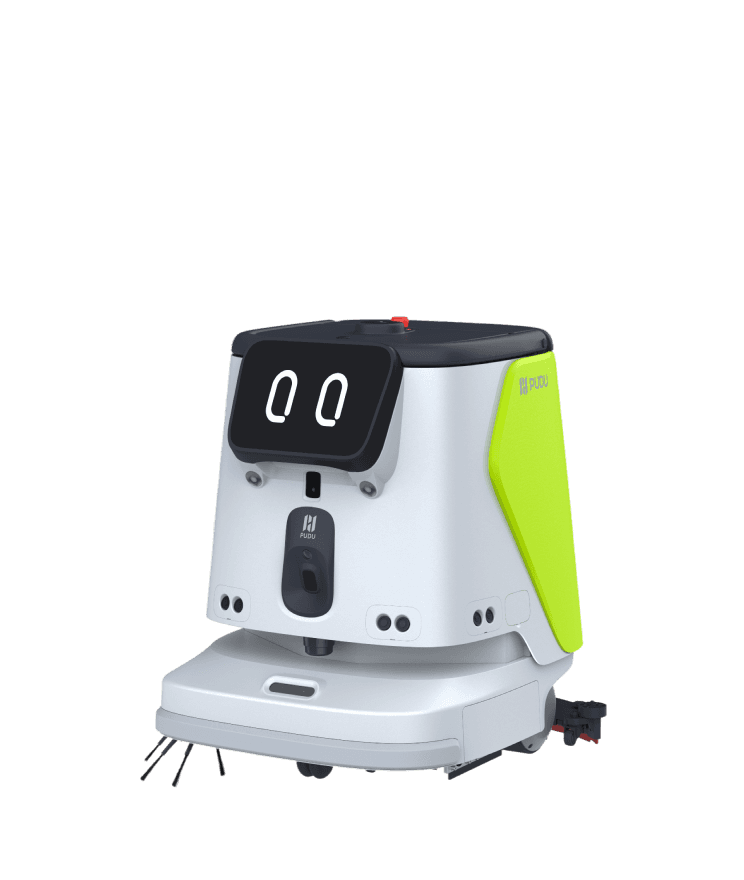
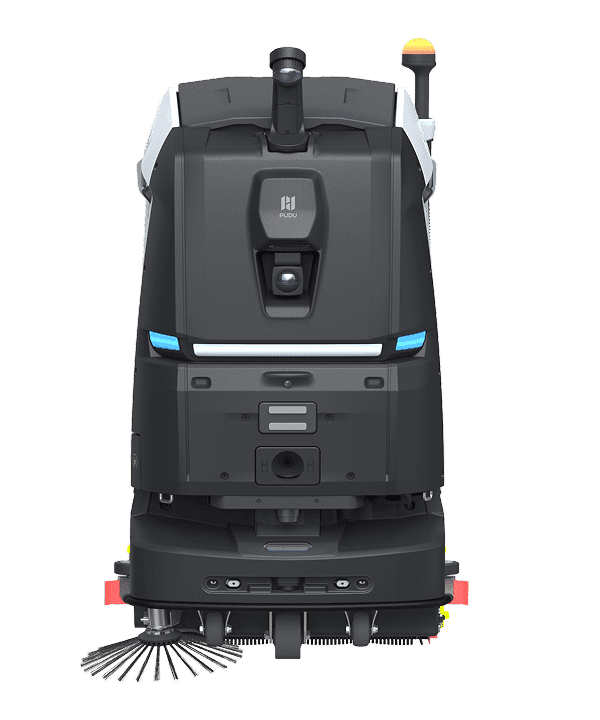
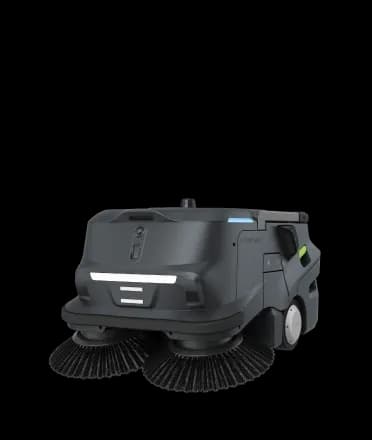
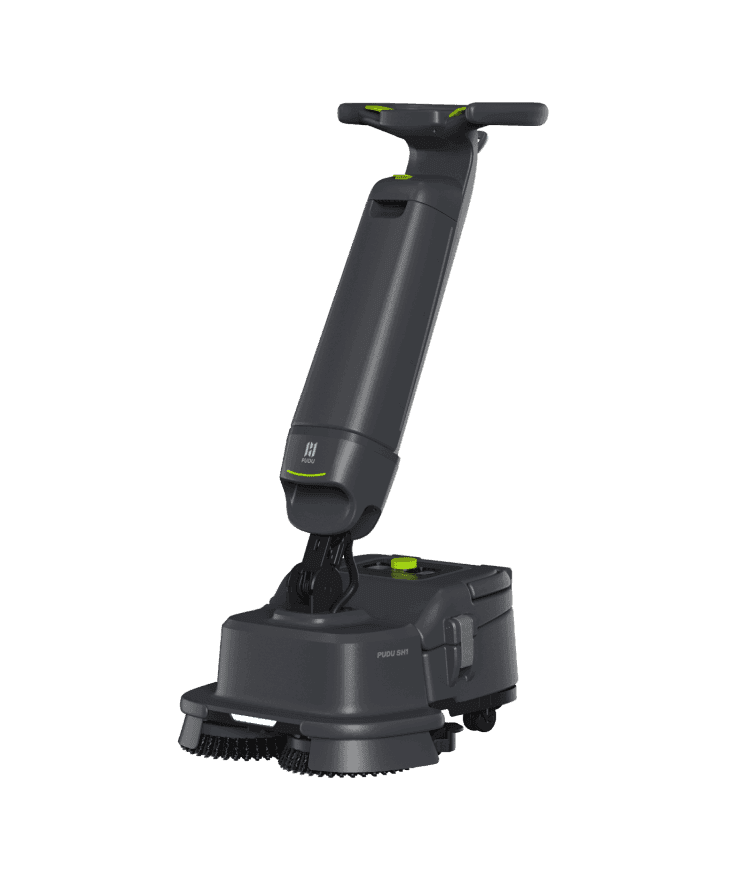
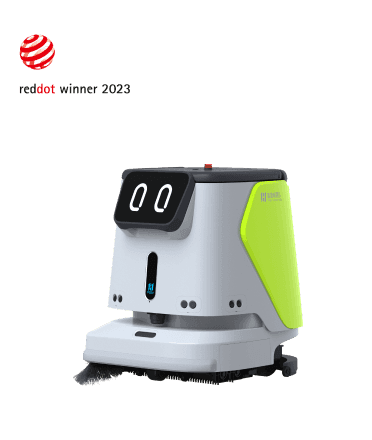
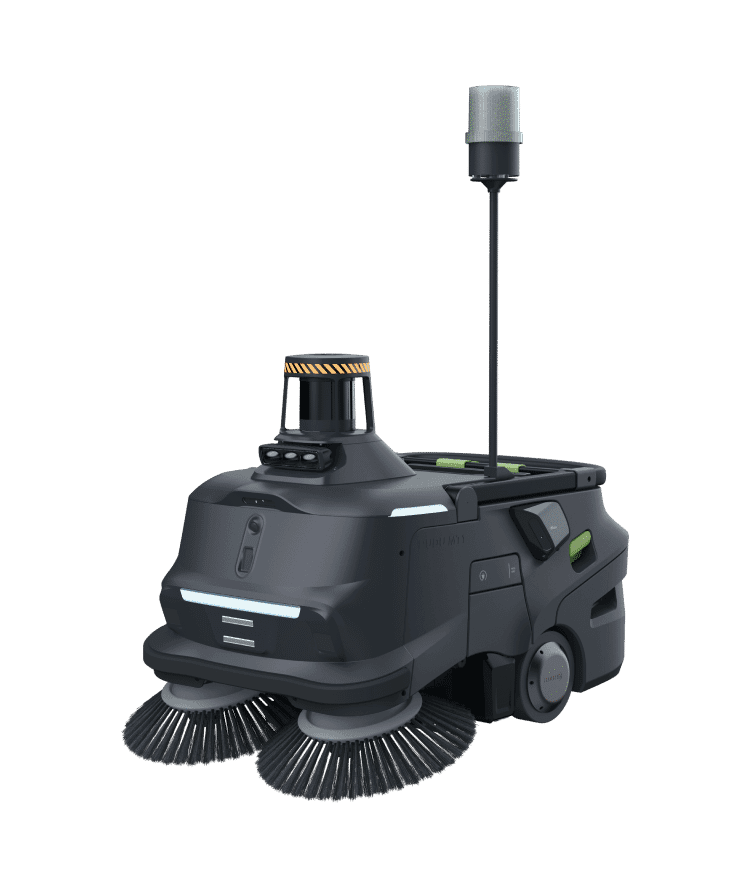
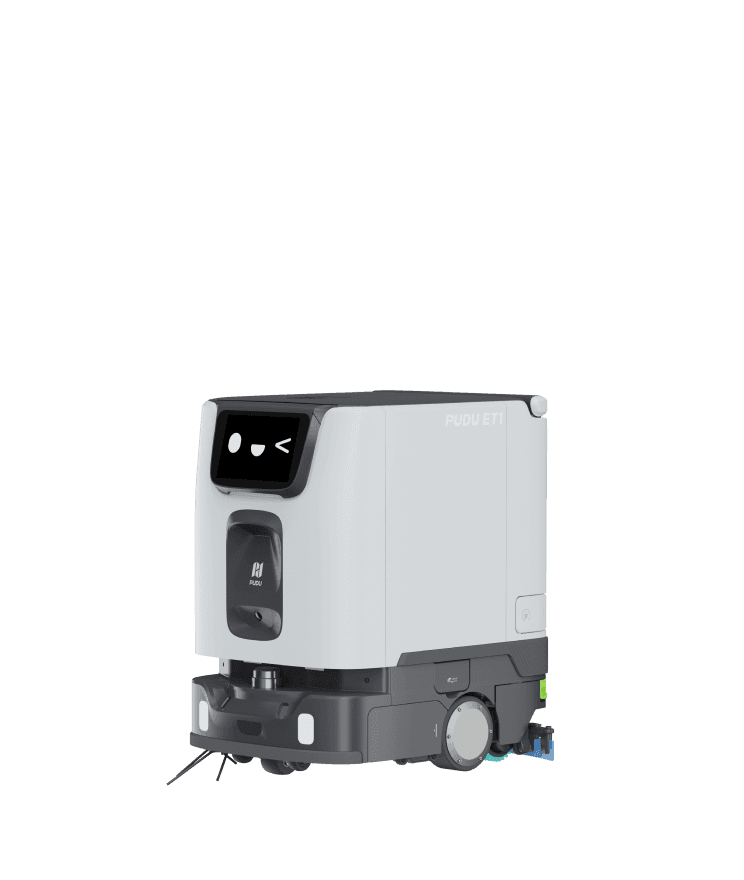
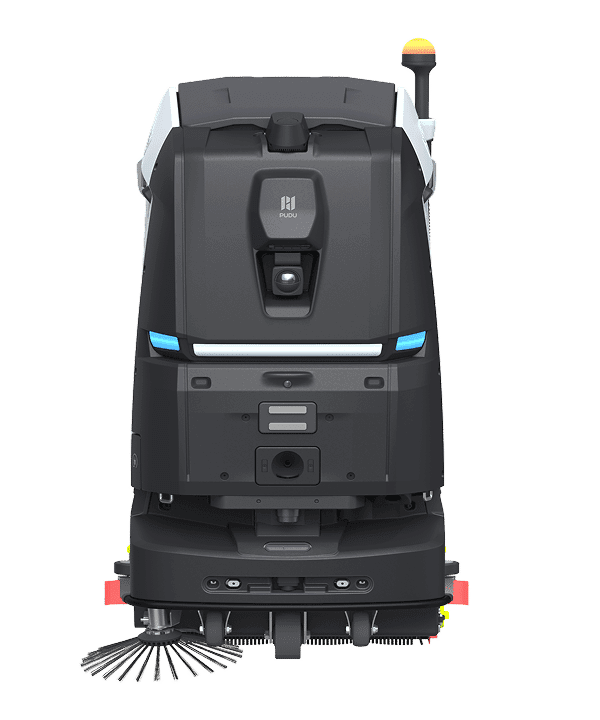
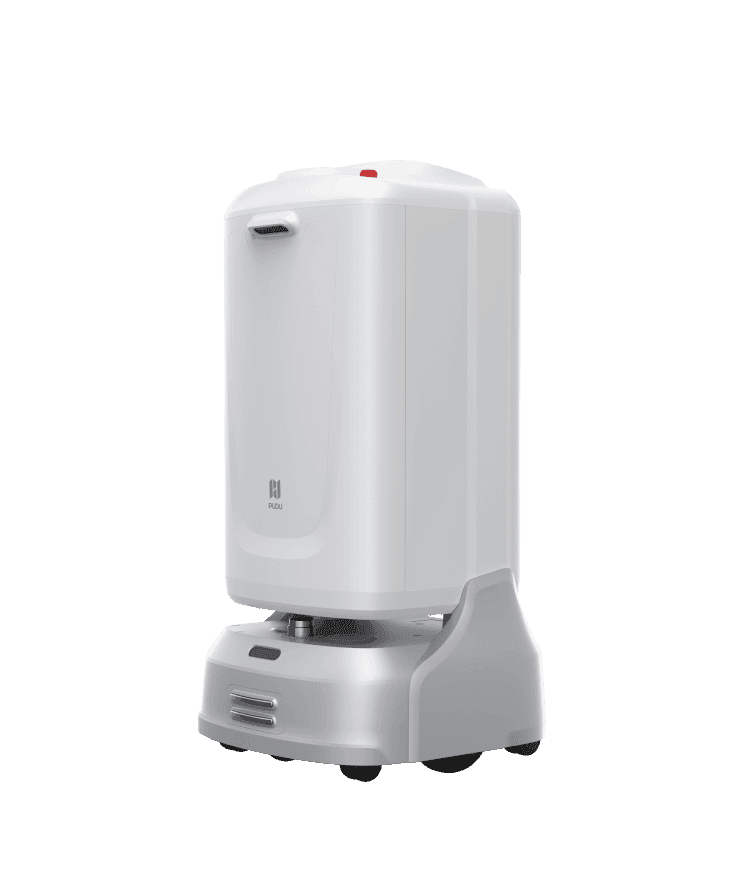
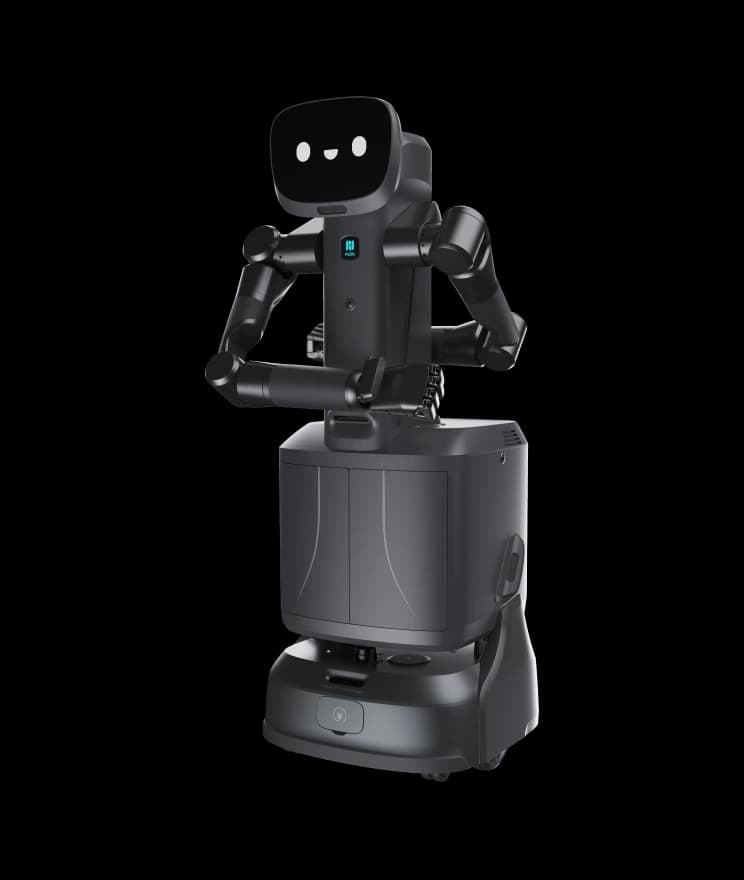
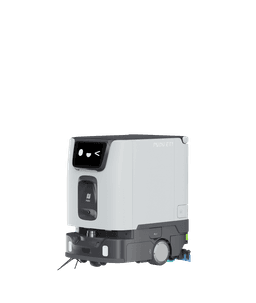
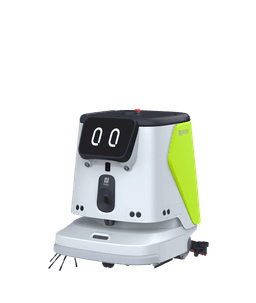
The CC1 Pro's body is 552 mm wide; the ET1's is 380 mm. The manufacturer's technical data states the ET1 passes clearances of 50 cm in width and 60 cm in height.
This is not a preference, it is a disqualifier. If shelf gaps, counter undersides or table spacings fall below 55-60 cm, the CC1 Pro physically cannot clean those zones; they stay manual, and the saving the robot was bought for leaks out there.
Measure before the site visit: take a tape to the three narrowest clearances in the facility and write them down. Those three numbers settle half the decision.
Measured Differences
| Measure | PUDU ET1 | PUDU CC1 Pro |
|---|---|---|
| Body (L × W × H) | 500 × 380 × 580 mm | 629 × 552 × 695 mm |
| Weight | approx. 45 kg | 75 kg |
| Target area | 100-800 m² | Large commercial space |
| Throughput | 300-720 m²/h | 3,000 m²/h (local cleaning) |
| Clean / waste water | 8 L / 7.2 L | 15 L / 15 L |
| Battery | 35 Ah | 50 Ah |
| Run-time | 2.5-4 h | 4-9 h by mode |
| Charging | approx. 3 h | 3 h |
| Suction | up to 20 kPa | , |
| Hot scrubbing | 85 °C | , |
| Roller speed | max. 800 rpm | , |
| Dust box | 2.5 L | , |
| Protection rating | , | IPX4 |
It does not mean zero or absent.
What the Throughput Gap Means
The CC1 Pro's 3,000 m²/h applies to local cleaning; the ET1's 300-720 m²/h varies by mode and floor condition. The gap is four to ten times, and it comes not from one robot being faster at the same job but from the two being built for different scales.
In practice: a 1,500 m² floor takes the ET1 roughly two hours even at the top of its catalogue range, consuming most of a charge. The same floor is half an hour of work for the CC1 Pro.
The reverse also holds: in a 250 m² store the CC1 Pro's throughput is unusable, because the limiting factor is not speed but manoeuvring. The robot stops in front of the shelf it cannot pass.
Water Cycle and Shift Interruption
The ET1 carries 8 L of clean water, the CC1 Pro 15 L. When water runs out the robot returns to the station, and each return is time taken out of the shift.
You can size the number of refills roughly as: square metres to clean ÷ (tank litres × area covered per litre). Area covered per litre varies with soil level and the chosen water rate, so it is measured on site.
What is decisive: the ET1's station has eight functions (charging, roller cleaning, squeegee rinsing, roller spin-drying, clean water refill, waste water drainage, detergent dosing, water heating) and the return is fully automatic. The refill break is therefore not staff work. The only routine needing hands is emptying the dust box weekly.
Which Business Buys Which
| Situation | Model | Why |
|---|---|---|
| Convenience store, drugstore, chain restaurant, economy hotel, office floor | ET1 | The manufacturer's target list; 100-800 m² and tight clearances |
| Narrowest clearance below 60 cm | ET1 | The CC1 Pro physically does not fit |
| Greasy floors, sticky residue (back of kitchen, food court) | ET1 | 85 °C hot scrubbing and 800 rpm roller |
| Open area above 800 m² | CC1 Pro | Throughput and water capacity |
| Narrow shift window, large area | CC1 Pro | 3,000 m²/h and a 15 L tank |
| Operation where staff cannot spare time for the robot | ET1 | Eight-function station, one intervention a week |
| Multi-site rollout across a chain | ET1 | Auto mapping, no pre-deployment setup |
The Decision Calculation, With Your Numbers
Fill in the six rows below; the result shows which model is required and how quickly the robot pays for itself. The only inputs that decide the result are your own facility's figures.
| # | What to measure | How to find it |
|---|---|---|
| 1 | Square metres cleaned daily | From the floor plan, counting only the area the robot will enter |
| 2 | Narrowest clearance (cm) | Shelf gaps, counter undersides, table spacing; take the narrowest |
| 3 | Shift window (hours) | Time available for cleaning between closing and opening |
| 4 | Monthly labour spent on floor cleaning | Hours × hourly cost × headcount; count floor work only |
| 5 | Consumables and equipment (monthly) | Detergent, mops, scrubber maintenance |
| 6 | Re-clean frequency | Cleanings repeated after a complaint or an audit |
If row 2 is below 60 cm the decision ends at the ET1 and the rest need not be calculated.
Row 1 ÷ row 3 gives the hourly throughput required. Below 720 m²/h the ET1 suffices; above it, look at the CC1 Pro.
The monthly sum of rows 4 + 5 + 6 is the real cost the robot displaces. Send us that figure with your facility measurements and we will work out the net quote and payback period together.
What the Two Models Share
Features often taken as differentiators that both models in fact have: four functions in one body (sweeping, scrubbing, vacuuming, dust-mopping), autonomous navigation and mapping, automatic return to charge, water refill and drainage with a suitable station, digital cleaning reports.
None of these decides between the two. Three things do: clearance width, required hourly throughput, and how greasy or sticky the floor is.