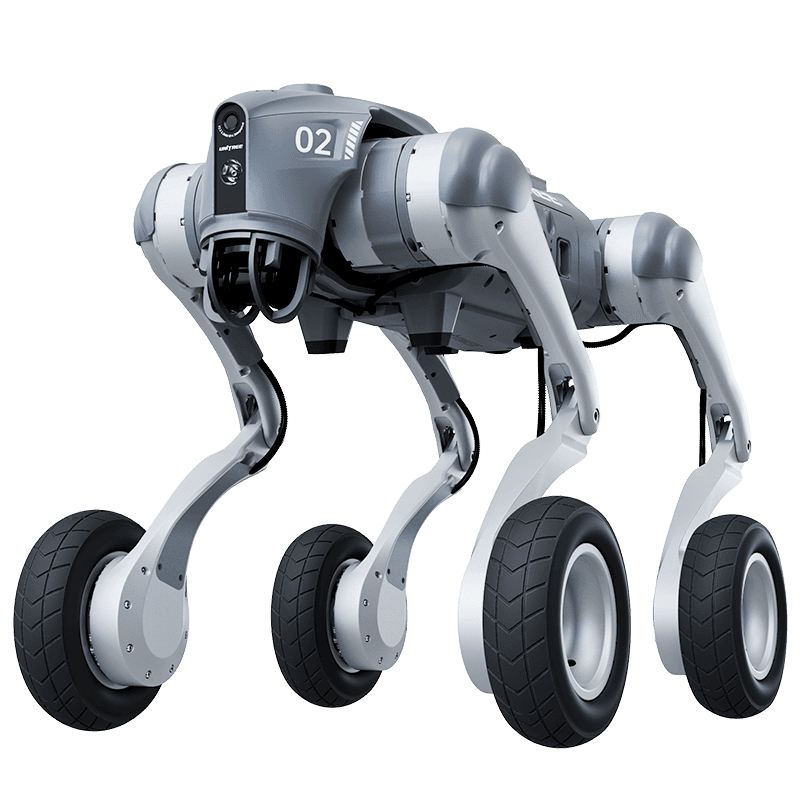
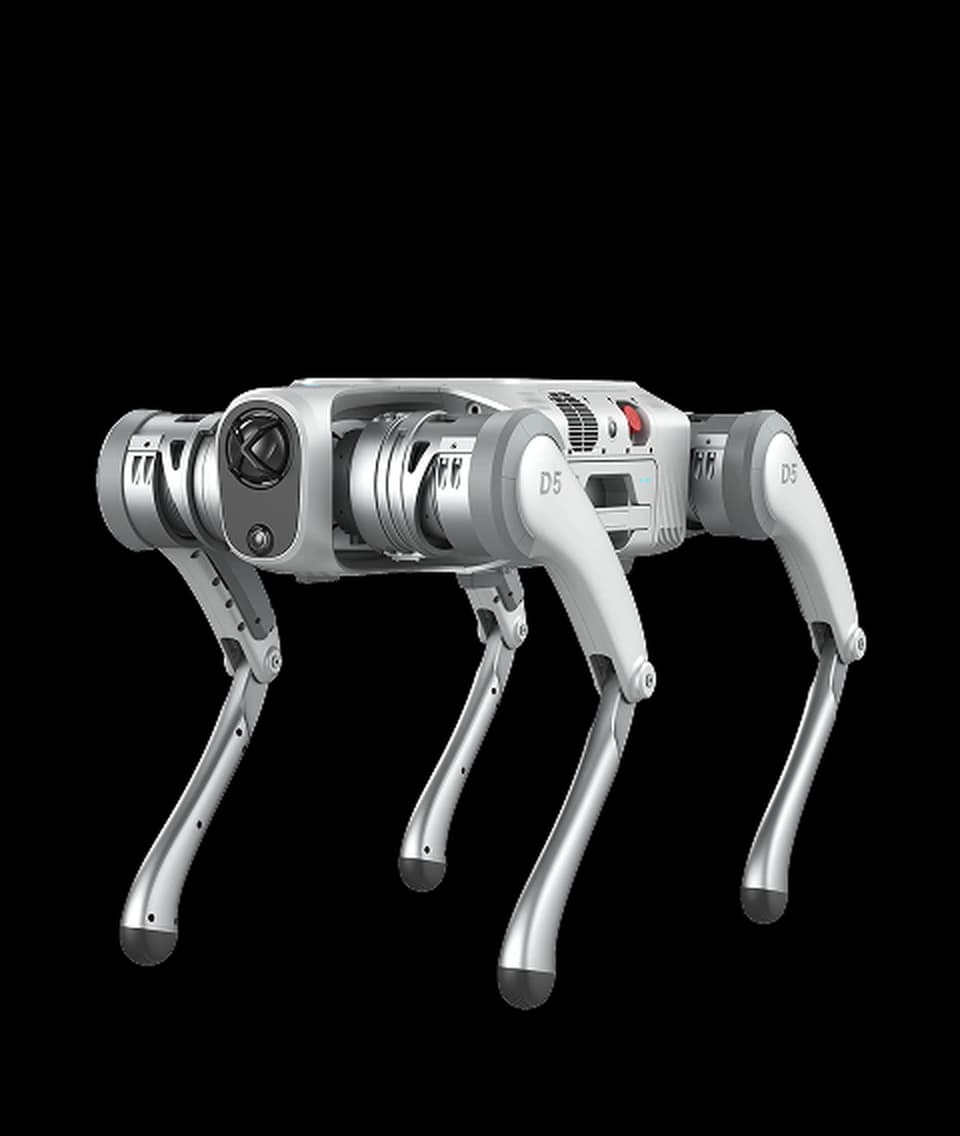
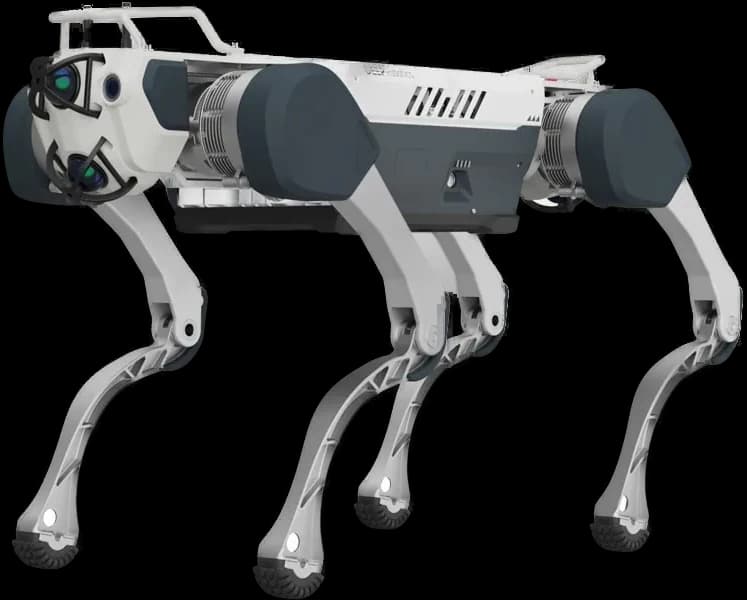
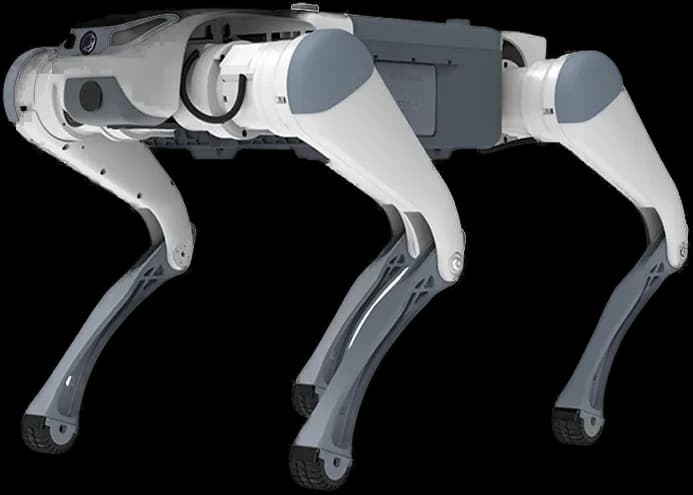
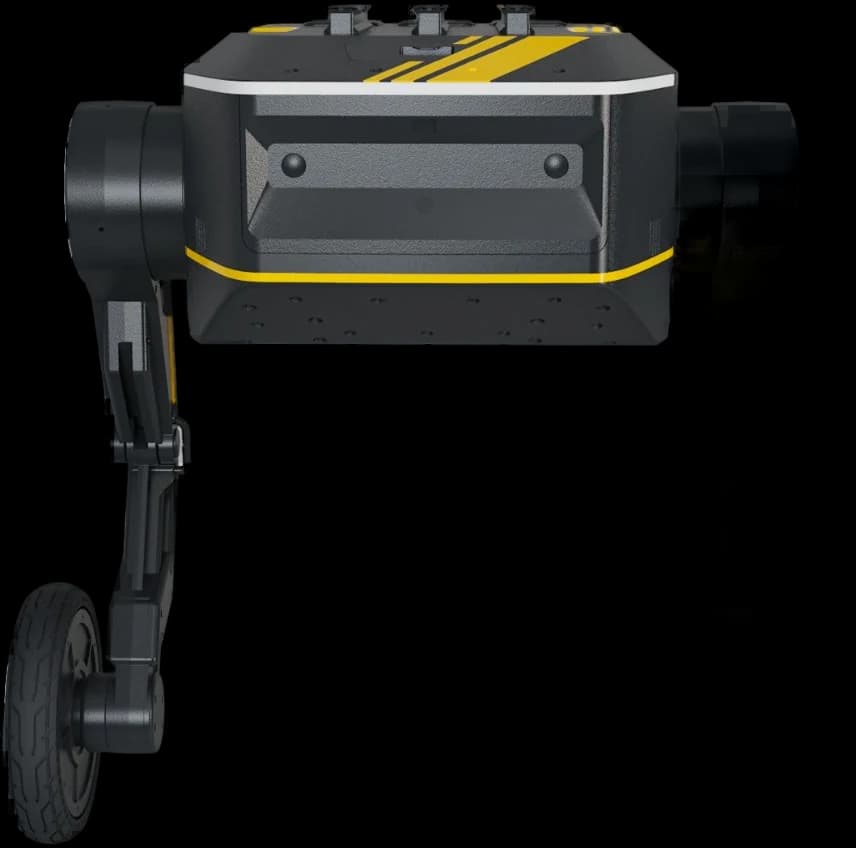
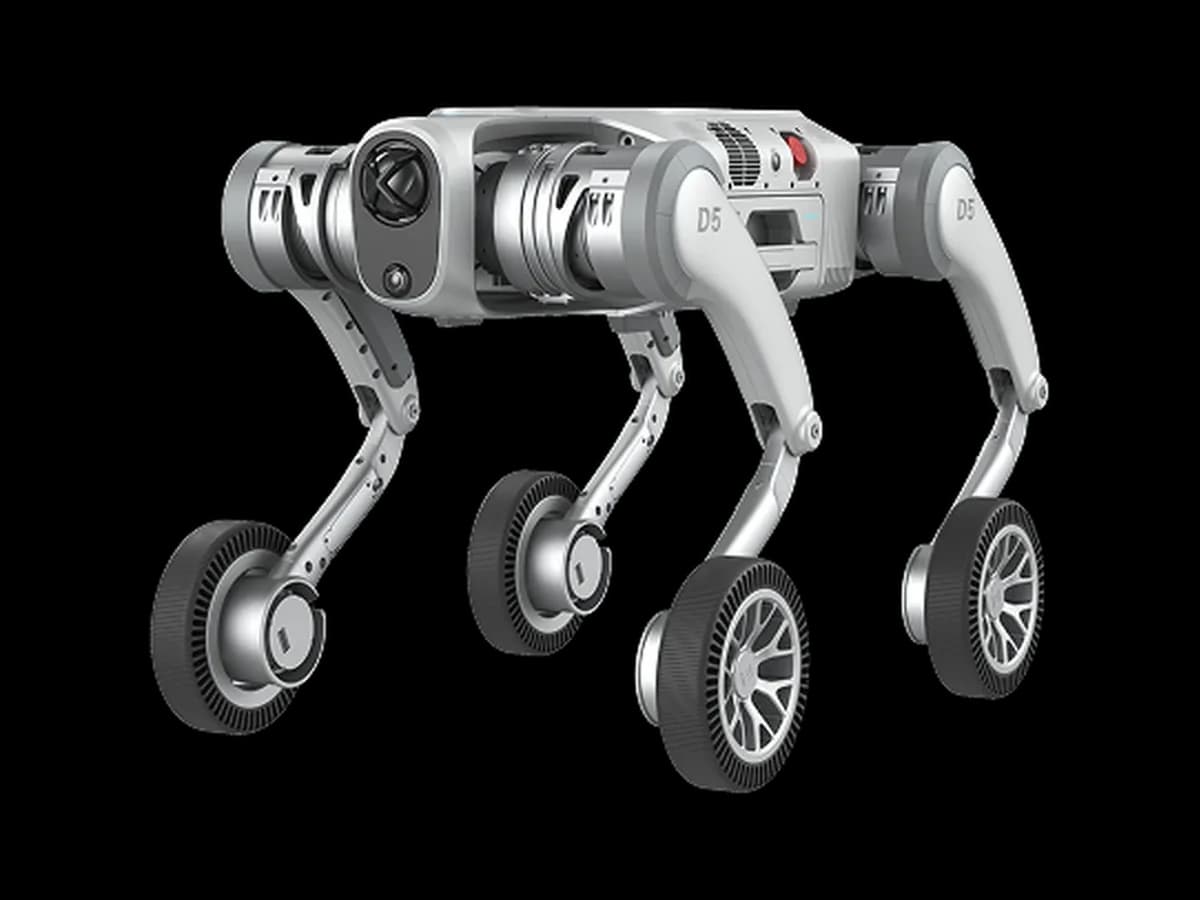
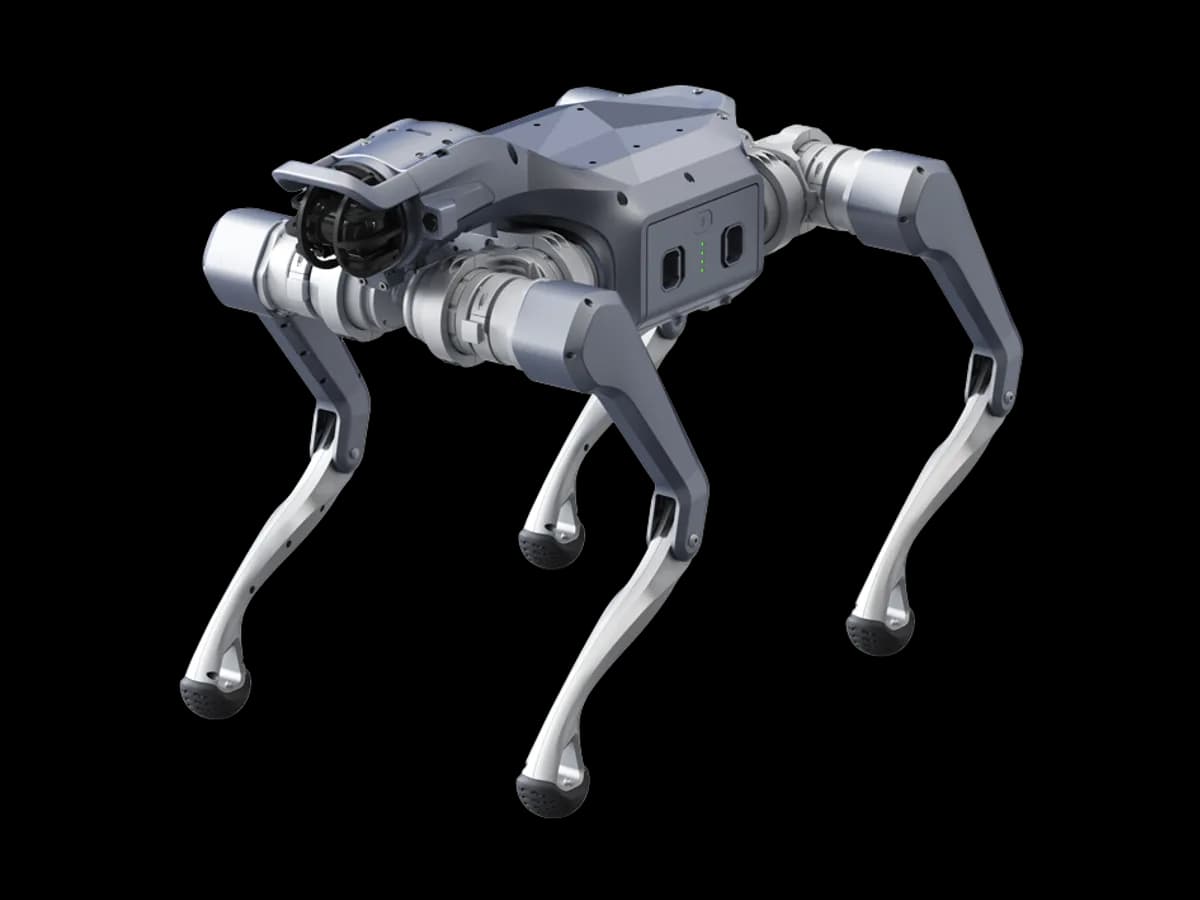
The AgiBot D1 Max is a wheel-legged quadruped positioned as a productivity platform built for industry. In a 41 kg body it carries a 25 kg rated payload, reaches 6 m/s, climbs 45-degree slopes and crosses 80 cm obstacles.
Read moreShow less
IP67 protection and a -20 to 55 degree operating range are built for outdoor and industrial use. Two 504.9 Wh batteries hot-swap; runtime is 5 hours and 29 km unloaded, 3.5 hours and 18 km fully loaded. It ships with front and rear 96-channel LiDAR, 8 MP FPV cameras, GNSS RTK and a Jetson Orin NX 16 GB. Robotlar.org assesses sourcing and alternatives together with organizations that have a D1 Max requirement.
Enterprise supply · specification support · integration engineering
1/6
Overview
AgiBot (AGIBOT Innovation (Shanghai) Technology Co., Ltd.) is a Shanghai-based Chinese company developing humanoid and quadruped robots. The D1 Max is the industrial wheel-legged member of the company's D1 series; it is a lightweight yet heavy-duty, highly durable, agile productivity platform that excels at overcoming obstacles.
Hardware highlights: 930 × 480 × 585 mm standing, 41 kg including battery, 12 leg joints and 4 wheels, 150 Nm joint torque. In wheel mode 6 m/s, 45-degree climbing, 80 cm obstacles and 25 cm continuous stairs; a 25 kg rated payload and 50 cm obstacle crossing while loaded. Two 504.9 Wh batteries hot-swap: 5 hours and 29 km unloaded, 3.5 hours and 18 km fully loaded. IP67 protection and a -20 to 55 degree operating range. For perception, front and rear 96-channel LiDAR, 8 MP FPV cameras, four fill lights, an automotive-grade IMU, GNSS RTK and ultrasonic sensors; compute is a Jetson Orin NX 16 GB (100-157 TOPS).
Three An SDK with 3D CAD and URDF files supports secondary development; two Gigabit Ethernet, two USB 3.0, RS232, RS485, two SBUS and PPS interfaces with up to 480 W of power output are reserved for payload modules. The adapter, charging dock and remote controller with display are standard, the autonomous charging station optional. All values are laboratory test data; actual performance may vary with the environment and usage.
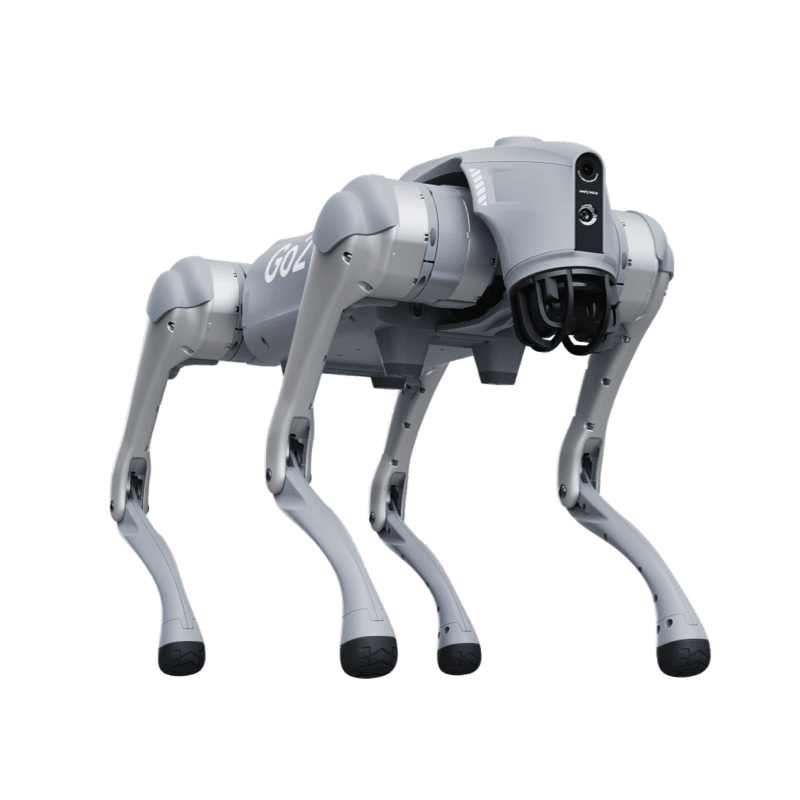
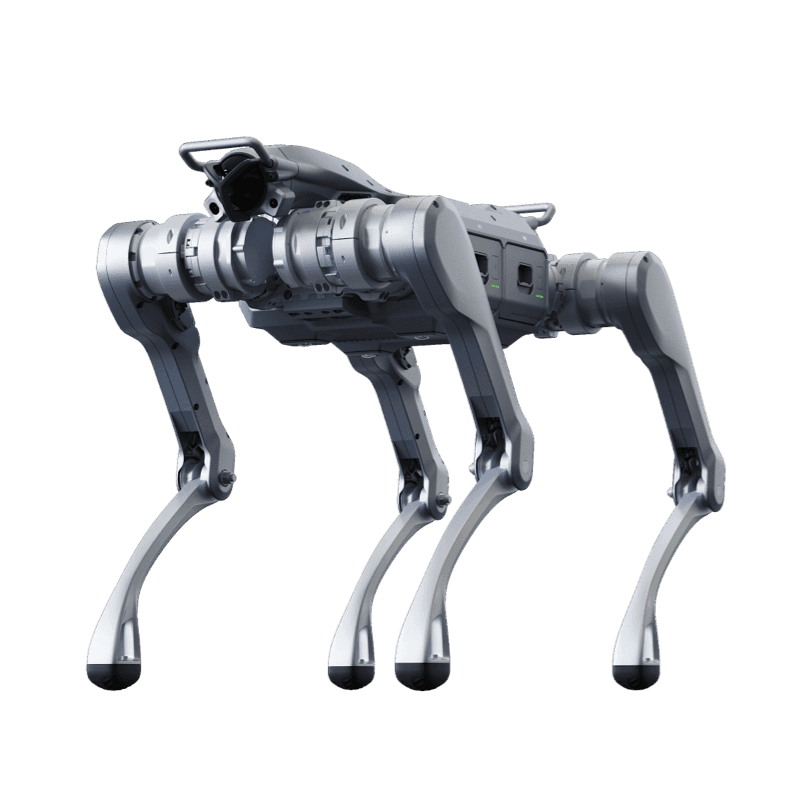
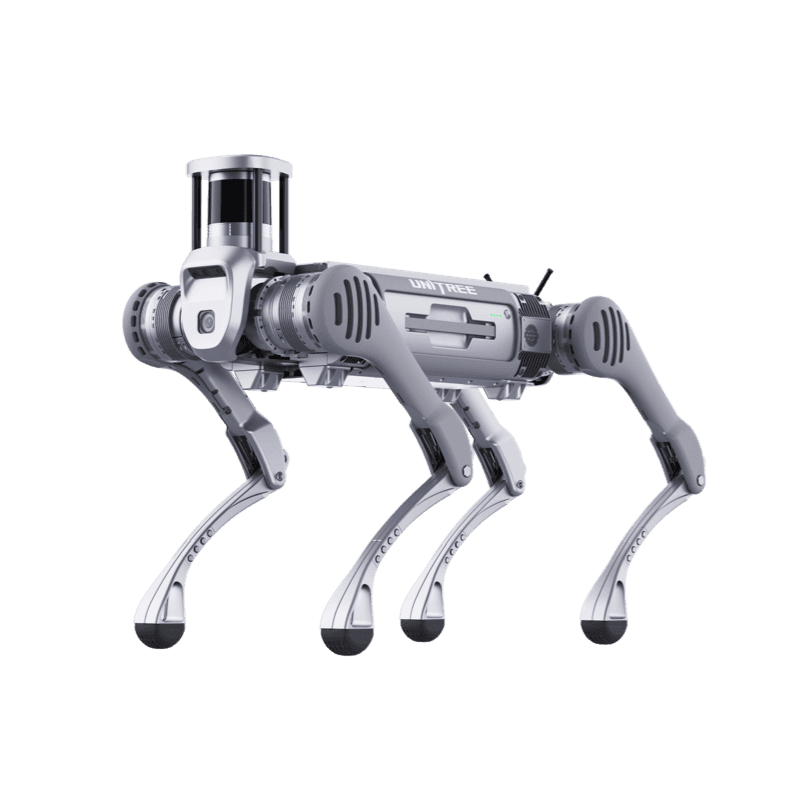
For organizations with a D1 Max requirement we assess sourcing, timing and the quadruped alternatives deliverable today (Unitree B2 and Go2) transparently.
Tap the cover to play; sound and loading start only on click.
AgiBot D1 Max product video
Use Cases
The use cases the manufacturer defines for the AgiBot D1 Max.
01Logistics and transport
02Personnel search and rescue
03And task execution
Key Advantages
A Productivity Platform for Industry: Launch Video
The D1 Max is lightweight yet heavy-duty, highly durable, agile and excellent at overcoming obstacles.
The two-minute launch video shows wheel-legged locomotion, the dual-battery swap and the logistics, search-and-rescue and task-execution scenarios.
Appearance and colour may be slightly adjusted in the future; the actual product prevails.
Enterprise-Grade Reliability
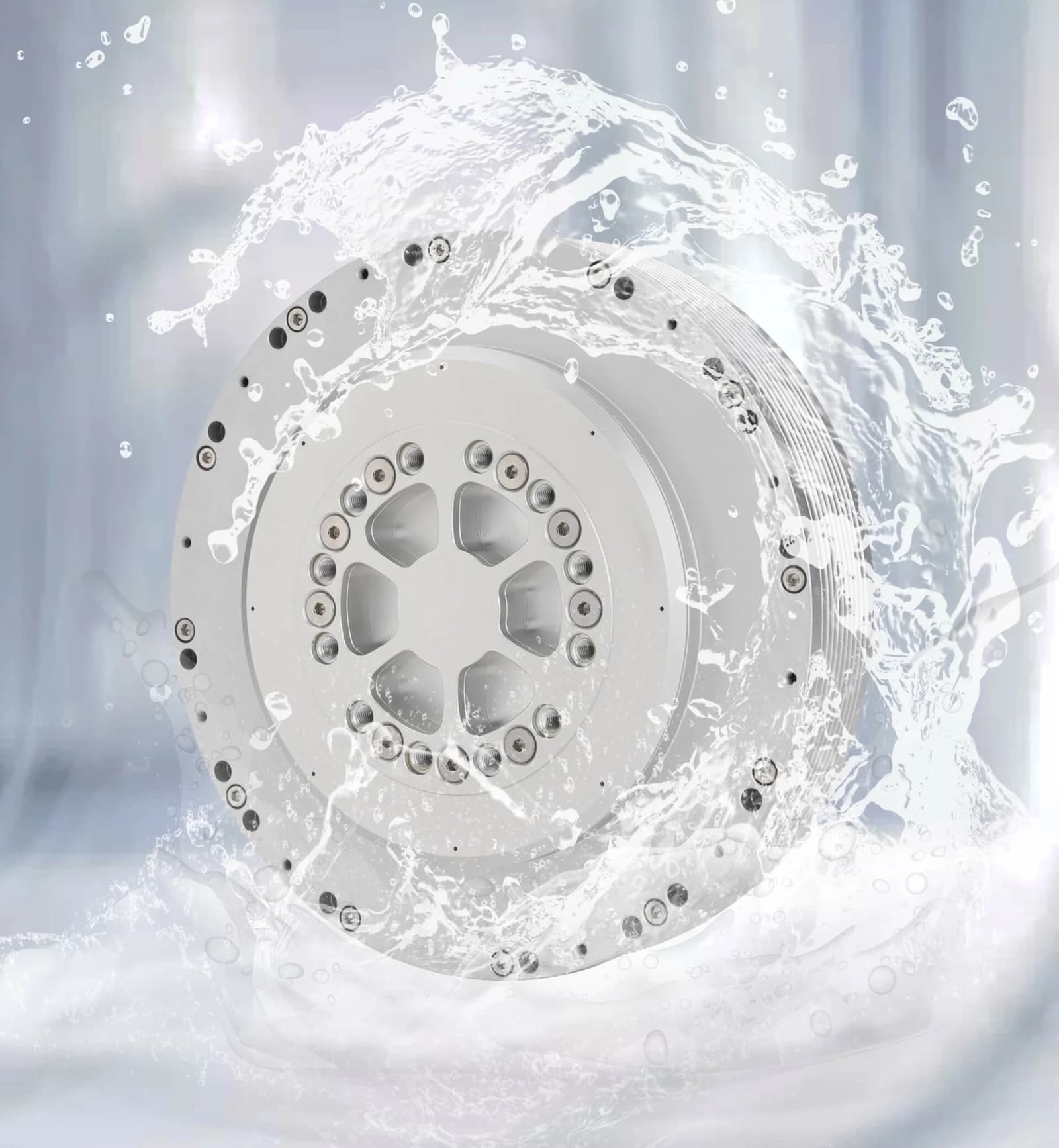
With an IP67 protection rating it handles rain, dust and humidity; the operating temperature spans -20 to 55 degrees.
Designed for long-term operation in outdoor and industrial environments, cutting equipment downtime and maintenance costs.
The body is aluminum alloy and high-strength engineering plastic.
Extended Operational Endurance
Battery life is 5 hours unloaded and 3.5 hours fully loaded (both ± 0.5 h); range is 29 km unloaded and 18 km fully loaded (± 1 km).
The two 504.9 Wh, 54 V batteries hot-swap and charge in under 1.5 hours.
Less manual intervention, longer continuous operation.
Robust Payload Capacity
A 25 kg rated payload delivers reliable performance across tasks, and the robot crosses 50 cm obstacles while loaded.
A wide set of communication, power and control interfaces (two Gigabit Ethernet, two USB 3.0, RS232, RS485, two SBUS, PPS; 5 to 48 V power outputs up to 480 W) supports flexible secondary development and in-depth industrial integration.
Superior Mobility
The wheel-legged structure brings faster response, broader coverage and higher operational efficiency: 6 m/s in wheel mode.
A 45-degree climbing angle, 80 cm obstacle-crossing height and 25 cm continuous stair climbing raise task success rates on complex terrain.
It supports zero-turn maneuvering and an adjustable crawling height (34 ± 0.5 cm) for forward and backward movement.
Optimized for Large-Scale Deployment
The dual-battery hot-swap design minimizes downtime.
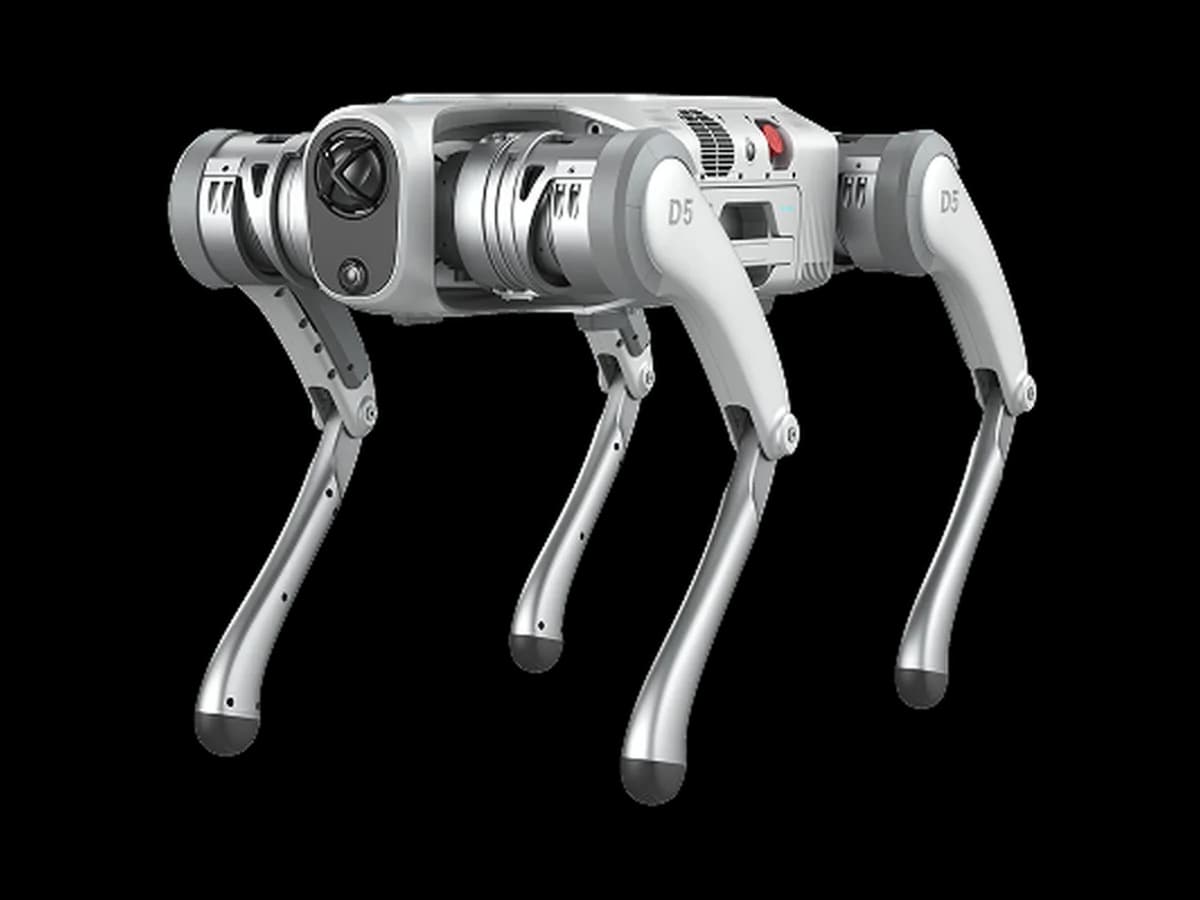
Intelligent wheel/leg mode switching: wheel mode offers stable, efficient movement with extended runtime, while leg mode provides superior terrain adaptability for multi-scenario operations.
An autonomous charging station is optional; the adapter, charging dock and remote controller with integrated display are standard.
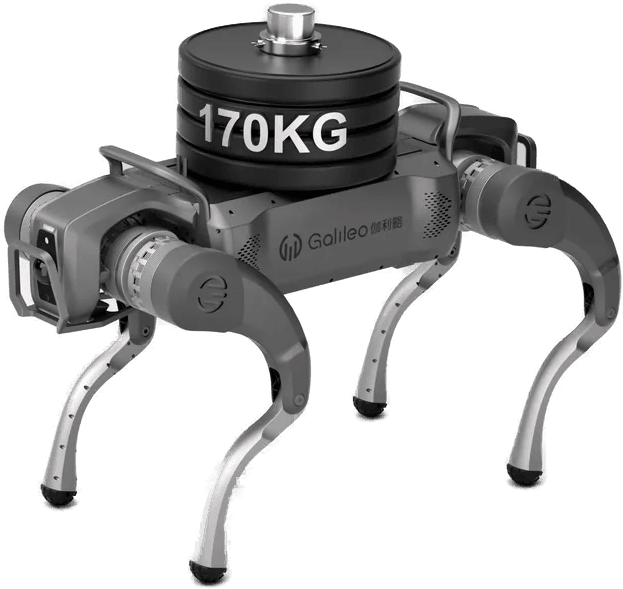
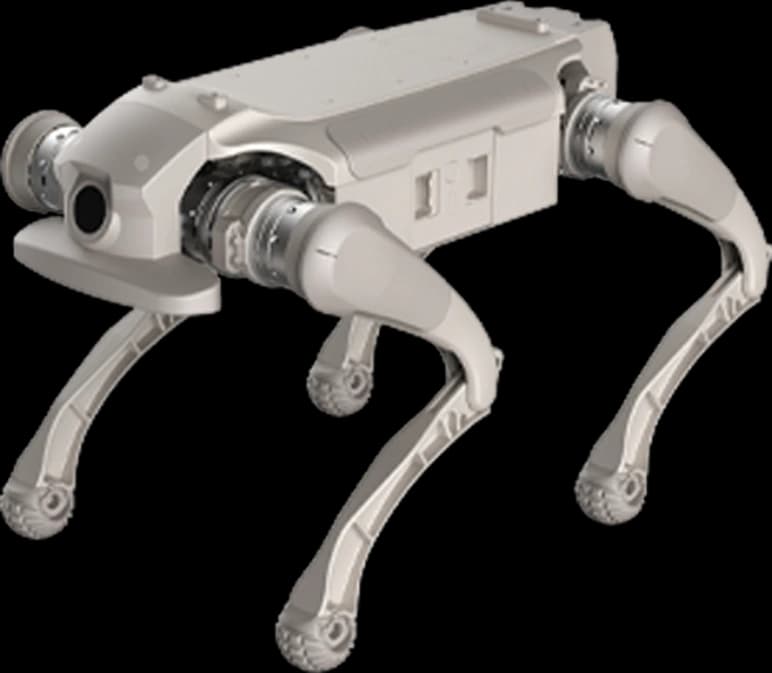
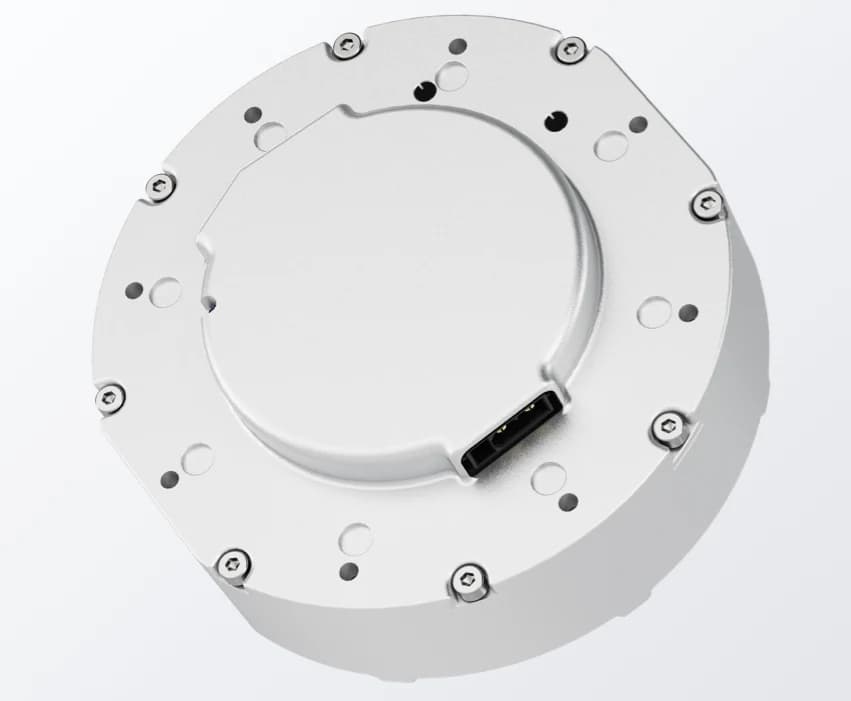
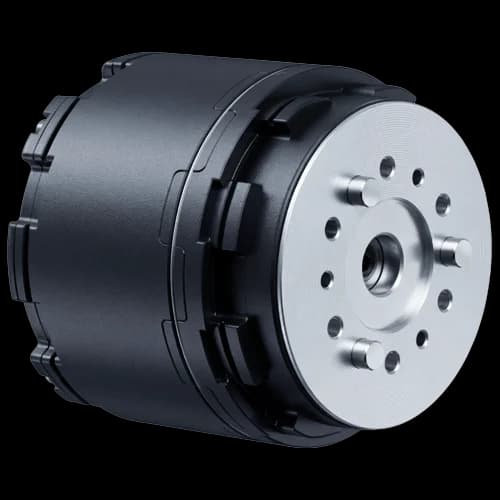
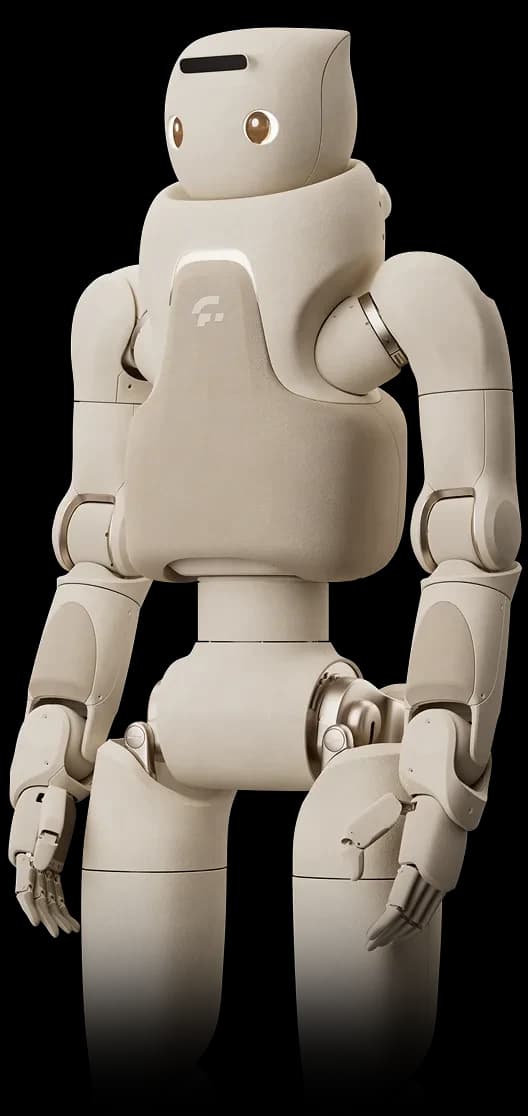
The AgiBot D1 Max up close
4 images; tap to enlarge.
Technical Specifications
37 values in 7 categories; data published by the manufacturer.
Size and weight
Dimensions (standing)
930 × 480 × 585 mm (L × W × H, standing)
Dimensions (crouching)
930 × 630 × 200 mm (prone)
Weight
41 kg (including battery)
Motion and performance
Payload
25 kg rated payload
Maximum speed
6 m/s
Climb angle
45°
Obstacle and step
Continuous stairs 25 cm; single obstacle 80 cm; obstacle crossing with payload 50 cm
Joint torque
150 Nm
Turning radius
Minimum turning width: supports on-the-spot reversing and forward/reverse switching
Joint range of motion
Body -30°~40°, thigh -160°~160°, calf -160°~160°
Power and runtime
Battery capacity
2 × 504.9 Wh
Battery
54 V, 2 × 504.9 Wh dual batteries; hot swap; charging under 1.5 hours
Runtime
5 ± 0.5 h unloaded / 3.5 ± 0.5 h fully loaded
Range
29 ± 1 km unloaded / 18 ± 1 km fully loaded
Charging time
<1.5 hour
Charger
Power adapter standard, charging dock standard, autonomous charging dock optional
Operating voltage
Power outputs 5 V, 12 V, 24 V, 48 V; up to 480 W in total
General structure
Mobility form
Wheel-legged quadruped; intelligent switching between wheel and leg mode; zero-turn; crawling height 34 ± 0.5 cm
Degrees of freedom
12 + 4 dof (12 leg joints, 4 wheels)
Torque density
Joint peak torque 150 Nm; 12 leg + 4 wheel degrees of freedom
Materials
Aluminium alloy and high-strength engineering plastic; IP67 protection; 41 kg
Material
Aluminum alloy and high-strength engineering plastic
Manufacturer note
Screen remote control with 700-1000 m range; power adapter and charging dock standard, autonomous charging dock optional. The manufacturer states all values are laboratory test data.
Total DoF
12 leg joints + 4 wheels (12+4 DoF)
Joint torque
Peak joint torque 150 Nm
Joint range
Body -30° to 40°, thigh -160° to 160°, calf -160° to 160°
Body material
Aluminum alloy and high-strength engineering plastic; 41 kg (including battery)
Protection
IP67; -20°C to 55°C operating temperature
Accessories
Adapter and charging dock standard; remote controller with integrated display; autonomous charging station optional
Size and weight
Dimensions (standing)
930 × 480 × 585 mm (L × W × H, standing)
Dimensions (crouching)
930 × 630 × 200 mm (prone)
Weight
41 kg (including battery)
Motion and performance
Payload
25 kg rated payload
Maximum speed
6 m/s
Climb angle
45°
Obstacle and step
Continuous stairs 25 cm; single obstacle 80 cm; obstacle crossing with payload 50 cm
Joint torque
150 Nm
Turning radius
Minimum turning width: supports on-the-spot reversing and forward/reverse switching
Joint range of motion
Body -30°~40°, thigh -160°~160°, calf -160°~160°
Power and runtime
Battery capacity
2 × 504.9 Wh
Battery
54 V, 2 × 504.9 Wh dual batteries; hot swap; charging under 1.5 hours
Runtime
5 ± 0.5 h unloaded / 3.5 ± 0.5 h fully loaded
Range
29 ± 1 km unloaded / 18 ± 1 km fully loaded
Charging time
<1.5 hour
Charger
Power adapter standard, charging dock standard, autonomous charging dock optional
Operating voltage
Power outputs 5 V, 12 V, 24 V, 48 V; up to 480 W in total
Sensors and connectivity
Sensors
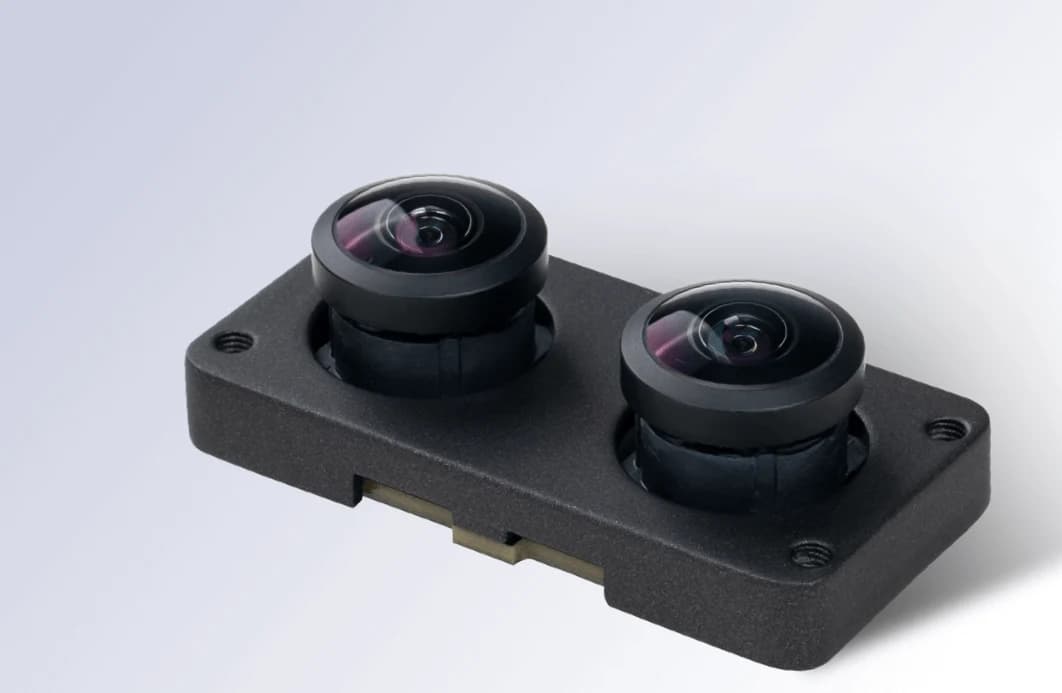
One 96-channel LiDAR front and one rear (360° × 90°, 120 m coverage diameter); one 8 MP industrial FPV camera front and one rear (DFOV 122°, HFOV 111°, VFOV 70°); 4 fill lights; automotive-grade IMU; GNSS RTK module; left and right ultrasonic sensors (obstacle detection within 5 m)
Secondary development with SDK; simulation with 3D CAD and URDF files; stepping, sliding and crawling postures; omnidirectional movement, zero-turn rotation and steering; knee joint configuration adjustment
Environmental resilience
Ingress protection
IP67
Operating temperature
-20°C to 55°C
Sources and documents
Verified on the manufacturer page on 18 September 2026.
Technical Analysis of the Wheel-Legged Field PlatformDesign decisions, comparison table and evaluation
What Wheels and Legs Together Buy You
A classic quadruped takes every metre on foot, at a high cost in energy and time. The D1 Max switches to wheels on flat ground for 6 m/s and 29 km of range, then returns to legs at obstacles to clear 80 cm barriers and 25 cm stairs. Having both modes in one body lets a single robot cover a logistics corridor and a construction site; 12 leg joints plus 4 wheels means 16 driven axes.
The Payload and Range Arithmetic
Range is given as two figures by load state: 5 hours and 29 km unloaded, 3.5 hours and 18 km at the full 25 kg. Full load therefore cuts runtime by about 30 percent and range by about 38 percent, and planning should use the second figure. Hot-swapping the two 504.9 Wh batteries keeps the robot working through the day without a shutdown; charging takes under 1.5 hours.
Perception Suite and Open Interfaces
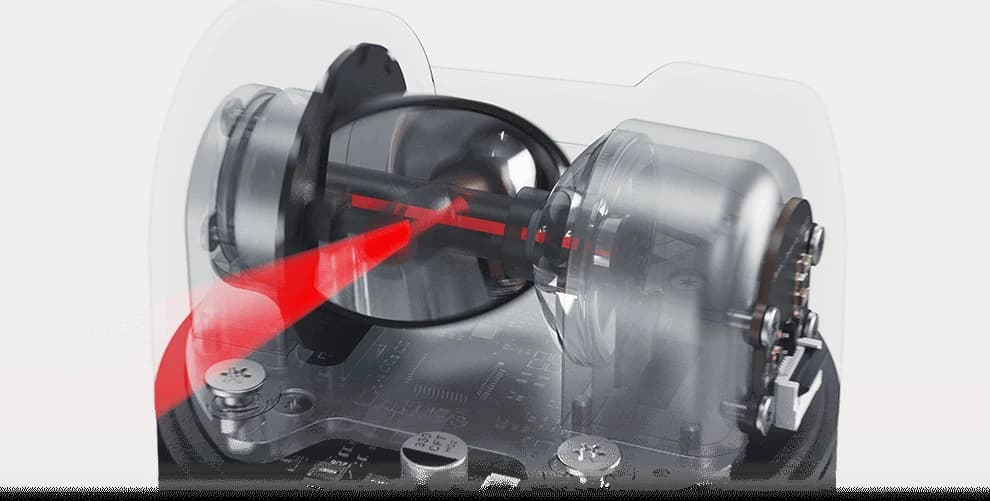
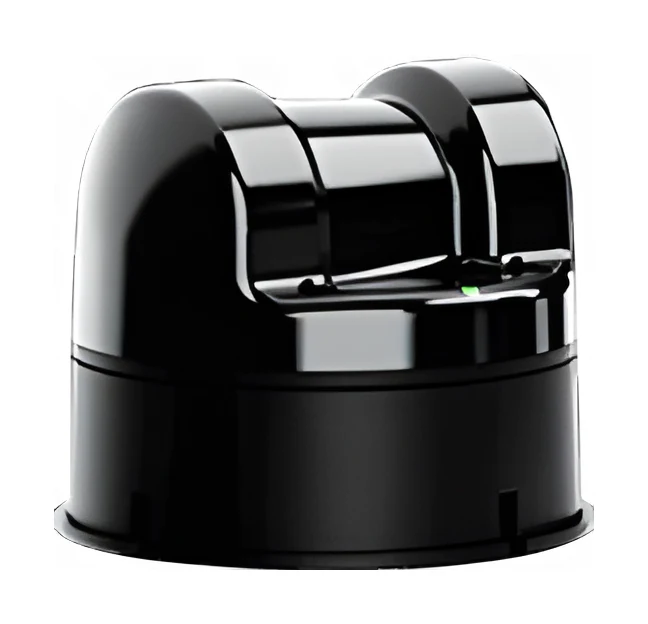
One 96-channel LiDAR front and one rear sweep 360 degrees horizontally and 90 vertically out to a 120 m diameter; 8 MP FPV cameras, four fill lights and ultrasonic sensors cover the near field. GNSS RTK gives centimetre-level position outdoors, while the Jetson Orin NX 16 GB (100-157 TOPS) carries perception and planning on board. Two Gigabit Ethernet, USB 3.0, RS232/RS485, SBUS and PPS with up to 480 W of power output make adding payload modules straightforward.
D1 Max Versus the Unitree Models Deliverable Today
Feature
AgiBot D1 Max
Unitree B2
Unitree Go2
Locomotion
Wheel-legged
Legged
Legged
Weight
41 kg
60 kg
15 kg
Payload
25 kg rated
120 kg standing
10-12 kg
Speed
6 m/s
Over 6 m/s
2.5-5 m/s
Climbing
45°
45°
30-40°
Step / obstacle
25 cm stairs, 80 cm obstacle
40 cm
15-16 cm
Runtime
5 h unloaded
Over 5 h unloaded
1-2 h (long range 2-4)
Protection
IP67
IP67
-
Status in Turkey
Sourcing enquiry
Orderable
Orderable
Engineering Assessment
What sets the D1 Max apart is not raw payload but not having to choose between speed and terrain: 6 m/s and 29 km on wheels, 80 cm obstacles on legs. Where heavy payload matters the Unitree B2's 120 kg standing capacity is clearly ahead, and for compact, lower-cost research the Go2 remains sufficient. The D1 Max belongs in logistics, patrol and search-and-rescue scenarios where long corridors and obstructed terrain meet in the same task.
Purchasing support
Supply model
Supply to Turkey is planned per project; import, delivery and commissioning scope are itemised in the quote.
Pre-sales assessment
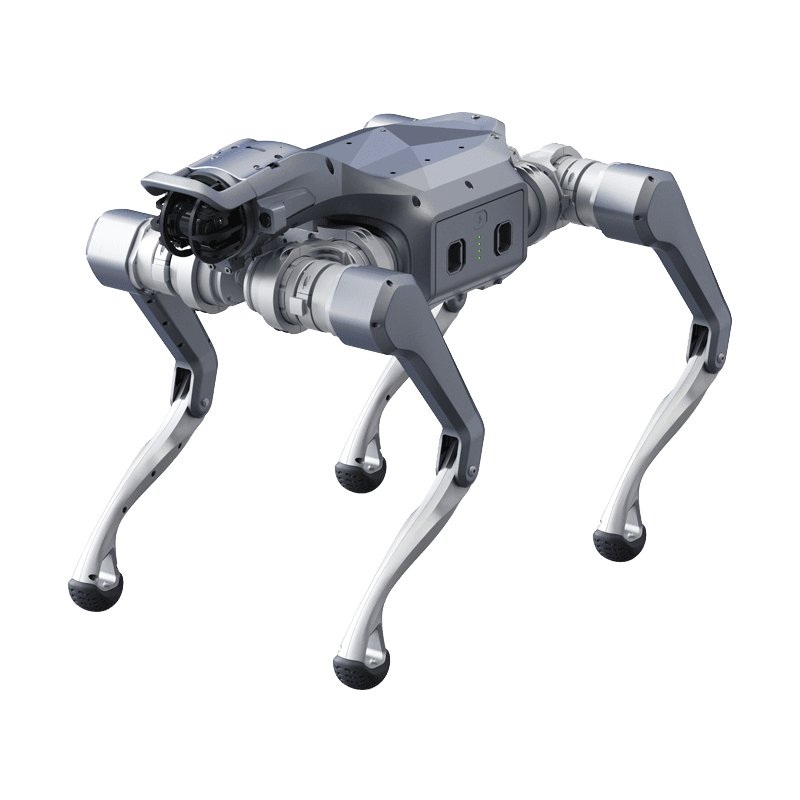
Site and mission focused technical feasibility; specification and administrative process support.
Robotic system costs are optimised according to the selected hardware platform, additional sensor and payload configurations, and the integration scenarios specific to your site. Share your requirements and our engineering team will prepare a feasibility report and a pro forma quotation tailored to your organisation.
Supply and delivery scheduling backed directly by the manufacturer
Site- and mission-focused technical feasibility and simulation
Turnkey hardware, software and mission integration
Advisory on corporate tenders, specifications and administrative processes
The most common questions about the AgiBot D1 Max.
Can the AgiBot D1 Max be bought in Turkey?
Sourcing, delivery schedule and investment for the D1 Max are settled per project. If you have a corporate requirement you can talk to Robotlar.org: we assess the sourcing process, a realistic timeline and the alternatives deliverable today.
What are the D1 Max's specifications?
930 × 480 × 585 mm, 41 kg (including battery), 12 leg joints + 4 wheels, IP67, -20 to 55 degrees, 6 m/s, 25 kg rated payload, 45-degree climbing, 80 cm obstacles, 25 cm continuous stairs, 150 Nm joint torque, 2 × 504.9 Wh hot-swappable batteries, 5 hours and 29 km unloaded, 3.5 hours and 18 km fully loaded, Jetson Orin NX 16 GB (100-157 TOPS), front and rear 96-channel LiDAR, 8 MP FPV cameras, GNSS RTK and ultrasonic sensors.
How does the wheel-legged design differ from a classic robot dog?
A classic quadruped covers every distance on foot. The D1 Max switches to wheel mode on flat ground to travel at 6 m/s with less energy, and returns to leg mode at obstacles and stairs. Wheel mode is meant for stable, extended movement and leg mode for terrain adaptability; the switch is made intelligently.
How long does the D1 Max run?
5 hours and 29 km unloaded, 3.5 hours and 18 km at the full 25 kg load (± 0.5 h and ± 1 km tolerances). The two 504.9 Wh batteries hot-swap and charge in under 1.5 hours; an autonomous charging station is optional.
How does the D1 Max differ from the Unitree B2?
At 41 kg the D1 Max is wheel-legged; with a 25 kg rated payload, 6 m/s and 80 cm obstacle crossing it avoids the trade-off between speed and terrain. The Unitree B2 is a 60 kg legged industrial platform; with 120 kg standing payload, 40 cm steps and IP67 it leads in heavy-payload scenarios and can be ordered in Turkey today, with 4-6 week delivery, a 1-year official warranty, on-site commissioning and engineering support across Turkey.