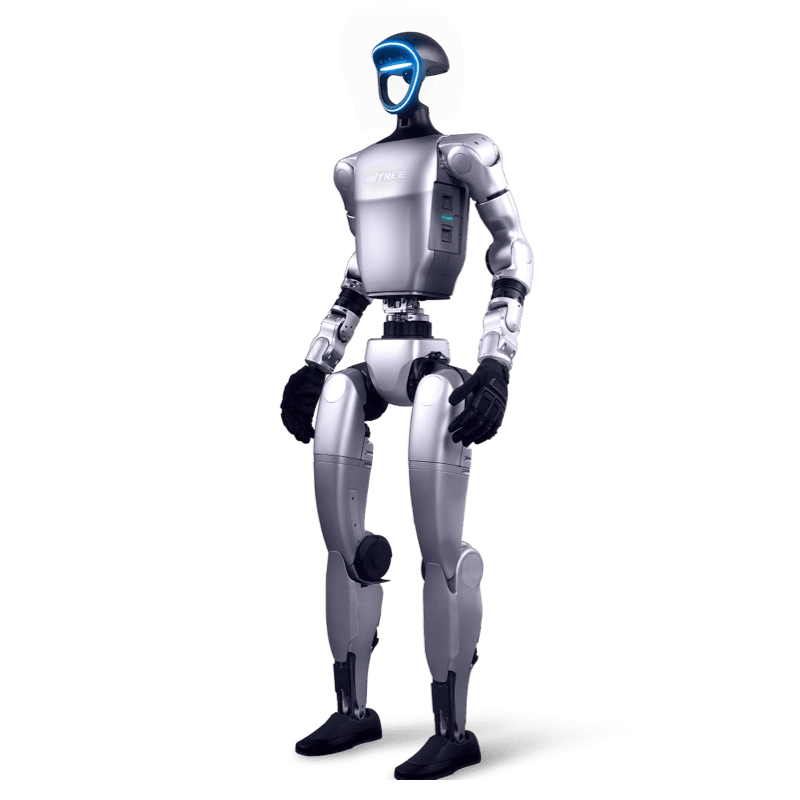
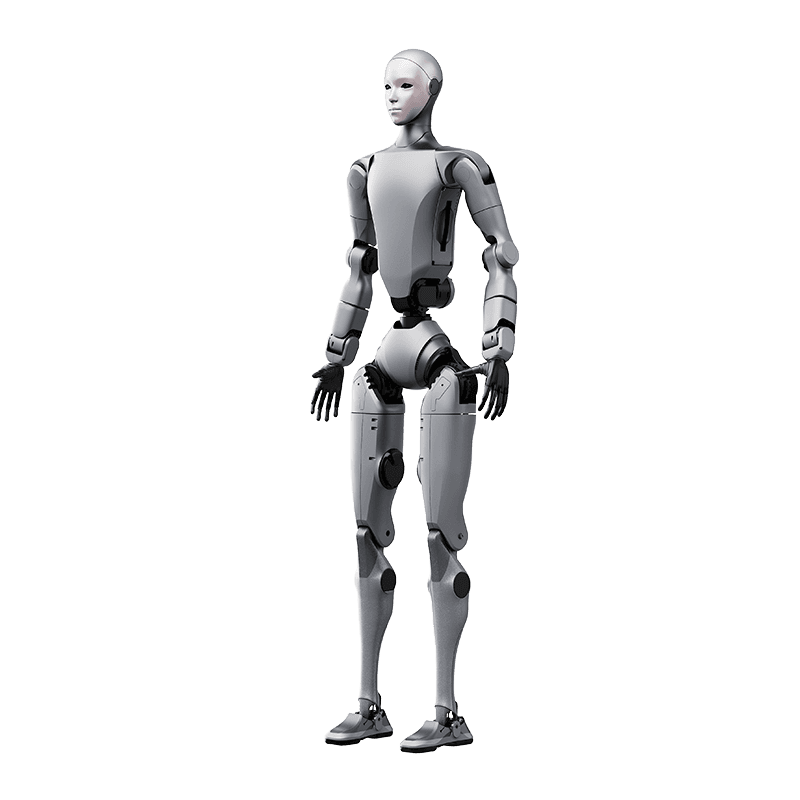
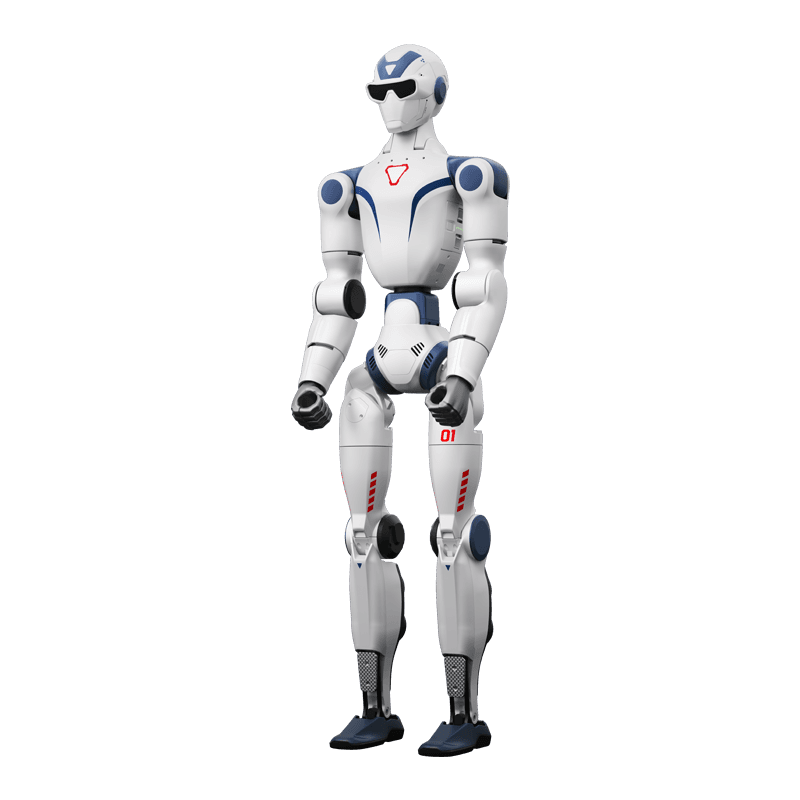
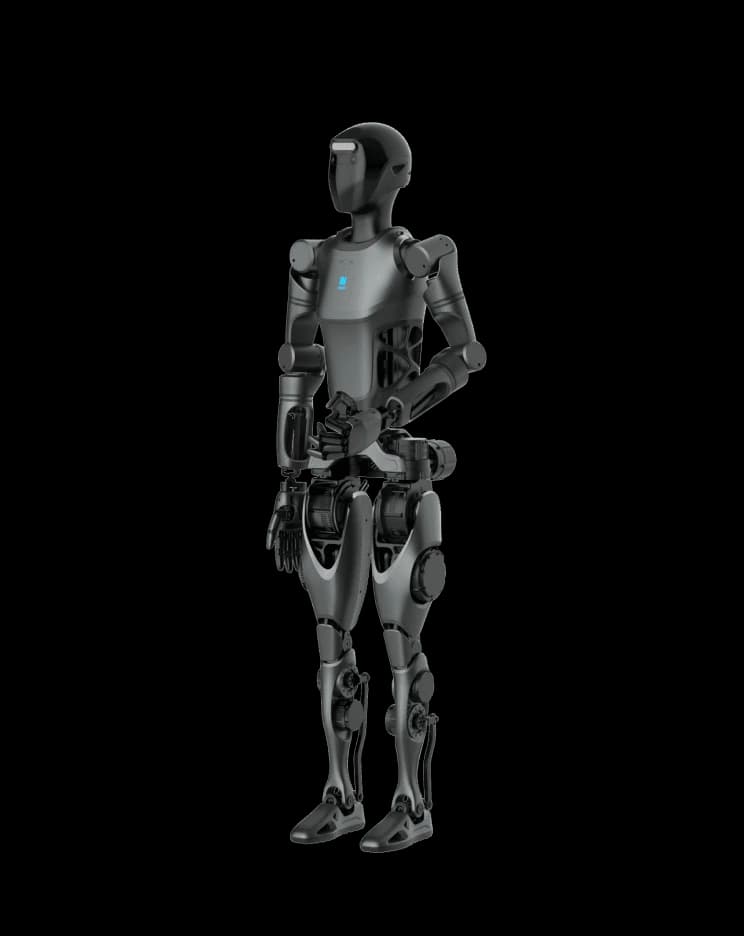
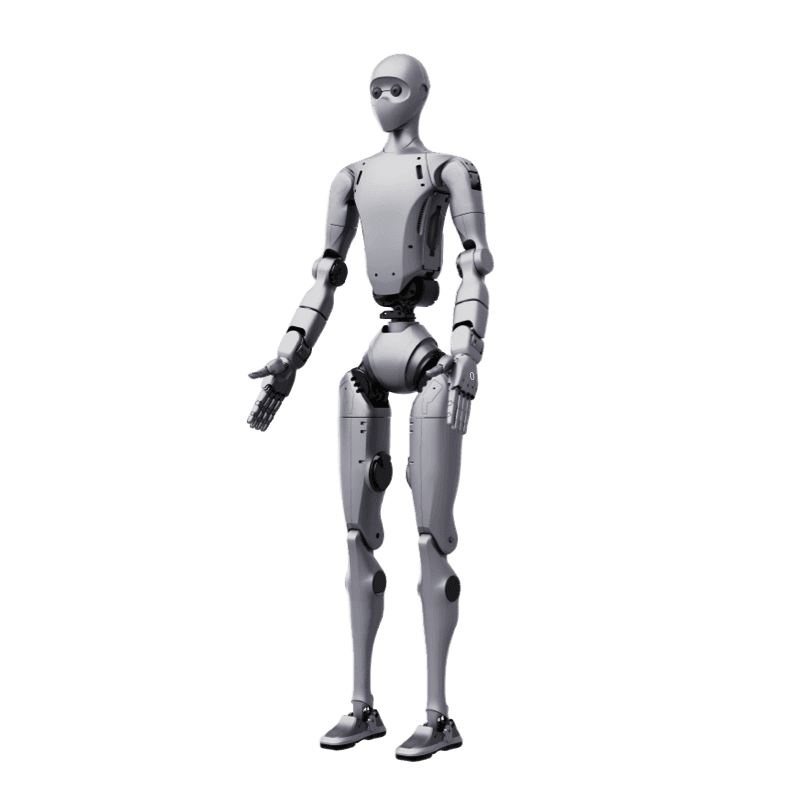
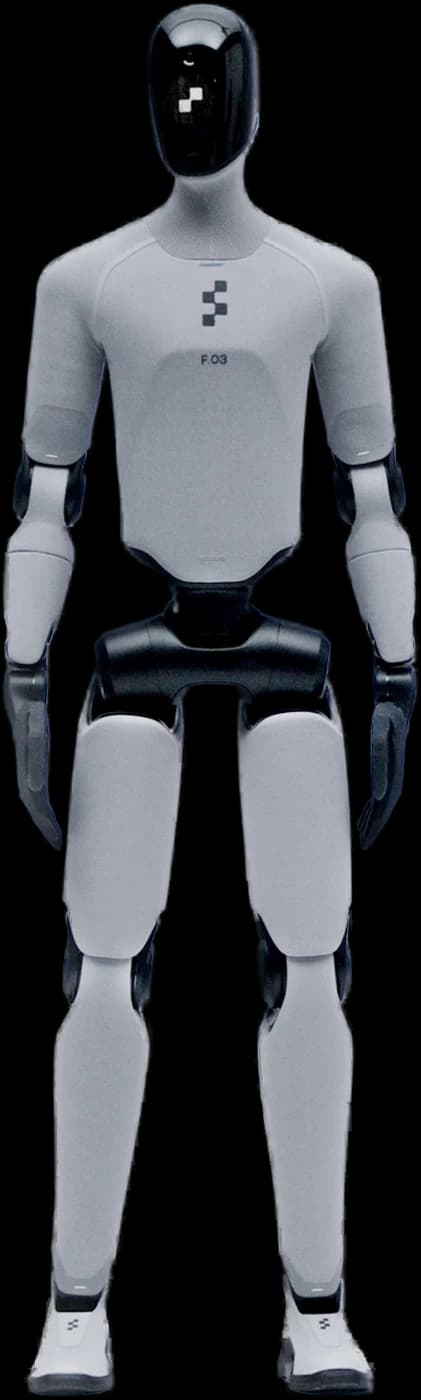
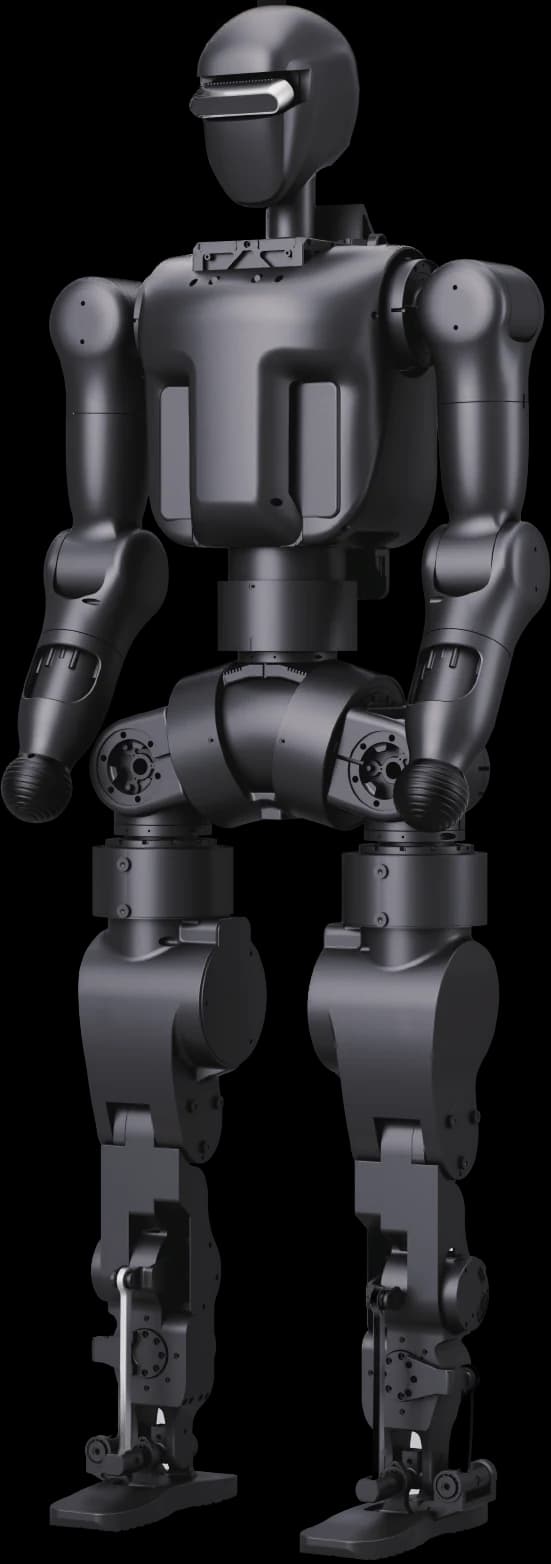
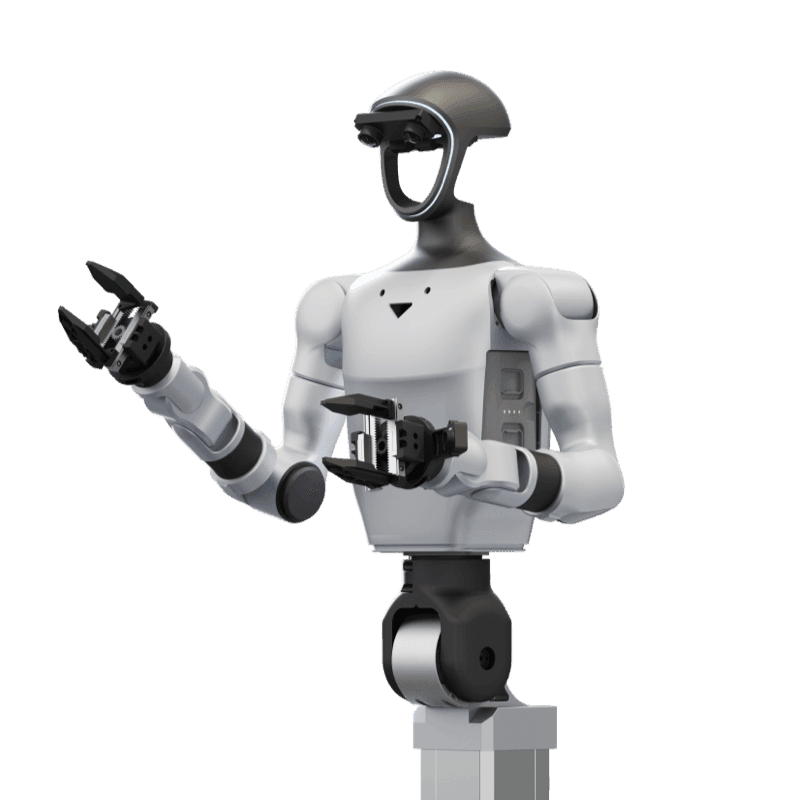
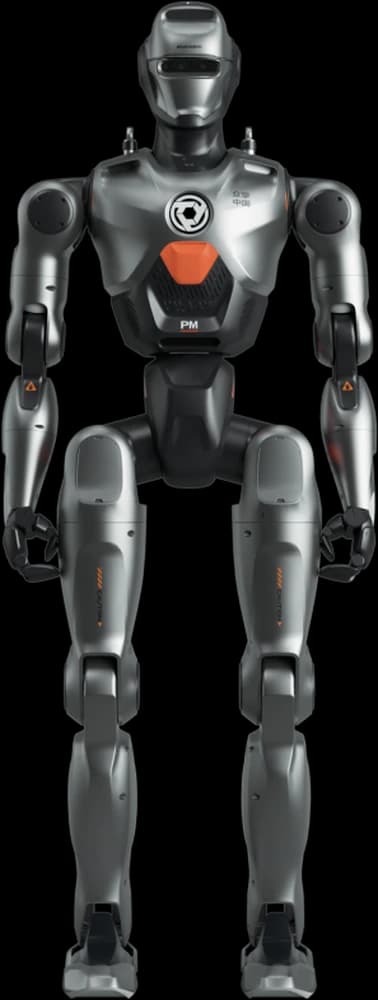
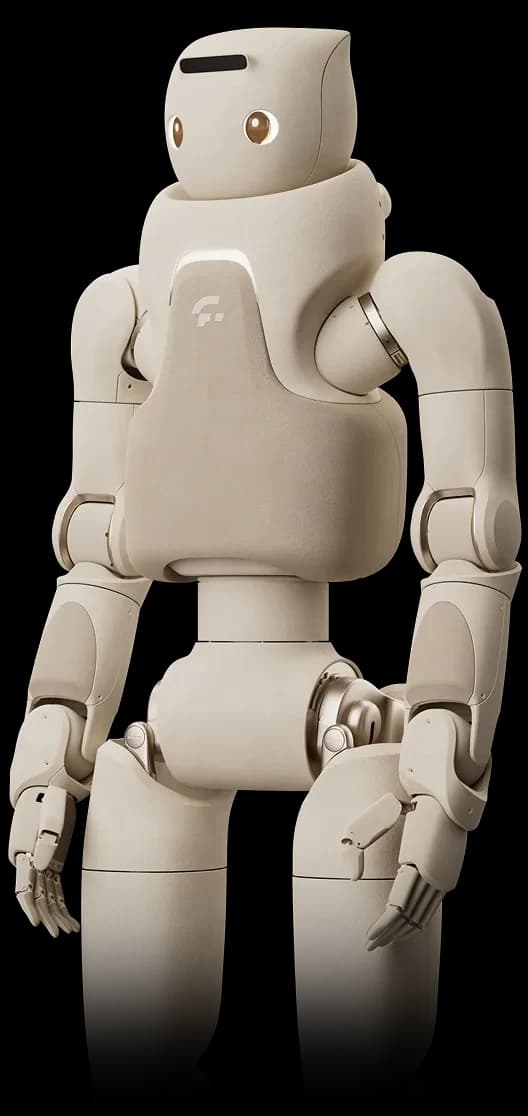
The Fourier GR-3 is Fourier's third generation in humanoid robotics. It stands 165 cm, weighs 71 kg and offers a 5.5 km/h walking speed, three hours of runtime, a 3 kg single-arm load capacity and 55 degrees of freedom.
Read moreShow less
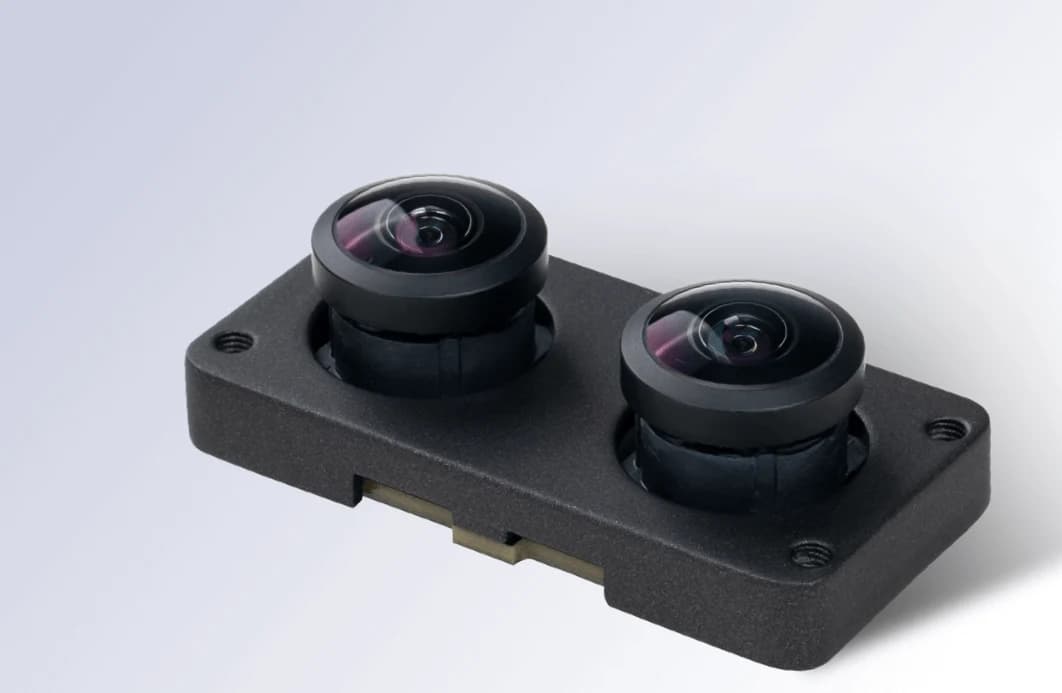
Fourier's proprietary Multimodal Interaction System merges vision, audio and tactile feedback into a single real-time emotional processing engine. A stereo-depth OAK camera module handles facial recognition and dynamic tracking; a four-microphone array delivers omnidirectional voice activation with echo cancellation and sound source localization; 31 pressure sensors distributed across the body detect touch in real time. The surface is Alcantara, the stuffing is a foamed material and the structure uses aluminium alloy with engineering plastic. The series comes in three configurations: GR-3, GR-3C and GR-3C Ultra. Robotlar.org assesses sourcing and alternatives together with organizations that have a GR-3 requirement.
Enterprise supply · specification support · integration engineering
1/10
Overview
Fourier is a Chinese company founded in 2015 that develops full-stack robotic technology. Its lineup spans the GRx humanoid series, RehabHub rehabilitation solutions, the Galileo system and open-source work. The GR-3 Series is the third-generation humanoid in that family, introduced under the principle "Love, above all functionality".
Hardware highlights: 165 cm tall, 71 kg, a 5.5 km/h walking speed, three hours of runtime, a 3 kg single-arm load and 55 degrees of freedom. The breakdown is head 2, waist 3, arm 7, leg 6 and six in the basic dexterous hand; a 12-DoF dexterous hand is offered as an option. The structure is aluminium alloy with engineering plastic, the surface Alcantara and the stuffing a foamed material.
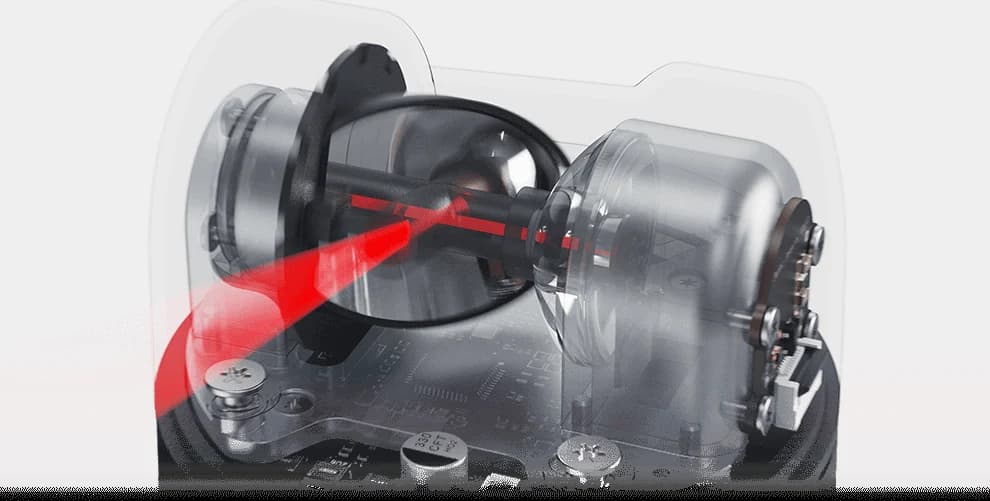
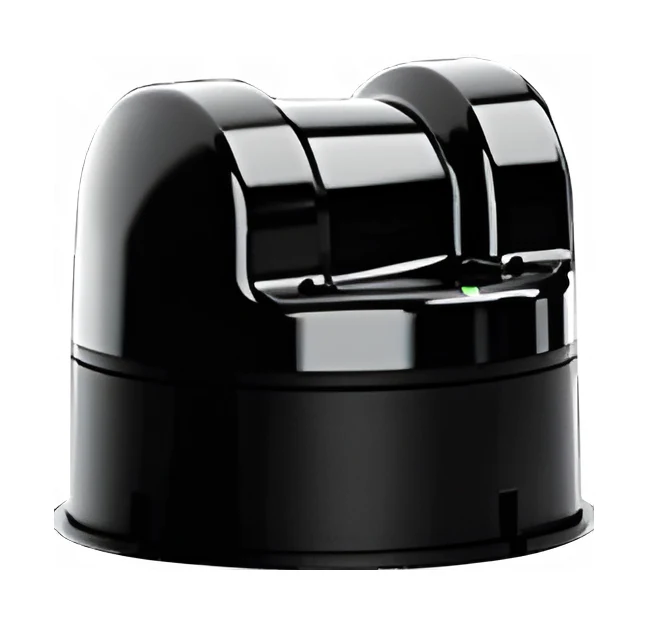
The perception layer is what sets this model apart. A stereo-depth OAK camera handles facial recognition and dynamic tracking. A four-microphone array provides omnidirectional voice activation, echo cancellation and sound source localization; the robot turns to the speaker with synchronized eye contact. Thirty-one pressure sensors, 16 on the head and 15 on the torso, detect touch in real time and answer with animated micro-expressions. The Multimodal Interaction System merges those three channels into a single real-time emotional processing engine.
The series comes in three configurations: the fully equipped GR-3, the plain-shelled GR-3C and the GR-3C Ultra with an optional Robosense Airy LiDAR.
For organizations with a GR-3 requirement we assess sourcing, timing and the humanoid alternatives deliverable today (the Unitree H2 and G1) transparently.
All three editions share the same 165 cm height, 71 kg weight, 5.5 km/h walking speed, three-hour runtime, 3 kg single-arm load and 55 degrees of freedom; the difference is hardware configuration. The GR-3 comes fully equipped for touch, voice and emotional interaction. The GR-3C focuses on functional performance with a plain shell. The GR-3C Ultra adds navigation hardware through an optional Robosense Airy LiDAR. The product page also introduces the GR-3C with a Lidar module, while the configuration table marks LiDAR only on the Ultra row, so a LiDAR requirement should be confirmed at order time.
GR-3
The fully equipped edition for touch and speech interaction, with an Alcantara surface, 31 pressure sensors, a four-microphone array and a large language model.
GR-3C
A plain, easy-to-maintain white shell; focuses on functional performance without the voice interaction and body tactile layer.
GR-3C Ultra
Navigation in complex environments through an optional Robosense Airy LiDAR; a 5 W speaker and dexterous hand configuration.
Use Cases
The use cases the manufacturer defines for the Fourier GR-3.
01Hospital and healthcare
02Companionship and home
Key Advantages
Fine Control
While the arm and hand work together, motion is continuously corrected by force feedback.
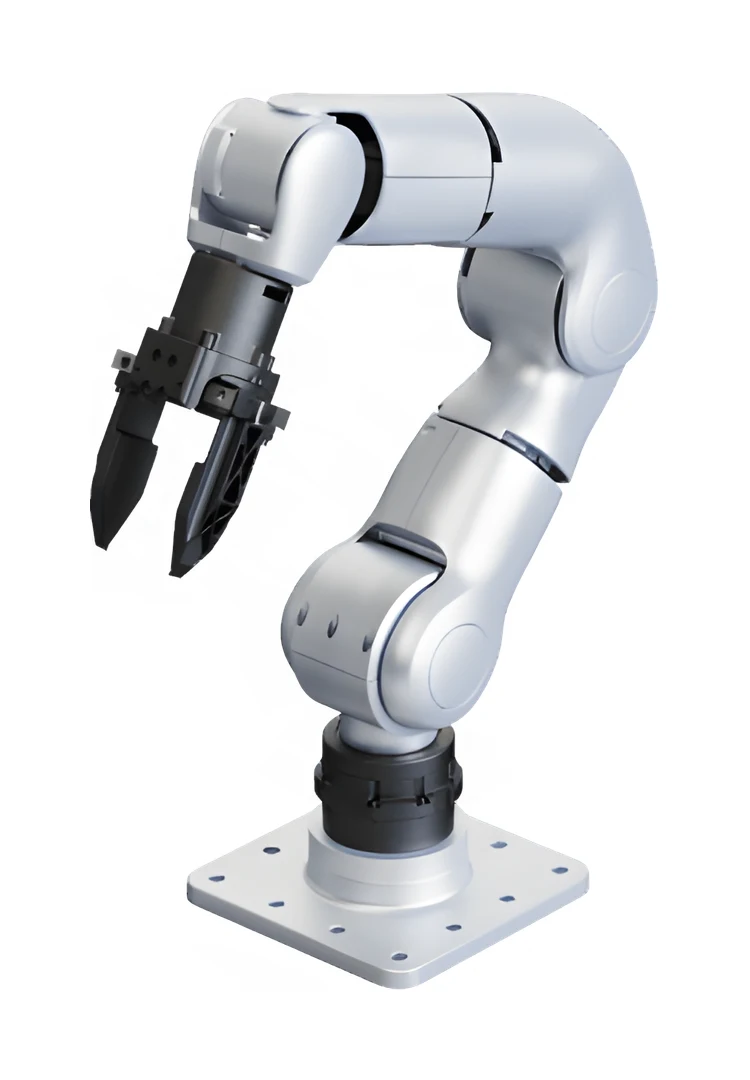
A 3 kg single-arm load capacity and seven degrees of freedom per arm keep grasping and guiding an object within an envelope close to a human arm.
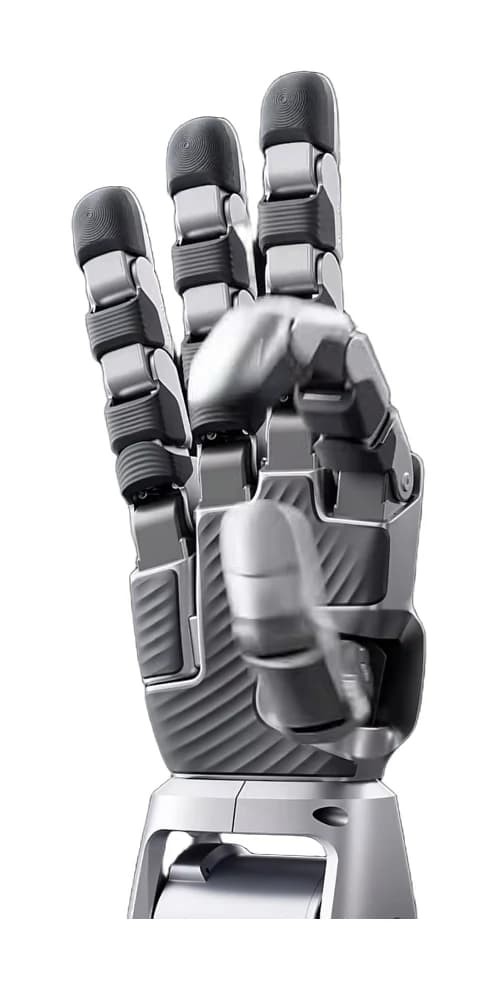
The optional 12-DoF dexterous hand carries tactile sensing at the fingertips.
Action Set
Fifty-five degrees of freedom let the whole body be driven from a single motion library.
When the two joints in the head, three in the waist and seven in each arm work together, the robot combines sitting, bending, reaching and gesturing into one continuous flow.
Stability
A 6-axis IMU measures acceleration and angular velocity, and a change in foot contact force is met by the six joints in each leg.
Under an external push the robot steps to re-establish its centre of mass, the core behaviour that lowers tipping risk in a body working alongside people.
Ping-Pong
Table tennis is a measure of how quickly vision and motion close the loop.
The stereo-depth OAK camera tracks the ball's trajectory and the arm brings the paddle to the meeting point.
The latency from image to motion indicates how fluently the same body can behave next to a person.
Walking Style
Maximum walking speed is 5.5 km/h.
That is slightly above a brisk human walk and means the robot can keep pace with people in a corridor or hall.
Six degrees of freedom per leg allow stride length and torso sway to be tuned to the ground.
Terrain Walking
Off flat ground the foot contact angle changes with every step.
The ankle joints and the IMU work together to keep the body upright on slopes, steps and loose ground.
In care and service scenarios, the situations where the robot has to cross a ramp or a threshold depend on this behaviour.
Visual Recognition and Audio Perception
The stereo-depth OAK camera module handles facial recognition and dynamic tracking, keeping the user inside the robot's expressive field.
A four-microphone array provides omnidirectional voice activation, echo cancellation and precise sound source localization; the robot turns to the speaker with synchronized eye contact.
Voice interaction runs on a large language model.
Tactile Feedback and Surface
Thirty-one pressure sensors distributed across the body detect touch in real time: 16 on the head and 15 on the torso.
Combined with animated micro-expressions, the robot responds to touch with social cues.
The surface is Alcantara, the stuffing a foamed material, and the structure aluminium alloy with engineering plastic.
Configuration Table
The series comes in three configurations.
The GR-3 carries the four-microphone array, head and torso tactile sensors, the Alcantara surface and voice interaction with a large language model.
The GR-3C focuses on functional performance with a plain shell.
The GR-3C Ultra adds navigation hardware with a 5 W speaker and an optional Robosense Airy LiDAR. All three include the OAK camera, a 6-axis IMU, an LED display showing facial expressions, visual recognition and tracking, and a communication light.
The Fourier GR-3 up close
3 images; tap to enlarge.
Technical Specifications
35 values in 7 categories; data published by the manufacturer.
Size and weight
Dimensions (standing)
165 cm tall
Weight
71 kg
Arm reach
1395 mm arm span; up to 1759 mm with self-developed dexterous hand (12-DOF dexterous hand version)
Motion and performance
Arm payload
3
Maximum speed
5.5
Climb angle
15 degrees (maximum walking gradient)
Joint torque
440 N·m (maximum joint peak torque)
Joint range of motion
Neck pitch -30°~8.5°; neck yaw ±80°; shoulder pitch ±170°; shoulder roll -15°~110°; shoulder yaw ±105°; elbow pitch -130°~5°; wrist yaw ±105°; wrist pitch -50°~75°; wrist roll -60°~70°; waist pitch -12°~30°; waist roll ±10°; waist yaw ±150°; hip pitch ±150°; hip roll -10°~90°; hip yaw -40°~90°; knee pitch 0°~135°; ankle pitch ±45°; ankle roll ±25° (left-side joint values)
Power and runtime
Battery capacity
702 Wh + 234 Wh
Battery
Lithium-ion, 702 Wh + 234 Wh; total weight 3.8 kg + 1.3 kg; 46.8 V nominal, 54.6 V charge limit; cycle life 500 or more (80% DOD); hot-swappable; single charge time approximately 1.5 hours
Runtime
3 hours
Charging time
Approx. 1.5 h (single charge)
Charger
Adapter input 90 V AC ~ 260 V AC, 50 Hz / 60 Hz; adapter output 54.6 V, 12 A MAX
Operating power
Rated power approximately 936 W
Operating voltage
46.8 V nominal voltage; adapter input 90-260 V AC, 50/60 Hz; adapter output 54.6 V, 12 A max
General structure
Mobility form
Bipedal full-size humanoid; terrain walking and balance recovery
Degrees of freedom
55 DoF
Neck DoF
2 DoF
End effector
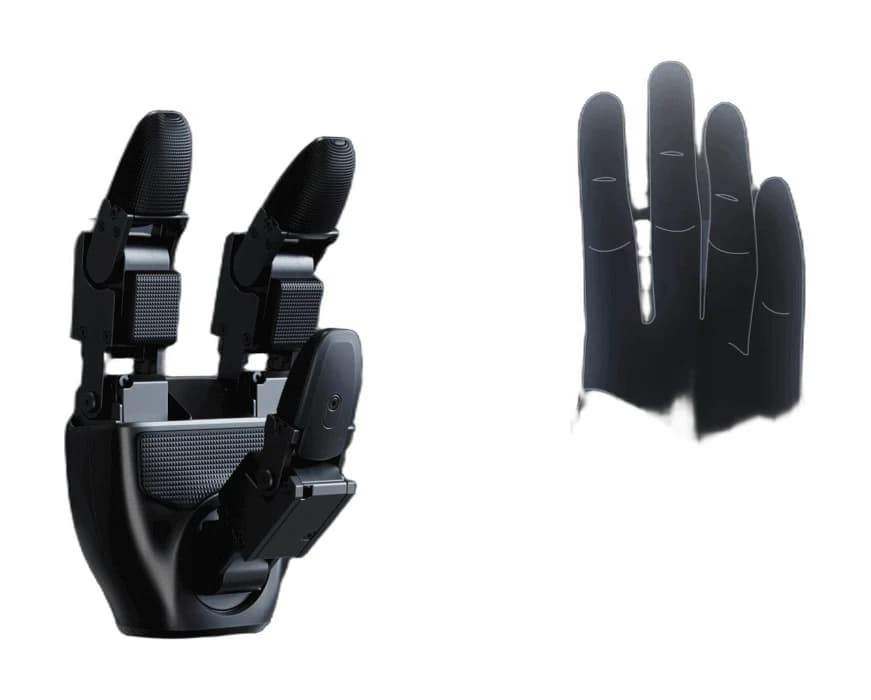
Basic dexterous hand with 6 DoF; a 12-DoF dexterous hand is optional (arm span up to 1,759 mm with the dexterous hand)
Torque density
3 kg single-arm load; 2 degrees of freedom in the head, 3 in the waist, 7 per arm and 6 per leg, 6 in the basic dexterous hand and 12 in the optional dexterous hand
Materials
Alcantara surface, foamed material stuffing, aluminium alloy and engineering plastic structure; a skin-soft touch reminiscent of supercar interiors
DoF layout
55 degrees of freedom in total; head 2, waist 3, arm 7, leg 6, basic dexterous hand 6, optional dexterous hand 12
Payload
3 kg single-arm load capacity
Battery system
3 hours of runtime
Structure and materials
Alcantara surface, foamed material stuffing, aluminium alloy and engineering plastic structure
Tactile sensing
31 pressure sensors: 16 on the head, 15 on the torso; real-time touch detection, with hand tactile sensing available through the 12-DoF dexterous hand
Size and weight
Dimensions (standing)
165 cm tall
Weight
71 kg
Arm reach
1395 mm arm span; up to 1759 mm with self-developed dexterous hand (12-DOF dexterous hand version)
Motion and performance
Arm payload
3
Maximum speed
5.5
Climb angle
15 degrees (maximum walking gradient)
Joint torque
440 N·m (maximum joint peak torque)
Joint range of motion
Neck pitch -30°~8.5°; neck yaw ±80°; shoulder pitch ±170°; shoulder roll -15°~110°; shoulder yaw ±105°; elbow pitch -130°~5°; wrist yaw ±105°; wrist pitch -50°~75°; wrist roll -60°~70°; waist pitch -12°~30°; waist roll ±10°; waist yaw ±150°; hip pitch ±150°; hip roll -10°~90°; hip yaw -40°~90°; knee pitch 0°~135°; ankle pitch ±45°; ankle roll ±25° (left-side joint values)
Power and runtime
Battery capacity
702 Wh + 234 Wh
Battery
Lithium-ion, 702 Wh + 234 Wh; total weight 3.8 kg + 1.3 kg; 46.8 V nominal, 54.6 V charge limit; cycle life 500 or more (80% DOD); hot-swappable; single charge time approximately 1.5 hours
Runtime
3 hours
Charging time
Approx. 1.5 h (single charge)
Charger
Adapter input 90 V AC ~ 260 V AC, 50 Hz / 60 Hz; adapter output 54.6 V, 12 A MAX
Operating power
Rated power approximately 936 W
Operating voltage
46.8 V nominal voltage; adapter input 90-260 V AC, 50/60 Hz; adapter output 54.6 V, 12 A max
Sensors and connectivity
Sensors
Stereo-depth OAK camera module; 6-axis IMU (acceleration and angular velocity); 31 pressure sensors distributed across the body (16 on the head, 15 on the torso); an optional Robosense Airy LiDAR on the GR-3C Ultra
Connectivity
Wired Ethernet and Wi-Fi 6; Type-C, USB 3.0 and RJ45 I/O
Wireless
Wi-Fi 6; wired connection over Ethernet
Interaction
Four-microphone array: omnidirectional voice activation, echo cancellation and precise sound source localization; a 15 W speaker (5 W on the Ultra); an LED display that shows facial expressions; the robot turns to the speaker with synchronized eye contact
Joint encoder
Dual encoders: supports absolute encoders
Software and development
Processor
AMD Ryzen 7 8845HS, 8 cores and 16 threads; D70 development board with AMD Radeon 780M graphics, 16 MB L3 cache, 32 GB memory and 1 TB storage
Operating system
Ubuntu 22.04
Software features
The Multimodal Interaction System merges vision, audio and touch into a single real-time emotional processing engine; voice interaction through a large language model; animated micro-expressions respond to touch with social cues; real-time remote control is optional
Environmental resilience
Operating temperature
0 to 45 degrees Celsius; operating humidity 20% to 80%, non-condensing
Sources and documents
Verified on the manufacturer page on 18 September 2026.
Technical Analysis of a Humanoid Designed for Care ScenariosDesign decisions, comparison table and evaluation
Where the 55 Degrees of Freedom Go
The published breakdown is: head 2, waist 3, seven per arm, six per leg, six in the basic dexterous hand and twelve in the optional one. The critical number here is the three joints in the waist. A humanoid without waist rotation has to turn its whole body with a step to reach an object beside it; a three-axis waist lets the torso bend and rotate while the feet stay planted. In a care scenario that means being able to reach a seated person from the side. The two joints in the head move eye contact and enable the turn-to-speaker behaviour during interaction.
Why the Tactile Layer Is a Separate Engineering Problem
The 31 pressure sensors are distributed across the head and torso. In a humanoid robot, touch sensing is usually limited to the hand; putting sensors on the head and torso is what lets the robot notice being touched. That has two consequences. On the safety side, an extra signal appears for stopping motion at unexpected contact. On the interaction side, the touch point is matched to micro-expressions to produce a response. The Alcantara on the surface and the foam beneath it soften how force reaches those sensors; a sensor mounted on a hard shell saturates at a single point, while a soft layer spreads contact across an area.
The Real Difference Between the Three Configurations
The mechanical base is the same on all three: 165 cm, 71 kg, 5.5 km/h, three hours, 3 kg per arm. The difference lies in the perception and interaction layer. The GR-3 carries the four-microphone array, head and torso tactile sensors, the Alcantara surface and voice interaction with a large language model; that is the edition designed for wellness companionship. The GR-3C removes that layer for a plain, easy-to-maintain shell. The GR-3C Ultra drops the speaker to 5 W and adds navigation hardware with an optional Robosense Airy LiDAR. The choice therefore comes down to whether the robot will relate more to people or to the space.
GR-3 Versus the Humanoid Models Deliverable Today
Feature
Fourier GR-3
Unitree H2
Unitree G1
Height
165 cm
182 cm
132 cm
Weight
71 kg
70 kg
35 kg
Degrees of freedom
55
31
23 (EDU: 43)
Walking speed
5.5 km/h
Running supported
2 m/s
Arm payload
3 kg (single arm)
7 kg rated, 15 kg peak
2 kg (EDU 3 kg)
Tactile sensing
31 pressure sensors (head and torso)
-
-
Status in Turkey
Sourcing enquiry
Orderable
Orderable
Engineering Assessment
What sets the GR-3 apart is not mobility but its perception layer. Fifty-five degrees of freedom is a high figure in this class, and the distribution, starting with a three-axis waist, makes the body suited to working beside a person. The real difference is the 31 pressure sensors spread across the head and torso together with the Alcantara surface: a humanoid where touch is sensed and answered serves a different function in care and wellness scenarios than a pure manipulation platform. The weakness is limited workload data. Three kilograms on a single arm is low for care work that requires lifting and transfer; for that workload Fourier's own wheeled GRw is a better base at 16 kg.
Purchasing support
Supply model
Supply to Turkey is planned per project; import, delivery and commissioning scope are itemised in the quote.
Pre-sales assessment
Site and mission focused technical feasibility; specification and administrative process support.
Robotic system costs are optimised according to the selected hardware platform, additional sensor and payload configurations, and the integration scenarios specific to your site. Share your requirements and our engineering team will prepare a feasibility report and a pro forma quotation tailored to your organisation.
Supply and delivery scheduling backed directly by the manufacturer
Site- and mission-focused technical feasibility and simulation
Turnkey hardware, software and mission integration
Advisory on corporate tenders, specifications and administrative processes
Sourcing, delivery schedule and investment for the GR-3 are settled per project. If you have a corporate requirement you can talk to Robotlar.org: we assess the sourcing process, a realistic timeline and the alternatives deliverable today.
What are the Fourier GR-3's specifications?
Height 165 cm, weight 71 kg, walking speed 5.5 km/h, runtime three hours, 3 kg single-arm load and 55 degrees of freedom. The breakdown is head 2, waist 3, arm 7, leg 6, basic dexterous hand 6, with an optional 12-DoF dexterous hand. Perception includes a stereo-depth OAK camera, a 6-axis IMU and 31 pressure sensors distributed across the body (16 head, 15 torso). The surface is Alcantara, the stuffing a foamed material and the structure aluminium alloy with engineering plastic.
What is the difference between the GR-3, GR-3C and GR-3C Ultra?
The mechanical base is the same on all three. The GR-3 carries the four-microphone array, head and torso tactile sensors, the Alcantara surface, foam stuffing, a 15 W speaker and voice interaction with a large language model. The GR-3C removes that interaction layer and focuses on functional performance with a plain, easy-to-maintain white shell. The GR-3C Ultra drops the speaker to 5 W and adds an optional Robosense Airy LiDAR. All three include the OAK camera, a 6-axis IMU, an LED display showing facial expressions, visual recognition and tracking, a communication light and the optional 12-DoF dexterous hand.
What can the GR-3 do in care and eldercare work?
The GR-3 is a body designed for wellness companionship: it senses touch, turns to the speaker, recognises faces and answers with micro-expressions. Lifting, transfer and heavy handling are outside this body's scope; single-arm capacity is 3 kg. For care scenarios that require physical load, Fourier's wheeled GRw is a better base with 16 kg dual-arm capacity and a 2 m working height.
Is there a humanoid alternative deliverable today?
Yes. The full-size Unitree H2 (182 cm, 70 kg, 31 degrees of freedom) and the compact Unitree G1 (132 cm, 35 kg, Jetson Orin) can be ordered now, with 4-6 week delivery, a 1-year official warranty, on-site commissioning and engineering support across Turkey. Pricing is set by quote per configuration.