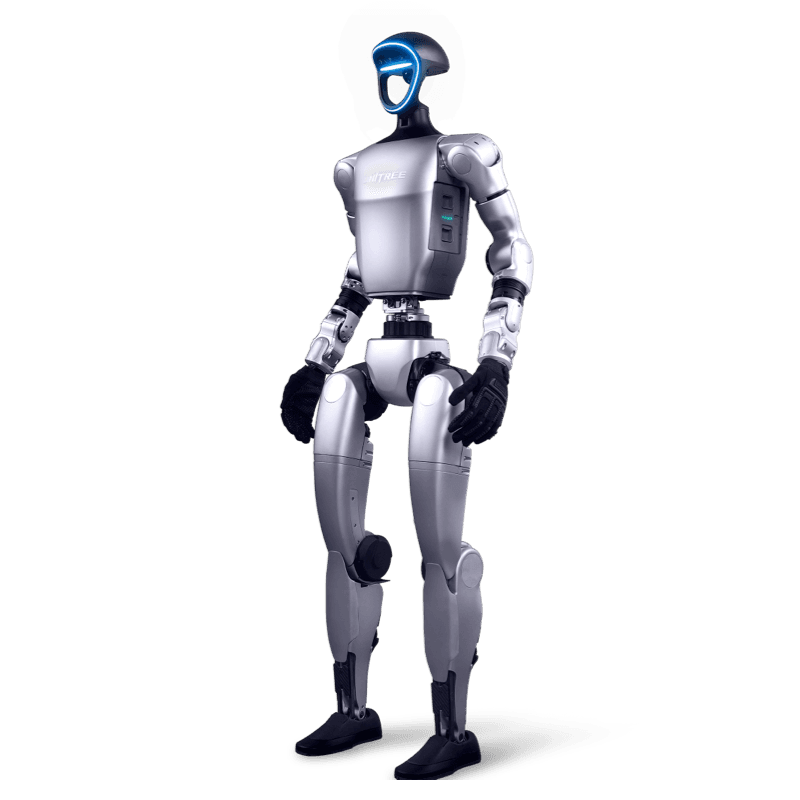
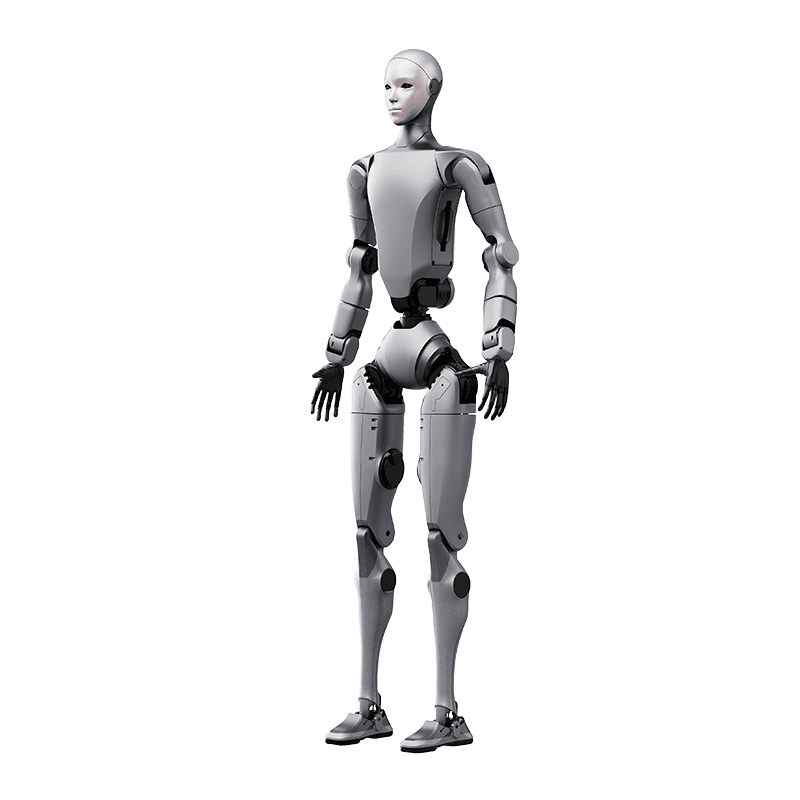
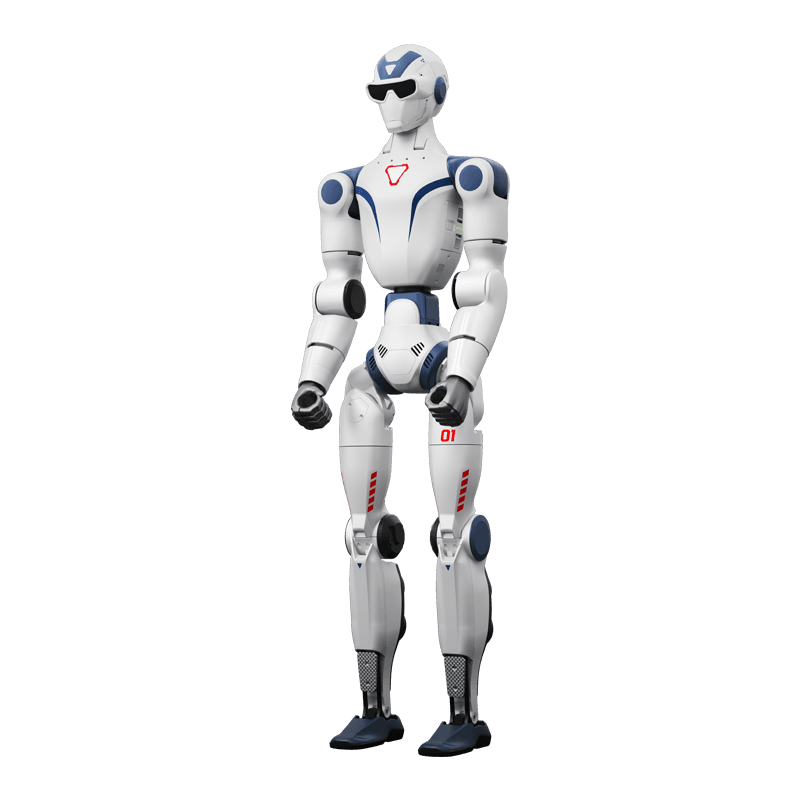
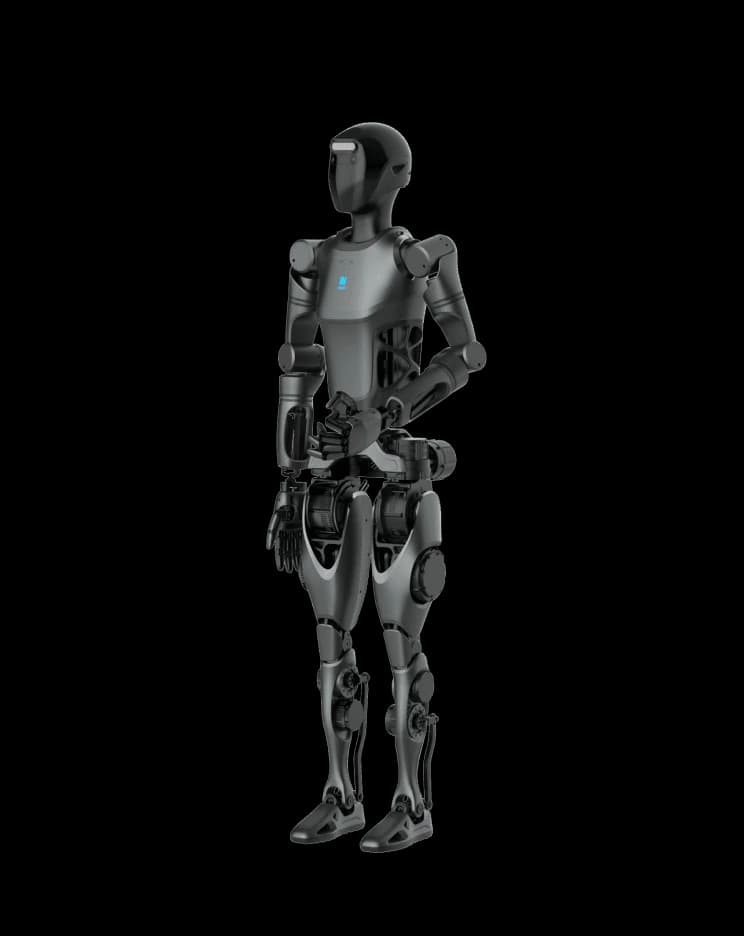
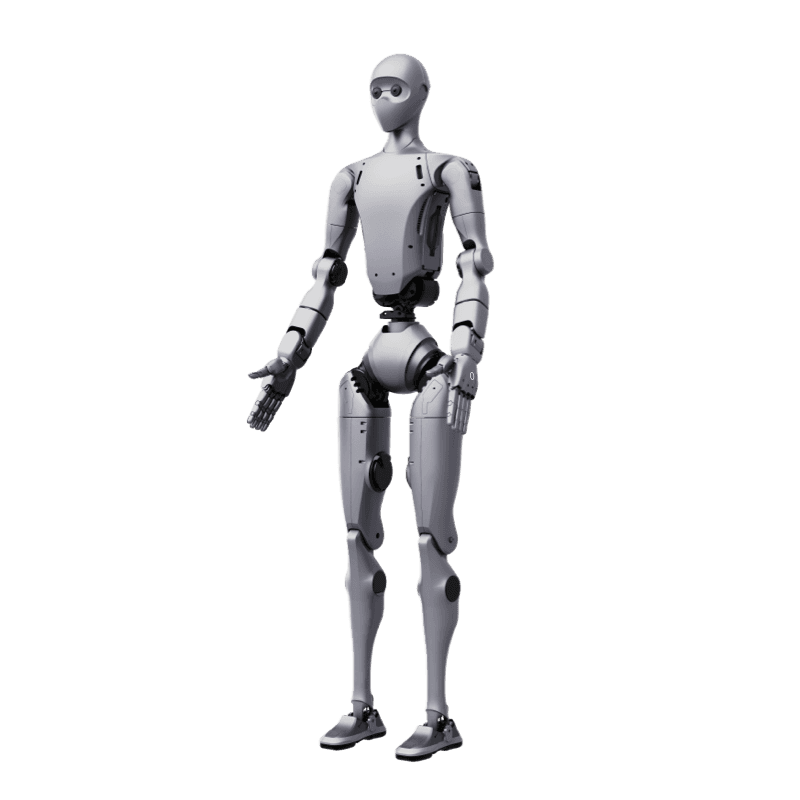
Two-Degree-of-Freedom Neck
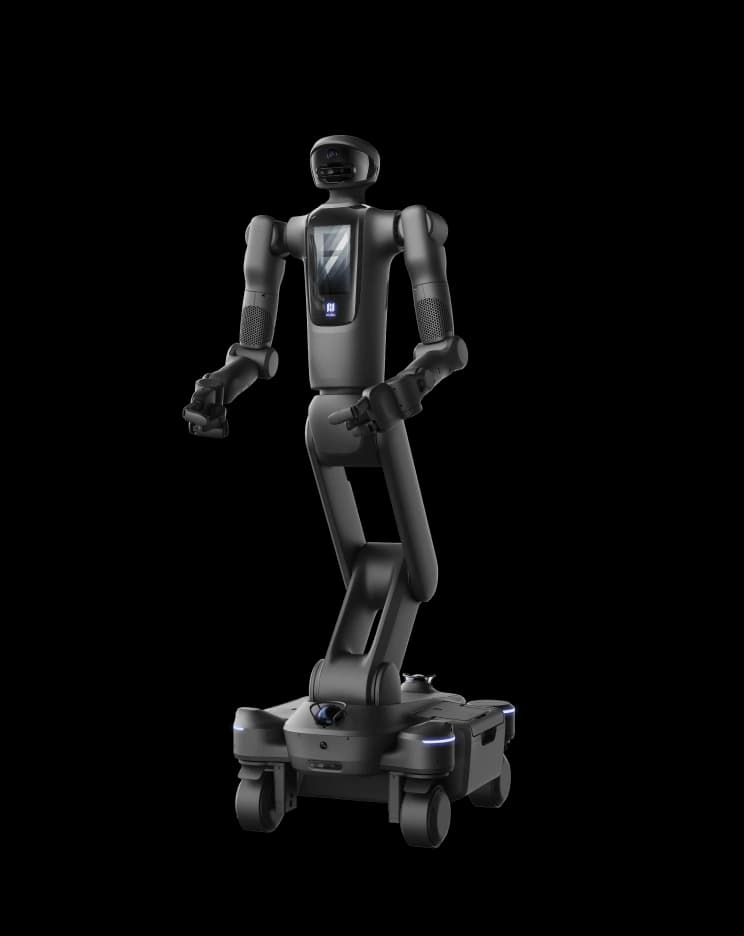
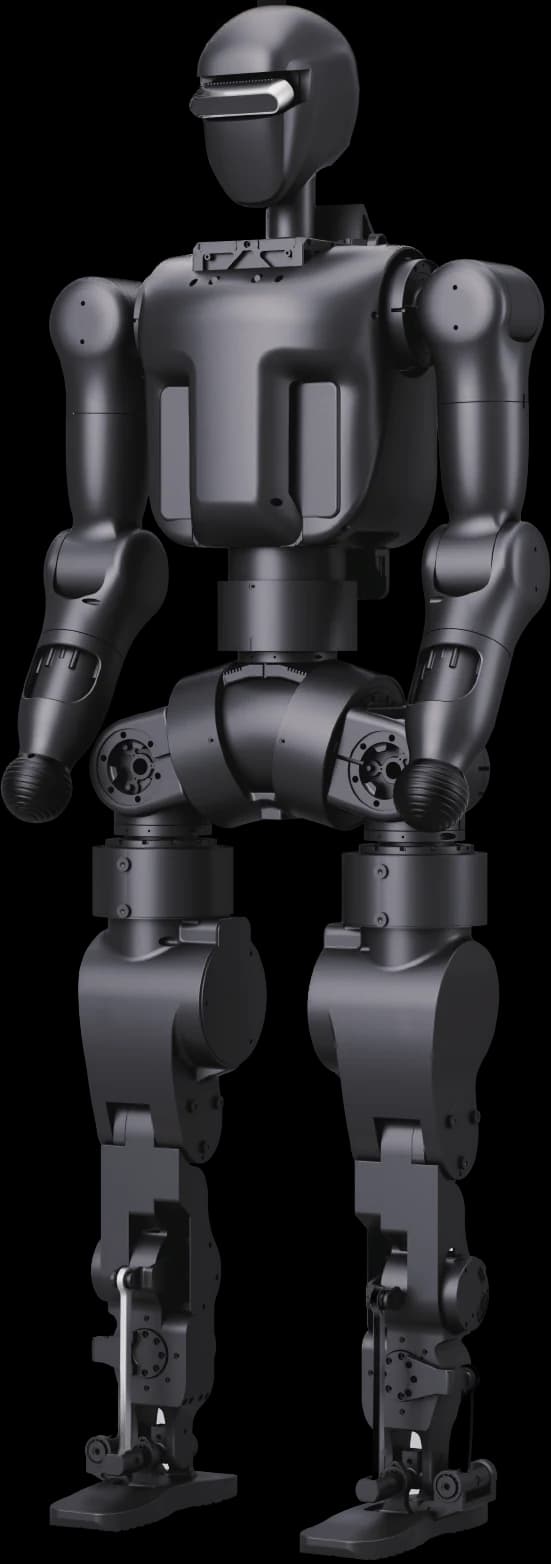
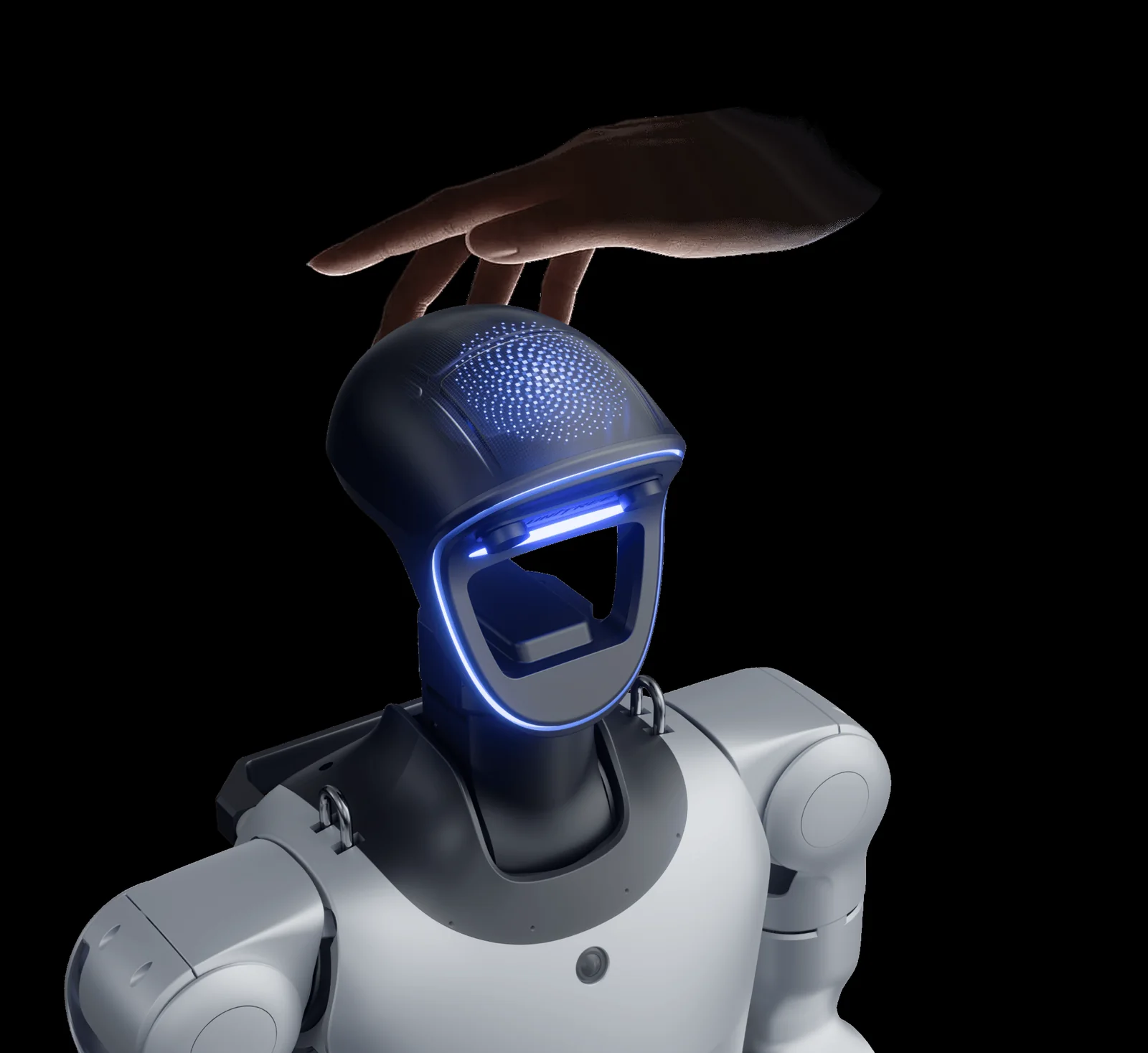
The G1+ pitches its head between -25° and +36° and yaws ±110°.
- Flexible head rotation lets it scan the environment naturally and turn towards the person it interacts with; on the G1 the head was fixed to the torso.
Fully Upgraded Compact Humanoid Robot
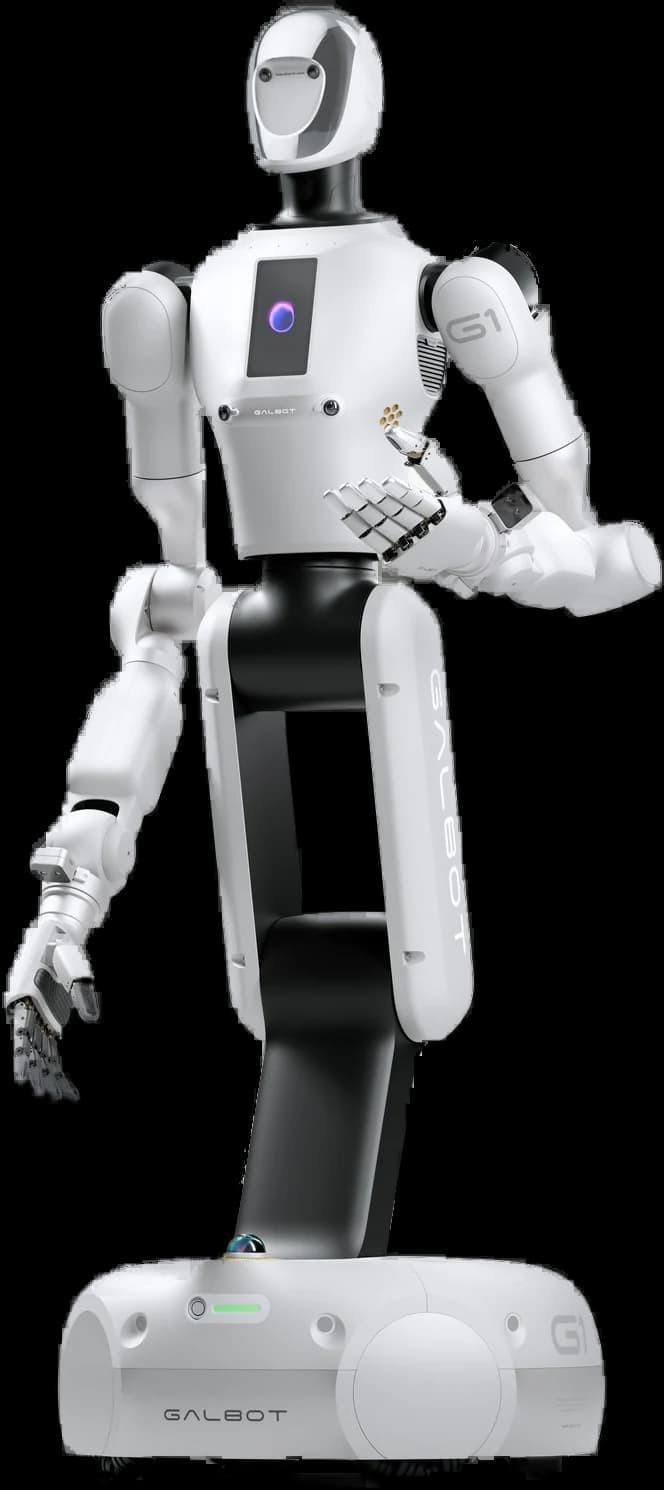
Unitree G1+ is the fully upgraded 2026 edition of the compact G1 humanoid.
It adds a two-degree-of-freedom neck, 110 percent higher peak torque at the shoulders and waist, a binocular plus wide-angle dual vision system, a tactile head, six-microphone far-field voice pickup and external power while running; it weighs about 35 kg and offers 25 degrees of freedom (up to 45 on the EDU).
Unitree Turkey Partner · on-site commissioning and support protocol (SLA) · 1-year warranty
Unitree G1+ is the fully upgraded edition of the compact G1 humanoid, announced by Unitree Robotics on 14 September 2026. The manufacturer summarises the upgrade along three axes: motion performance, perception and interaction, and intelligent experience. It measures 1340 × 450 × 200 mm standing and 690 × 450 × 300 mm folded, and weighs about 35 kg with the battery.
The base model has 25 degrees of freedom; the G1+ EDU extends to 45 with dexterous hand and wrist options.
Six major upgrades: (1) a two-degree-of-freedom neck (pitch -25° to +36°, yaw ±110°) for natural environmental perception and interaction; (2) a comprehensive motor overhaul: peak torque at the shoulder and waist motors rises 110 percent while heat at the same torque falls 72 percent, arm motors gain 43 percent torque with 30 percent less heat, and thigh motors run 28 percent cooler; (3) a dual vision system combining a 60 mm baseline 2 MP binocular camera (H110° / V80° / D125°) with a 1920 × 1080 @ 30 fps wide-angle monocular camera (H117° / V67°); (4) head-integrated tactile sensors: tap to start a dialogue or trigger a motion; (5) external power supply and charging while running, for long sessions in research and demonstration scenarios; (6) a six-microphone array (4 front + 2 rear) with sound-source direction finding, external wireless microphone support and dual 10 W waist speakers.
Keeping the G1's price-performance position, the G1+ is supplied in Turkey through Robotlar.org, the Unitree Turkey Partner, with installation, training and technical support in Turkish. Pricing for the G1+ and G1+ EDU is set by quote per configuration.
Tap the cover to play; sound and loading start only on click.
The manufacturer's official variant matrix; the values are documented data.
| Feature | G1+ | G1+ EDU |
|---|---|---|
| Turkey starting price | Teklifle | Teklifle |
| Total degrees of freedom | 25 | 25-45 |
| Waist degrees of freedom | 1 | 1 veya opsiyonel 3 |
| Hand degrees of freedom | - | 7 (hünerli el) + 2 bilek |
| Arm maximum load | Yaklaşık 3 kg | Yaklaşık 4 kg |
| High computing power module | - | Orin vb. seçenekler |
| Secondary development (SDK) | - | ✓ |
| Manufacturer warranty | 8 ay | 18 ay |
| Quote | Get a Quote for This ModelG1+ | Get a Quote for This ModelG1+ EDU |
Values are from the manufacturer's official table (September 2026); the final configuration and price are confirmed by quote. Dexterous hand, wrist and high-compute module options are set at order time.
Edition noteOnly the EDU edition supports secondary development; projects that need customisation choose the EDU edition.
G1+
New-generation base model: neck joint, upgraded motors, dual vision, tactile head and far-field voice; demos, education and interaction.
G1+ EDU
The R&D edition: secondary development open, high-compute module, dexterous hand and wrist options, 18-month manufacturer warranty.
The G1+ pitches its head between -25° and +36° and yaws ±110°.
Peak torque at the shoulder and waist motors rises 110 percent while heat at the same torque drops 72 percent.
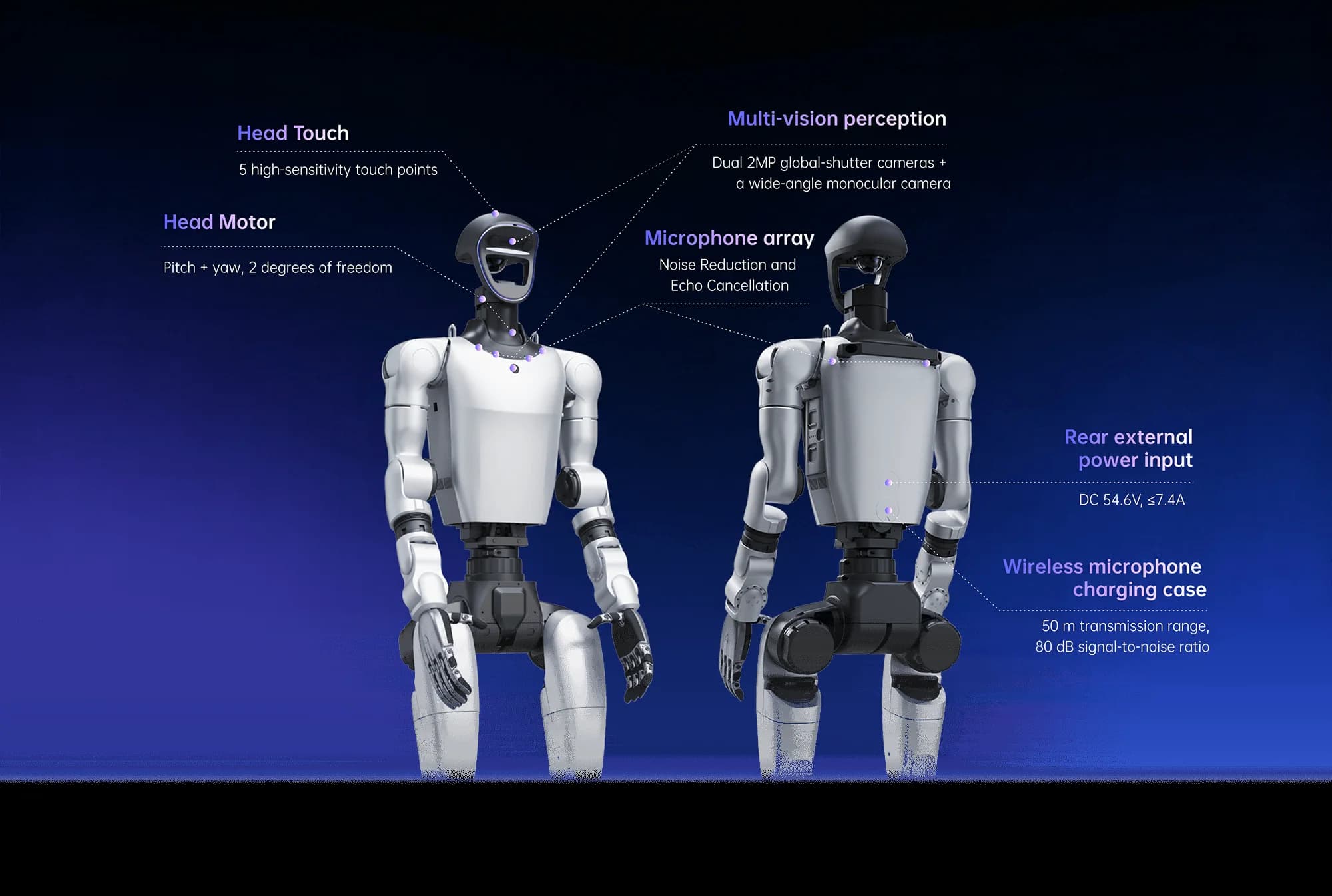
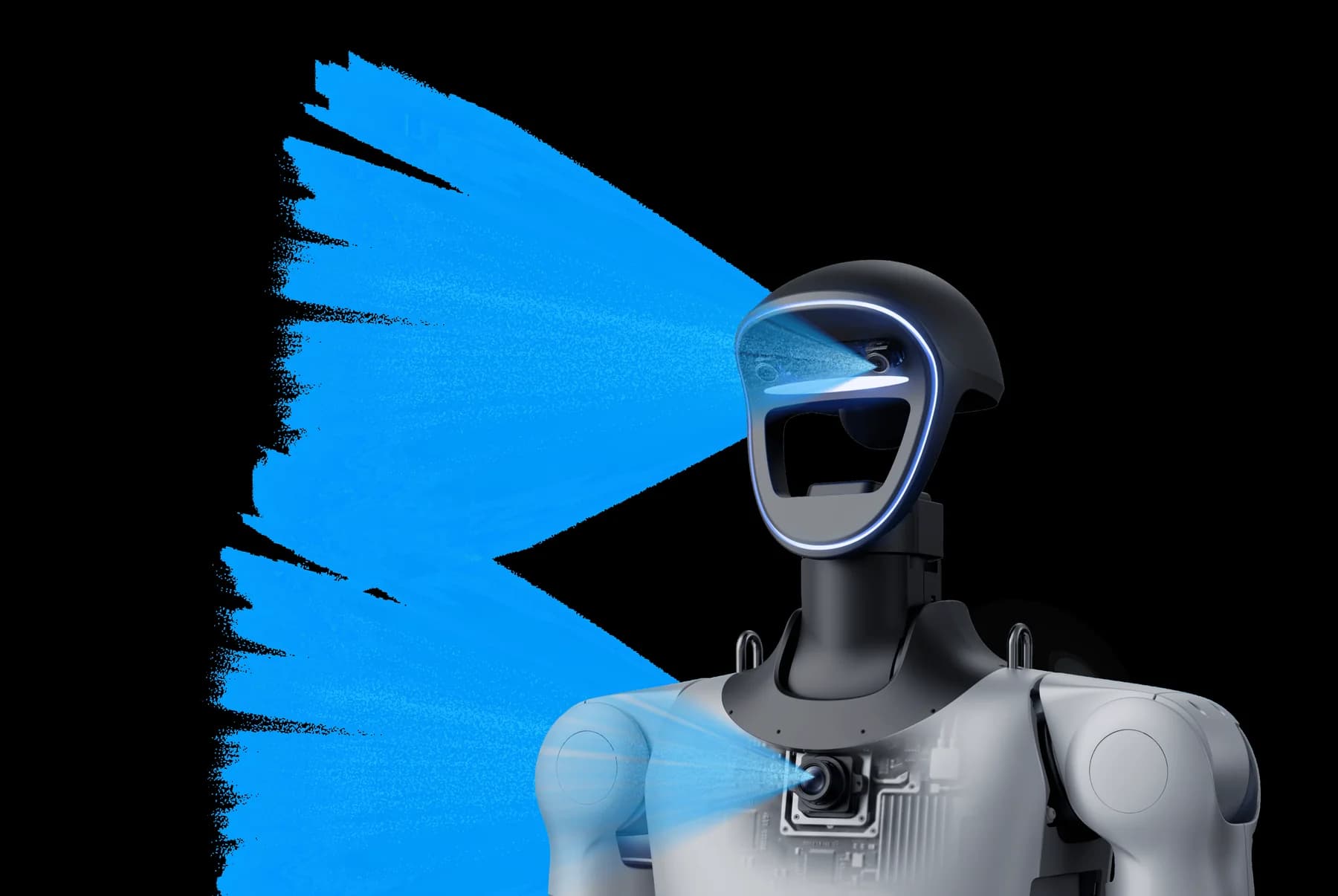
A 60 mm baseline 2 MP binocular camera (H110° / V80° / D125°) provides stereo depth perception; a 1920 × 1080 @ 30 fps wide-angle monocular camera (H117° / V67°) adds an ultra-wide field of view.
Five high-sensitivity touch points integrated into the head start a dialogue or trigger a motion with a light tap.
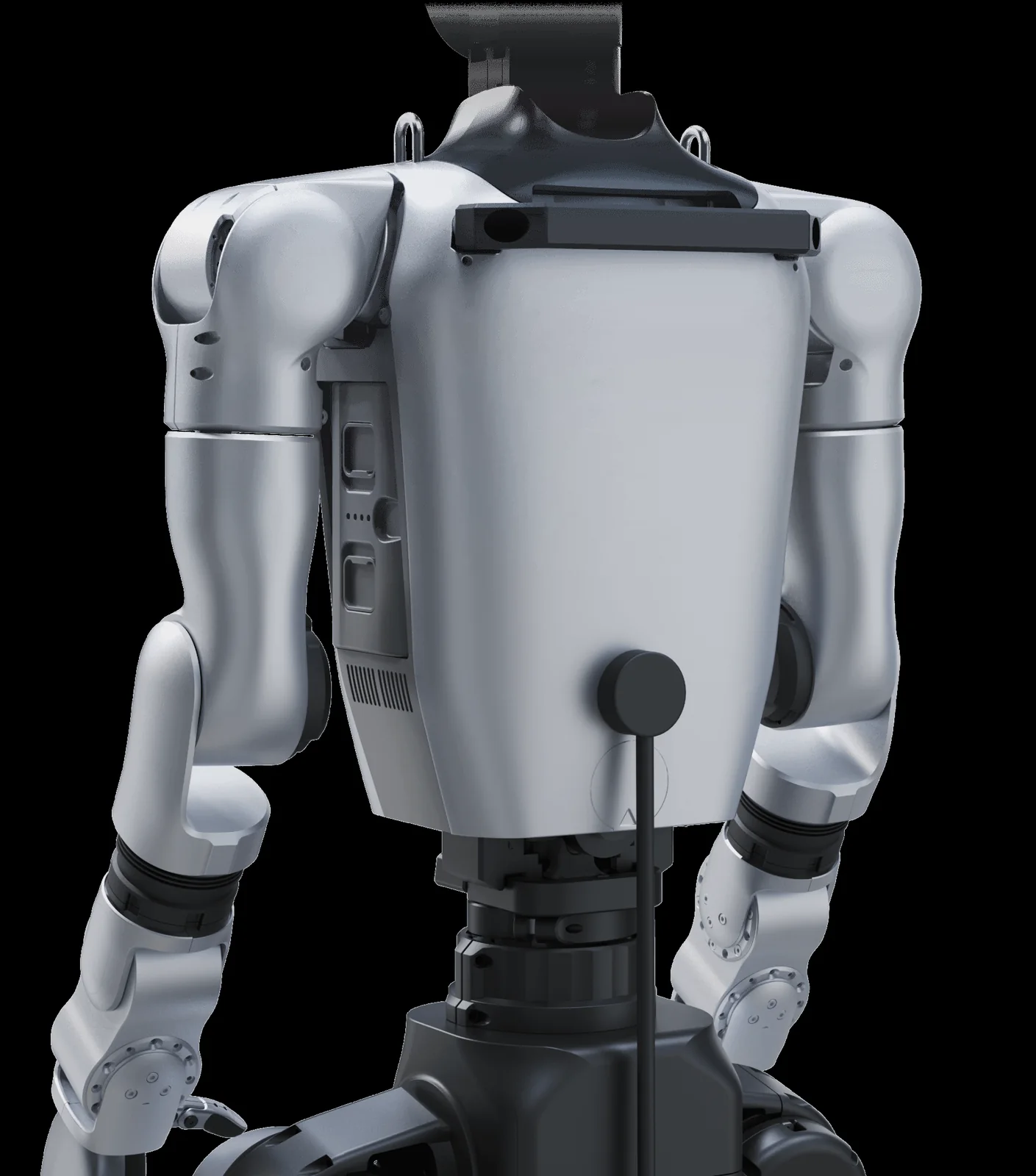
The rear power input (DC 54.6 V, ≤7.4 A) allows external supply and charging while running, so the robot works for hours in research and demonstration scenarios without depending on the battery.
The introduction clip from the manufacturer's official product page: the new visor head, neck joint and refreshed body lines.
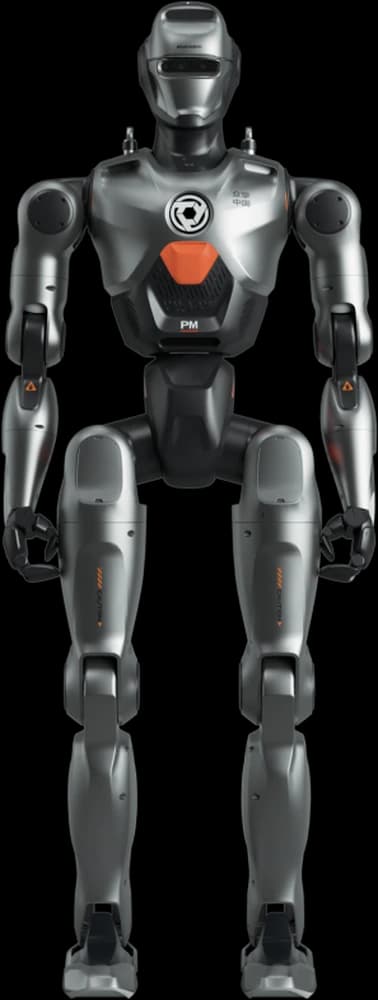
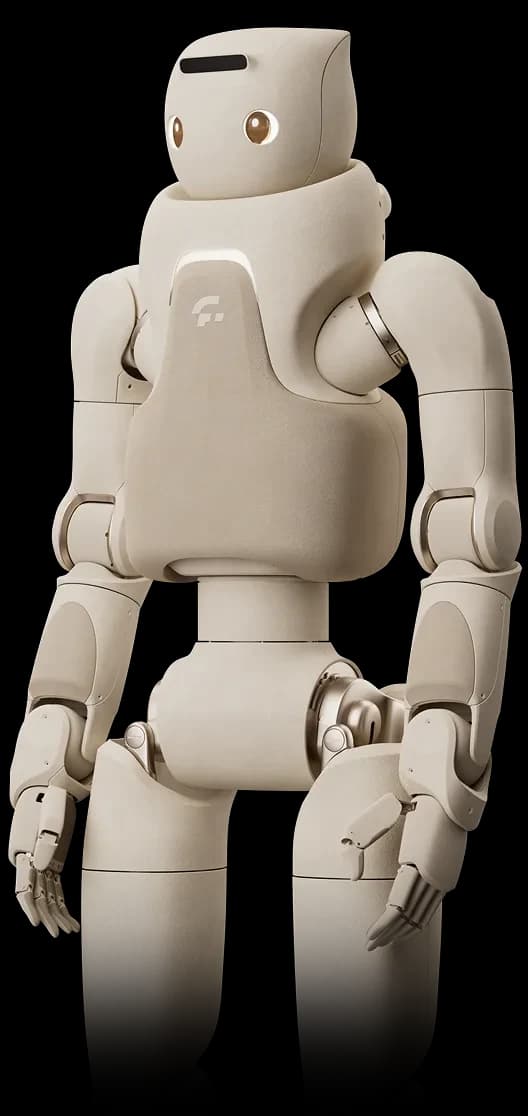
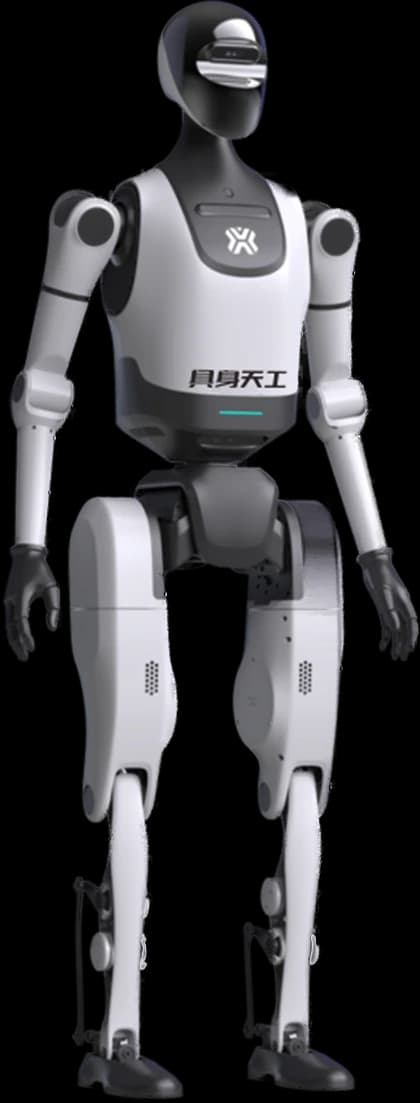
4 images; tap to enlarge.
28 values in 7 categories; data published by the manufacturer.
Verified on the manufacturer page on 21 September 2026.
An itemised quote for the Unitree G1+ is prepared by configuration, quantity and delivery scope.
The body class is the same: 1340 × 450 × 200 mm, about 35 kg, 0.6 m legs and a 0.45 m arm span. The difference sits in three layers. In the motion layer the shoulder and waist motors deliver 110 percent higher peak torque while heating 72 percent less at the same torque; arm motors give 43 percent more torque with 30 percent less heat, and thigh motors run 28 percent cooler. In the perception layer a two-degree-of-freedom neck, a binocular plus wide-angle camera pair and a tactile head are added. In the interaction layer sit a six-microphone array, wireless microphone support and dual 10 W speakers; external power while running decouples session length from the battery.
| Feature | G1+ | G1+ EDU |
|---|---|---|
| Total degrees of freedom | 25 | 25-45 |
| Arm maximum load | ~3 kg | ~4 kg |
| Dexterous hand and wrist | - | Optional |
| High computing power module | - | Orin etc. |
| Secondary development | ❌ | ✅ |
| Manufacturer warranty | 8 months | 18 months |
| Starting price | By quote | By quote |
The G1+ keeps the G1's accessible price class while answering the two most criticised points of the humanoid, limited torque and a fixed head. The torque and heat improvements are the manufacturer's percentage comparisons; since absolute N·m values are not published, project calculations should apply the ratios to the G1's known figures and ask for confirmation at the quote stage. The dual cameras, tactile head and six microphones make the robot markedly more useful in demonstration and human-robot interaction scenarios, and external power effectively removes the 2-hour battery limit in lab and trade-show use. If you will run your own algorithms, secondary development is open only on the EDU.
Supply model
Delivered from Turkey stock; installation, training and on-site service under one responsibility.
Pre-sales assessment
Site and mission focused technical feasibility; specification and administrative process support.
Demo and site visit request
Send a demo request; availability and scope are settled in the call.
Manufacturer warranty
Manufacturer warranty: G1+ 8 months; G1+ EDU 18 months
Source documents
Technical values come from the manufacturer's documents; verified on 21 September 2026. 1 documents at the bottom of the page.
Configuration, accessories and quantity determine the price. A line-by-line quote follows the site survey.
To talk directly: 0850 532 6 777
The most common questions about the Unitree G1+.
The G1+ is the G1 renewed with six major upgrades: a two-degree-of-freedom neck (pitch -25° to +36°, yaw ±110°), 110 percent higher peak torque and 72 percent less heat at the shoulder and waist, 43 percent higher torque at the arm motors, a binocular plus wide-angle dual vision system, a tactile head, six-microphone far-field voice pickup and external power while running. The size class and roughly 35 kg weight are kept; the base model goes from 23 to 25 degrees of freedom.
The G1+ EDU is the edition open to secondary development: SDK access, an optional high-compute module such as Orin, an optional 3-DoF waist, dexterous hands with 7 DoF per hand plus 2 wrist DoF extending to 45 degrees of freedom, about 4 kg arm load and an 18-month manufacturer warranty. The base G1+ ships with 25 degrees of freedom, about 3 kg arm load and an 8-month manufacturer warranty; if you will run your own code, you need the EDU.
About 2 hours on the 9,000 mAh quick-release smart battery, charged with a 54 V 5 A charger. The G1+ also supports external power while running: connected to the rear power input (DC 54.6 V, ≤7.4 A) it works for long sessions in research and demonstration scenarios without depending on the battery.
A 60 mm baseline 2 MP binocular camera in the head (H110° / V80° / D125°) gives stereo depth perception, a 1920 × 1080 @ 30 fps wide-angle monocular camera in the chest (H117° / V67°) adds an ultra-wide field of view, and 3D laser radar complements them. The six-microphone array (4 front + 2 rear) locates the sound source and suppresses noise; five touch points on the head allow tap-to-talk and motion triggering.
The Turkey price of the Unitree G1+ and G1+ EDU is set by quote per configuration; dexterous hand, wrist and high-compute module options affect it. In Turkey an official quote is obtained through Robotlar.org, the Unitree Turkey Partner; installation, training and Turkish technical support are included in the supply. The delivery time is stated in the quote.
Secondary development is open only on the G1+ EDU; the manufacturer refers to the secondary development manual for details. A high-compute module such as Orin can be added to the EDU. The base G1+ runs as a closed system with the manual controller and smart OTA updates.
Robotlar.org is the Turkey Partner for Unitree Robotics, the Turkey Distributor for Pudu Robotics, and authorized systems integrator (Service Hub), providing sales, on-site engineering across Turkey, spare parts, and SDK/API integration support.
G1+ price guide, comparison table and SDK guide


