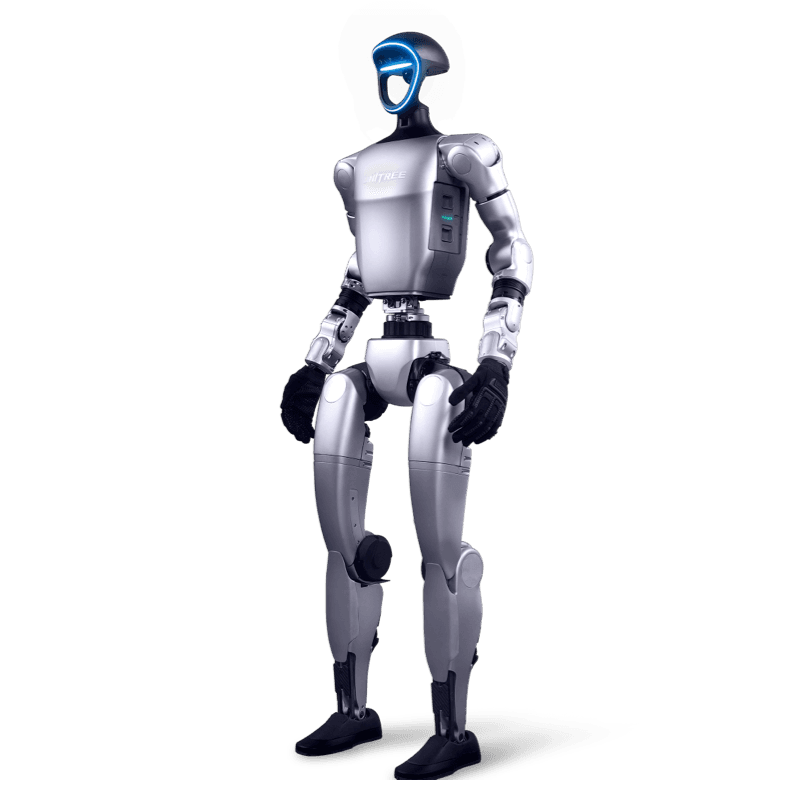
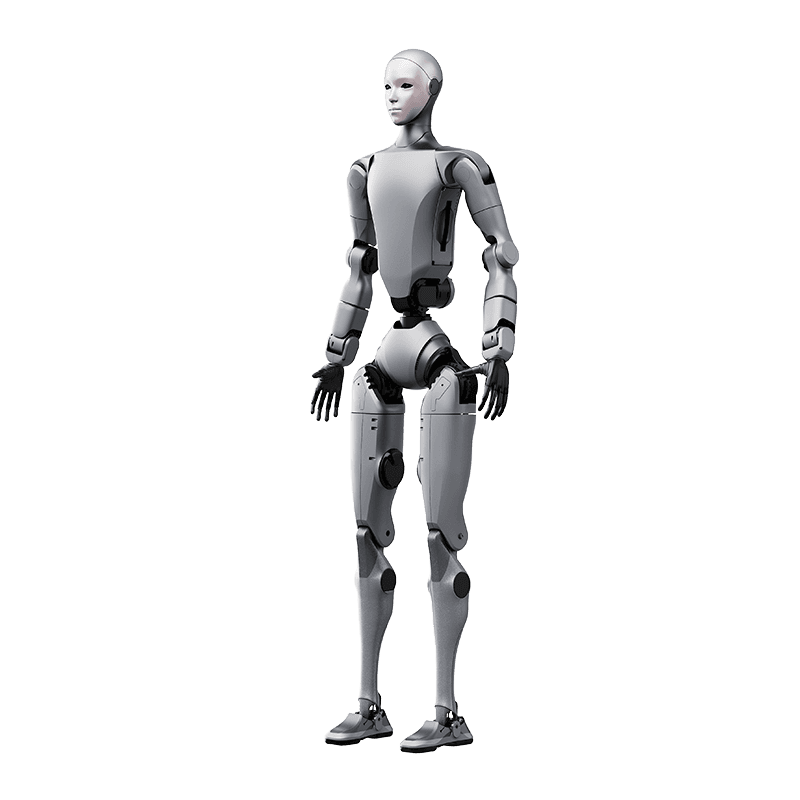
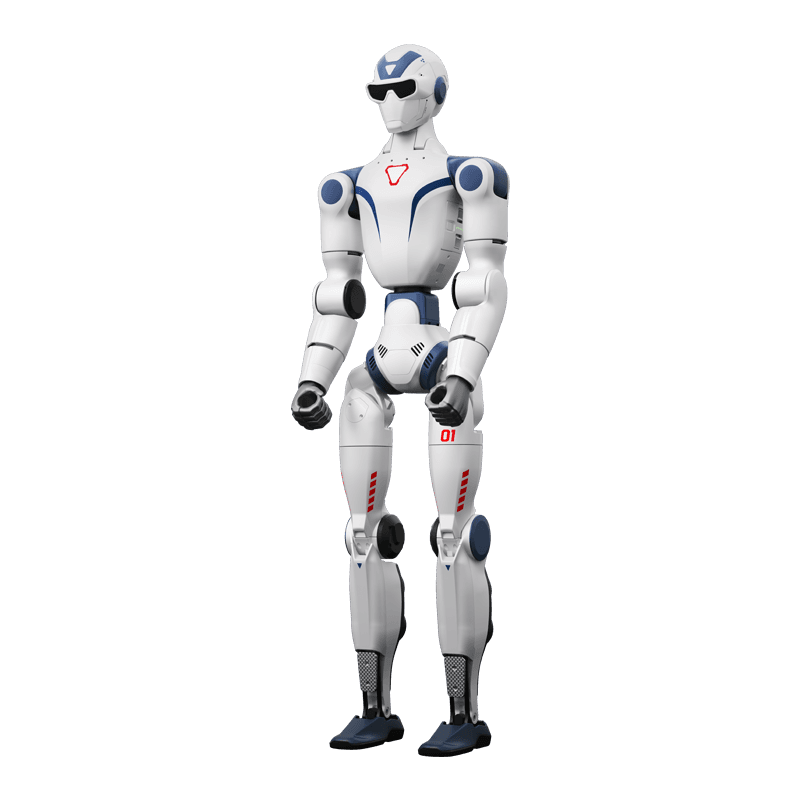
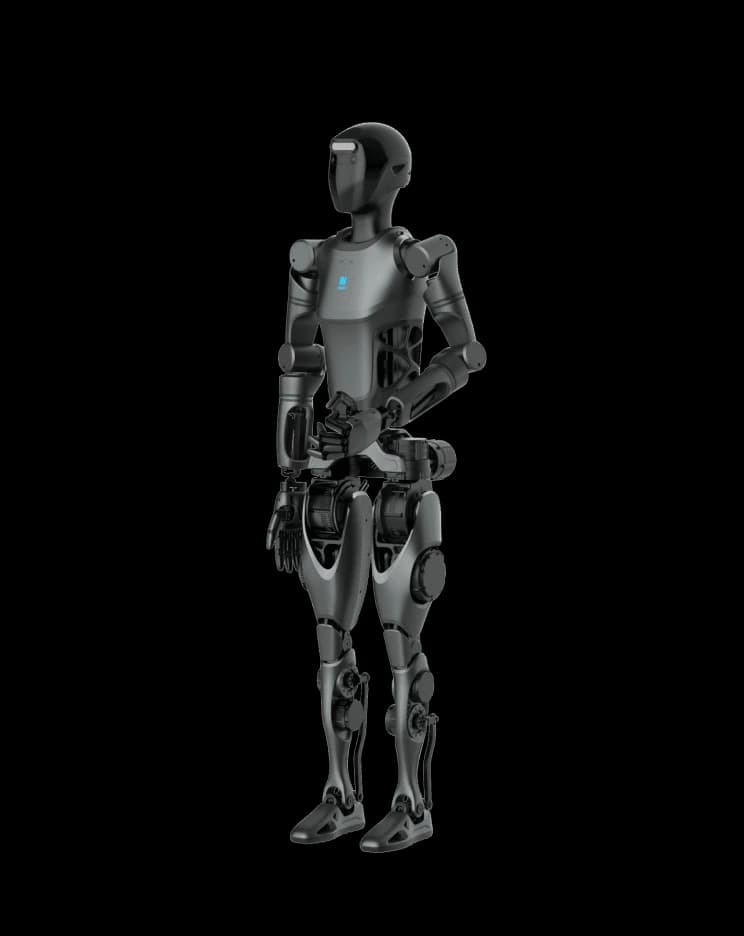
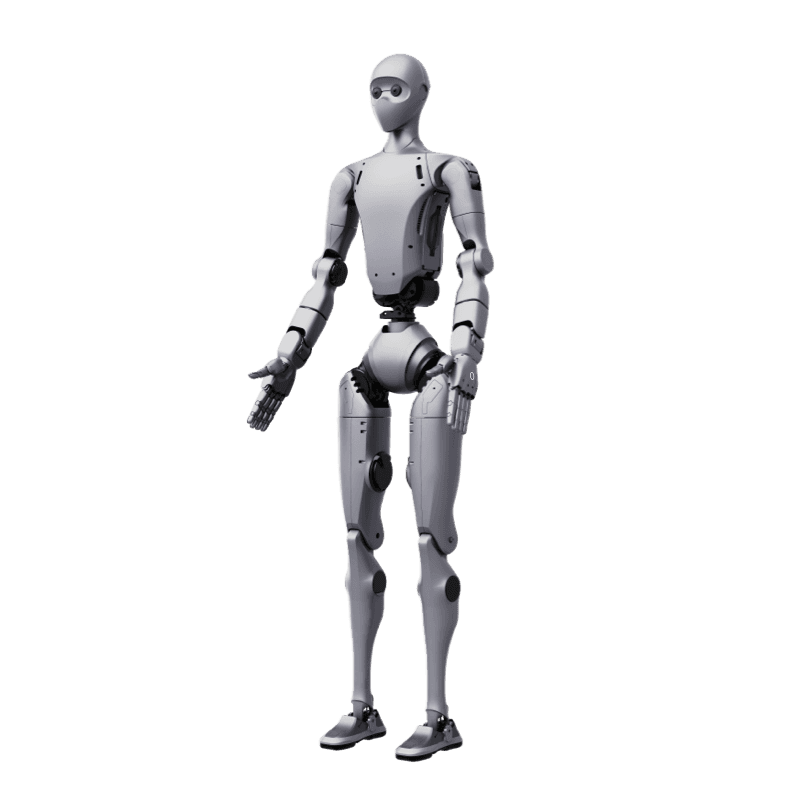
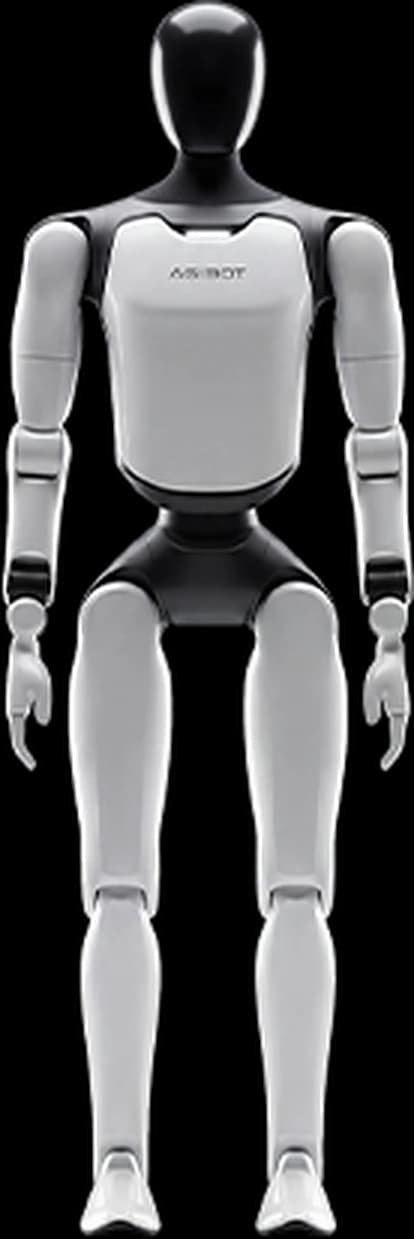
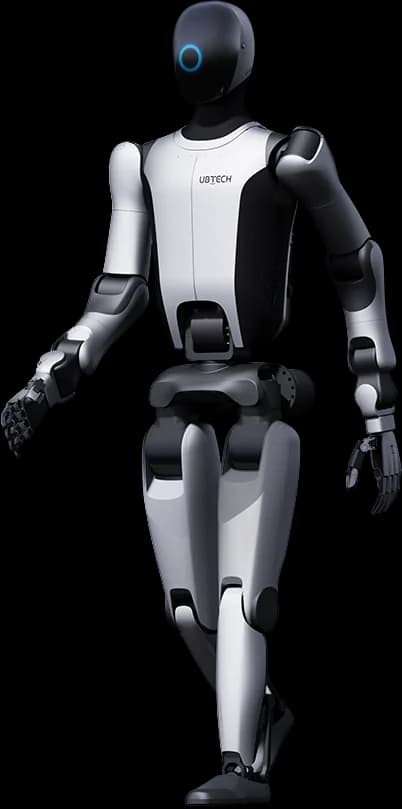
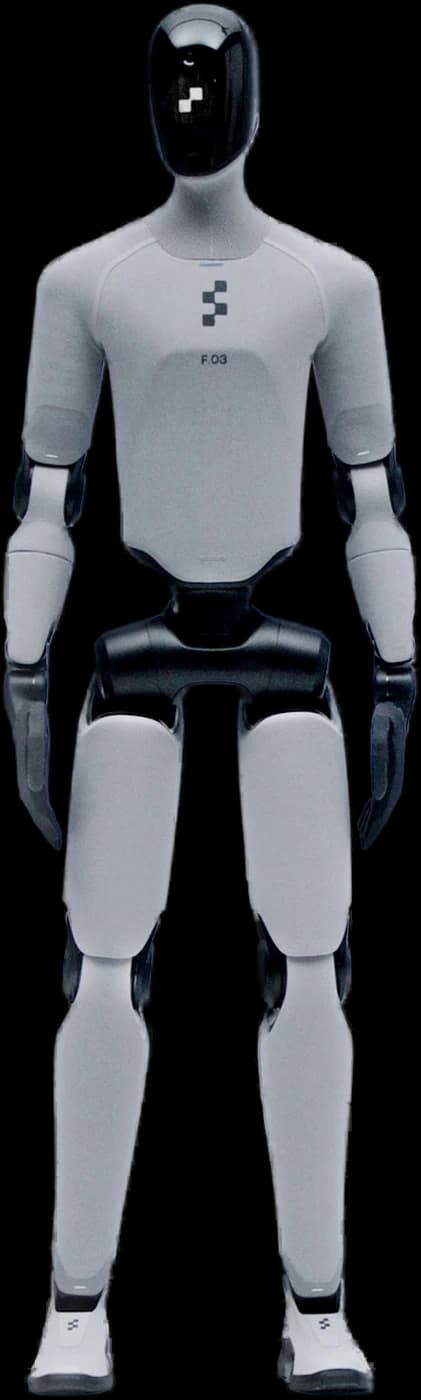
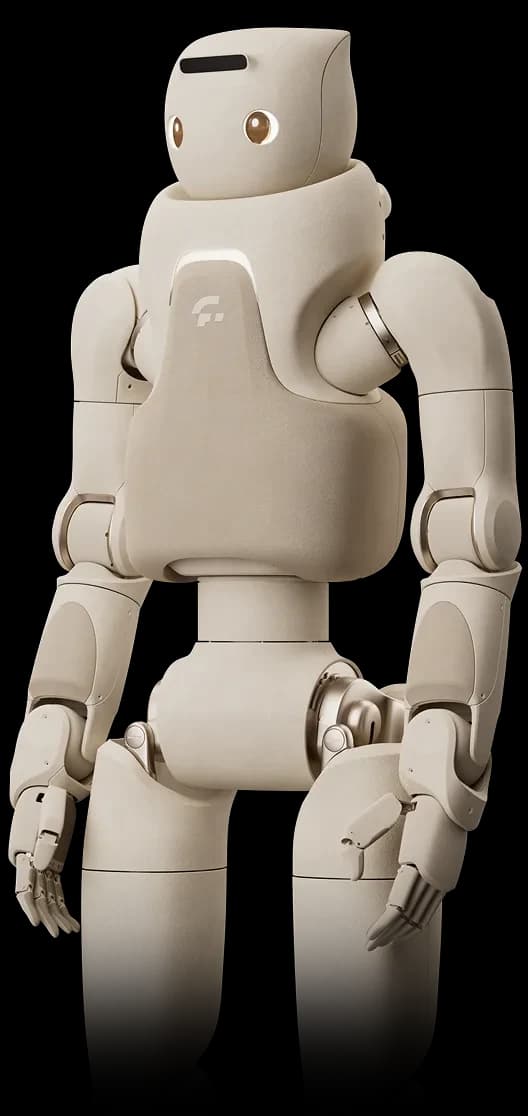
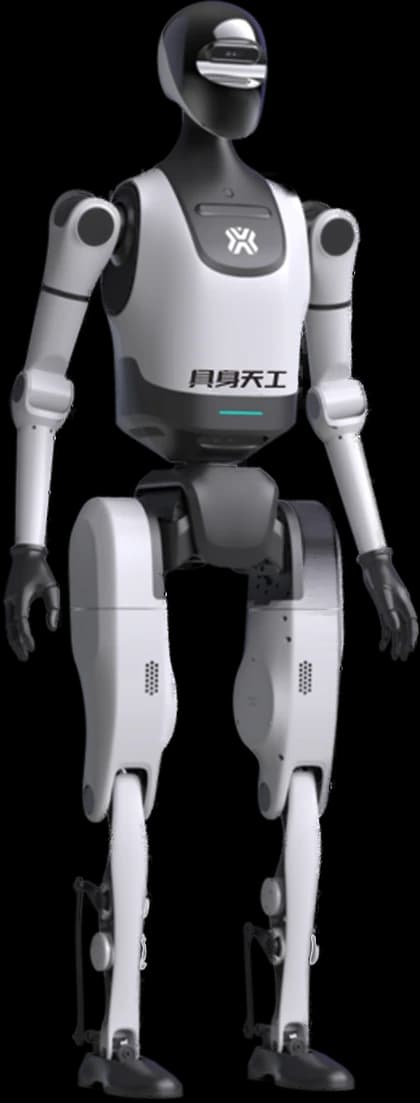
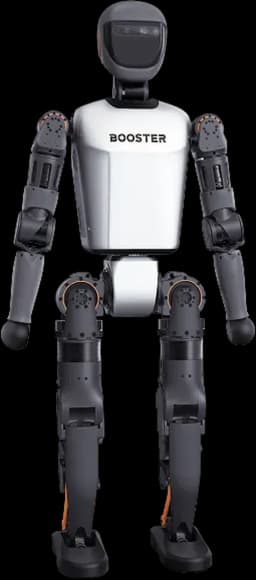
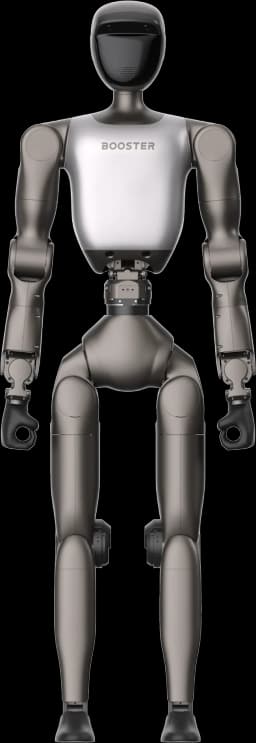
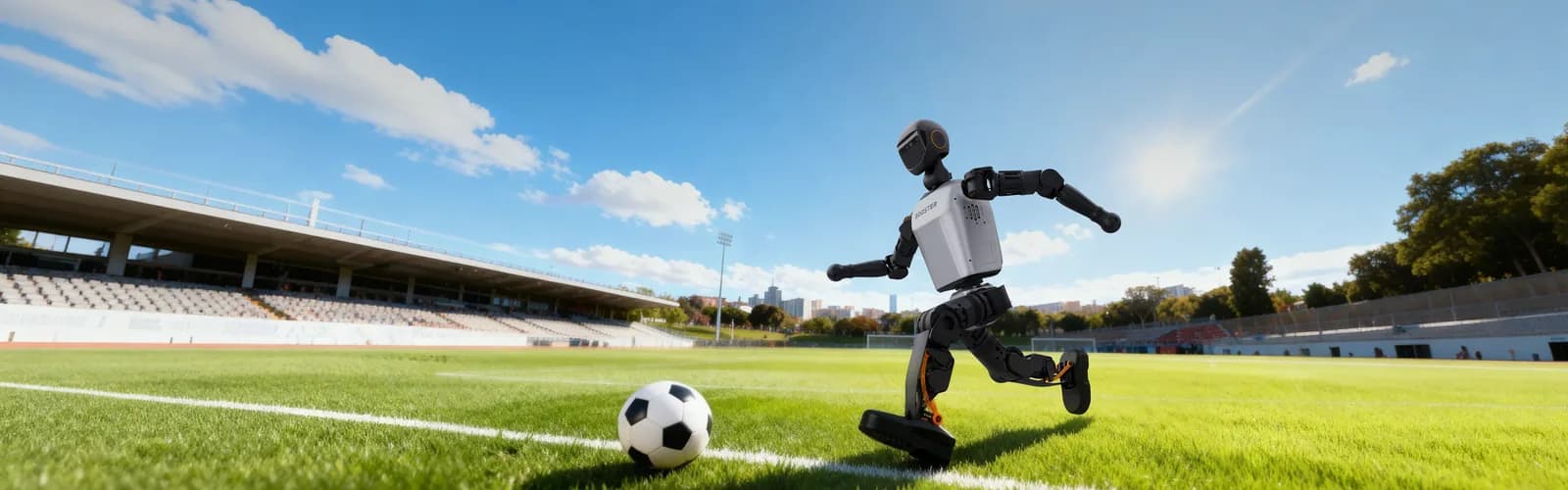
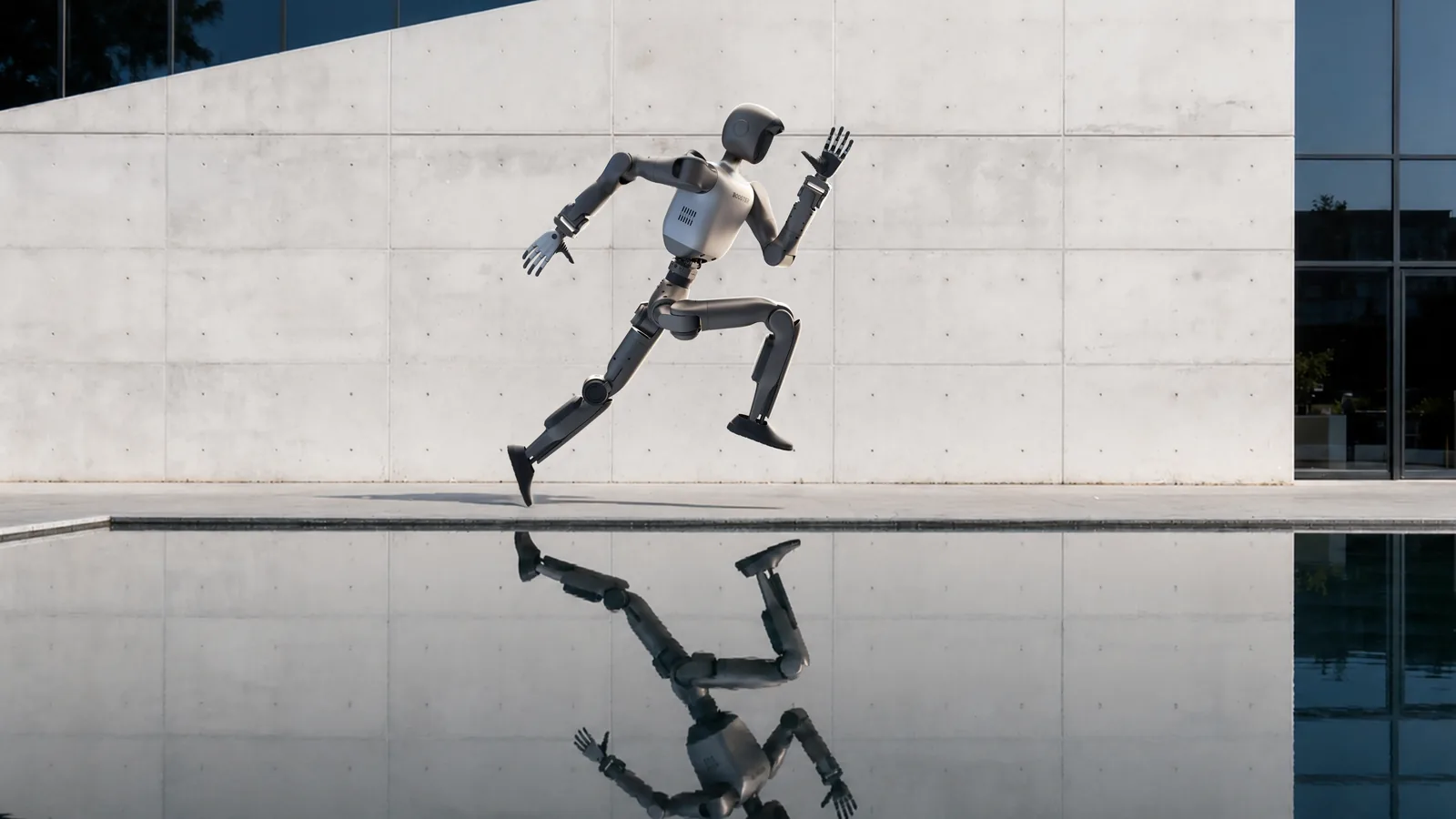
Body: 118 cm / 30 kg and 140 cm / 42 kg
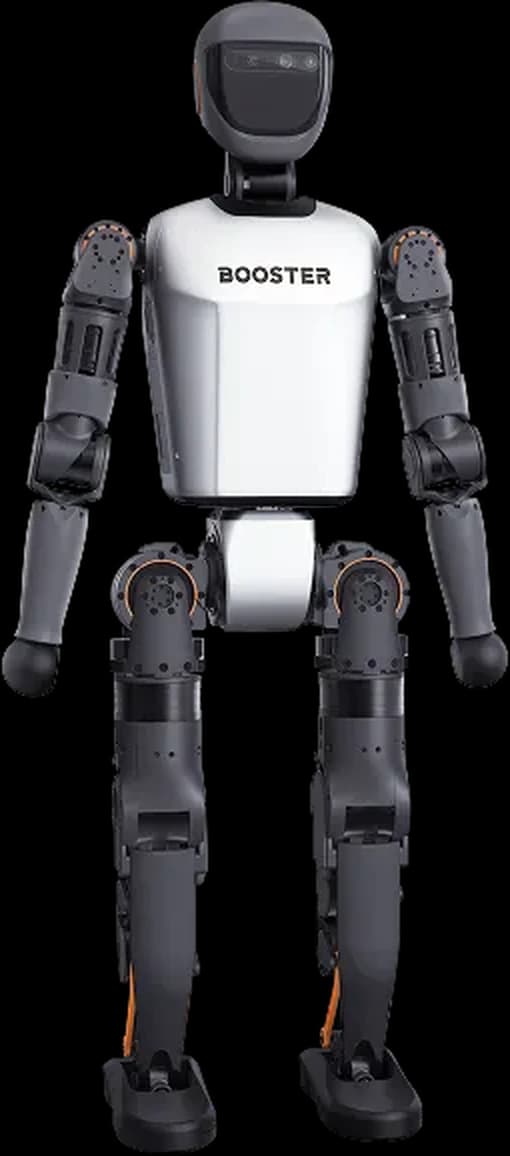
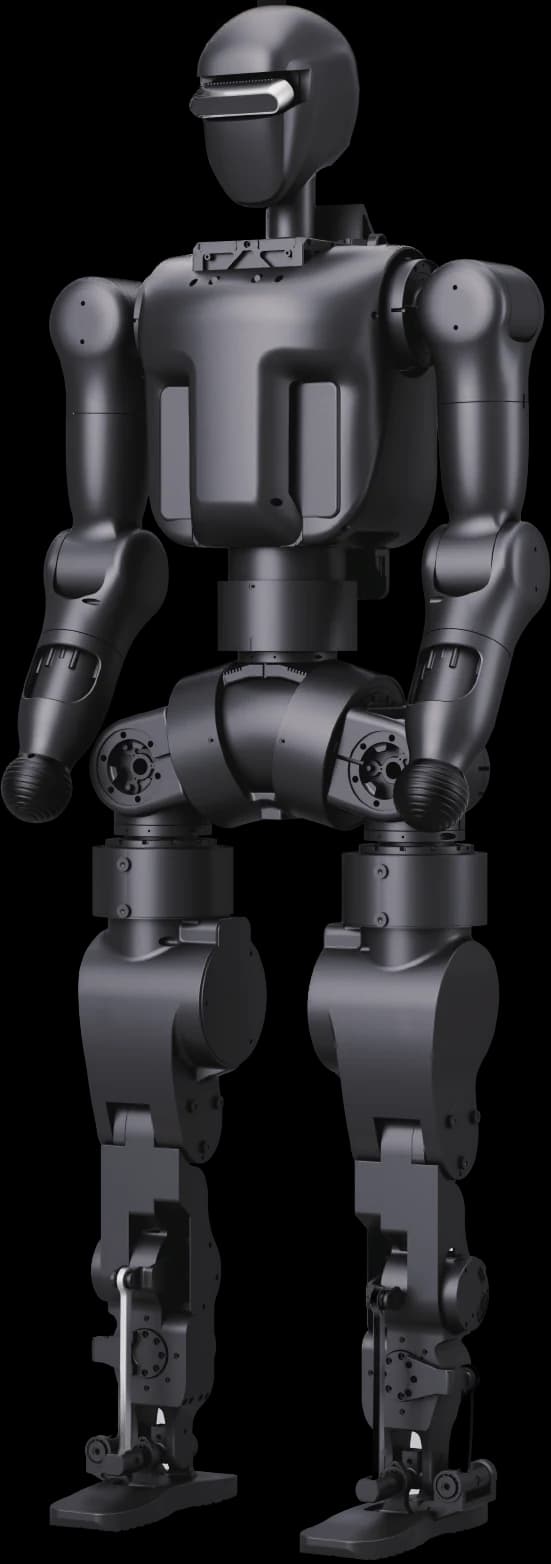
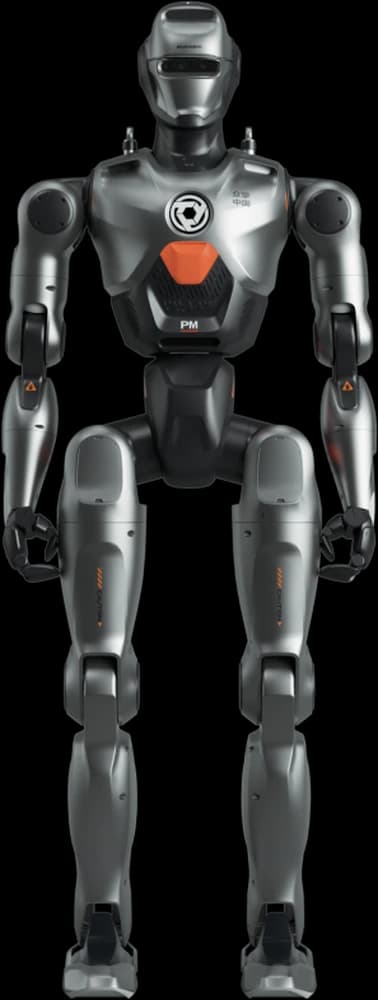
The T1 measures 118 × 47 × 23 cm at about 30 kg; the T2 is about 140 cm and 42 kg. The T2's extra 22 cm changes reach at bench and shelf height; the extra 12 kg means stronger joints and a bigger battery. The T1 is a body sized around competition rules and built to fall and get up; the T2 is positioned as a body that opens onto real workloads.
| Measure | Booster T1 | Booster T2 |
|---|---|---|
| Height / weight | 118 cm / ~30 kg | ~140 cm / 42 kg |
| Total degrees of freedom | 23 / 31 / 41 (by edition) | 31 (body) |
| Waist | 1 axis | 3 axes |
| Arm | 4 (7 with gripper or hand) | 7 |
| Peak torque | 130 N·m | 140 Nm |
| Dual-arm payload | No value published in the product record | Up to 10 kg (varies with arm posture) |
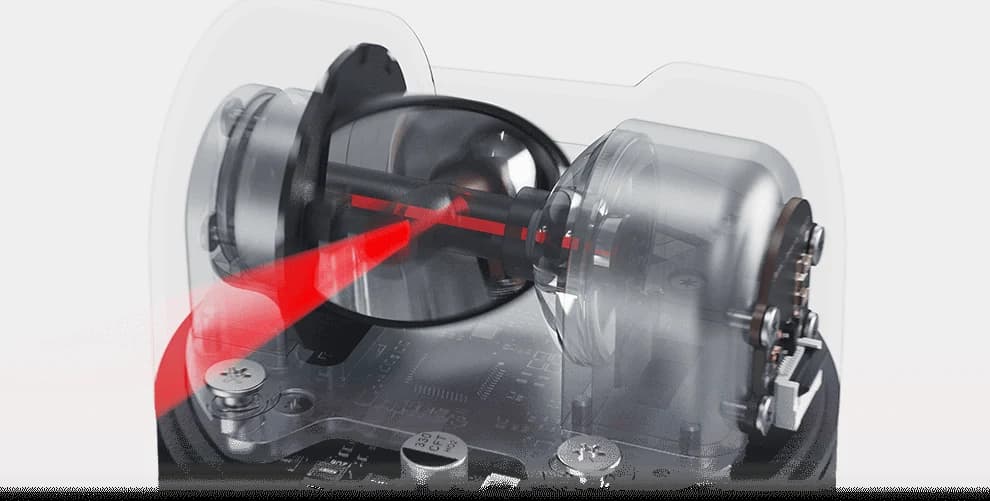
| Compute | NVIDIA AGX Orin 200 TOPS; added Intel i7 1370p on Standard/Customized | Education: ARM processor; Professional: NVIDIA Jetson Thor T5000 |
| Battery | 10.5 Ah; 2 h walking, 4 h standing | 48 V, 10 Ah; 2 h continuous walking |
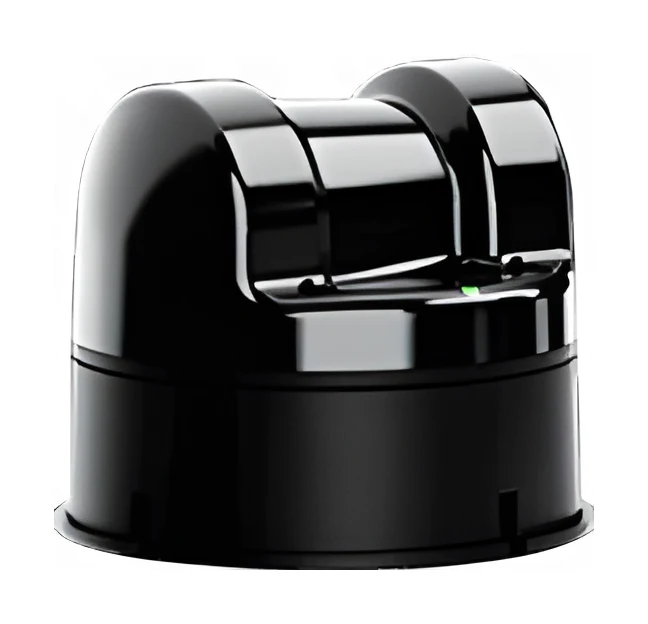
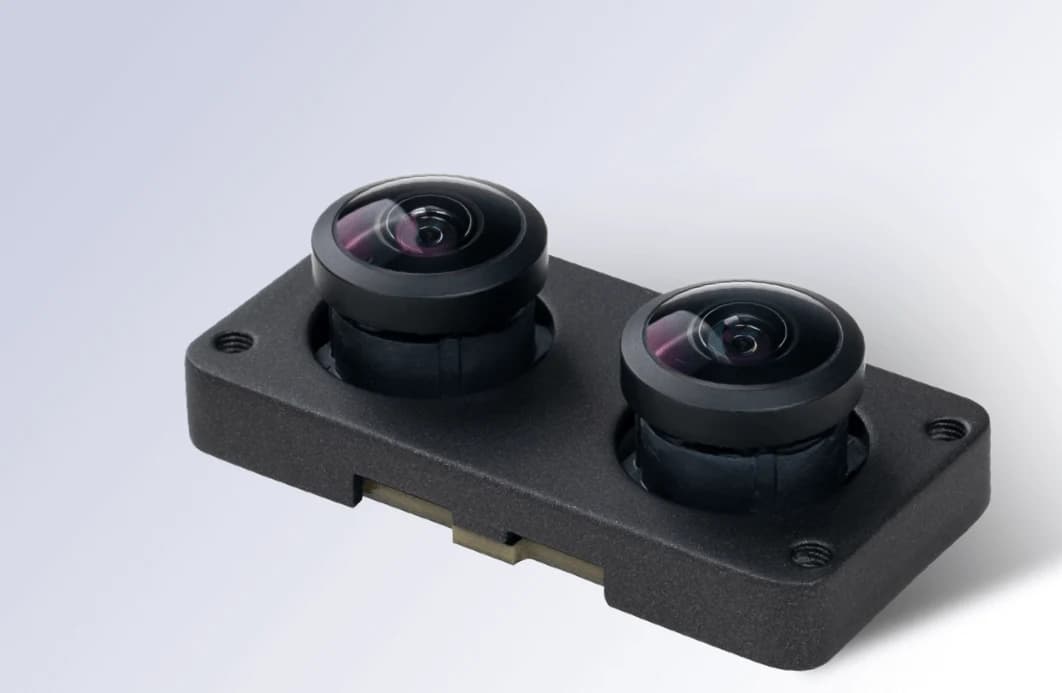
| Perception | Depth camera, 9-axis IMU | Binocular cameras in head and waist, optional wrist camera and LiDAR |
Waist and Arms: From 1 Axis to 3
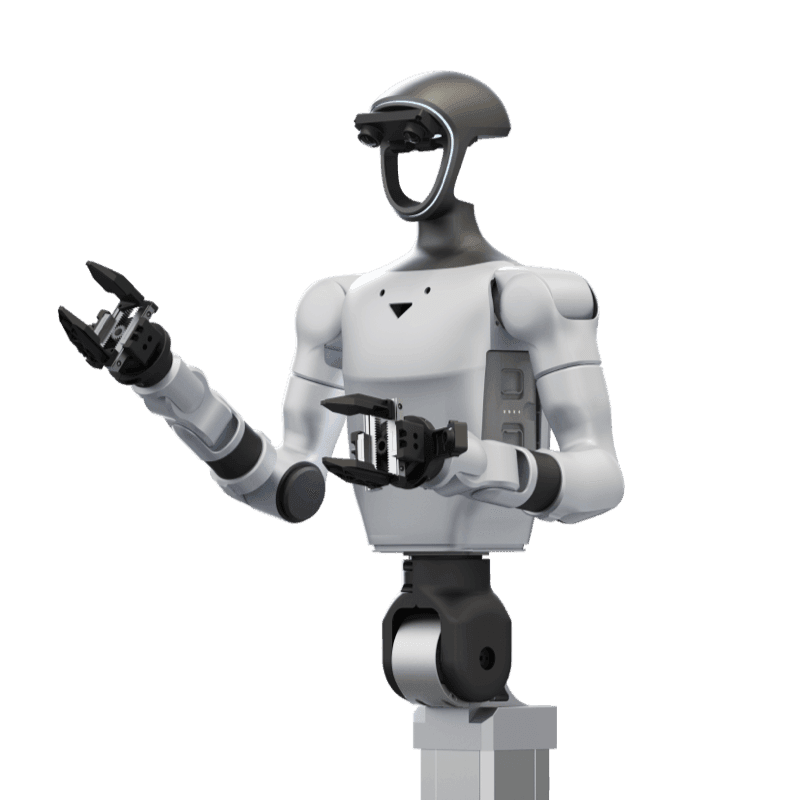
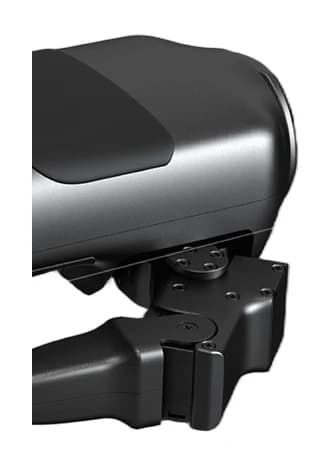
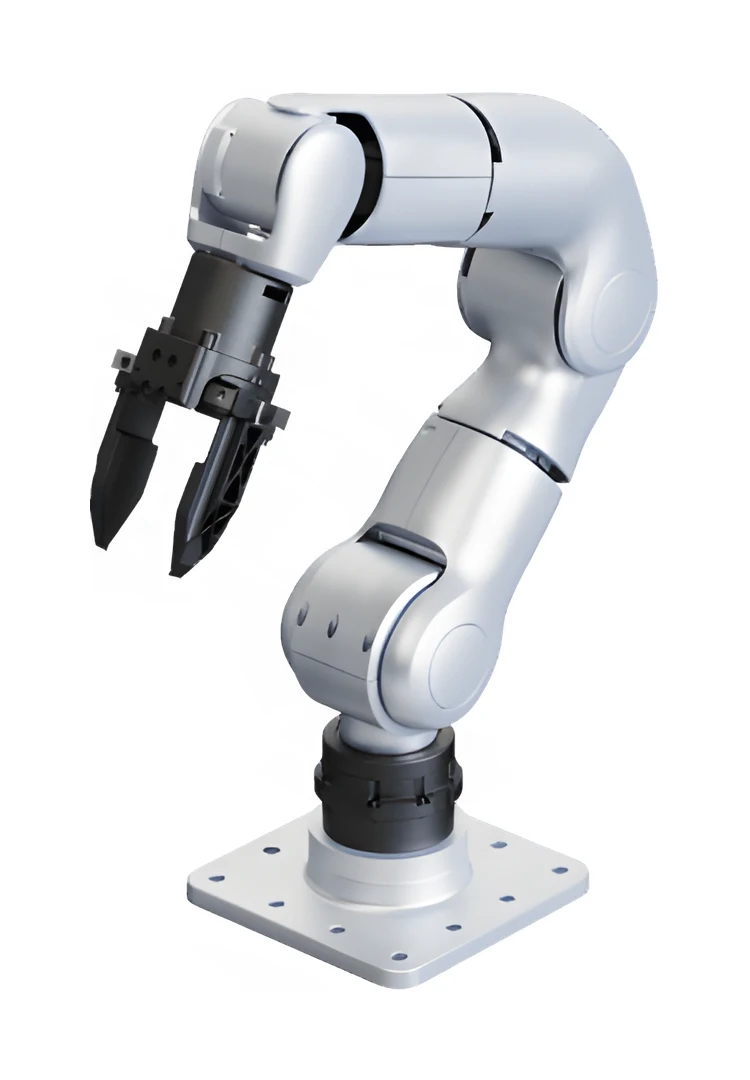
The T1 has 1 waist axis (yaw); the T2's waist has 3. A three-axis waist lets the torso both turn and bend with the feet planted: there is no need to step to reach a side shelf or pick something off the floor. It is also one reason the T2 can carry up to 10 kg with both arms.
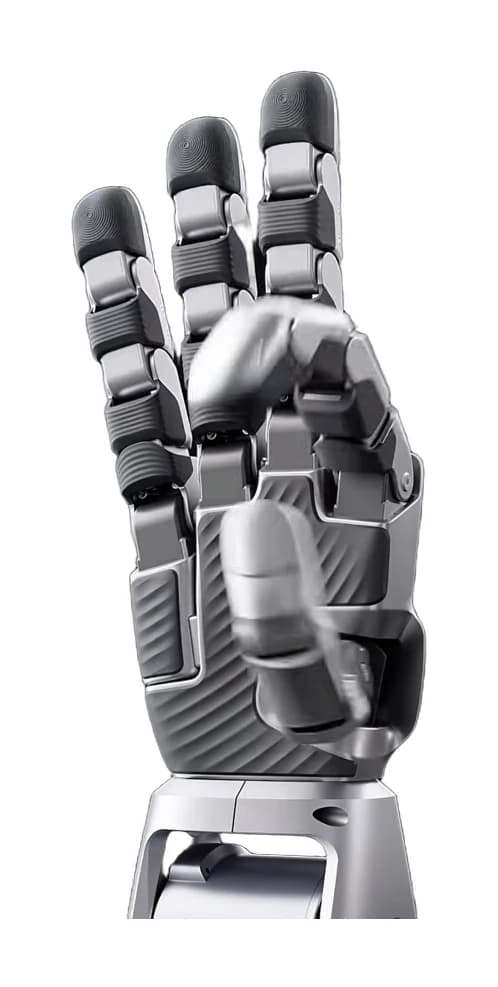
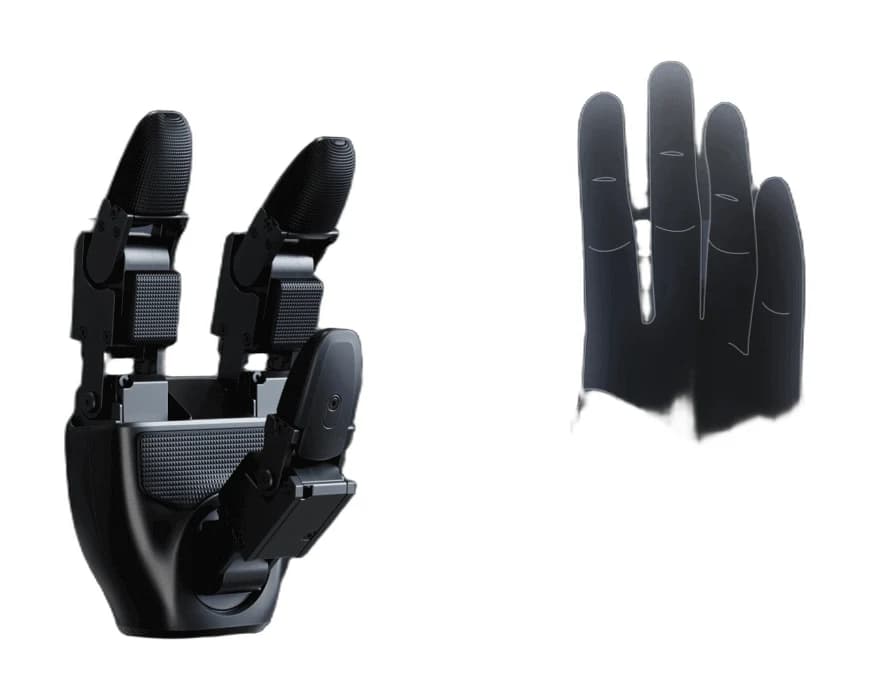
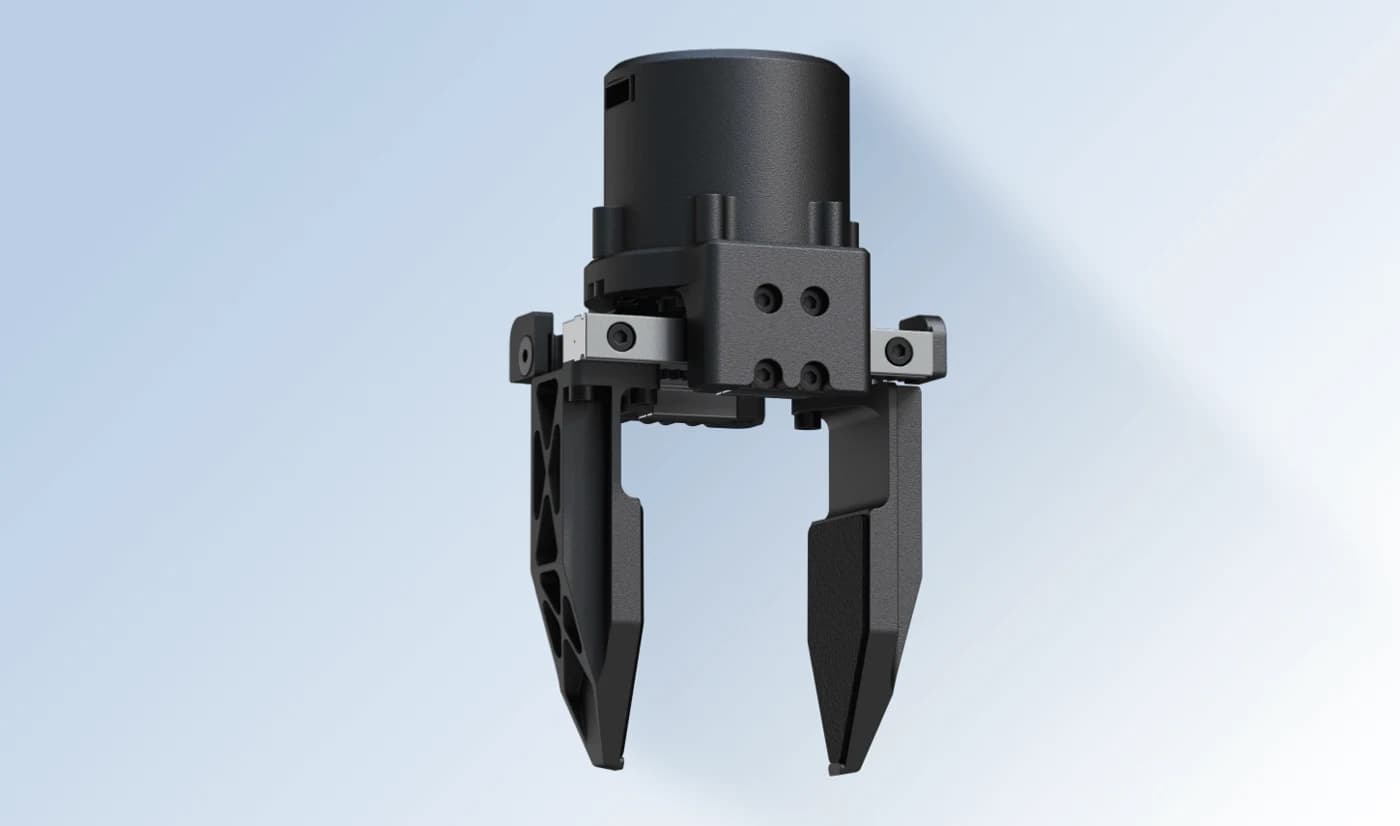
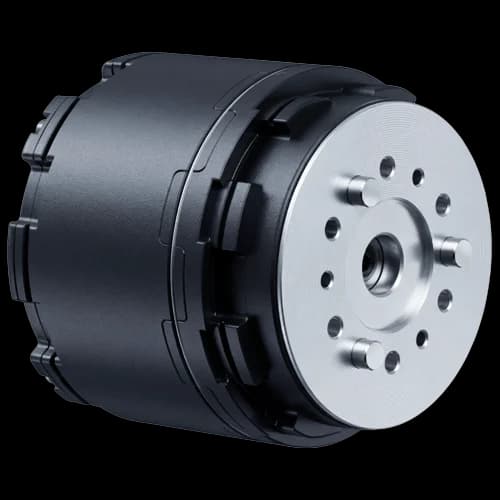
On the arms, the T1 base body has 4 axes per arm, rising to 7 with a gripper or dexterous hand. On the T2, 7 axes per arm are standard and both grippers and dexterous hands are supported as end effectors. The joint outputs use industrial-grade cross roller bearings and inner-rotor permanent magnet synchronous motors.
Compute: AGX Orin 200 TOPS and Jetson Thor T5000
Every T1 edition carries an NVIDIA AGX Orin at 200 TOPS; the Standard and Customized editions add an Intel i7 1370p for the x86 side. The T2 Professional carries an NVIDIA Jetson Thor T5000, so the whole loop from perception to decision and action, large vision-language-action models included, can close on the robot. The T2 Education uses a high-performance ARM processor in the same body.
A note: the TOPS figure quoted for Orin describes INT8 inference throughput, while the TFLOPS figure makers quote for Thor describes FP4 precision. The two numbers are not in the same unit and should not be compared as a ratio.
Battery and Endurance
The T1 runs about 2 hours walking and 4 hours standing on a 10.5 Ah battery and charges in 2 hours or less. The T2 offers 2 hours of continuous walking on a 48 V, 10 Ah battery, charges through a magnetic port and gives audible warnings for low battery and joint over-temperature. On both bodies, manipulation and heavy perception loads shorten runtime.
Shared Software
The T1 and T2 use the same software stack: the Booster SDK (C++ and Python), the ROS 2 interface package, Booster Studio and the reinforcement learning repositories. The README of Booster's Isaac Lab based booster_train repository states support for the T2, T1 and K1 platforms. That makes it easier to carry a lab setup built on the T1 over to the T2; installation and API details are in the Booster SDK development guide.
Field Record
The T1 has the longest field record: it won the 2025 RoboCup AdultSize category with Tsinghua's Hephaestus team, and according to Booster's 9 July 2026 announcement the top three places in the 2026 Large category also went to teams on the T1. The T2 launched in July 2026; as a new body, its published field and academic track record is not yet as broad as the T1's.
Pricing Structure
Booster does not publish open list prices; on both models the price is quoted by edition, end effector, compute and scope. We explain the quote structure on the T1 pricing page and the T2 pricing page.
Robotlar.org is an authorized distributor of Booster Robotics products in Turkey: the T1 and T2 are invoiced in Turkey and quoted on a proforma that includes taxes and freight; commissioning, training, a 1-year warranty and authorized service are delivered in Turkey.
The Decision
If the work is walking, balance, reinforcement learning, RoboCup and a proven research body, choose the Booster T1. If you need near human-height reach, a 3-axis waist, two-handed manipulation with 7-axis arms and large models on the robot, choose the Booster T2, and the Professional edition for large models. To weigh the T2 against another maker's body, see the G1 EDU and T2 Pro comparison.