
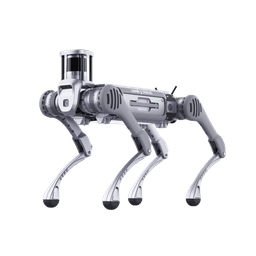
The Three Constraints That Decide the Choice
Choosing a quadruped comes down to three numbers in practice: walking payload, ingress protection and mission endurance. Walking payload is the sensor and equipment budget the robot can carry while moving, and it is the figure that matters in the field, not the standing load printed in the catalogue. Ingress protection tells you whether the robot can work outdoors in rain and dust. Endurance sets the shift plan: a two-hour robot only covers a six-hour inspection round with a battery swap. The three models below separate clearly along these three axes.
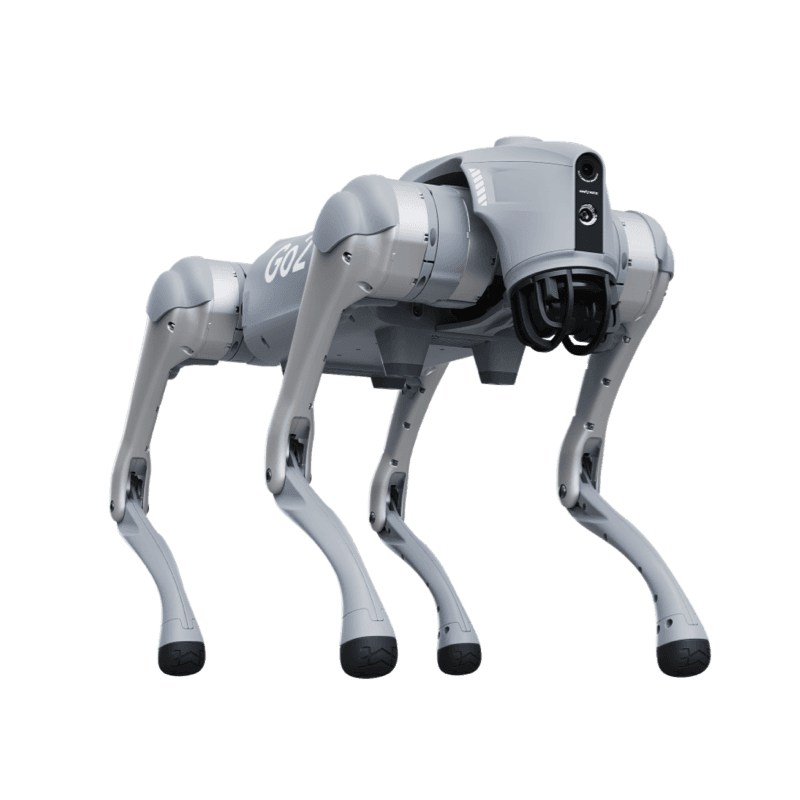
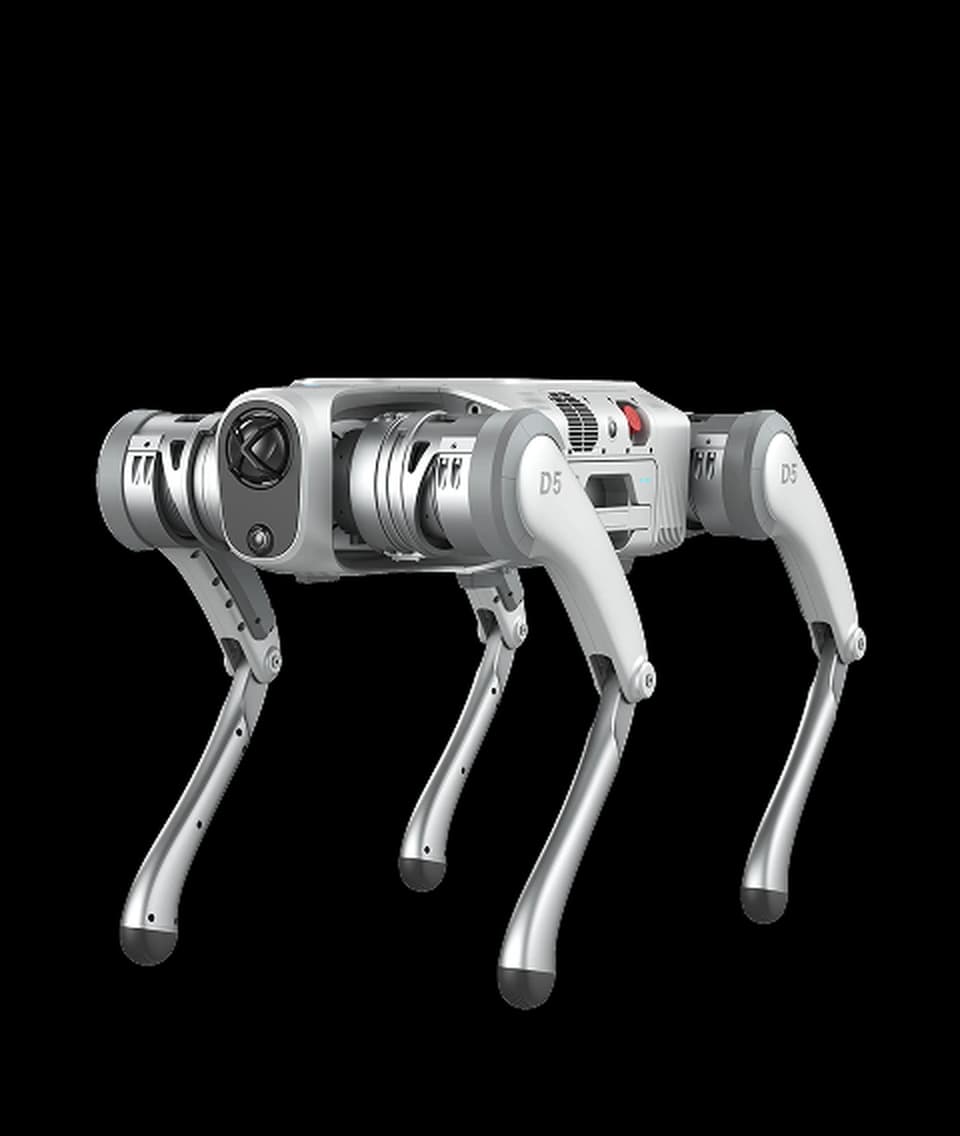
Go2: Entry, Education and Research
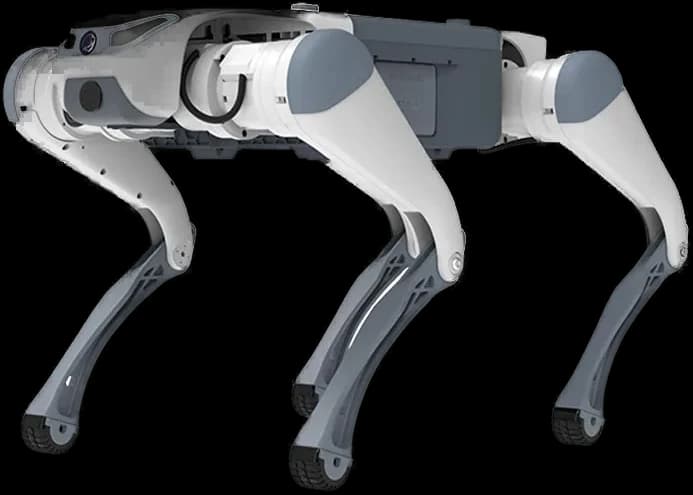
A 15 kg body, 700 × 310 × 400 mm standing, 8 kg walking payload (12 kg on the EDU) and 2.5-3.5 m/s depending on variant. Slope capability is 30 degrees on the AIR and 40 on the PRO and above; step clearance is 15-16 cm. What sets the Go2 apart is not price but accessibility: a platform one person can carry, that fits in a lab and through a doorway. The full difference table across the AIR, PRO, X and EDU variants sits in the variant matrix on the Go2 product page. It is the right starting point for coursework, theses and algorithm development; the EDU is the only real option for research because it brings full SDK and ROS 2 access.
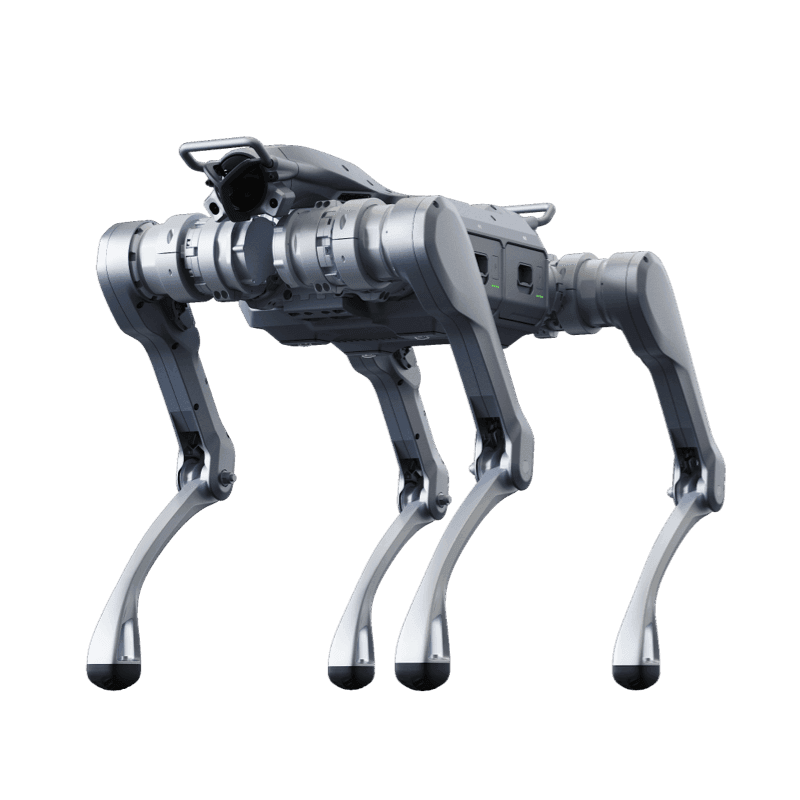
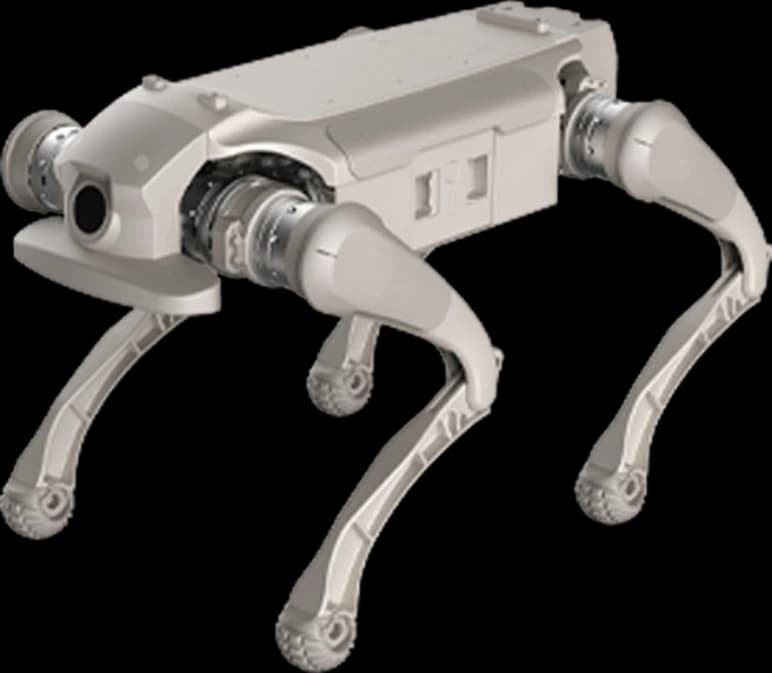
AS2: The Mid-Class Field Robot
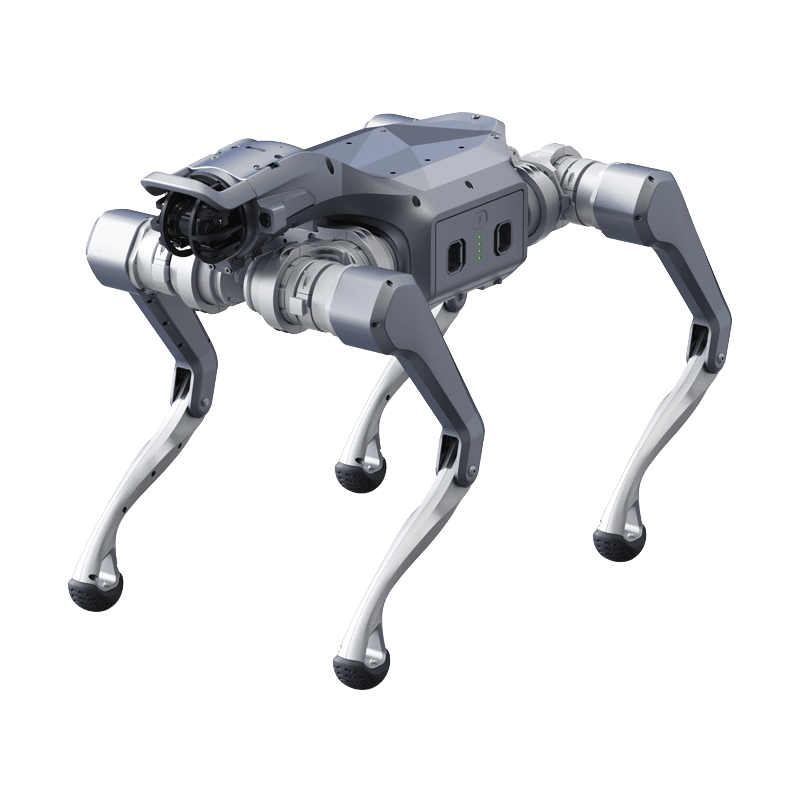
A 20 kg body, 15 kg walking payload, up to 65 kg standing capacity, over 5 m/s, 40 degree slope and 25 cm step. A 648 Wh battery gives over 4 hours unloaded, peak joint torque is 95 N·m, the operating range is -20 to 50 degrees and protection is IP54. The AS2 fills the band where the Go2 runs out of capacity but the B2 is heavier than the job needs: in-facility and semi-open site inspection, covered car parks, the area around a production line. IP54 handles dust and splashes outdoors but not sustained rain; genuine open-air work belongs to the B2.
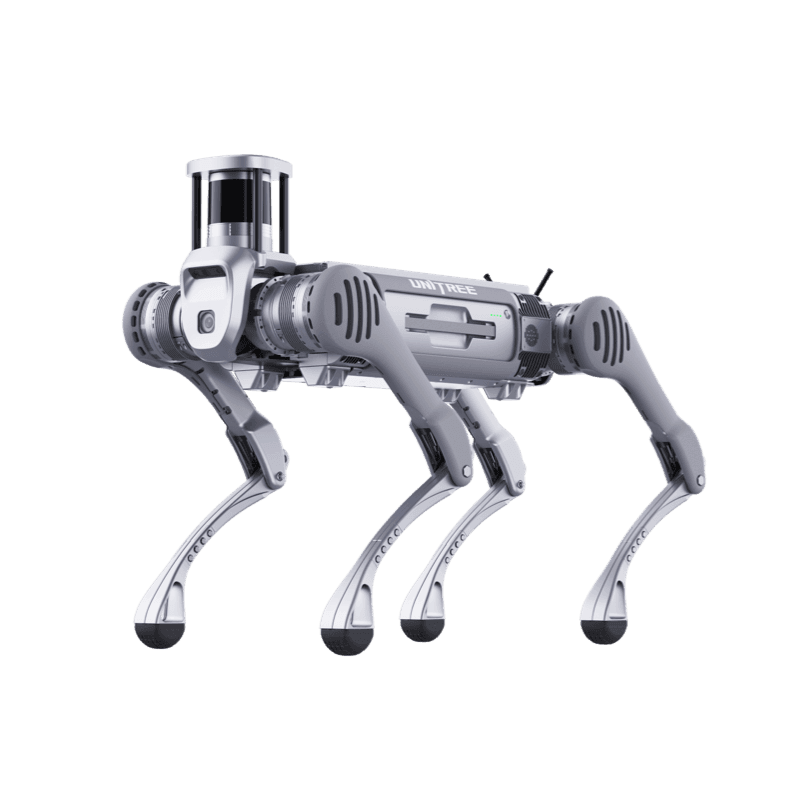
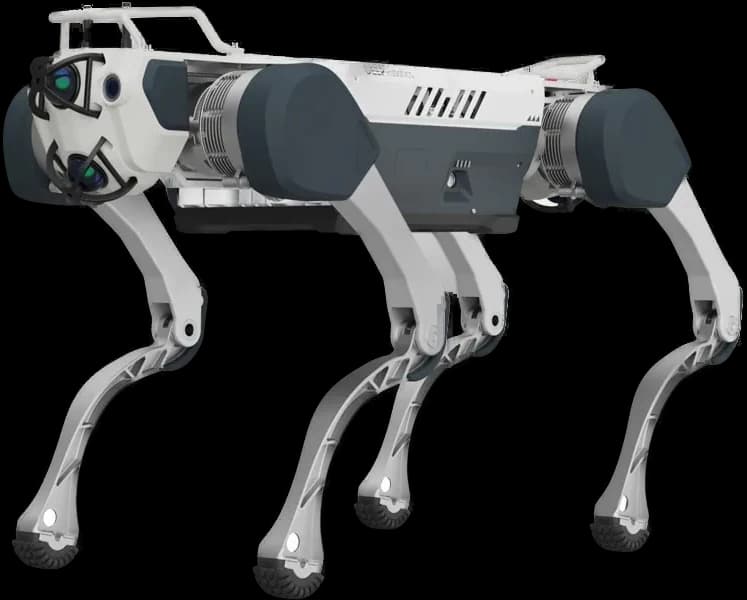
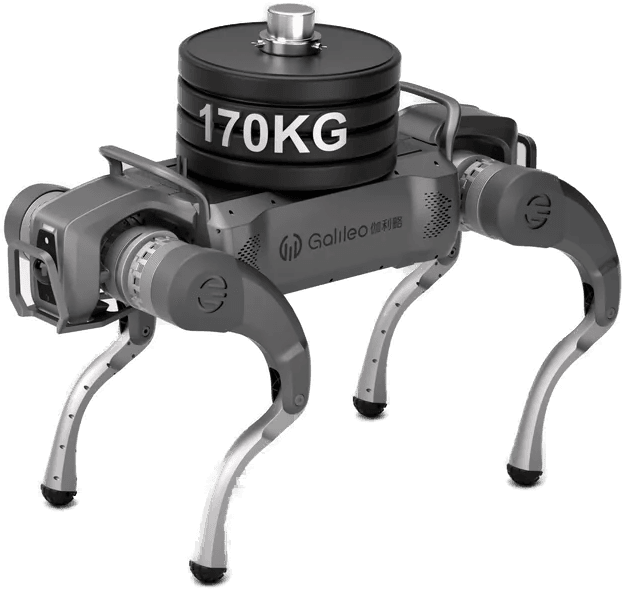
B2: Heavy Industry and Outdoors
A 60 kg body, 1098 × 450 × 645 mm, 40 kg walking payload and 120 kg standing capacity. Over 6 m/s, 45 degree slope, 40 cm step and jumps beyond 1.6 m. The 2250 Wh battery gives over 5 hours unloaded and over 4 hours with a 20 kg load; joint torque is 360 N·m, the operating range is -20 to 55 degrees and protection is IP67. Two numbers define the B2: IP67 and 40 kg. The first puts the robot into the rain and the dust, the second covers a thermal camera, a gas sensor and a spare battery pack at the same time. Power line, mining, refinery and construction inspection is this class of work.
Decision: Which One, When
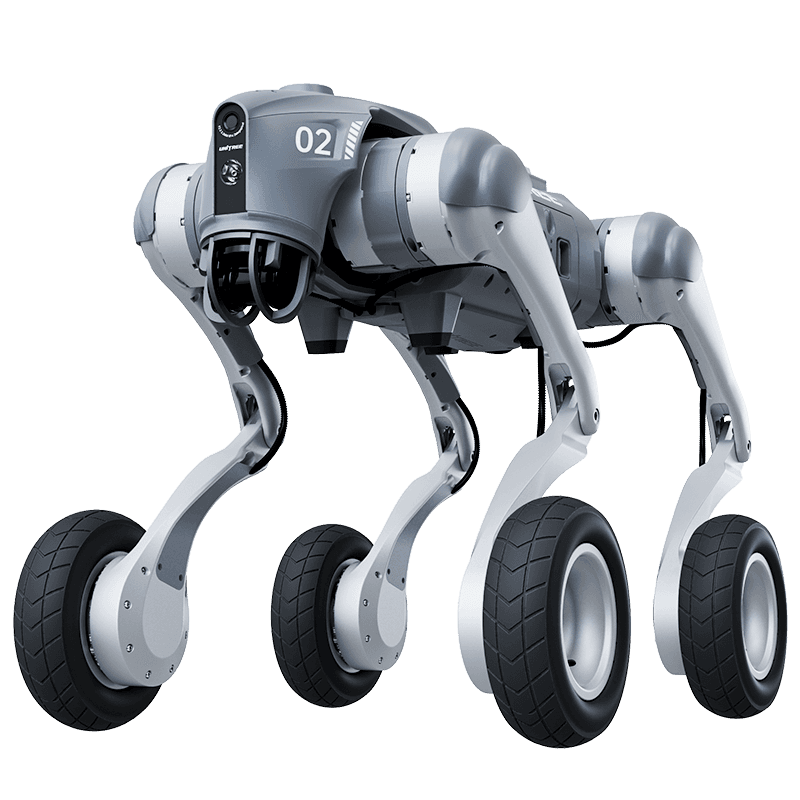
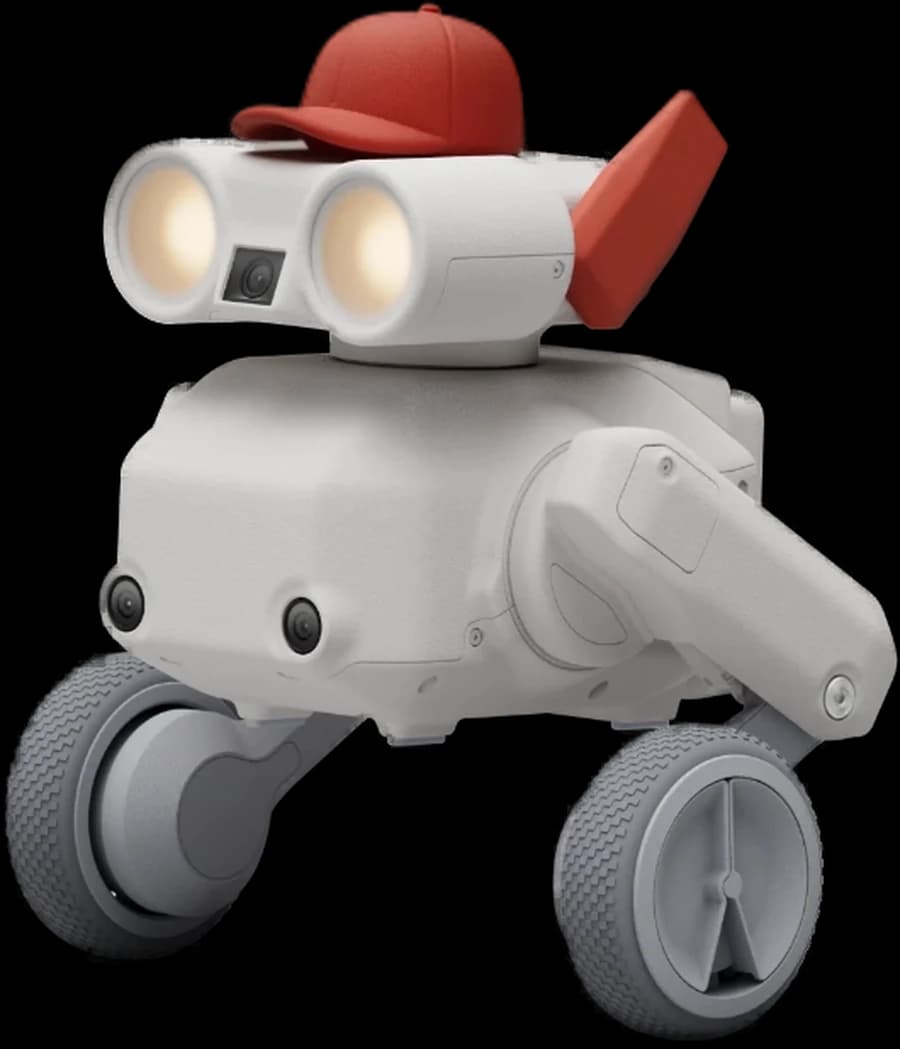
Let the mission decide rather than the budget. Coursework and theses, indoor use, one-person transport: the Go2, and the EDU if research is involved. In-facility and semi-open site inspection, a mid-weight sensor package, a few hours of rounds a day: the AS2. Continuous outdoor work, rain and dust, equipment above 20 kg, long shifts: the B2. Where the call is close, walking payload almost always settles it: work out the weight of the sensor package you want to carry and rule out any model below that figure. Wheeled-legged options form a separate class: look at the AS2-W and A2-W when range is the priority.