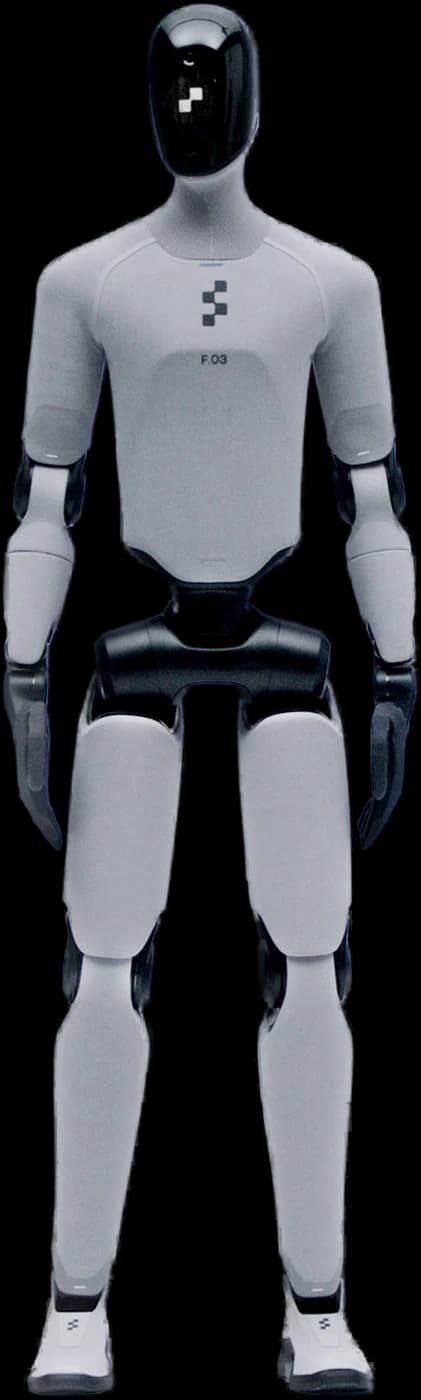
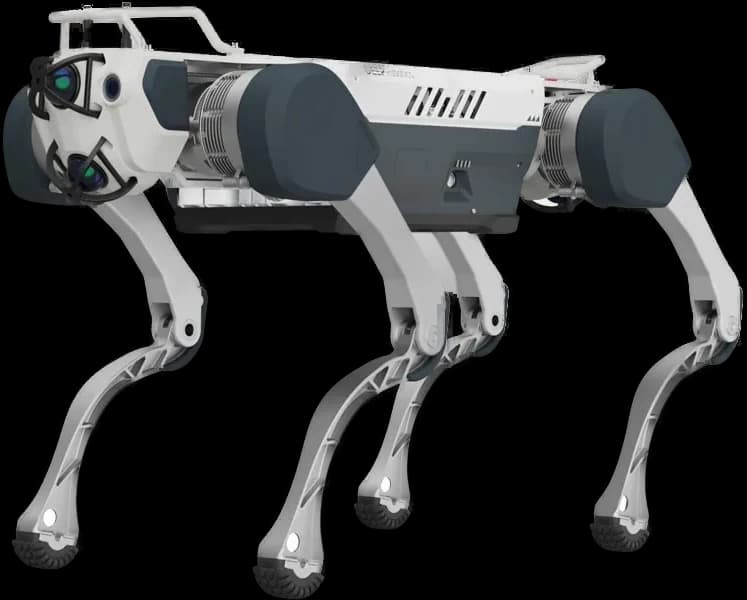
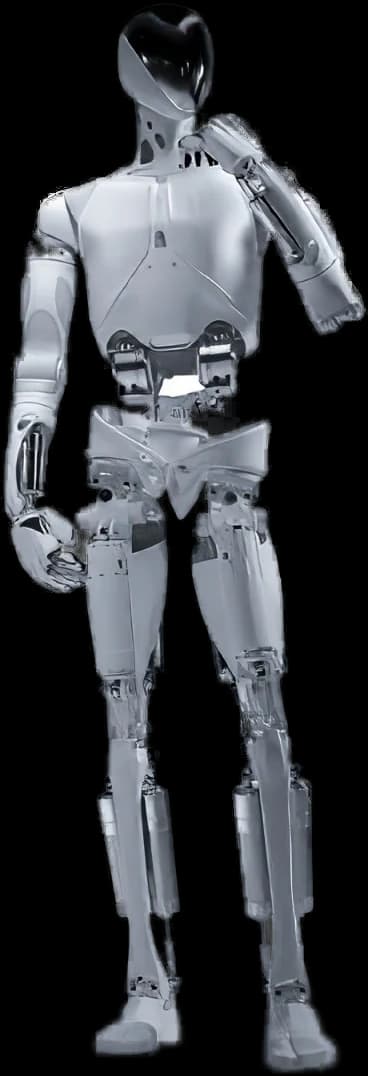
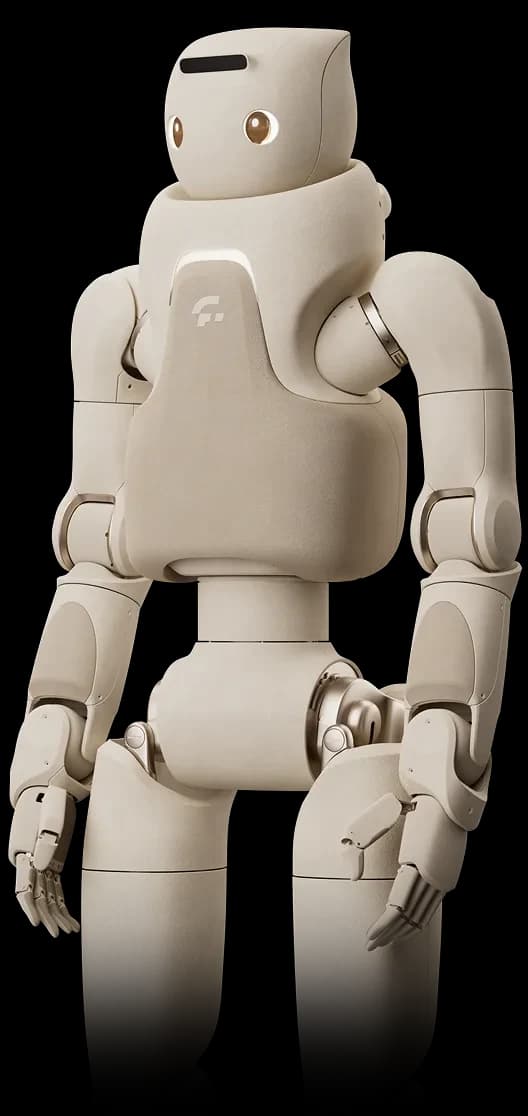
What is Gemini Robotics 2, and what was actually announced?
According to Google DeepMind's announcement of 30 July 2026, Gemini Robotics 2 consists of three models forming the "think, act and interact" layer of robots:
- Gemini Robotics 2 (VLA): A vision-language-action model that converts vision and language directly into motor control. For the first time it can control a full humanoid: legs included.
- Gemini Robotics ER 2 (Embodied Reasoning): The robot's high-level brain. It talks with humans, understands the environment, plans multi-step tasks lasting several minutes and involving hundreds of decisions, tracks progress and self-corrects when a step fails.
- Gemini Robotics On-Device 2: The efficient version that runs locally on the robot without network connectivity.
The headline new capabilities: whole-body control, improved hand/gripper dexterity, and multi-robot collaboration; different types of robots communicating to complete workflows a single robot could not do alone.
Why does whole-body control matter so much?
The world is built for human movement: you have to reach, bend and balance in tight spaces. DeepMind's previous models controlled only the upper body of a humanoid, meaning the robot worked at a tabletop. Gemini Robotics 2 brings the legs into the equation for the first time.
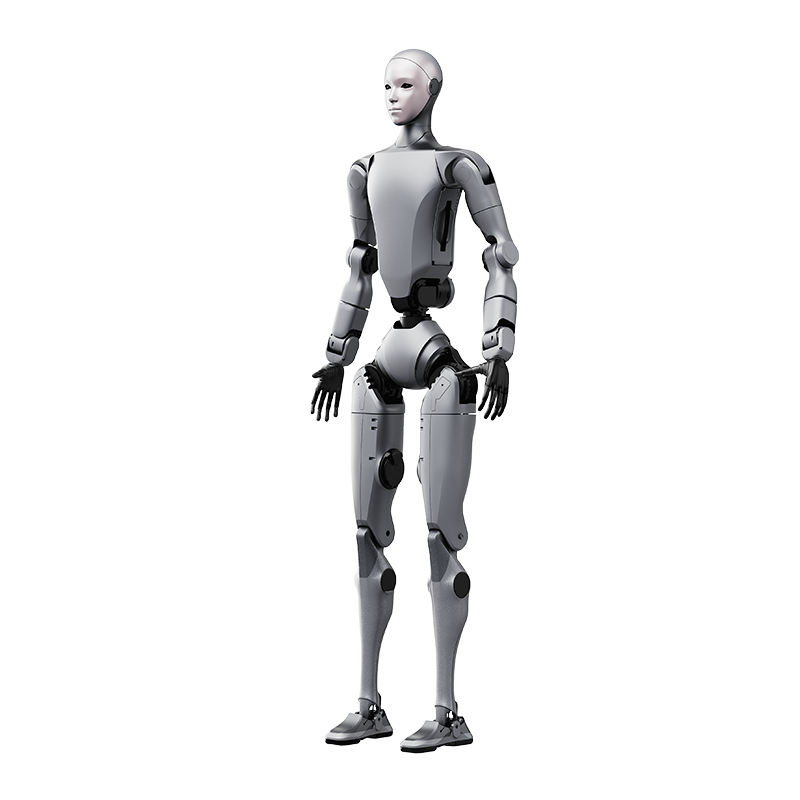
The example scenario shared: Apptronik's Apollo 2 humanoid is told "put the watering can into the green bin in the bottom shelf"; the robot processes the instruction, walks to the table, picks up the can, takes a few steps toward the shelves and places it precisely. DeepMind itself notes there is still ground to cover on movement speed, but the decision chain now spans the entire body.
This is the threshold that turns a humanoid from "a more expensive fixed arm" into a genuine mobile manipulation platform.
What do the published success rates actually say?
To get past marketing language, look at DeepMind's own published measurements; these numbers matter for timing an investment correctly:
- General whole-body manipulation (Apollo + Inspire hands): pick up from table 68.4%; from floor 45.7%; from shelf 76.3%.
- Gripper dexterity (Franka Duo): general pick and place 74.2%; diverse tool kitting 78.9%; precise insertion 89.6%.
- Multi-finger dexterity (Apollo + SharpaWave, a five-fingered 22-DoF hand): unscrew bulb 92%; but screw bulb 36%, tie trash bag 44%, dustpan 32%, ziplock 40%.
The picture to read: gripper-based industrial work is now seriously reliable (the 74-90% band), whole-body motion works, but human-level fine finger dexterity is still early. DeepMind writes it plainly: "multi-finger dexterous manipulation remains challenging."
The organizational takeaway: rather than waiting for a "do-everything humanoid", the right strategy is to start today with specific, measurable tasks and accumulate competence.
Note: the fine-dexterity problem DeepMind calls "still challenging" is being worked on academically directly on the Unitree G1: see our review of the June 2026 CoorDex paper: dexterous manipulation while walking on the Unitree G1.
The real shift: intelligence is decoupling from the body
The most strategic detail is not in the headline but in the technical section: Gemini Robotics On-Device 2 is natively multi-embodiment. A single model can adapt to robots with drastically different shapes, sensors and degrees of freedom; with, in DeepMind's own figures, a few hours of adaptation and typically fewer than 200 examples. The same model checkpoint was shown running on platforms as different as Apollo 2, Franka Duo, Dexmate, SO101 and Trossen.
The implication for organizations is significant: the robot you buy today does not lock you out of tomorrow's model. The intelligence layer is commoditizing and becoming portable across platforms. The scarce resource is not the model; it is the physical body you have, the engineering team that runs it, and the proprietary data you collect.
This confirms exactly the picture in our analysis of open AI models and physical AI: the robotics race will be won on hardware and on data-collection capacity.
What can actually be done in Turkey today?
Let us be precise here and avoid overclaiming: Unitree is not among the announced partners of Gemini Robotics 2. DeepMind's announcement thanks Apptronik, Boston Dynamics and Agile Robots. The Gemini Robotics 2 (VLA) and On-Device 2 models are currently limited to early-access partners.
However, one critical piece is open to everyone today: Gemini Robotics ER 2 is available through Google AI Studio (and in private preview on the Gemini Enterprise Agent Platform). ER 2 is a vision-language model; it does not provide low-level motor control, it provides the high-level reasoning and task-planning layer.
So the architecture a Turkish university or R&D team can build today is: ER 2 = planning brain (understand the scene, decompose the task, track progress) → a robot with an open SDK = executing body (carry out the steps through your own control stack). The only requirement for this architecture is that the robot be a programmable platform, not a closed box.
Why is the Unitree G1 the right body for this?
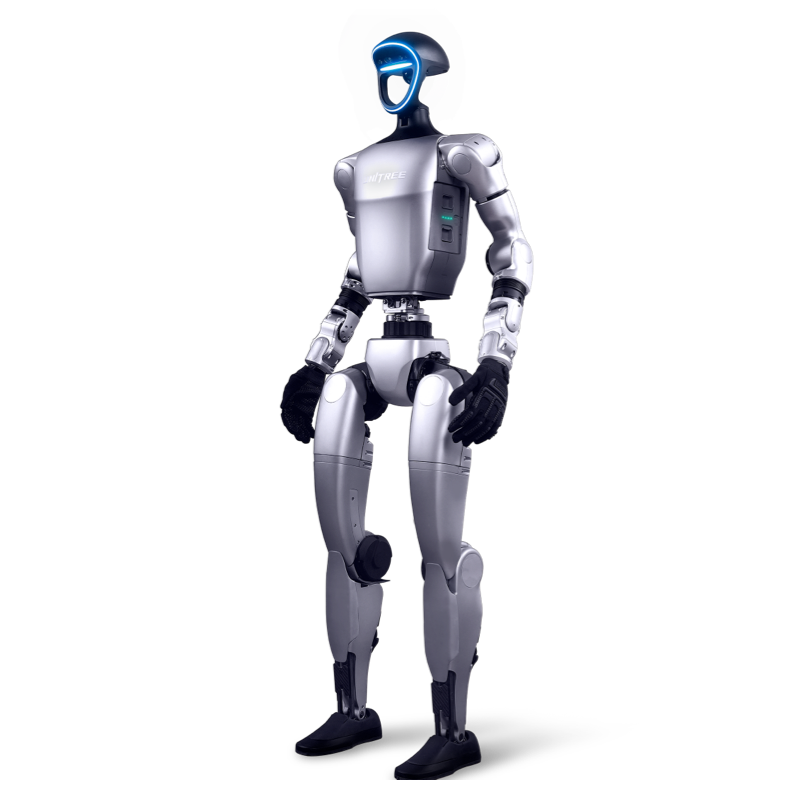
The Unitree G1 is the most accessible humanoid platform on which to build this architecture, and it meets all three requirements for whole-body work:
- Genuine whole-body hardware: 132 cm, ~35 kg, 23 DoF; up to 43 DoF on the G1 EDU with the Dex3-1 dexterous hand. Legs, waist and arms are part of a single control problem: whole-body algorithms can be tested on real hardware.
- On-board compute: The G1 EDU delivers 100-157 TOPS via NVIDIA Jetson Orin; the edge compute needed to run on-device models and real-time perception.
- Open development stack: ROS 2, Isaac Sim and MuJoCo compatibility; Python/C++ SDK; reinforcement and imitation learning through Unitree's UnifoLM framework. We walk through the sim-to-real workflow step by step in our G1 + NVIDIA Isaac GR00T guide.
And most importantly, the cost scale: while research humanoids of the class used in DeepMind's demos sit outside most organizational budgets, the G1 makes work in the same problem space; whole-body control, dexterous manipulation, VLA model training; possible today. See our G1 price page for the current investment range and the G1 EDU page for the developer variant.
For corporate R&D teams we have turned this into a turnkey starting point: the G1 R&D Platform.
Safety: ASIMOV-Agentic and working alongside humans
Safety matters as much as capability in Gemini Robotics 2.
ER 2 is also DeepMind's safest robotics model to date on human-proximity benchmarks: it can better detect when humans are nearby, trigger safety tool calls, and bring the robot to a safe stop if someone approaches too closely; a core requirement of collaborative safety standards.
This is a directly applicable principle for enterprise deployments in Turkey: if a robot will share space with people in a factory, hospital or campus, the safety layer must be defined at the very start of project scope. At Robotlar.org we plan safety scenarios with this approach during installation and site mapping.
Where should your organization start?
The message of Gemini Robotics 2 is clear: the intelligence layer of physical AI is accelerating and becoming portable across bodies. The way to fall behind is to "wait for the model to mature"; the way to get ahead is to acquire a body today and start accumulating your own data and competence.
Robotlar.org is the official Unitree Robotics partner in Turkey. We supply universities, industry and defense organizations with open-SDK, NVIDIA-powered humanoid and quadruped robots, backed by official warranty, Turkish technical documentation, on-site commissioning and engineering support across Turkey.
To discuss your team's physical-AI roadmap and get a project-specific quote, contact us.