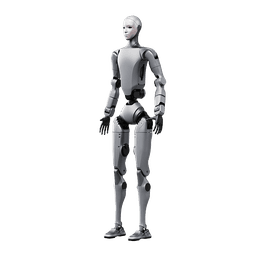
Where the Portfolio Stands Today
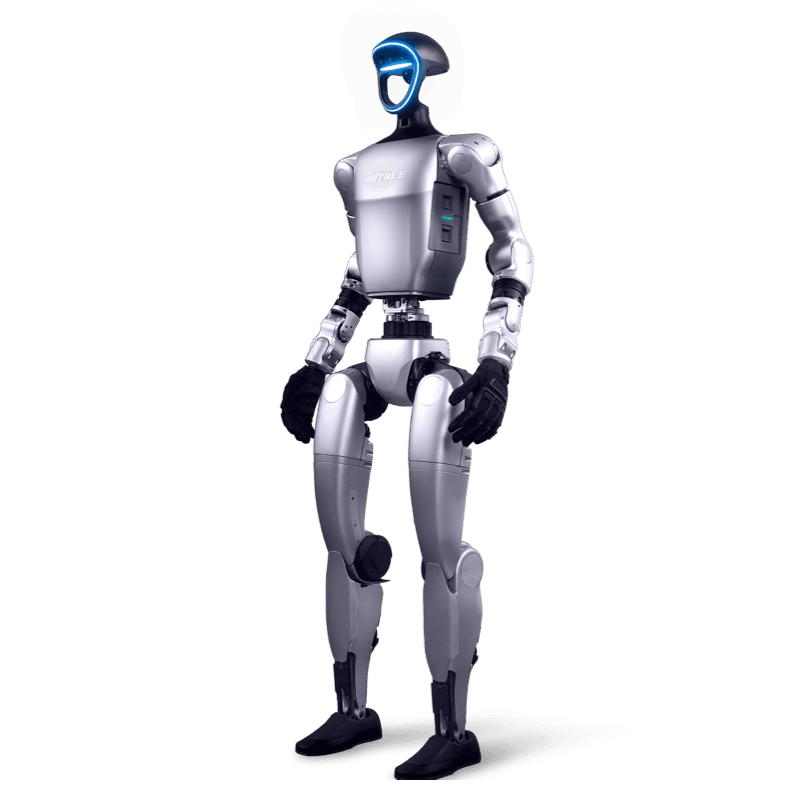
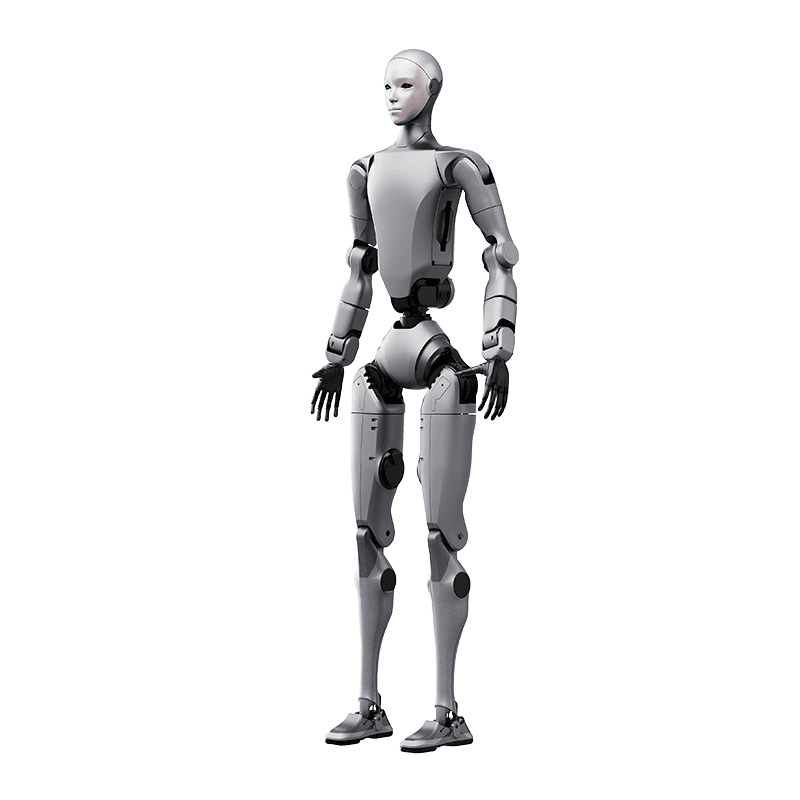
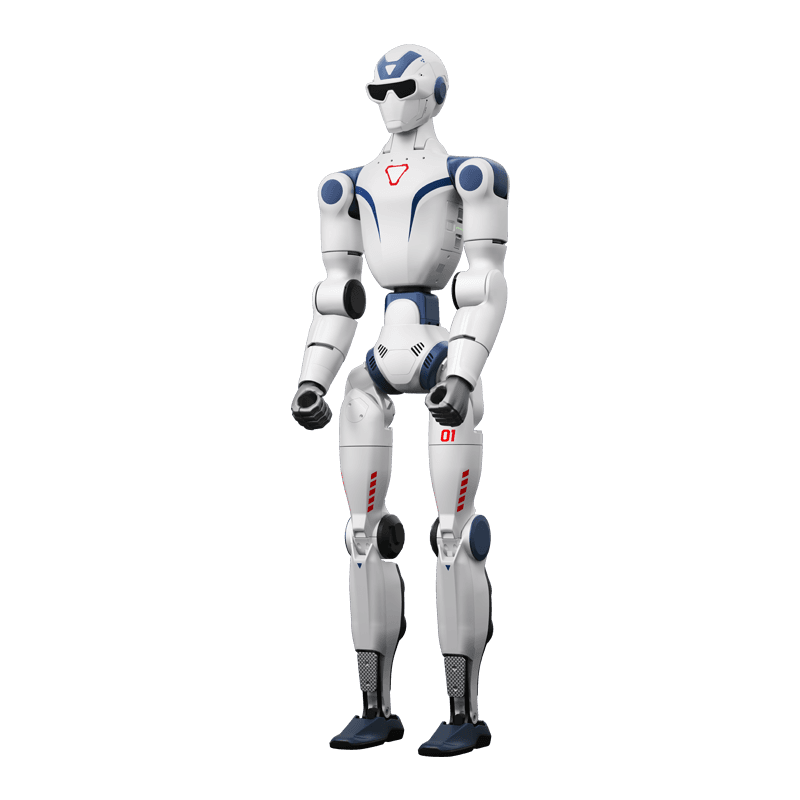
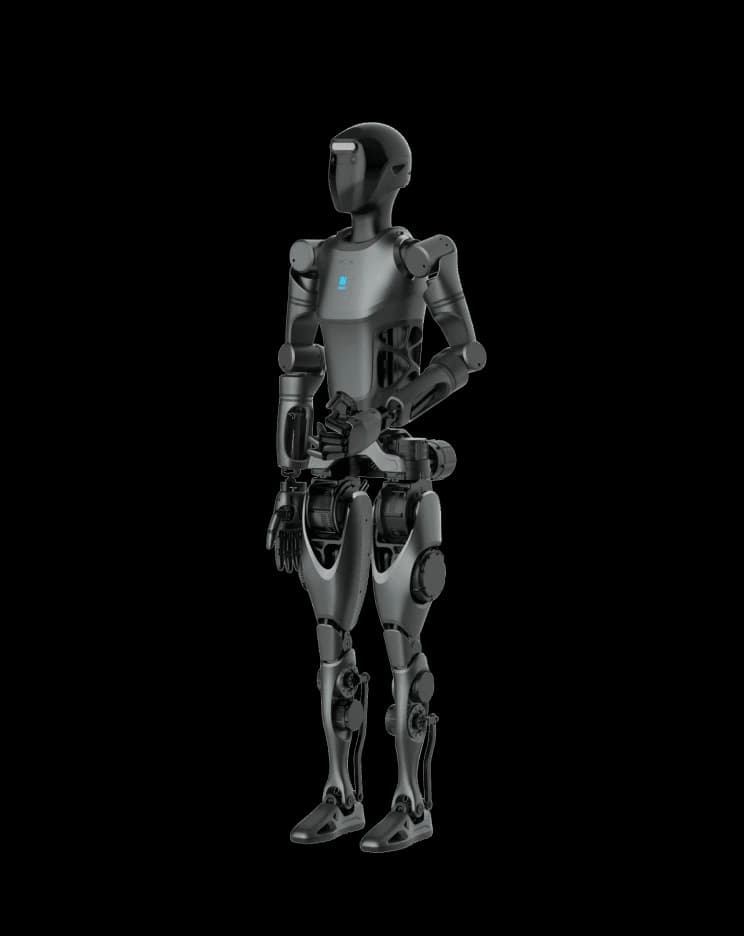
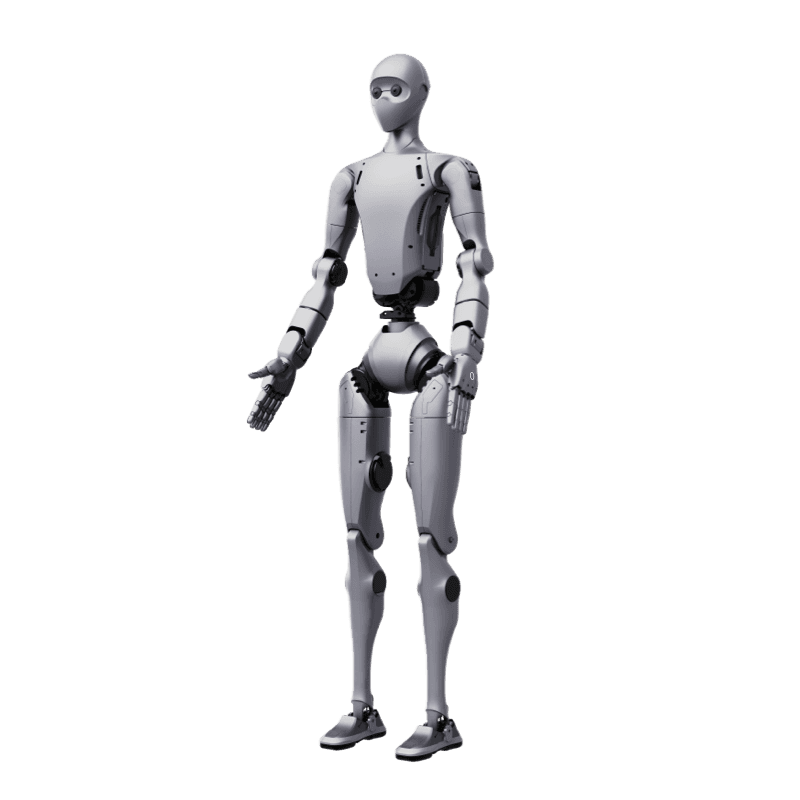
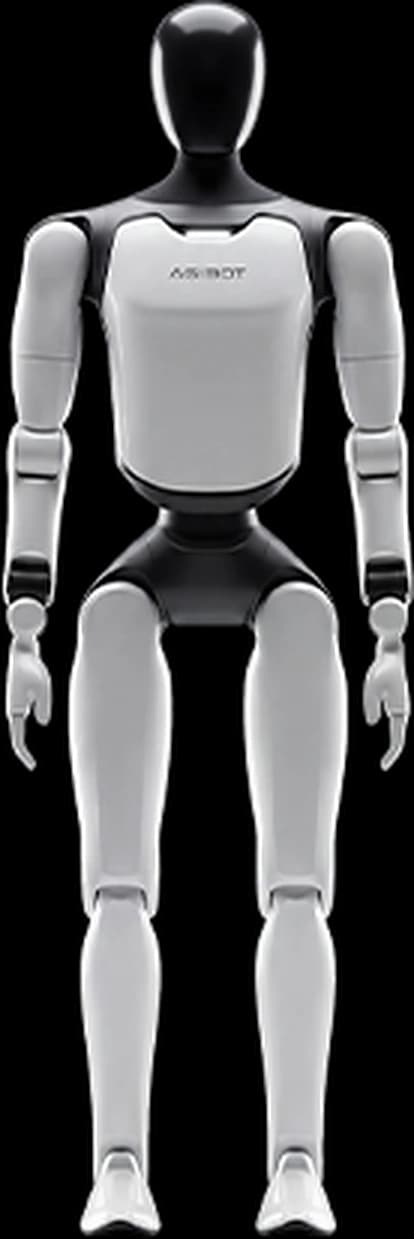
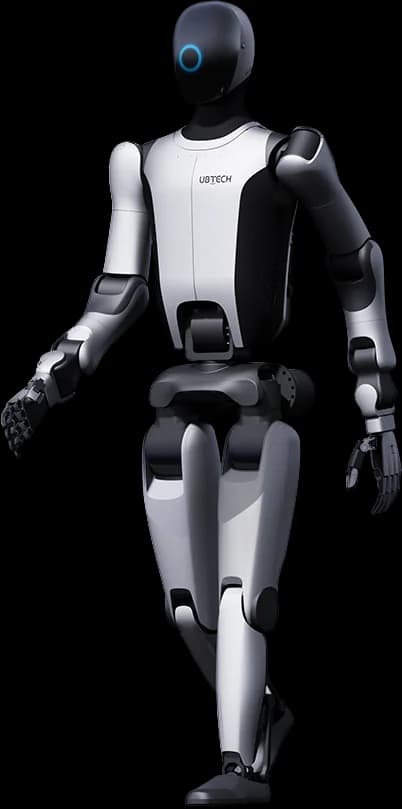
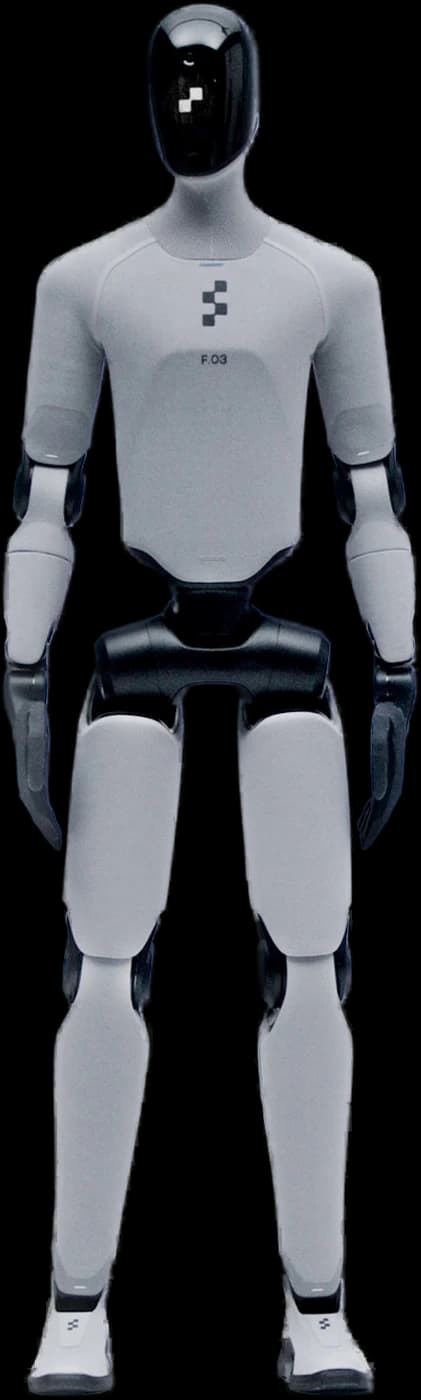
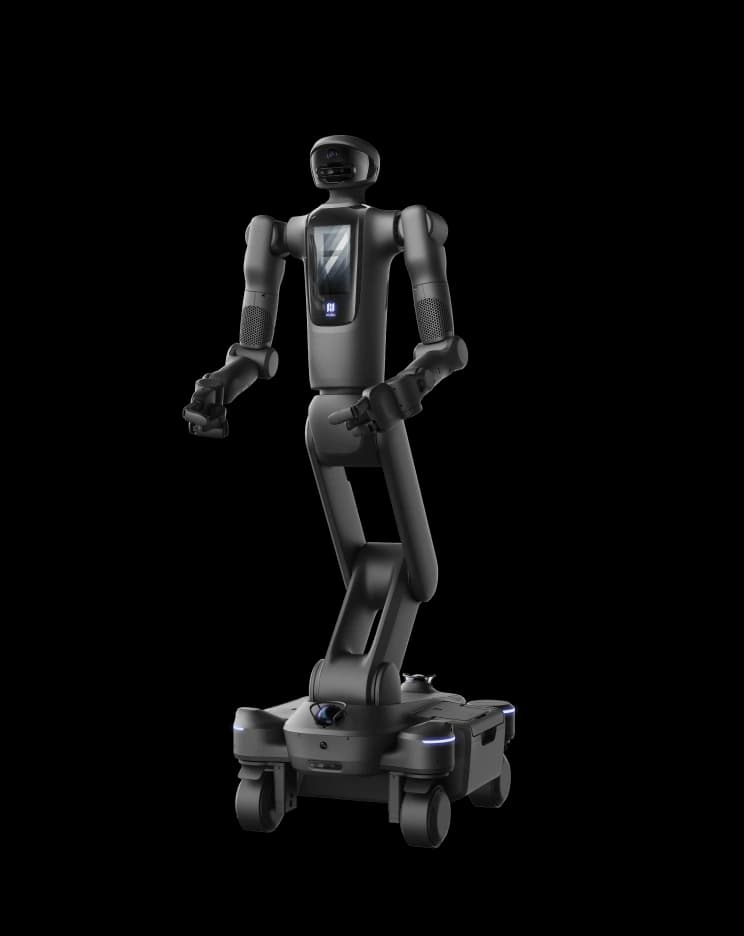
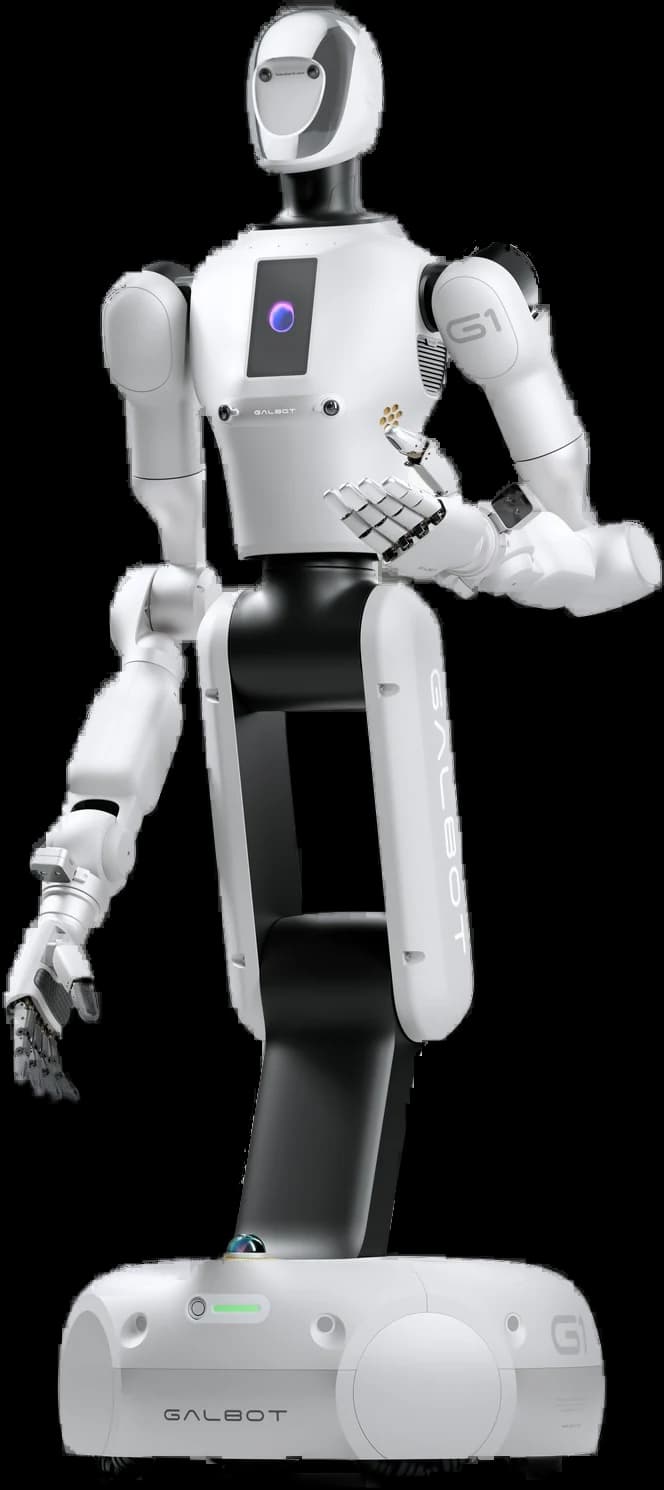
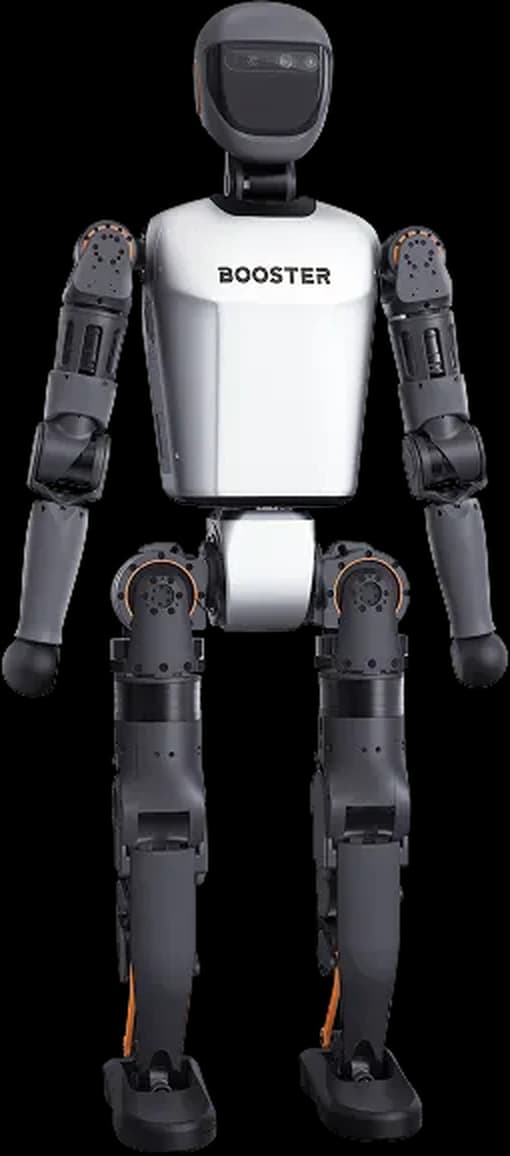
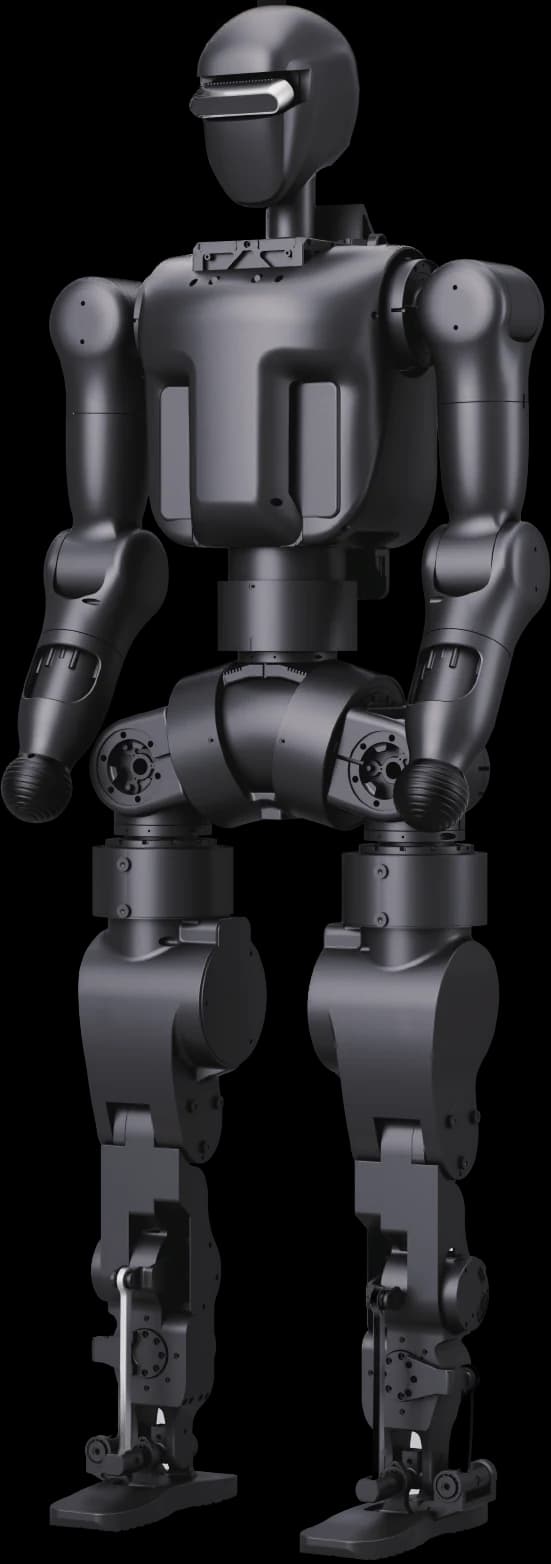
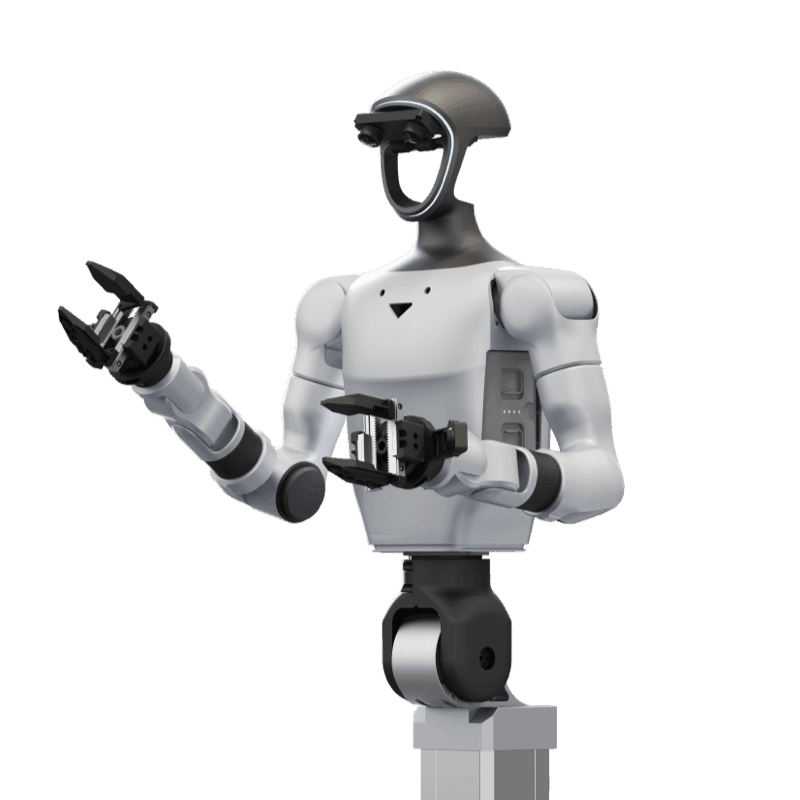
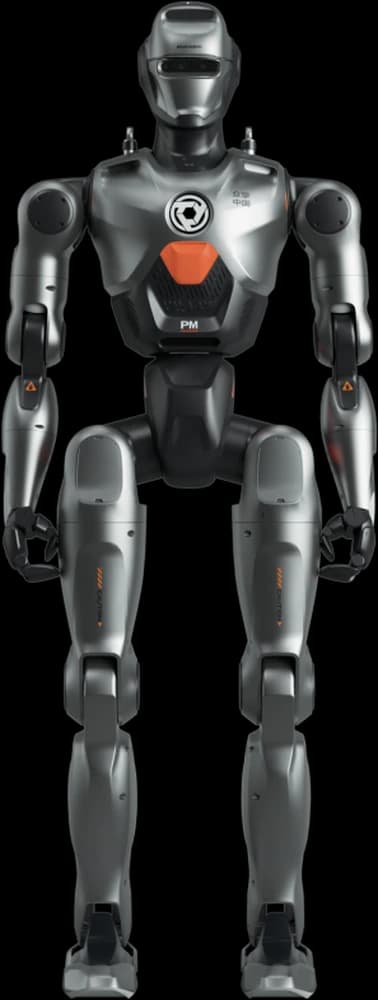
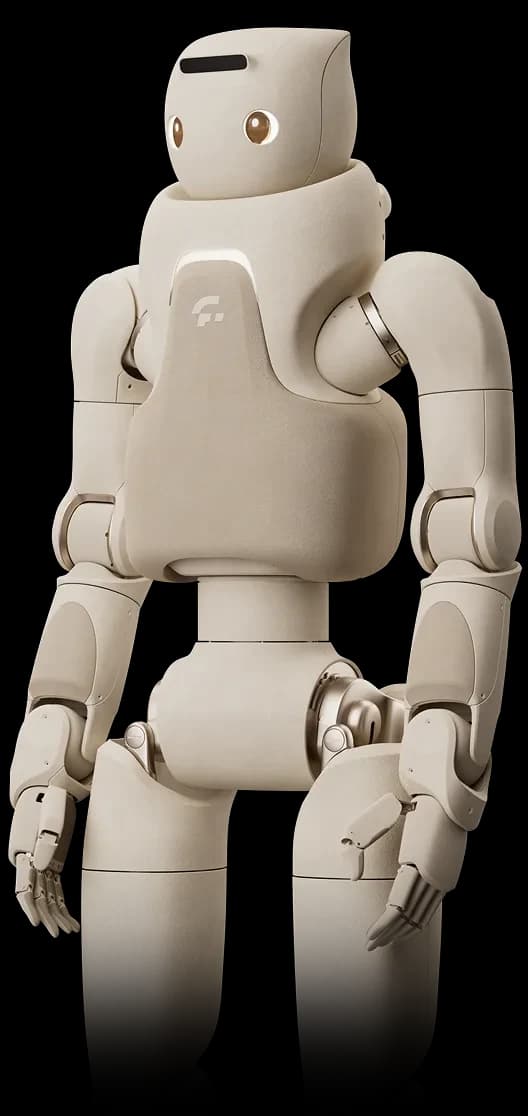
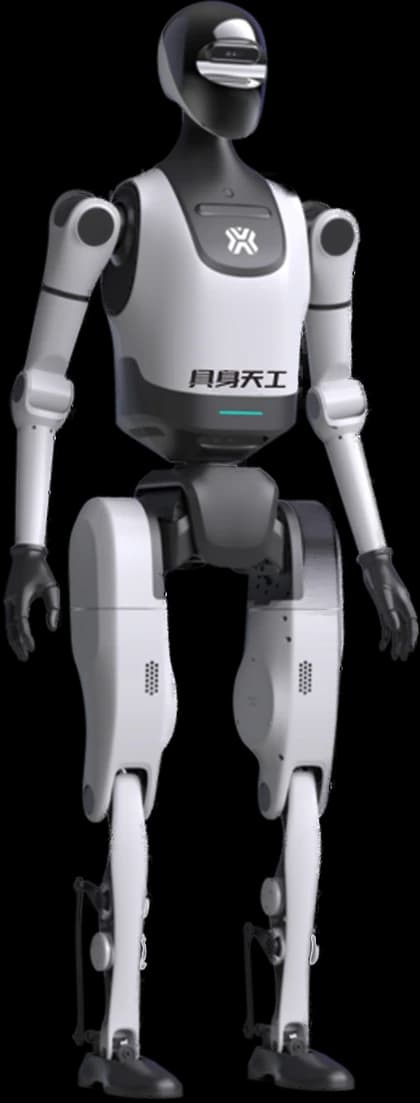
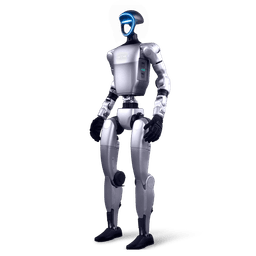
The H1 is discontinued and the H2 replaced it, so the humanoid line you can actually buy today consists of the G1, the R1 and the H2 family. The G1 sits at the compact, accessible end, the R1 on the ultra-light side and the H2 at the full-size industrial end. The H2 Plus shares the same body with a changed compute layer. If you operate an H1, contact us about spare parts and successor models.
Height, Weight and Degrees of Freedom
The G1 stands 1320 × 450 × 200 mm at 35 kg and folds down to 690 × 450 × 300 mm, so one person can carry it to a site in a case. It runs 23 degrees of freedom. The H2 stands 1820 × 456 × 218 mm at around 70 kg, with 31 degrees of freedom split as 6 per leg, 7 per arm, 3 at the waist and 2 in the head. The waist and head joints bring a capability the G1 does not have: rotating the torso independently of the legs and aiming the gaze separately. That is what decides tasks needing human-height working reach, such as shelves, benches and door handles.
Arm Payload and Torque
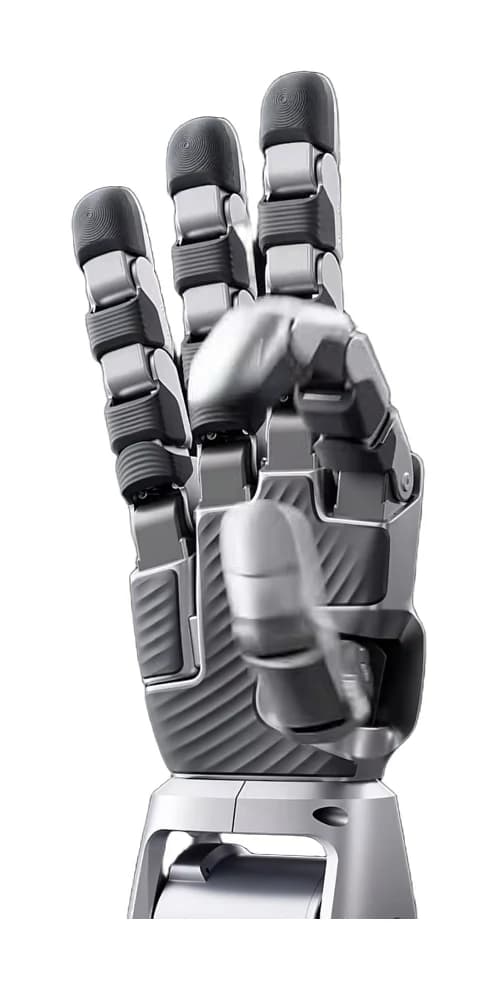
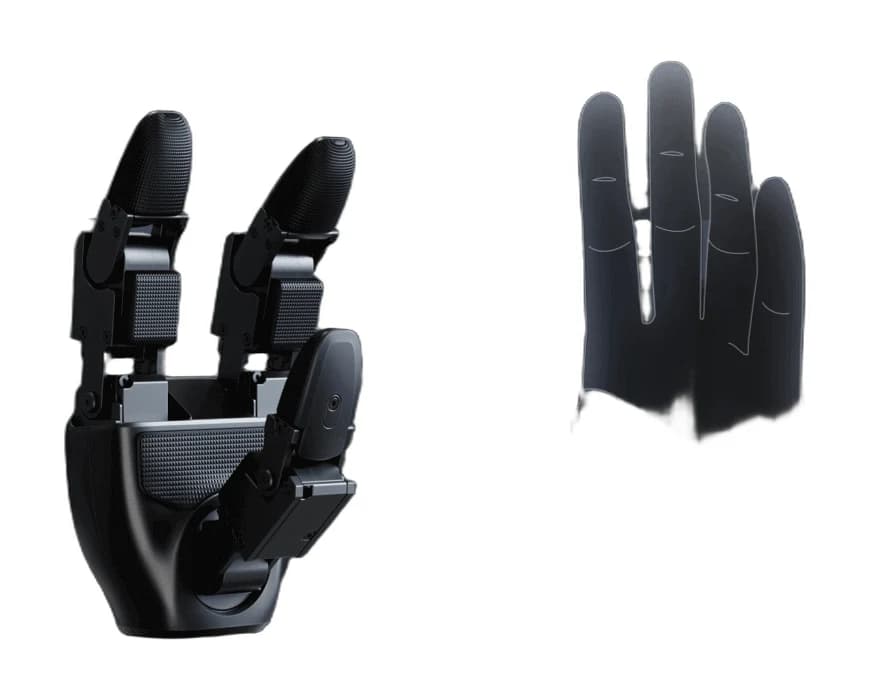
The G1 carries 2 kg per arm, or 3 kg on the EDU. The H2 is rated at roughly 7 kg per arm with a peak around 15 kg; joint torque is 360 N·m in the leg and 120 N·m in the arm. The gap is not just a number but a change of task class: the G1 is for grasping, placement and light manipulation, while the H2 handles carrying and two-handed work under real load. If you are building a manipulation-focused lab, the dual-arm R1-D platform is a separate option worth weighing.
The Compute Layer
The G1 uses a 100 TOPS class Jetson Orin platform, which is enough for teaching, algorithm development and most research workloads. The H2 Plus ships with an NVIDIA Jetson T5000: a 2560-core Blackwell-architecture GPU, a 14-core Arm Neoverse-V3AE CPU and 128 GB of LPDDR5X, with a peak of 2070 TFLOPS at FP4. The practical meaning of 128 GB is holding a large vision-language-action model on the device without forcing it through lossy quantisation. If you are building a stack that must run end to end without cloud dependence, the split starts here.
Which Model for Which Project
University coursework, theses, algorithm development, constrained budget: the G1, and the EDU version if research is involved. Human-height reach, manipulation under real load, factory and automation scenarios: the H2. A team running large models on-device and building a GR00T-based development flow: the H2 Plus. For a narrower head-to-head, our G1 versus H2 comparison puts the two side by side.