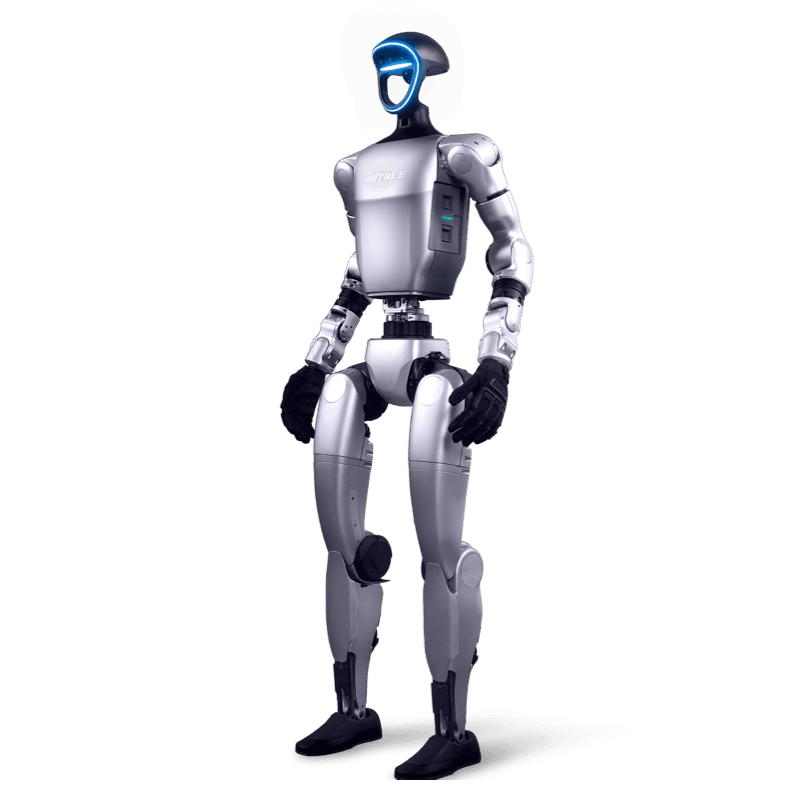
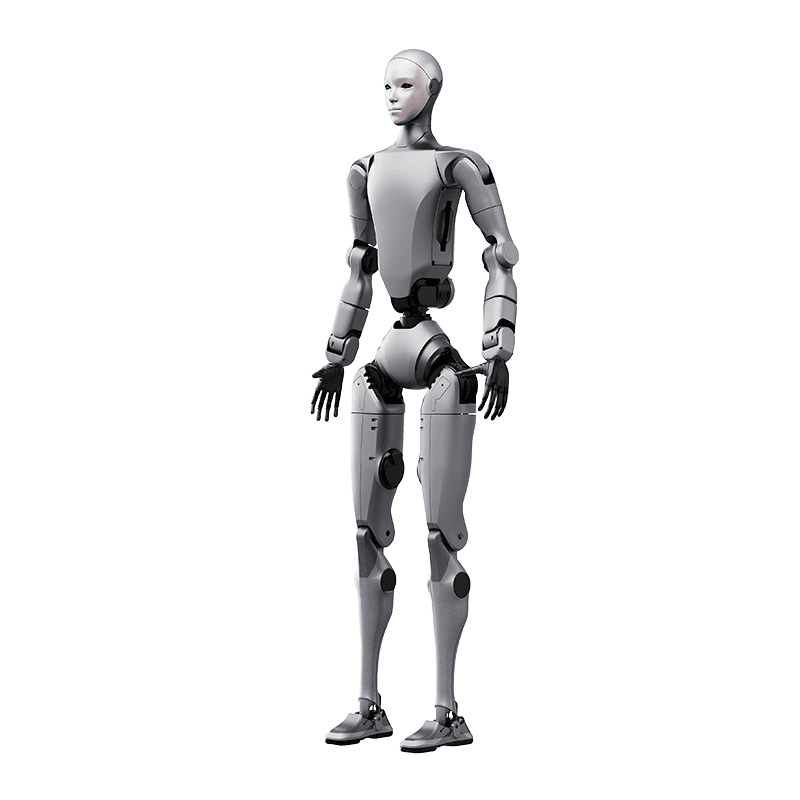
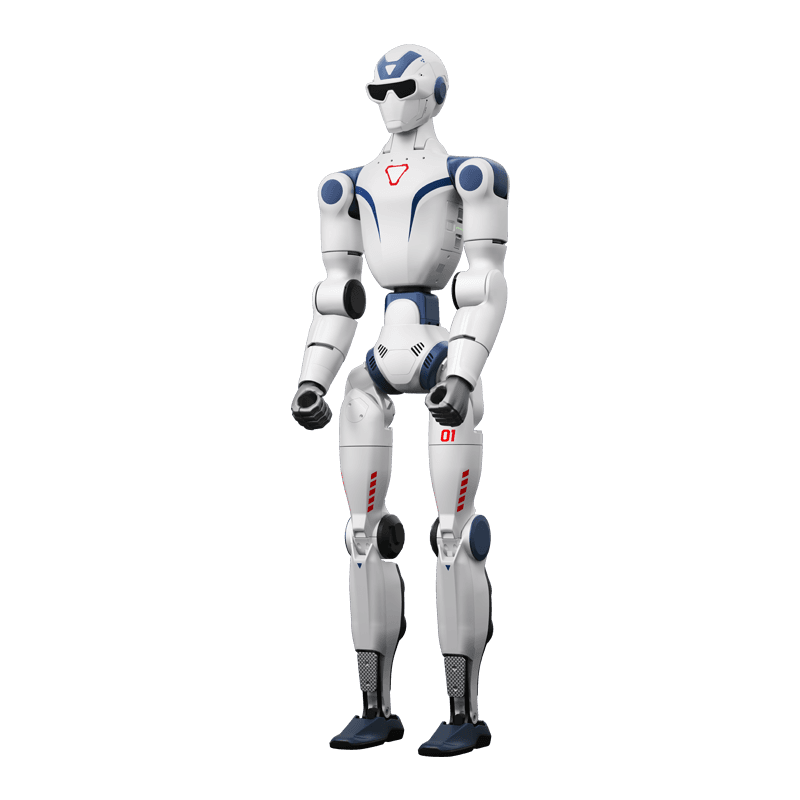
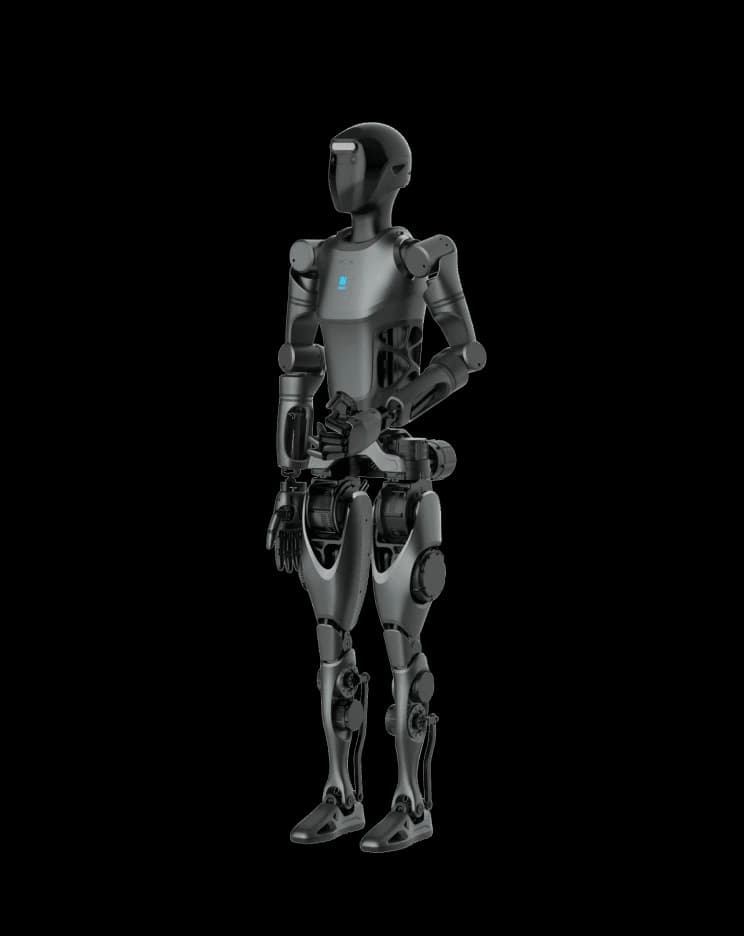
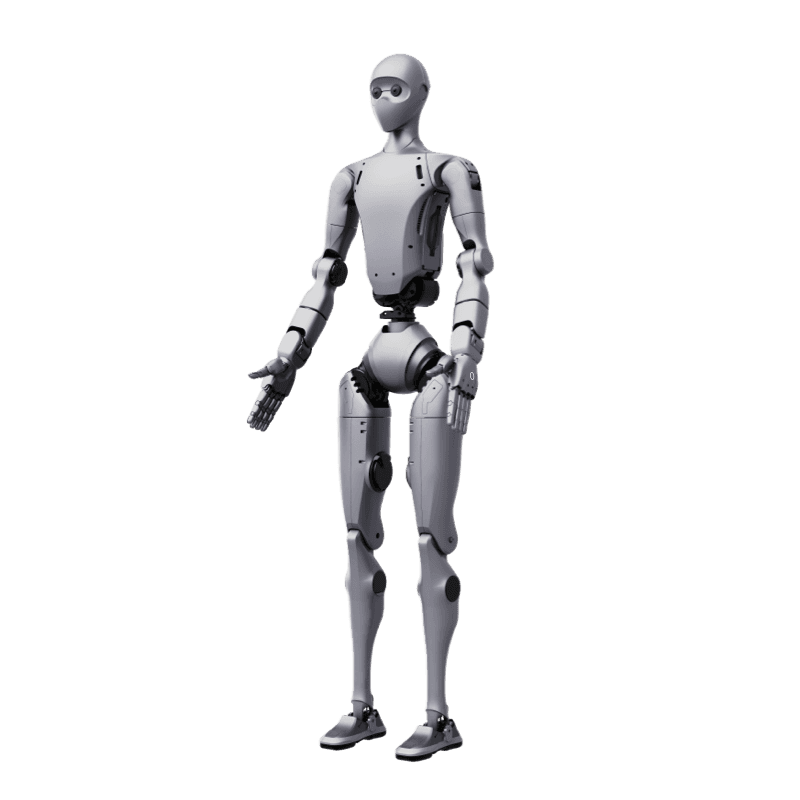
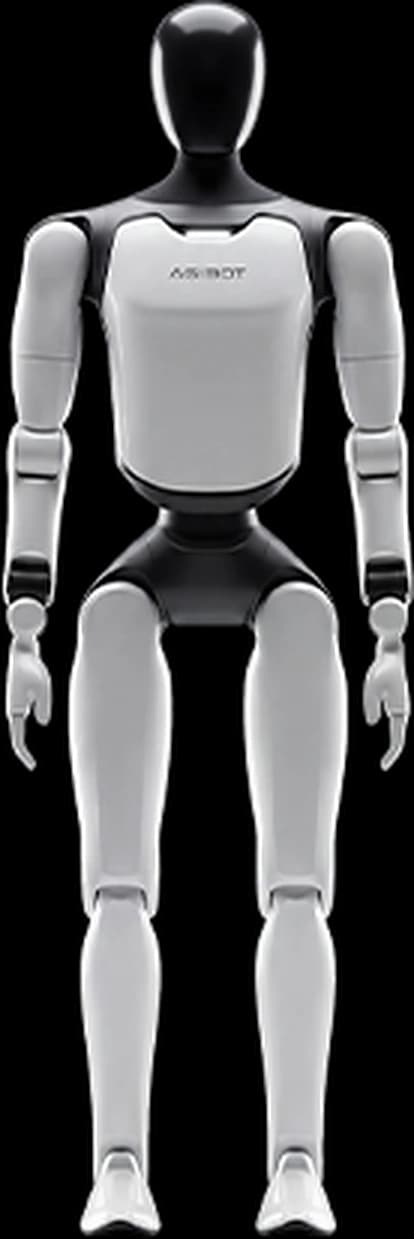
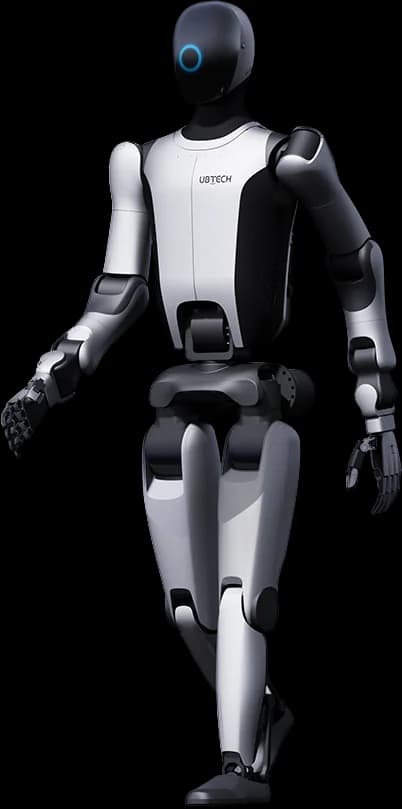
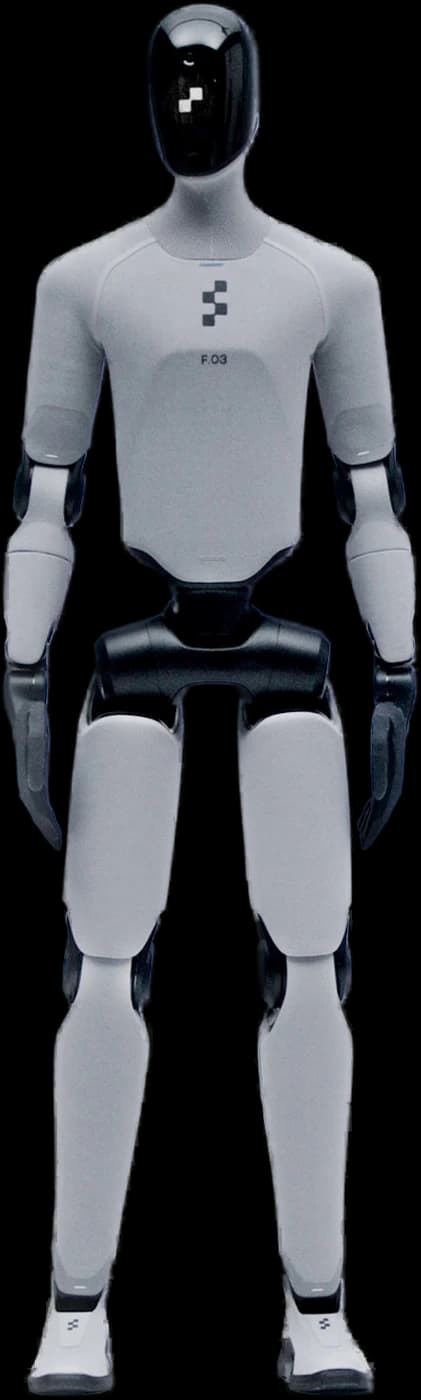
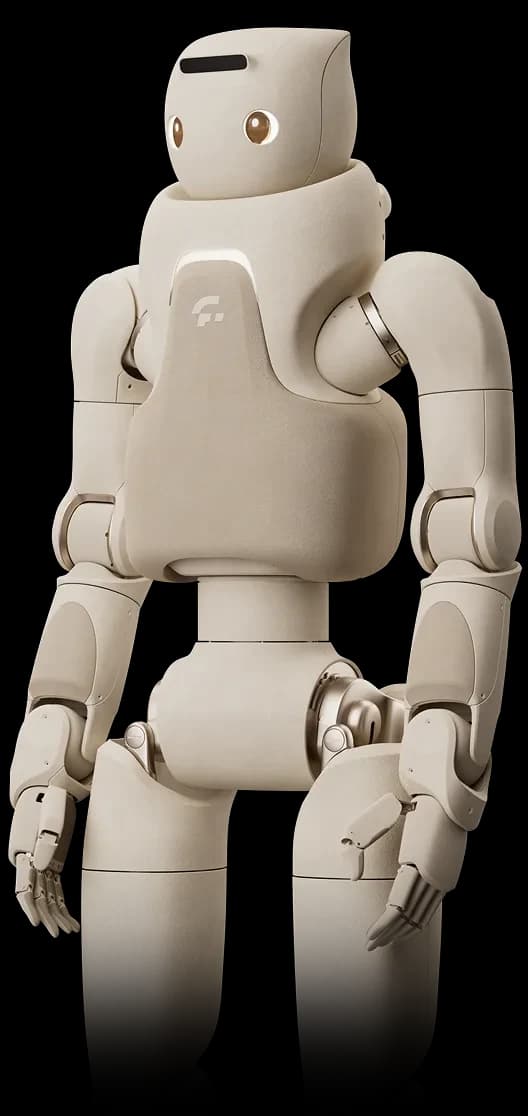
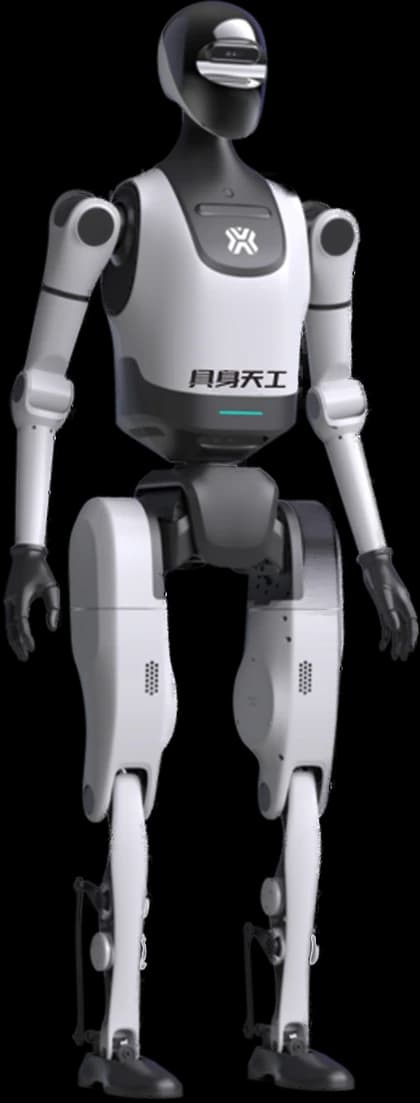
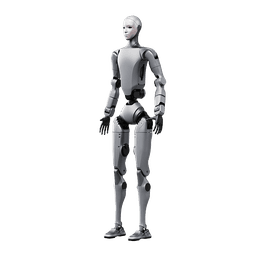
The Body: 1320 mm and 1820 mm
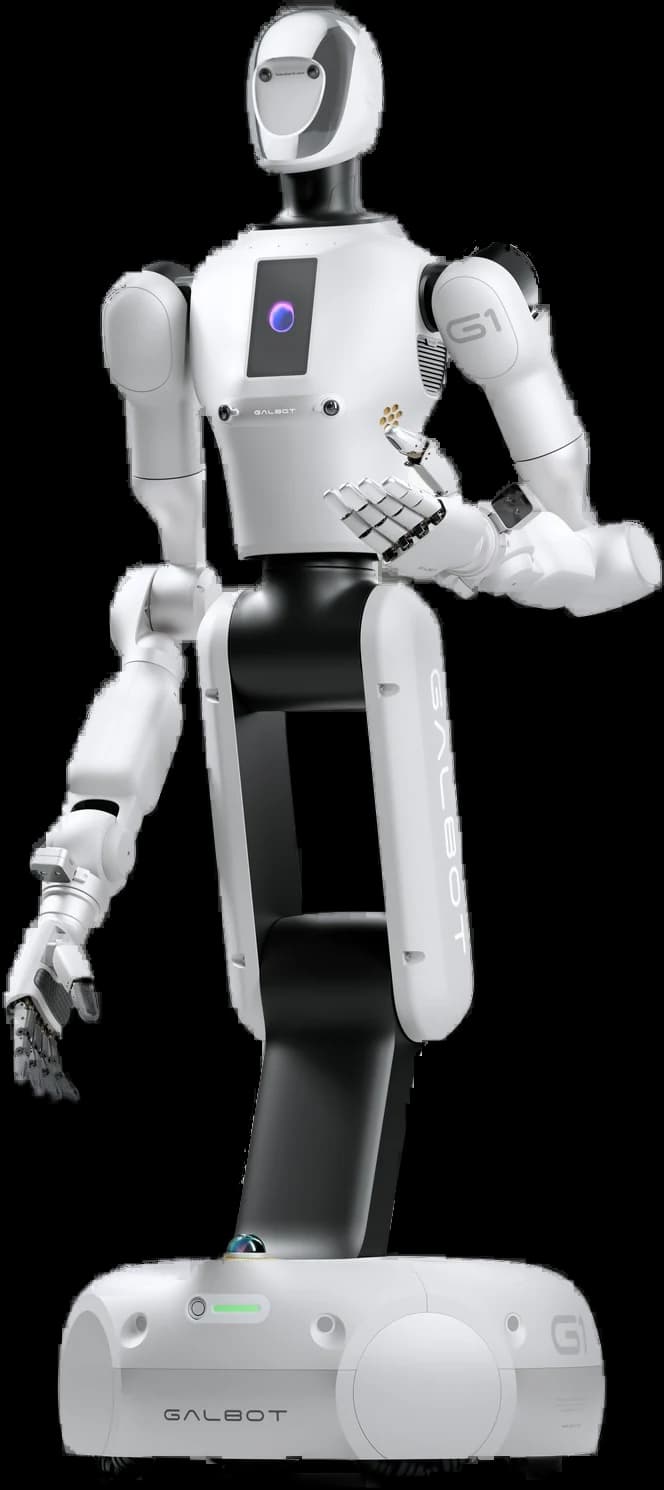
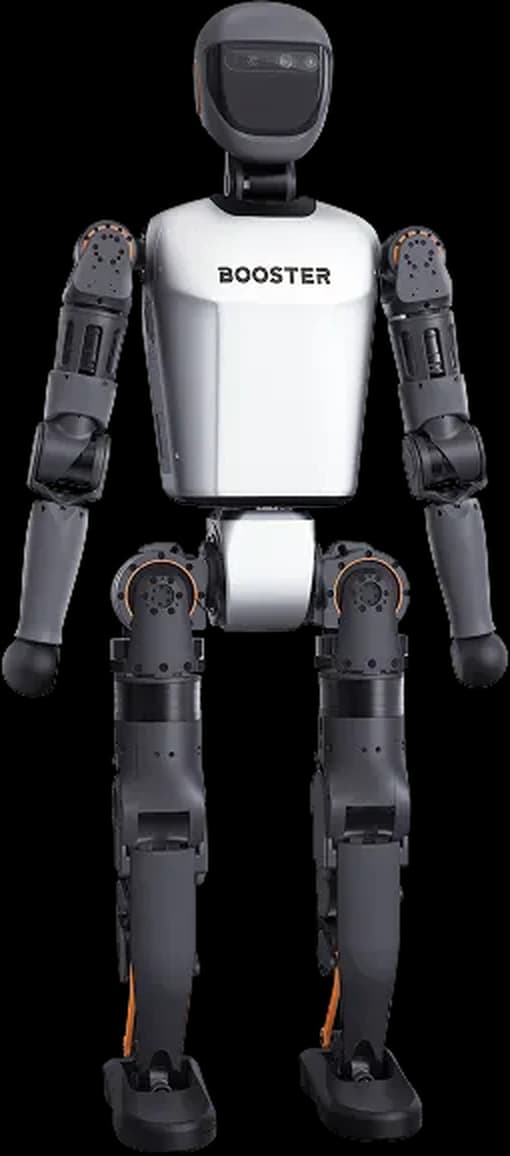
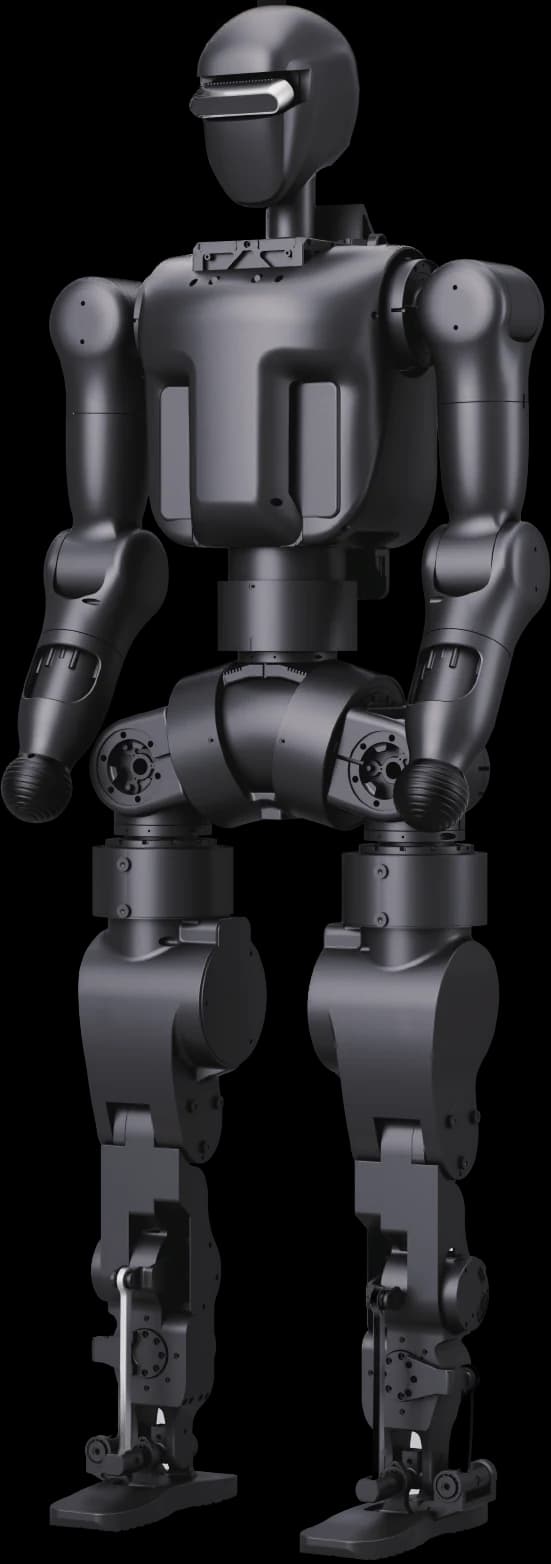
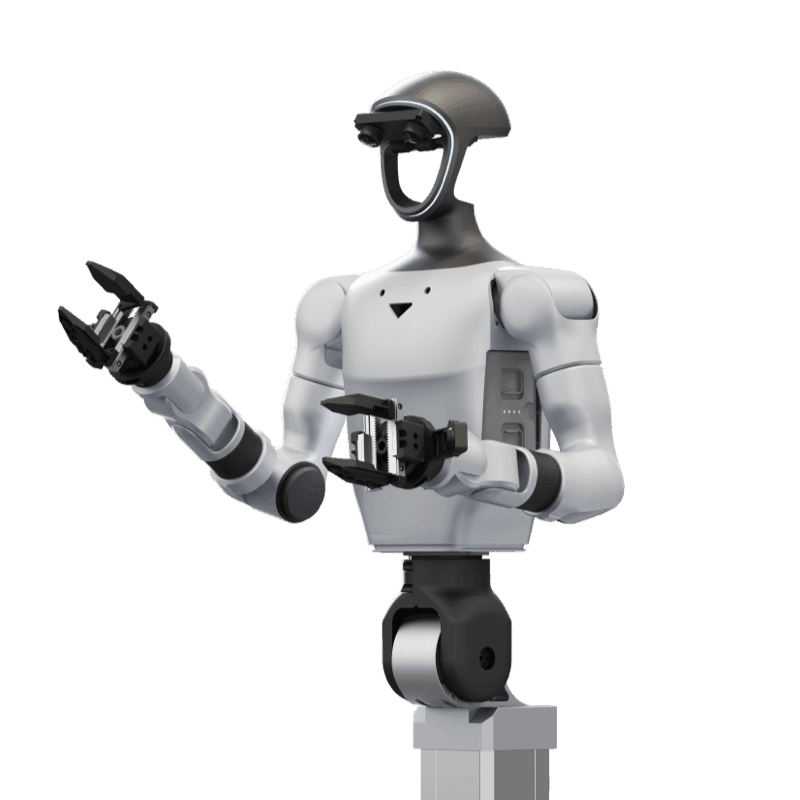
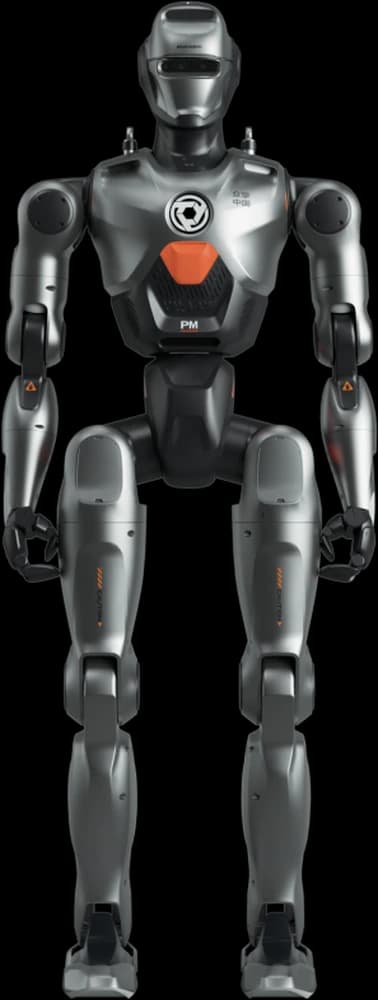
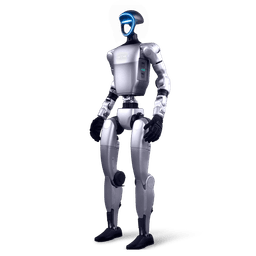
The G1 stands 1320 × 450 × 200 mm at 35 kg and folds to 690 × 450 × 300 mm, so it fits in a case and one person can carry it to a site. The H2 stands 1820 × 456 × 218 mm at around 70 kg. The 50 cm of height and the doubling in weight are not a comfort preference but a difference in working reach: bench-top, shelf and door-handle level tasks need a human-height body. The G1's foldability, in turn, is a practical advantage for lab work and field demos.
Degrees of Freedom and Joint Torque
The G1 runs 23 degrees of freedom. The H2 has 31 joints: 6 per leg, 7 per arm, 3 at the waist and 2 in the head. The waist and head joints bring two capabilities the G1 lacks, rotating the torso independently of the legs and aiming the gaze separately. Peak joint torque on the H2 is 360 N·m in the leg and 120 N·m in the arm. On arm payload, the G1 carries 2 kg (3 kg on the EDU) while the H2 is rated around 7 kg with a peak near 15 kg.
Compute Architecture
The two models also take different approaches to compute. The G1 uses a 100 TOPS class Jetson Orin platform, enough for teaching, algorithm development and most research workloads. The H2 builds a multi-computer architecture: motion control runs on a 10-core, 12-thread Intel Core i5 while the development units (PC2-PC4, two of them optional) carry Intel Core i7 or Jetson Thor with 16-32 GB of LPDDR5. Separating the control loop from the development load keeps gait stable while a heavy perception model is running. If you want to run a large vision-language-action model on-device, the real jump is the H2 Plus: a Jetson T5000, 128 GB of LPDDR5X and an FP4 peak of 2070 TFLOPS.
Battery and Endurance
The G1 runs for about 2 hours on a quick-release 9000 mAh battery, and the quick-release design makes uninterrupted demos with a spare pack straightforward. The H2 family gives around 3 hours from a 15 Ah / 0.972 kWh battery. On both models, endurance falls below these figures depending on the perception and motion load you run on top; a scenario with continuous manipulation calls for planning spare batteries.
The Decision
If the budget is limited, the work is coursework, a thesis or algorithm development, and portability matters, choose the G1, and the EDU version if research is involved. If you need human-height reach, two-handed manipulation under real load and factory scenarios, choose the H2. If your team will run large models on-device, choose the H2 Plus. To see the whole family side by side, look at our humanoid robot family comparison.