Why use robots for CBRN reconnaissance?
The aim of CBRN (chemical, biological, radiological, nuclear) reconnaissance is to establish the type, location and level of a hazard without exposing people. A robot contributes in two concrete ways: it keeps people out of the hazard area, and it repeats a survey the same way every time.
- Keeping people out of the hazard: The operator stays at the control point while the detector enters the suspect area on the robot. Dose and toxic vapor exposure move from the person to the machine.
- Repeatable surveys: A pre-recorded route takes measurements at the same points for the same dwell time, so the difference between two runs reflects the site, not the operator's hand movement.
- Records and traceability: Each reading can be stored with the robot's position, so data is ready for post-event reports and ALARA records.
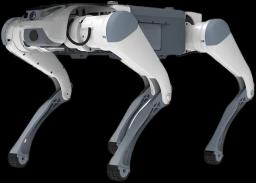
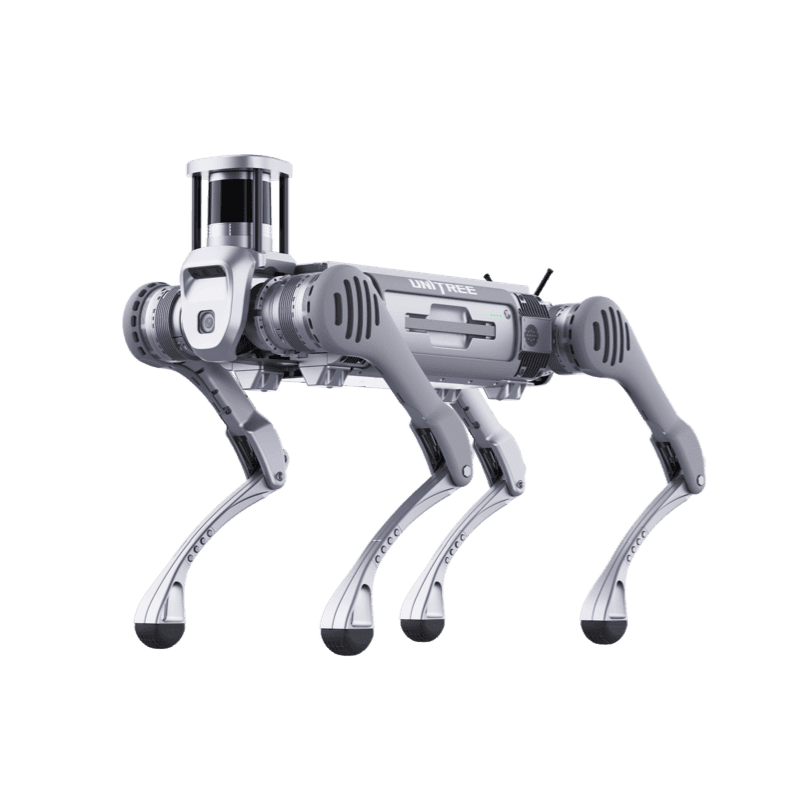
- Terrain access: Legged robots handle stairs, thresholds, rubble and narrow passages better than wheeled platforms. See the types of robots guide and the security and patrol robot guide for context.
One limit applies: the robot does not replace the CBRN specialist. It brings the measurement back; interpretation and the response decision belong to trained personnel.
Radiation detection basics: gamma, neutron, RIID and dose rate
Three concepts are often confused in radiological reconnaissance: dose rate, counts and isotope identity.
- Dose rate: The speed of exposure at your location, usually expressed in µSv/s or µSv/h. It is the first indicator of whether an area can be entered.
- Gamma: The common signature of most radioactive sources, detectable at a distance. The gamma spectrum (energy distribution) reveals which isotope is present.
- Neutron: A signature of special nuclear material such as plutonium and of some industrial neutron sources. A neutron channel helps separate cases that gamma alone could miss.
- RIID (radioisotope identification device): Compares the gamma spectrum with a library and proposes an isotope name, for example medical versus naturally occurring versus industrial source. ANSI N42.34 sets performance criteria for handheld radionuclide identifiers, and manufacturers state conformity on their product pages.
Practical note: count rate falls quickly with distance, so the detector's position and field of view relative to the robot matter. The robot's battery and body materials can attenuate or scatter the signal to some extent; the mounting point should be verified with a source during the project.
Chemical detection basics: IMS, multisensor, TIC/CWA and false alarms
Detected substances fall into two broad classes: CWA (chemical warfare agents: nerve, blister, blood, choking agents) and TIC (toxic industrial chemicals such as chlorine, ammonia and hydrogen sulfide). For energy, petrochemical and municipal fire services, the second class is often the more relevant day-to-day risk.
- IMS (ion mobility spectrometry): Draws in an air sample and separates ionized molecules by their drift time. It responds quickly and gives class-level results.
- Multisensor (orthogonal detection): Semiconductor sensors are added to the IMS cell so different physical principles cross-check one another. Bertin Environics describes the ChemProX series this way: an open-loop (aspirated) IMS cell plus several semiconductor sensors.
- False alarms: Solvent vapor, exhaust, cleaning chemicals and humidity can trigger false alarms in this class of device. Orthogonal design aims to reduce the risk, not to remove it; alarms should be handled with a confirmation measurement and operator judgment.
- Trend view: A trend line showing which way concentration is rising before the alarm threshold is useful when tracking a source with a robot.
According to Bertin Environics datasheets, the ChemProX series needs no calibration, only a simple confidence check; since filters are listed in the Deployment Kit contents, ask the manufacturer about the service life and supply of filters and similar spare parts.
Detector examples: manufacturer public data only
The table summarizes values from the manufacturers' public pages and datasheets. Robotlar.org provides integration and corporate procurement services for these sensors and does not speak on the manufacturers' behalf. Fields not stated must be confirmed with the manufacturer.
| Feature | Kromek D5 RIID | Bertin ChemProX + Deployment Kit (robot mount) | Bertin ChemProX-DS |
|---|---|---|---|
| Measured quantity | Gamma, neutron, isotope identification, accumulated dose | CWA and TIC; optional RDM for gamma/X-ray | CWA and TIC |
| Detection | CLLBC gamma (174 cm³) and neutron, PIN diode for high dose | Open-loop IMS + semiconductor sensors | Open-loop IMS + semiconductor sensors, Ni-63 (90 MBq, under exemption limit) |
| Weight | 660 g | Detector about 770 g, RDM about 150 g; full kit case about 9 kg | About 2.5 kg |
| Size | 187 x 80 x 70 mm | Detector 160 x 100 x 50 mm | 255 x 230 x 80 mm |
| Protection | IP67 | MIL-STD-810G; dust and water immersion "with inlet closed"; no IP class stated | IP65 |
| Power | Internal rechargeable battery and replaceable 3 x AA, 24 hours | Li-ion 5-8 hours; kit adapters take 100-240 VAC | 12-33 VDC; 2 x 24 VDC (15 W) and 1 x 12 VDC (5 W) outputs |
| Data | USB, Bluetooth, Wi-Fi; Remote Mode for spectrum capture on a UGV; ATAK compliant | WLAN, WPAN, radio data, GPS; optional Ethernet adapter; two-way remote commands with the kit (C&CT software) | 3 x Ethernet, 2 x RS-485, 1 x RS-485/422; Modbus TCP and RTU; relays, digital I/O, 0-20 mA |
| Temperature | Not stated on the page | -32 °C to +55 °C | -32 °C to +55 °C |
By the manufacturer's description the ChemProX Deployment Kit is platform independent and fits an unmanned vehicle that can carry the detector (about 1 kg including the RDM). ChemProX-DS is described by the manufacturer as a detector for fixed installations that can also be mounted on platforms such as vessels and armoured vehicles; its Modbus interface makes integration with the robot computer more direct, but its mass and IP65 rating must be weighed. The pages and datasheets reviewed do not list ATEX (explosive atmosphere) certification; ask the manufacturer explicitly for petrochemical Zone 1/2 use.
Integration on a legged robot: power, data, weight, IP, decontamination, mounting
Connecting a detector to a robot often takes more engineering than the device itself. Six topics should be settled at project start:
- Data link: Options are USB, serial (RS-485/422), Modbus TCP or Ethernet. ChemProX-DS offers these directly; the D5 offers USB, Bluetooth and Wi-Fi, and Kromek also describes a module for power and communications over Ethernet in Remote Mode. The ChemProX handheld uses WLAN, WPAN and radio data, with Ethernet available through an optional adapter. A driver or gateway service is written on the robot's embedded Linux computer, and readings are time-stamped and merged with the robot's pose. Manufacturers usually release communication documents and command sets separately for integration.
- Power: The robot's external power output (for example 5 V, 12 V, 24 V) must match the detector's input range. The 12-33 VDC input range of ChemProX-DS covers a 24 V robot output. The D5 and ChemProX run on their own batteries; for long missions plan robot-side charging or spare batteries.
- Weight and center of mass: Detector mass should be a small share of the robot's walking payload limit; mount the sensor symmetrically on the back rail.
- IP protection: The weakest link sets the system rating. An IP65 detector on an IP67 robot makes the detector the limit. For the ChemProX handheld the manufacturer states a dust and water immersion test "with inlet closed", not an IP class, and the air inlet must stay open in use.
- Decontamination: A robot returning from a contaminated site must be washed and wiped. Smooth surfaces, protective covers and a removable bracket are preferred; cleaning agents and chemical compatibility must be verified separately with the robot and detector manufacturers. This guide does not provide decontamination procedures; the organization's own CBRN procedure governs.
- Mounting: Keep the detector away from hot parts (battery, processor), with a free air inlet and an open field of view for the gamma detector. Add cable protection and a safety tether for vibration and shock; the permanent mounting kit is designed around the robot's payload limit and sensor position.
Data to the operator: live map overlay and alarms
Field value depends on how the measurement reaches the operator as much as on the measurement. A typical architecture: detector data is collected on the robot's embedded computer, matched to the robot's SLAM pose and sent over the wireless network to the operator station.
- Live map overlay: Dose rate or chemical concentration is drawn along the robot's path with a color scale, and the highest points are flagged.
- Alarms: Dose rate thresholds, neutron detection or CWA/TIC class alarms are sent with visual and audible warnings and position data. Thresholds follow the organization's procedure.
- Confirmation command: Sending the robot back to a point for a longer measurement after an alarm is a common way to sort out false alarms. The Bertin Deployment Kit allows remote change of detection mode; Kromek describes Remote Mode for capturing spectra remotely from a UGV.
- Tactical systems: The D5 is ATAK compliant and can connect to the CBRN plugin; the scope of integration should be settled with the manufacturer.
- Link loss: Networks can drop in tunnels and basements. Storing data locally on the robot and forwarding it when the link returns should be part of the design.
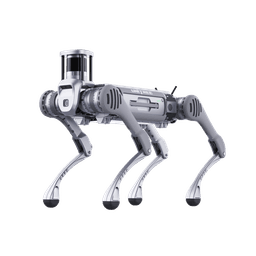
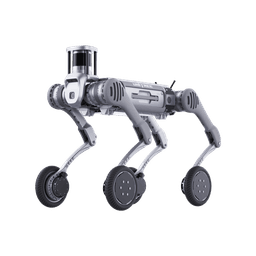
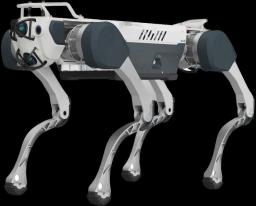
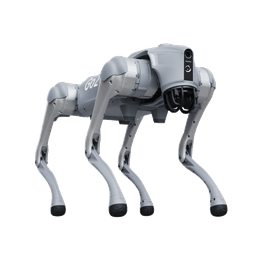
Robot fit table: B2, B2-W, X30 and why Go2 and Lite3 are limited
Based on the product data on this site, robot suitability for carrying CBRN detectors is below. "Suitable" reflects only a mass and IP comparison; power and data interfaces must still be verified for each project.
| Robot | Weight | Payload | IP | External power / data (manufacturer data) | CBRN detector fit |
|---|---|---|---|---|---|
| Unitree B2 | 60 kg | 120 kg standing, 40 kg walking | IP67 | 4 x Gigabit Ethernet, 4 x USB 3.0; power outputs 24 V x 4, 12 V x 4, 5 V x 1; optional Intel Core i7 or Orin NX (current ratings confirmed at project stage) | Suitable for D5 and ChemProX; suitable for ChemProX-DS with a bracket |
| Unitree B2-W | 85 kg | 120 kg standing, 40 kg walking | IP67 | Same compute options as the B2 | Suited to long surveys on flat plant floors; legs on stairs |
| DEEP Robotics X30 | About 56 kg (X30 Pro 59 kg) | 20 kg continuous | IP67 | X30: Ethernet, 72 V output. X30 Pro: 24 V / 12 V / 5 V power, Ethernet, USB 2.0, USB 3.0 | On the Pro version the 24 V output and USB ease detector integration |
| Unitree Go2 | 15 kg | 8-12 kg (by version) | No IP class published on the site | Extra ports by version (EDU) | Limited: a D5 fits by mass, but with no IP claim it is not suited to contaminated sites and washdown |
| DEEP Robotics Lite3 | 12-12.9 kg | 4-5 kg (by version) | No IP class published on the site | 24 V / 12 V / 5 V output by version | Limited: research and education class; with no published IP class it is not suited to contaminated sites and washdown |
The Go2 and Lite3 stay limited more because of site conditions than load capacity: chemical and radiological sites call for washdown, rain and dust resistance, while these two are light research and education platforms. They are useful for prototyping and training; for operational reconnaissance, the B2, B2-W or X30 class is a more suitable start. Figures are manufacturer data; DEEP Robotics states that the X30 values come from laboratory testing and are for reference only.
Reference examples: radiation and chemical sensors on Spot
Public sources document several legged robots carrying radiation and chemical sensors. These projects used Boston Dynamics Spot; Robotlar.org is not a party to them and cites them only to show the integration approach the field has demonstrated:
- Kromek D3S based GRID detector: In a 2024 INMM paper by UMass Lowell and Brookhaven researchers, a GRID detector built by Physical Sciences Inc. from several D3S units was integrated with Spot through the Spot CORE payload computer; the robot patrols a pre-recorded route, diverts toward the source when an isotope is detected, and can take long confirmation measurements at the highest-count points. The results are from preliminary tests.
- H3D M400 (CdZnTe): In a 2023 INMM paper by the same team, the M400 was connected to Spot through Spot CORE to reduce inspector exposure during repetitive surveys, and tested with a Ba-133 source in a simulated facility.
- Createc NV-Explore: According to a Boston Dynamics and Createc webinar, Bruce Power has used the NV-Explore gamma imager on Spot to improve radiation mapping across its CANDU reactors, with reduced worker exposure among the goals.
- Mirion SPIR Explorer and Honeywell MultiRAE: According to a March 2024 SRNL news item, the Mobile Plutonium Facility (MPF) team is deploying a Spot carrying a monitoring package built with Mirion: the SPIR Explorer gamma spectrometer, an RDS-32itx dose rate instrument and a Honeywell MultiRAE gas monitor. The goal is to reduce human exposure to radiation and other hazards; at the time of the article the team was preparing for a live exercise.
Most of these examples show the shared pattern of connecting a detector to the robot through a payload computer. The same pattern can be applied to the B2, B2-W and X30 with their embedded computers and external power outputs.
Export control and end-user certificates: general awareness
Radiation and chemical detection devices may be treated as dual-use goods under the exporting country's rules. This section is general information, not legal advice; have classification and licensing steps confirmed by your legal counsel.
- License requirement: In the European Union, exports of dual-use items are governed by Regulation (EU) 2021/821 of 20 May 2021; the control list is in Annex I and is updated regularly by the Commission. Classifying the item is the exporter's responsibility, while individual or global licences are granted by the competent authority of the member state concerned. The United Kingdom and other countries have their own regimes.
- End-user certificate (EUC): Manufacturers typically ask in writing for the end user, intended use and deployment location. Documents and lead time vary by product and country, so leave margin in the schedule.
- Platform information: When describing the intended use, include the platform the device will be fitted to; state the robot make and model plainly in project documents.
- Radioactive source: The ChemProX-DS datasheet describes its Ni-63 source (90 MBq) as under the exemption limit; the ChemProX handheld datasheet gives no source information, so ask the manufacturer. NDK states that importing radioactive sources requires a licence plus a permit for each import; have the Nuclear Regulatory Authority of Turkey (NDK) confirm whether an exempt device falls under these obligations.
- Re-export and diversion: The goods must not be passed on beyond the declared user; contracts should say so.
Customer types: who is this for?
The list below describes common user groups in general terms; it is not a claim about existing customers.
- AFAD and emergency agencies: Search and rescue, first reconnaissance at hazardous material incidents.
- TENMAK and research institutions: Laboratory, source storage and facility survey work.
- Power plants: Regular rounds and dose mapping in radiological monitoring areas; TIC monitoring in thermal and chemical storage areas. Similar field scenarios appear on the energy sector solutions page.
- Municipalities and fire services: First entry in chemical leaks and industrial accidents.
- Petrochemical and industry: Toxic gas leaks and process area checks; ATEX requirements are decisive in this segment.
How Robotlar.org helps
Robotlar.org is the official Turkey distributor of Unitree and Booster, an authorized Pudu distributor and an integration provider for DEEP Robotics. For Kromek, Bertin Environics and other sensor manufacturers' products it offers integration and corporate procurement services.
- Mission definition and robot selection (B2, B2-W, X30).
- Technical pre-discussion with manufacturers and document requests for detector selection.
- Mounting bracket, power and data interface design; embedded software and map overlay.
- Pilot field trial and operator training.
- Help preparing project information for the end-user certificate process (legal assessment remains with the customer and counsel).
For a detailed pre-assessment, fill in the quote form.
Sources
- Kromek, RIID product family: https://www.kromek.com/riids/
- Kromek D5 RIID product page: https://www.kromek.com/product/d5-riid/
- Kromek, D5 RIID Remote Mode one-pager (PDF): https://www.kromek.com/wp-content/uploads/2025/05/D5-RIID-Remote-Mode-One-Pager.pdf
- Bertin Environics, ChemProX-DS product page and datasheet: https://www.environics.fi/cbrn-products/chemprox-ds/
- Bertin Environics, ChemProX handheld detector product page and datasheet: https://www.environics.fi/cbrn-products/chemprox/
- Bertin Environics, unmanned chemical reconnaissance and ChemProX Deployment Kit: https://www.environics.fi/cbrn-solutions/unmanned-chemical-reconnaissance/
- INMM, Spot and Kromek D3S based GRID detector: https://resources.inmm.org/node/73709
- INMM, Spot and H3D M400: https://resources.inmm.org/node/73172
- Boston Dynamics and Createc webinar, Bruce Power and Createc NV-Explore: https://bostondynamics.com/webinars/enhancing-nuclear-radiation-operations-with-spot/
- SRNL, Spot reduces hazards to workers: https://www.srnl.gov/srnl_news/see-spot-reduce-hazards-to-workers/
- DEEP Robotics X30 product page: https://www.deeprobotics.cn/en/products/detail/6.html
- Unitree B2 product page: https://www.unitree.com/b2/
- Regulation (EU) 2021/821 (dual-use items), EU Publications Office record: https://op.europa.eu/en/publication-detail/-/publication/d8e79ebf-ca4e-11eb-84ce-01aa75ed71a1/language-en
- European Commission, exporting dual-use items: https://policy.trade.ec.europa.eu/help-exporters-and-importers/exporting-dual-use-items_en
- Nuclear Regulatory Authority of Turkey (NDK), import, export and transport licence for radioactive sources: https://www.ndk.gov.tr/ithalat-ihracat-tasima-lisansi