How an acoustic camera works
An acoustic camera overlays sound, recorded by a microphone array, as a map on a camera image. Each microphone in the array receives the same sound with tiny time differences. Software calculates the direction of the source from those phase and time differences (beamforming) and draws the result as a colored spot on the built-in camera image. An operator or a robot sees directly which valve, flange, insulator or bearing the sound comes from.
In industrial models the array is made of MEMS microphones, small silicon sound sensors that fit in a compact housing. The Sorama L642 family uses 64 digital MEMS microphones; HERTZINNO models have 64 or 128 microphones according to the manufacturer pages. More microphones improve direction resolution and the ability to separate weak sources, but housing size and power draw grow too.
The useful information sits in the ultrasonic band. Compressed air or gas escaping through a small opening, and the noise of partial discharge (corona, surface and internal discharge), contain frequencies the human ear cannot hear. Background noise is lower in this band and sound is more directional, so the source is located more clearly. Ranges differ by product: for the HERTZINNO HZ-FA-36, HZ-FA-371T and HZ-ACM-20Ex the manufacturer states 2 to 65 kHz; Sorama does not publish a frequency range on its L642 page or in the technical data of the L642V+ user manual. Confirm the range in writing with the manufacturer during procurement.
The output is more than an image. According to the Boston Dynamics page, the Sorama L642 provides classification, frequency, decibel and intensity values and event triggering from its onboard processor, and can produce audio (.wav), pictures, video and .json messages. This lets a robot record an event on its route and send it to the control center together with image and measurement.
Use cases
Acoustic imaging serves three main jobs.
- Compressed air and gas leaks: compressor lines, valves and flanges, vacuum systems. Boston Dynamics lists identifying compressed air or gas leaks as the first use of the Sorama L642. A leak may be inaudible, yet it is visible in the ultrasonic band, so it can be located even in a noisy plant.
- Partial discharge (PD): substations, high-voltage equipment, insulators and cable terminations. Sorama lists partial discharge among the events the L642 can detect; the L642V+ manual lists leak, partial discharge and mechanical inspection as licensed features. The acoustic method is used to show where a discharge is and to prioritize inspection; it does not replace calibrated electrical PD measurement under IEC 60270.
- Mechanical faults: bearing wear, pump and roller anomalies. Boston Dynamics notes early indicators of bearing failures.
Sorama's leak detection page names oil and gas, chemical processing, hydrogen, energy and utility infrastructure for hazardous environments, and food and beverage, automotive, production lines and general manufacturing for industrial operations. In Turkey this covers power distribution and transmission sites, petrochemical plants, compressor stations and industrial facilities.
Why mount it on a legged robot
An acoustic camera can also work as a fixed monitor or a handheld tool. The reasons for putting it on a robot are these.
- Autonomous rounds: the robot stops at defined points and measures from the same viewpoint every time. Predefined routes and stop points give regular scanning without shift dependence.
- Repeatable routes: comparing the same point over time is worth more than a single reading. The trend shows that a leak has started or a discharge has grown.
- Hazardous areas: high-voltage yards, pressurized pipe corridors and confined volumes. The robot performs the inspection round with less human entry. In Ex zones, the robot and the sensor must each hold suitable certification.
- Terrain ability: steps, slopes, cable trenches and uneven ground are less of a problem for legged robots than for wheeled platforms, which decides whether the robot can finish a route in a substation or on a pipe rack.
Boston Dynamics lists the Sorama L642 on its Spot payload pages. That shows the concept is ready on a reference platform; on other legged robots the integration is done per project.
Limits: what an acoustic camera does not do
Expectations should be set accurately.
- It does not measure gas type or concentration. The camera finds the sound of a leak; it does not say what the gas is, how dense it is or whether it is above or below an explosive limit. A separate gas detector is needed for gas safety. Leak size can only be estimated indirectly from sound intensity.
- A direct line of sight is required. Sorama states that the L642 depends on direct sound propagation; solid barriers and poor line of sight reduce detection. A leak behind a panel, under insulation or behind a cover should not be expected to be found as quickly.
- Ambient noise and reflections affect result quality and should be tested with pilot measurements on site.
- Ingress protection: IP54 is stated for the Sorama L642. A sensor mounted on an IP67 robot may need an extra cover or cage in rain and wash-down conditions.
Integration requirements
Connecting an acoustic camera to a robot requires decisions on four topics.
Power. There are two approaches. The Sorama L642V+ takes both data and power over a single Ethernet cable via PoE+ (IEEE 802.3at) and, according to its user manual, uses up to 20 W. If the robot has no PoE output, a PoE+ injector fed from the robot's 24 V output is needed. The HERTZINNO HZ-FA-36 and HZ-FA-371T, according to the manufacturer pages, need DC 12 V, 3 A supply; a 12 V output on the robot or an external DC-DC converter is required. Power drawn from the robot battery shortens runtime, and this effect should be measured on site.
Data. Ethernet is the base interface in both families. the Sorama L642V+ offers an open HTTP REST API, with WebSocket and (via the API) PLC and Modbus TCP/IP as output protocols according to its manual; HERTZINNO models state an RTSP video stream and an HTTP or WebSocket interface. On the robot side the stream is taken into the robot's compute unit or a separate gateway.
Offline operation. Energy and petrochemical sites often have no cloud connection or forbid one. The solution is a processing and logging layer on the local network. The Sorama L642 processes on the device, so event and classification data are produced locally, and the L642V+ manual states that the device does not need an active internet connection to function. Because leak and partial discharge inspection are licensed features, licensing and update terms must be confirmed in writing with the manufacturer.
Software layer. Robot navigation, triggering the sensor at a stop point, logging the measurement with timestamp and position and passing it to an inspection dashboard are the integrator's job, not the sensor maker's. Robotlar.org builds this layer between the robot SDK and the sensor API.
Weight and mounting
Weight decides which device fits which robot. The Sorama L642 itself weighs 0.85 kg; according to the Boston Dynamics page it is 3.7 kg with protective cage and rail adapter and 3.86 kg with cage and Core I/O adapter. Planning should use the caged total. The mounting bracket is fixed to the robot's payload rail or sensor plate; cable routing, vibration isolation and a crash-protection cage are part of the design.
On the HERTZINNO side, the manufacturer pages give: HZ-FA-36 about 310 g (80 x 84 x 40 mm, IP65), HZ-FA-371T about 1.6 kg (thermal camera included, IP65), and the HZ-ACM-20Ex OEM module under 450 g. For integrators who want to design a housing built into the robot, the HZ-ACM-20Ex is offered as an OEM module; supply voltage and interface details should be confirmed with the manufacturer.
The gap between the robot's walking payload and the sensor mass should leave margin for dynamic balance and runtime. Loading close to the limit is not recommended.
Products: Sorama and HERTZINNO compared
The table below relies only on manufacturers' public data. Robotlar.org is not an authorized representative of Sorama or HERTZINNO; it provides integration and corporate procurement services.
| Model | Microphones and band | Power and data | Protection, weight | Note |
|---|---|---|---|---|
| Sorama L642 / L642V+ | 64 digital MEMS; frequency range not published by the manufacturer | PoE+ 802.3at, up to 20 W (L642V+ manual); Ethernet, HTTP REST API | IP54; 0.85 kg, 3.7 to 3.86 kg with cage; -20 to +50 C (L642V+) | Listed on the Boston Dynamics Spot payload page |
| Sorama L642Ex | No technical values on the manufacturer page | To be requested from the manufacturer | To be requested from the manufacturer | Sorama states it is ATEX certified and can be used on inspection robots; request Ex marking and datasheet |
| HERTZINNO HZ-FA-36 | 64 MEMS, 2 to 65 kHz | DC 12 V / 3 A; Ethernet, RTSP | IP65; about 310 g | Stated as designed for robot dogs |
| HERTZINNO HZ-FA-371T | 128 MEMS, 2 to 65 kHz, 640 x 512 thermal | DC 12 V / 3 A; Ethernet, RTSP, WebSocket | IP65; about 1.6 kg; Ex ib IIC T4 Gb | Acoustic and thermal in one unit |
| HERTZINNO HZ-ACM-20Ex (OEM) | 128 MEMS, 2 to 65 kHz | USB 2.0 or TCP/IP (RJ45); 3.5 W (without processor) or 7.5 W | IP65; under 450 g; Ex | For those embedding it in their own housing |
Manufacturer statement note: HERTZINNO states that its acoustic cameras have been integrated as standard payloads on quadruped robots such as Deep Robotics and Unitree (B2 and Aliengo), powered from the robot battery and connected over Ethernet/IP or SDK. This is the manufacturer's own claim; it has not been independently verified by Robotlar.org and needs project-level verification for any specific robot and sensor pair. The values in the HERTZINNO rows come from the manufacturer product pages.
Robot fit table
The table compares site robot data with sensor requirements. Results are a preliminary assessment; final fit is set by a pilot and manufacturer confirmation.
| Robot | Payload and protection (published) | Power and data interface (published) | Assessment for an acoustic camera |
|---|---|---|---|
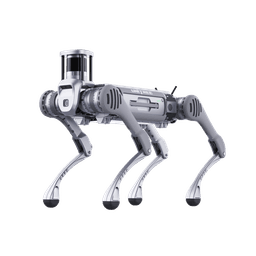
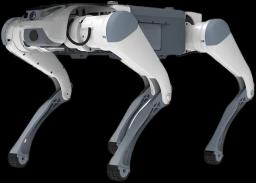
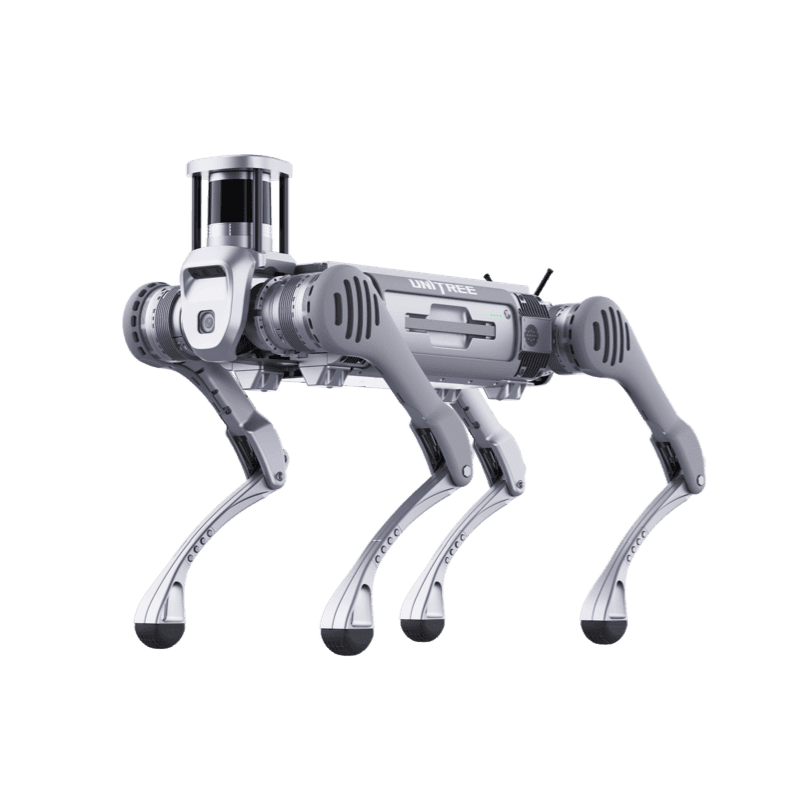
| Unitree B2 | 60 kg body; 120 kg standing, 40 kg walking; IP67 | 12 V x4, 24 V x4, 5 V x1; Ethernet x4 | Most comfortable platform for both sensor families; 12 V directly, 24 V to a PoE+ injector |
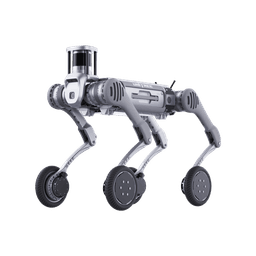
| Unitree B2-W | 85 kg body; 120 kg standing, 40 kg walking; IP67 | Same version family as the B2; power output details to be confirmed before the project | Long routes on flat-floor sites; suitable in weight |
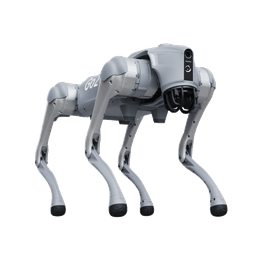
| Unitree Go2 | 15 kg; walking 8 kg (AIR, PRO, X) or 12 kg (EDU) | Interfaces vary by version; EDU suits expansion | Possible for the HZ-FA-36 (310 g); the caged 3.7 to 3.86 kg Sorama package is at the limit for dynamic balance and runtime |
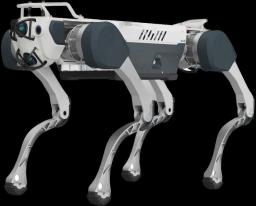
| DEEP Robotics X30 | 56 to 59 kg; payload 20 kg and above; IP67 | X30 Pro: 5 V, 12 V, 24 V output, Ethernet, USB; standard X30: Ethernet and 72 V battery output | The Pro suits both families; the standard version needs a converter; consider a cover if the sensor is IP54 |
| DEEP Robotics Lite3 | 12 to 12.9 kg; payload 4 to 5 kg | VENTURE and PRO: Ethernet and external 24 V / 12 V / 5 V power interface | Only light sensors in the HZ-FA-36 class; the caged Sorama package does not fit |
Robotlar.org is the official distributor of Unitree and Booster in Turkey. For DEEP Robotics it provides corporate supply and integration services. See also the robot dog guide and the security patrol robot guide.
Pre-purchase checklist
- What is the target event: compressed air, gas, partial discharge, bearings? Does the frequency range suit it?
- Is the area Ex-classified? Are there separate certificates and datasheets for robot, sensor and mount? For Ex rules see the EU ATEX framework.
- Power: PoE+ or DC 12 V, does the robot have the output, is the budget enough?
- Data: Ethernet, RTSP, API; is offline operation on a local network confirmed in writing?
- Mass: where does the total with cage and bracket sit against the robot's walking payload?
- Protection: under which conditions does an IP54 or IP65 sensor match the robot's IP67?
- Export and import: have your legal counsel confirm product classification and licence requirements; this article is not legal advice.
- Acceptance: do not set contractual thresholds without a pilot measurement on a real leak or discharge source on site.
How Robotlar.org helps
Robotlar.org handles robot platform selection, mounting the sensor on the robot, building the power and data infrastructure, and combining the robot SDK with the sensor API to write the route and reporting layer. It is not an authorized representative of sensor makers such as Sorama and HERTZINNO; products are assessed per project under integration and corporate procurement.
- Preliminary assessment: fit analysis for your site, event type, Ex class and robot choice.
- Pilot: a measurement and reporting pilot on your real route with a limited number of robots and sensors on an offline local network.
- Integration: mounting bracket, power converter, network and software layer.
- Training and support: operator and maintenance team training.
For a technical assessment and a quote, fill in the quote form.
Sources
- Boston Dynamics, Sorama L642 payload page: https://bostondynamics.com/products/payload/sorama-l642/
- Sorama, L642 product page: https://sorama.eu/sorama-l642
- Sorama, leak detection solution page: https://sorama.eu/leak-detection
- Sorama, L642Ex product page: https://sorama.eu/sorama-l642ex
- Sorama L642V+ Industrial user manual, version 2.20.0 (technical data, power, network requirements): Sorama manual PDF
- HERTZINNO HZ-FA-36: https://hertzinno.com/products/hz-fa-36
- HERTZINNO HZ-FA-371T: https://hertzinno.com/products/hz-fa-371t
- HERTZINNO HZ-ACM-20Ex: https://hertzinno.com/products/hz-acm-20ex
- HERTZINNO, robot integration case page (manufacturer statement): https://hertzinno.com/cases-detail/hertzinno-acoustic-camera-advancing-global-power-grid-inspection-with-robotics
- Published values for Unitree B2, B2-W, Go2 and DEEP Robotics X30, Lite3: Robotlar.org product pages (based on manufacturer data).
- EU ATEX framework: European Commission