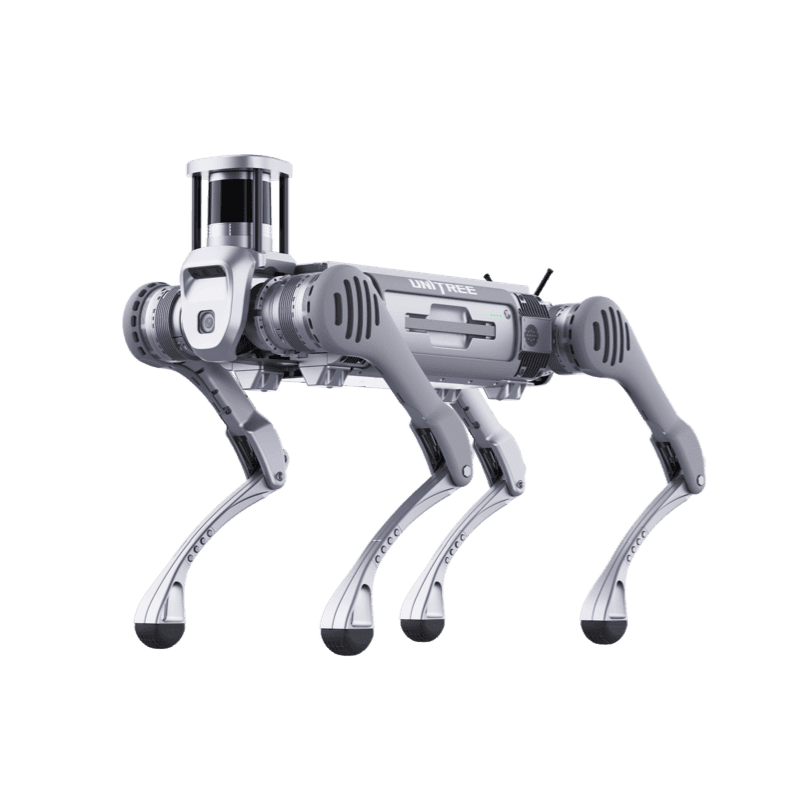
The robot's own compute: verify this first
Before adding a computer to a field robot, establish what processing capacity the robot maker already provides. For many inspection tasks it is sufficient, and extra hardware adds weight, power draw and maintenance.
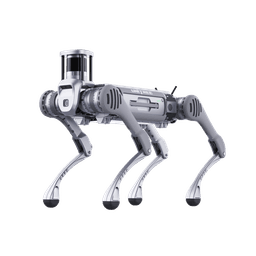
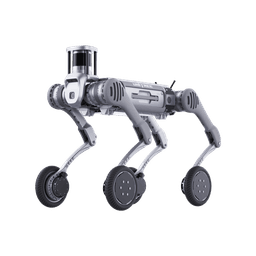
- Unitree B2 and B2-W: According to the manufacturer page, the standard configuration has an Intel Core i5 (platform functions) and an Intel Core i7 (user development). An optional Intel Core i7 or Orin NX module can be added, up to 3 devices. The robot provides 4 x 1000M Ethernet, 4 x USB 3.0, 4 x 12 V, 4 x 24 V, 1 x 5 V and 1 x BAT power outputs; the battery is 58 V, 45 Ah (2250 Wh) and the protection rating is IP67. See the Unitree B2 and Unitree B2-W pages.
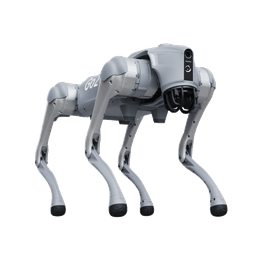
- Unitree Go2 EDU: The manufacturer page lists an 8-core high-performance CPU as standard and an optional high computing power module, such as "Orin (40-100 TOPS)". Maximum payload is about 12 kg. See Unitree Go2.
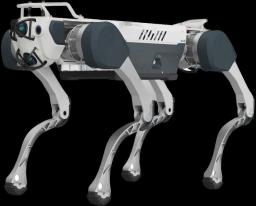
- DEEP Robotics X30: According to the manufacturer page, the X30 has two and the X30 Pro three octa-core 64-bit industrial processors. The X30 has a 72 V external power interface; the X30 Pro provides 24 V, 12 V and 5 V (USB) outputs. Protection is IP67, continuous payload 20 kg, operating temperature -20 to 55 °C. See DEEP Robotics X30.
In short, the B2 family is already prepared to take an Orin NX module integrated inside the robot. If camera count and model complexity stay within that capacity, no external rugged computer is needed.
When is an extra rugged computer justified?
When one or more of the following apply, placing a standalone Jetson Orin computer alongside the robot becomes defensible from an engineering standpoint.
- Multi-camera sensor fusion: If four or more GMSL2 cameras (RGB, thermal, stereo) are processed at once, the camera interface and bandwidth become decisive. For example, the Connect Tech Anvil-RX offers 8 GMSL2 inputs and the Rudi-NX 4 GMSL1/2 inputs.
- Compute beyond the Orin NX class: NVIDIA quotes 100 TOPS for the Orin NX 16 GB (157 TOPS in Super mode in its specification table) and up to 275 TOPS for AGX Orin. If several models must run at once, the AGX class comes into play.
- Documented vibration and shock tolerance: If the customer or insurer expects hardware tested to a standard such as MIL-STD-810H, choose a product with a test declaration. The walking vibration of a legged robot may exceed the design assumptions of a typical board-level module.
- Wide temperature range: At winter construction sites, open mines and energy facilities, ambient temperature can approach the robot's own operating range (for example -20 to 55 °C for the X30); the range of the added computer must be verified separately against these conditions.
- ATEX and similar Ex contexts: Equipment for explosive atmospheres is assessed under Directive 2014/34/EU. The public pages of the products in this article carry no ATEX declaration; for an Ex zone a suitable enclosure and certification solution is needed separately.
- A separate mission computer: Motion control and perception/payload software may need to be physically separated for update and fault isolation reasons.
If none of these apply (for example a single-camera indoor patrol), the robot's own Orin NX option or standard processor is usually the simpler and lighter solution.
Selection criteria: what to look for
Orin NX or AGX Orin?
NVIDIA's Jetson Orin page gives up to 100 TOPS and 10-25 W for the Orin NX series and up to 275 TOPS and 15-60 W for the AGX Orin series. The specification table on the same page shows 15-75 W for AGX Orin Industrial and, in Super mode, 157 TOPS and 10-40 W for the Orin NX 16 GB; confirm with the manufacturer that Super mode is supported on the chosen rugged system. Choosing the power mode is the first step of sizing, both for heat and for the load on the robot battery.
Input voltage and robot outputs
Robots offer 12 V, 24 V or battery-voltage outputs; the computer's input range need not cover all of them, but the port you choose must fall inside it. Published input ranges: Rudi-NX 9-36 V, Anvil 10-36 V, Syslogic RPC RSL A4AGX 9-45 V, Anvil-RX 18-60 V. The 24 V and 12 V ports of the Unitree B2 fall within the range of the first three; the 18-60 V range of the Anvil-RX covers the 24 V port, and because the battery is nominally 58 V, feeding from the BAT port can be examined in theory, but the fully charged battery voltage must be checked against the 60 V limit. The manufacturer page does not state the fully charged voltage or the port current limits; do not freeze the design before obtaining written confirmation from Unitree.
Camera and network interfaces
GMSL2, FPD-Link III, MIPI CSI-2, USB or Ethernet (GigE Vision, PoE) cameras bring different cabling and driver loads. Verify from the manufacturer's compatibility list that your camera model is supported on the Jetson carrier. On the Ethernet side, the Anvil provides two 10GBASE-T and two 1000BASE-T, the Anvil-RX two 10GBASE-T and two 2500BASE-T (M12 X-coded), and the Syslogic RSL A4AGX one 10G and one 1G connection.
Storage
If camera streams will be recorded, NVMe capacity is decisive. The Anvil has two M.2 Key M slots and the Rudi-NX one M.2 NVMe slot; the Anvil-RX page lists 2, 4 and 8 TB internal storage options.
Cooling
Passive (fanless) cooling removes the risk of moving parts under dust and vibration, but tightens thermal design limits. In the Anvil family the ESG620 is actively and the ESG621 passively cooled; the Syslogic RSL A4AGX is presented as fanless.
Ingress protection and tests
IP67 means protection against temporary immersion and IP69 against high-pressure hot-water jets (IEC 60529). An IP rating, however, says nothing about vibration or shock tolerance. For that, ask for an environmental test standard such as MIL-STD-810H, or for railway applications standards such as EN 50155, and confirm that the declared test report covers the same configuration of the product. The public pages of the products mentioned here carry no EN 50155 declaration.
Product overview (manufacturers' public data only)
| Product | Jetson module | Input voltage | Temperature | Protection / tests | Interface examples | Size / weight |
|---|---|---|---|---|---|---|
| Connect Tech Rudi-NX (ESG605) | Orin NX 16 GB (100 TOPS) / 8 GB (70 TOPS) | 9-36 V DC | -20 to +80 °C (product page); check the user manual for thermal conditions such as airflow | No IP or shock/vibration statement on the page | 4x GMSL1/2, 4x USB 3.0, 2x GbE, 1x CAN 2.0b, 1x M.2 NVMe | 135 x 50 x 105 mm, 646 g (module only) |
| Connect Tech Anvil (ESG620 active / ESG621 passive) | AGX Orin and AGX Orin Industrial | 10-36 V DC | -25 to +60 °C | No IP or shock/vibration statement on the page | 2x 10GBASE-T, 2x 1000BASE-T, 2x USB-C 3.2, 2x CAN 2.0b, 2x M.2 Key M, 16-lane MIPI expansion (optional GMSL2/FPD-Link III) | 206 x 163 x 94 mm, 2.31 kg |
| Connect Tech Anvil-RX (ESG635) | AGX Orin 32 GB (200 TOPS), 64 GB (275 TOPS), Industrial (248 TOPS) | 18-60 V DC | -40 to +65 °C | IP67; stated as tested to MIL-STD-810H (no further detail) | 8x GMSL2, 2x 10GBASE-T, 2x 2500BASE-T (M12 X), 2x USB 3.2, 2x CAN | 5.2 kg |
| Syslogic RPC RS A4NX | Orin NX | Not stated on the page | Not stated on the page | IP67, M12 connectors; stated to meet "high shock and vibration requirements", no standard named | GMSL variant: 4x GMSL2 inputs | Not stated on the page |
| Syslogic RPC RSL A4AGX | AGX Orin and AGX Orin Industrial (32 or 64 GB RAM) | 9-45 V DC | -25 to +65 °C | IP67 / IP69; no shock/vibration or EN 50155 statement on the page | 1x 10G + 1x 1G Ethernet, 2x CAN (CAN-FD capable), USB, M.2 Key M SSD slot, fanless | 250 x 75 x 170 mm, 3 kg |
Cells marked "not stated" mean the product page gives no value; missing values should be completed from the datasheet and user manual with written confirmation from the manufacturer.
Power budget and effect on robot runtime
The cost of an extra computer is not only its purchase price; continuous draw from the robot battery shortens mission time. For a simple order-of-magnitude estimate, the B2 manufacturer figures can be used: a 58 V, 45 Ah (2250 Wh) battery and 4-6 hours of battery life. From these two values an average robot draw of roughly 375-560 W is derived (this is arithmetic by this article, not a manufacturer value; the real figure varies with task, speed and load).
- Estimate: an Orin NX class system running in the 10-25 W range adds roughly 2-7 percent to that average draw and shortens runtime by roughly 2-6 percent. At the 40 W upper limit of Super mode the added load can reach about 11 percent and the runtime reduction about 10 percent.
- Estimate: an AGX Orin class system running in the 15-60 W range adds roughly 3-16 percent and shortens runtime by roughly 3-14 percent; peripherals such as cameras, SSDs and Ethernet switches come on top.
Method (estimate): added load = computer power / average robot draw; runtime reduction is approximately computer power / (average robot draw + computer power). Lower values use about 560 W and upper values 375 W average draw; DC-DC converter losses are not included.
Practical implications: (1) Set the power mode to the real need of the task; running at full power continuously is unnecessary for most inspection rounds. (2) Account for converter losses; a DC-DC converter stepping down from 58 V or 72 V adds heat and loss. (3) The mass of the added computer counts against the walking payload: the manufacturer gives the B2 walking payload as above 40 kg, and the Anvil-RX weighs 5.2 kg and the Anvil 2.31 kg, with cables, brackets and converters on top. (4) Measure runtime with and without load; for the B2 the manufacturer reports over 4 hours with a 20 kg load and over 5 hours unloaded.
When choosing a converter, ask the manufacturer for the robot's port current limit. Drawing 60 W from a 24 V port means about 2.5 A; the fuse and wire gauge at the port must suit that.
Robot fit table
| Robot | Robot's own compute option | Power output (manufacturer) | Extra rugged computer approach |
|---|---|---|---|
| Unitree B2 | Standard i5 + i7; optional i7 or Orin NX, up to 3 devices | 12 V x4, 24 V x4, 5 V x1, BAT x1 (58 V battery); current limit not stated | The 24 V/12 V ports fall within the input ranges of Rudi-NX, Anvil and Syslogic RSL A4AGX; the Anvil-RX 18-60 V range can be examined for the 24 V or BAT port. Only if the reasons above apply |
| Unitree B2-W | Same optional compute module choices as B2 | 58 V battery (>2 kWh) | Same approach as B2; because the wheeled version has a longer range, the power budget effect should be measured separately |
| Unitree Go2 EDU | 8-core CPU; optional high computing module (Orin 40-100 TOPS) | No port list stated on the page | With a maximum payload of about 12 kg and its own Orin option, it is generally not a suitable platform for the rugged systems in this article |
| DEEP Robotics X30 / X30 Pro | Two (X30) / three (X30 Pro) octa-core 64-bit industrial processors | X30: 72 V external interface; X30 Pro: 24 V, 12 V, 5 V | The X30 Pro 24 V output fits the ranges above; the X30 72 V interface is above the input range of all listed products and needs a DC-DC converter. With a 20 kg payload the weight budget is tight |
The table is a pre-screening aid built from public manufacturer data; every integration must be verified against the robot maker's power and mechanical interface documents.
Ex environments and export note
Directive 2014/34/EU (ATEX) applies to equipment and protective systems intended for use in potentially explosive atmospheres. Because the public pages of the products here carry no ATEX certificate, if use in an Ex zone is planned, a certified enclosure or an Ex solution for the whole robot must be assessed separately. This section is for information only and is not legal advice; confirm the conformity assessment with a notified body and your legal counsel.
NVIDIA Jetson modules and systems containing them may be subject to export control classification. We do not give legal advice on this; have the classification and the shipping conditions to Turkey confirmed by your legal counsel before purchase.
How Robotlar.org helps
Robotlar.org is the official Turkey distributor of Unitree and Booster, and provides integration and enterprise supply for DEEP Robotics robots. For the rugged computer products mentioned above we provide engineering support within an integration and enterprise supply framework.
- Task analysis: deciding from camera count, model load and vibration/temperature conditions whether the robot's own Orin option or an extra computer is needed.
- Power and mechanical integration: port voltage/current verification, DC-DC converter, bracket, cabling and runtime measurement.
- Pilot: validating the chosen configuration at your site with a short pilot.
- Quote: send your requirements through the quote form.
Related guides: Security and patrol robot guide, Industrial robot insurance and liability guide.
Sources
- Unitree B2 official page: https://www.unitree.com/b2
- Unitree B2-W official page: https://www.unitree.com/b2-w
- Unitree Go2 official page: https://www.unitree.com/go2
- DEEP Robotics X30 official page: https://www.deeprobotics.cn/en/index/product3.html
- Connect Tech Anvil: https://connecttech.com/product/anvil-embedded-system-with-nvidia-jetson-agx-orin/
- Connect Tech Anvil-RX: https://connecttech.com/product/anvil-rx-rugged-system-powered-by-nvidia-jetson-agx-orin/
- Connect Tech Rudi-NX (Orin NX): https://connecttech.com/product/rudi-nx-embedded-system-with-nvidia-jetson-orin-nx/
- Syslogic RPC RS A4NX: https://www.syslogic.com/products/rugged-computer-rpc-rs-a4nx
- Syslogic RPC RS A4NX GMSL: https://www.syslogic.com/products/rugged-computer-rpc-rs-a4nx-super-gmsl
- Syslogic RPC RSL A4AGX: https://www.syslogic.com/jetson-agx-orin/rugged-edge-ai-computer-rpc-rsl-a4agx
- IEC 60529 (IP codes): https://webstore.iec.ch/en/publication/2452
- NVIDIA Jetson Orin: https://www.nvidia.com/en-us/autonomous-machines/embedded-systems/jetson-orin/
- Directive 2014/34/EU (ATEX), EU Publications Office: https://op.europa.eu/en/publication-detail/-/publication/68451154-b720-11e3-86f9-01aa75ed71a1