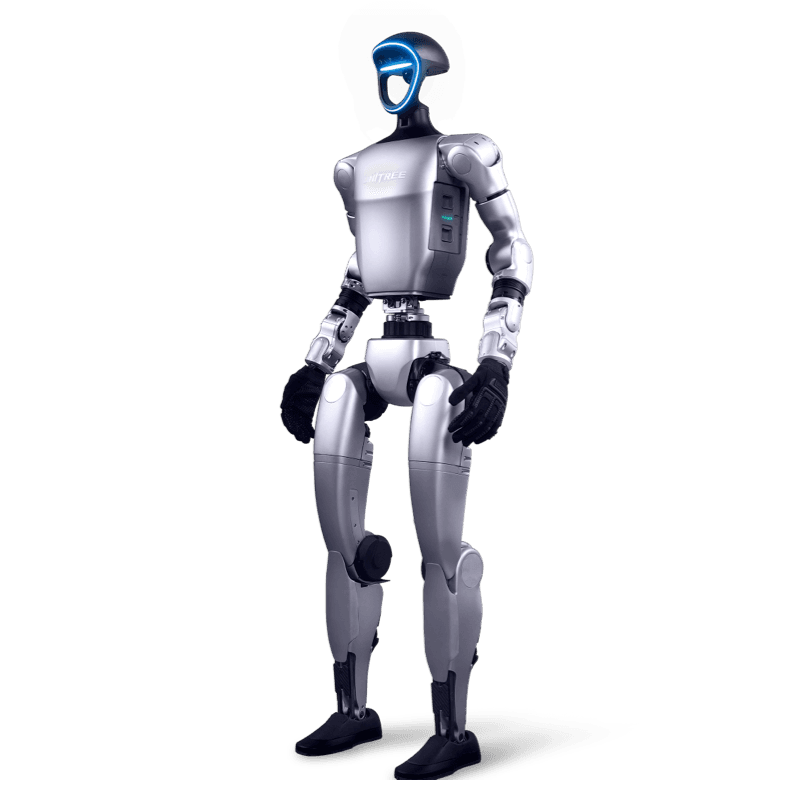
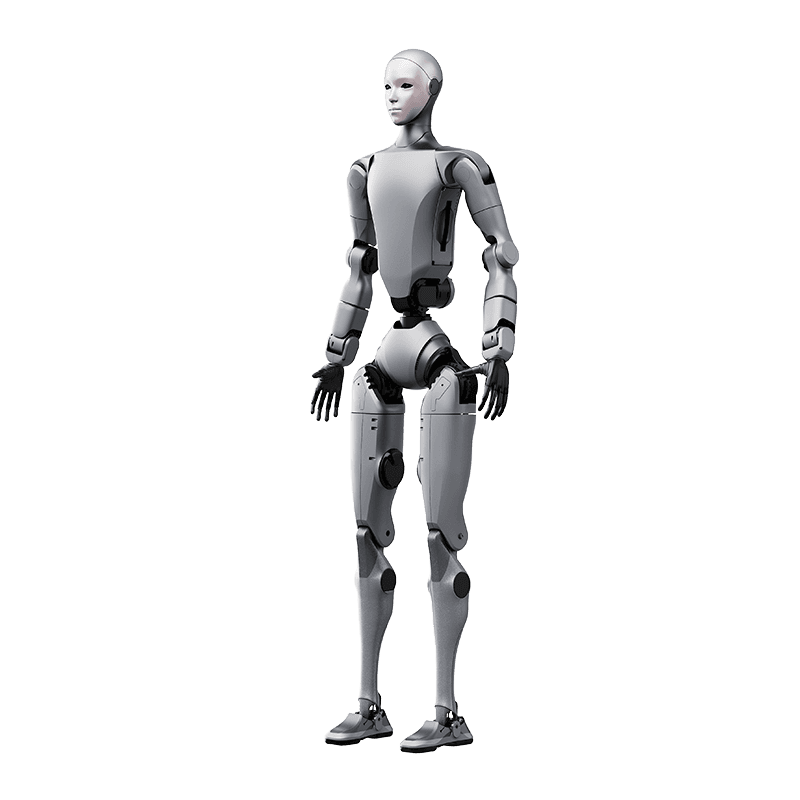
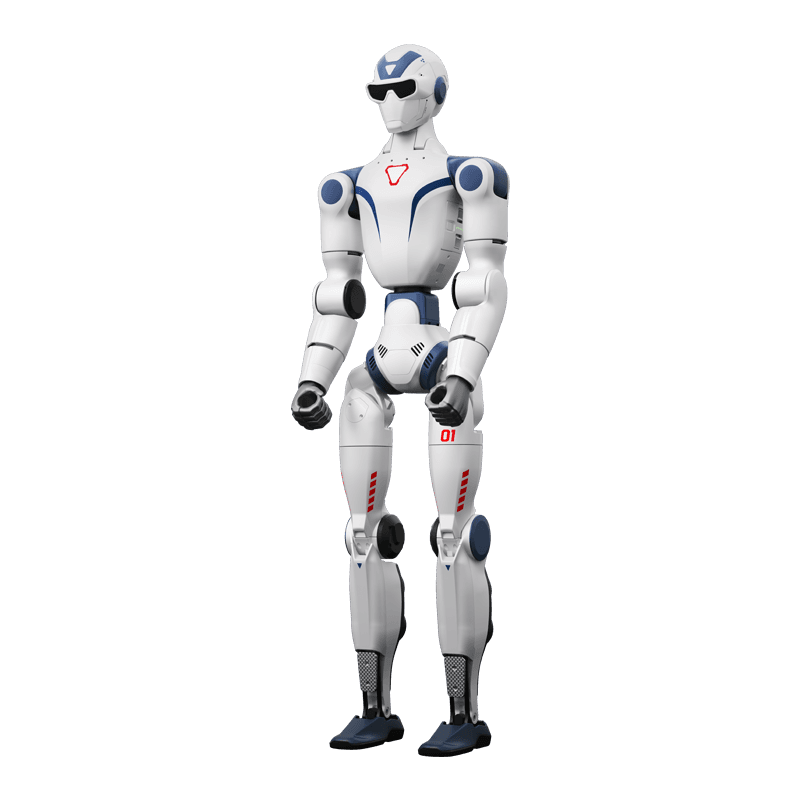
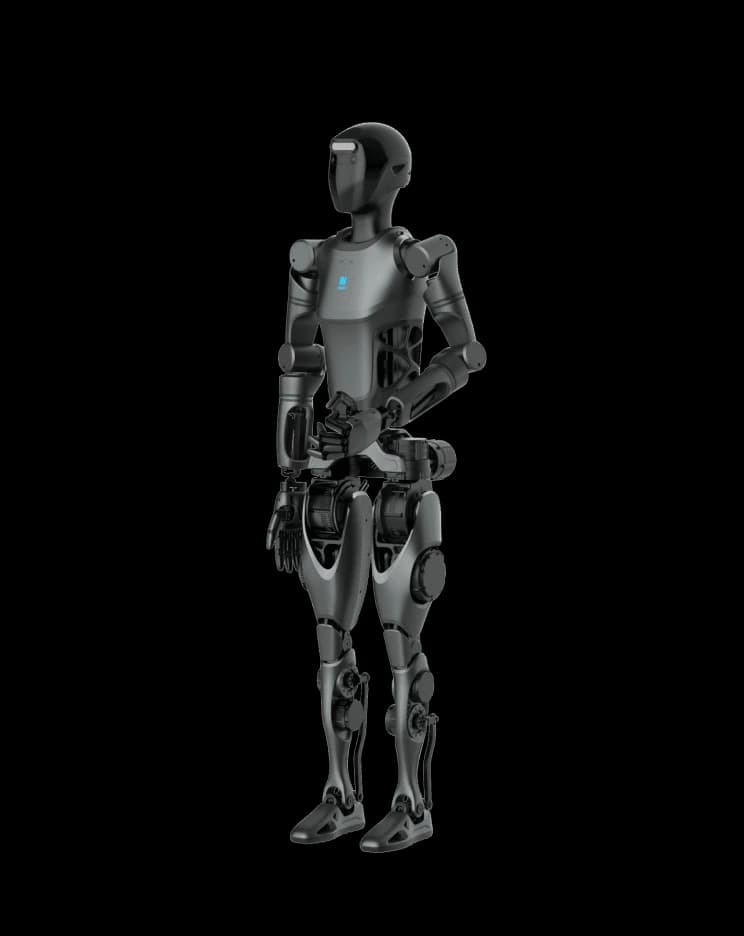
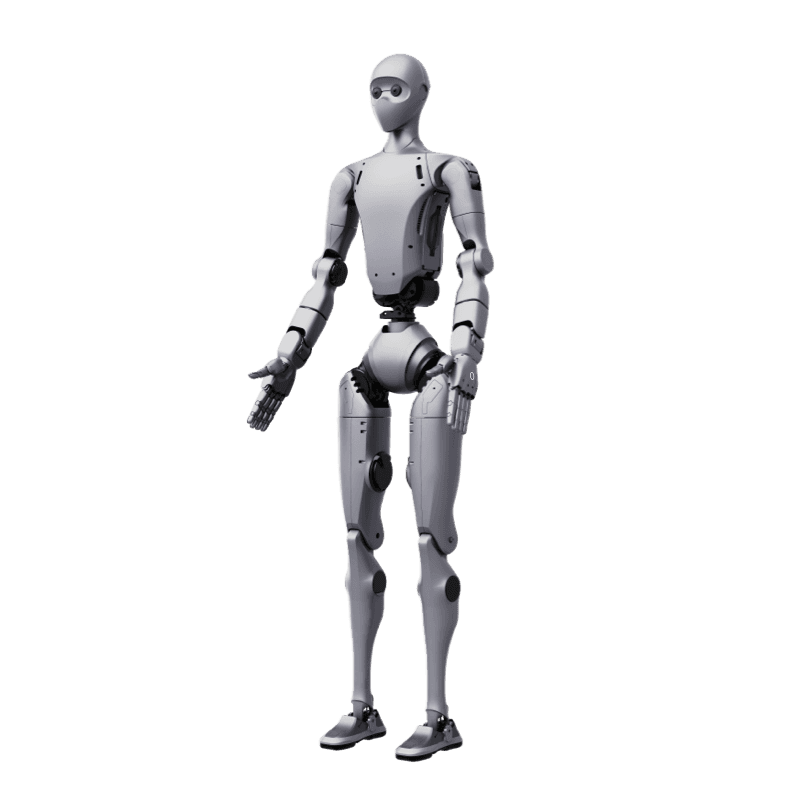
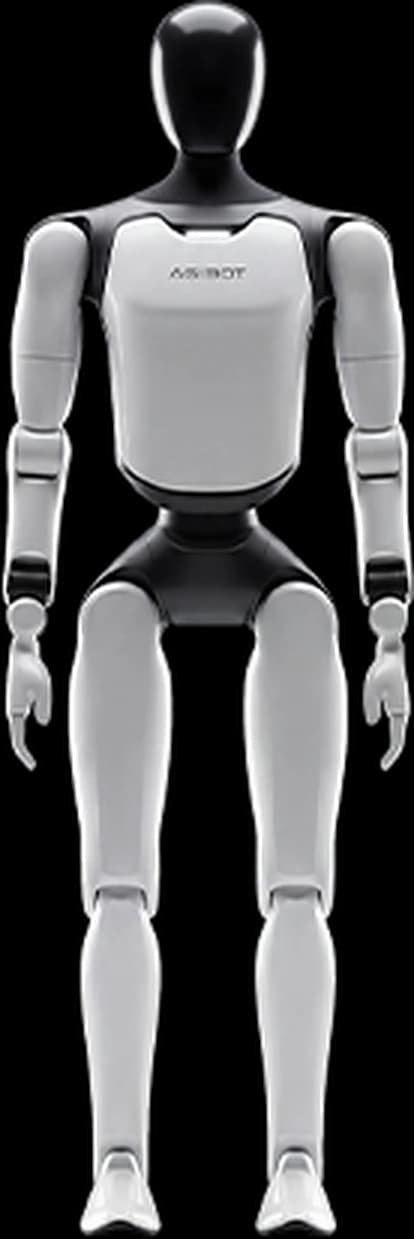
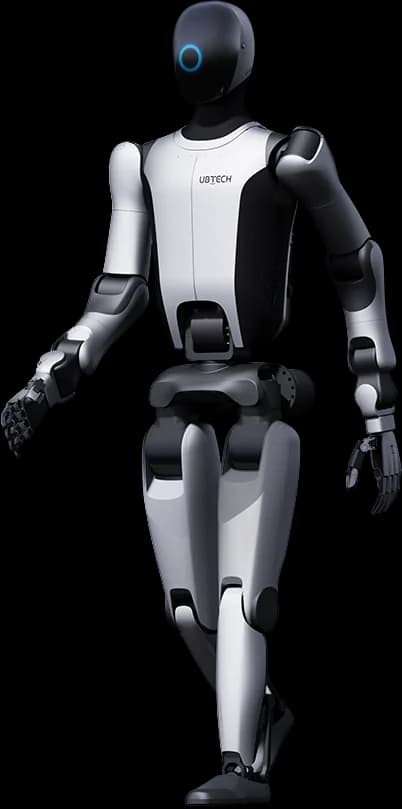
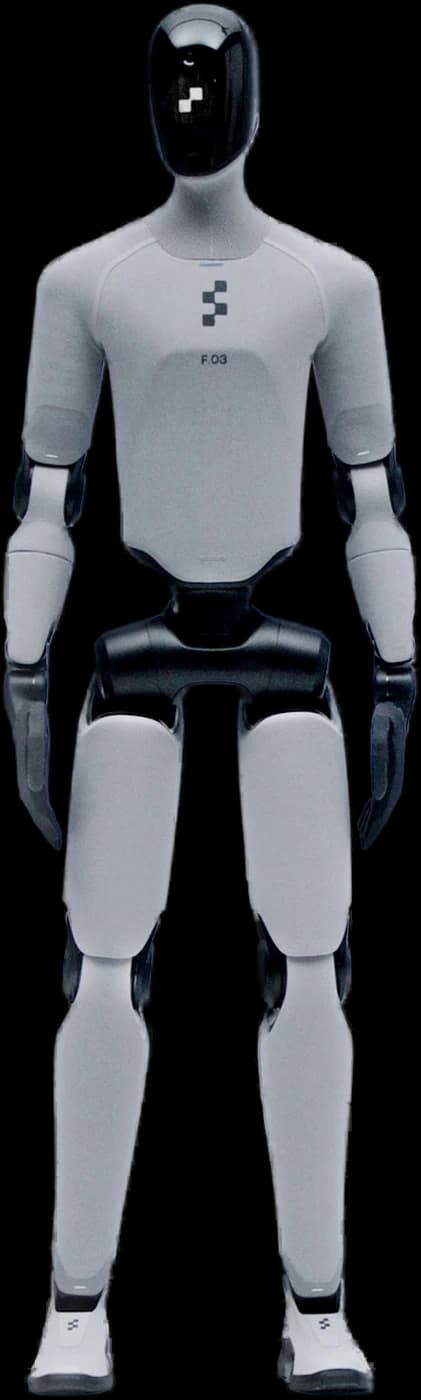
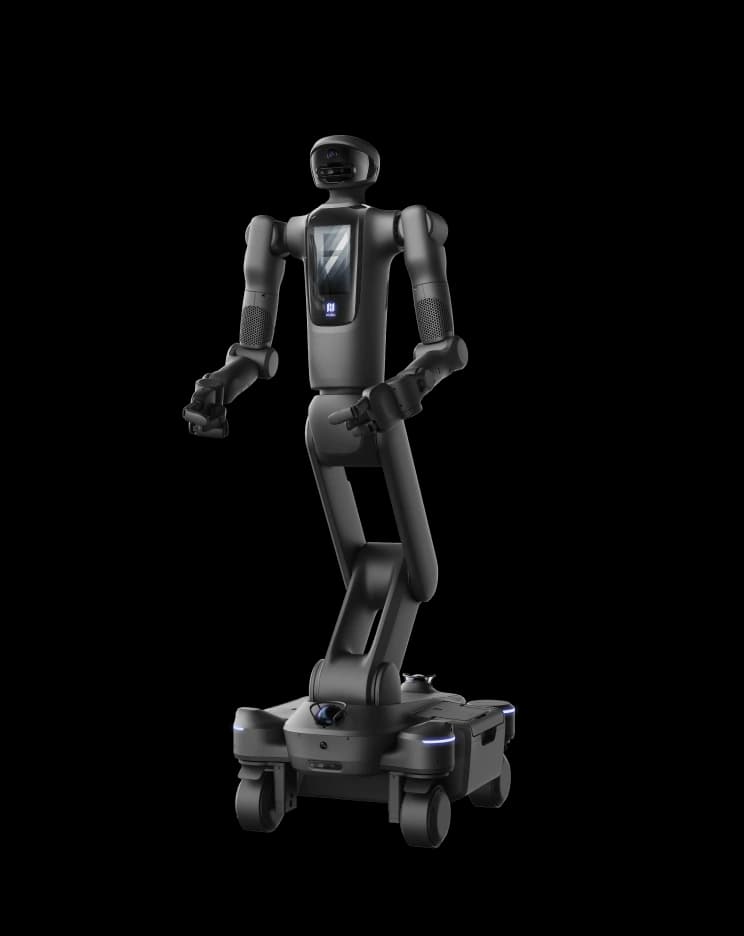
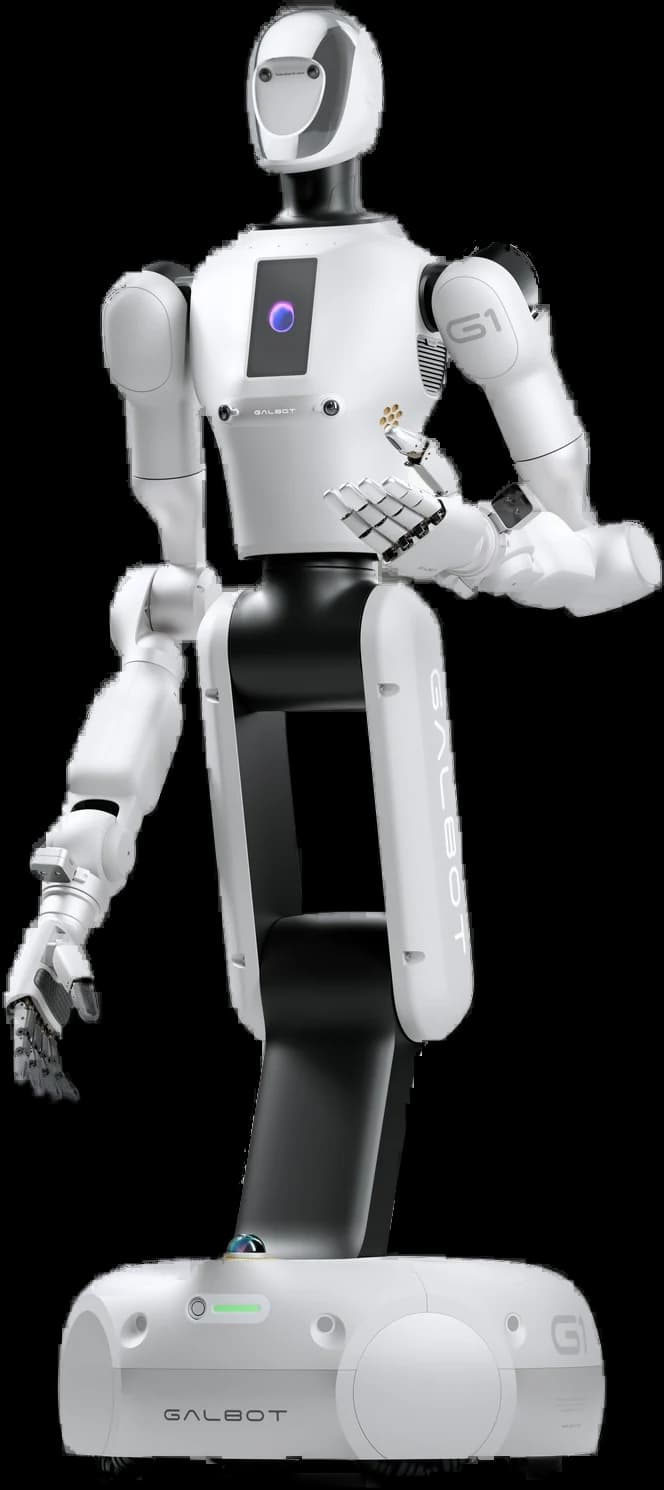
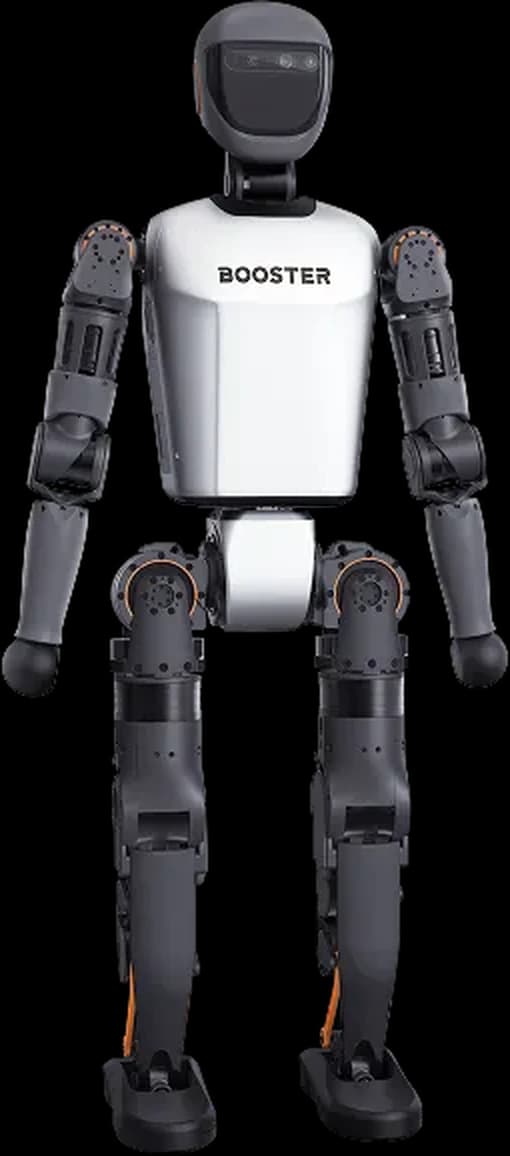
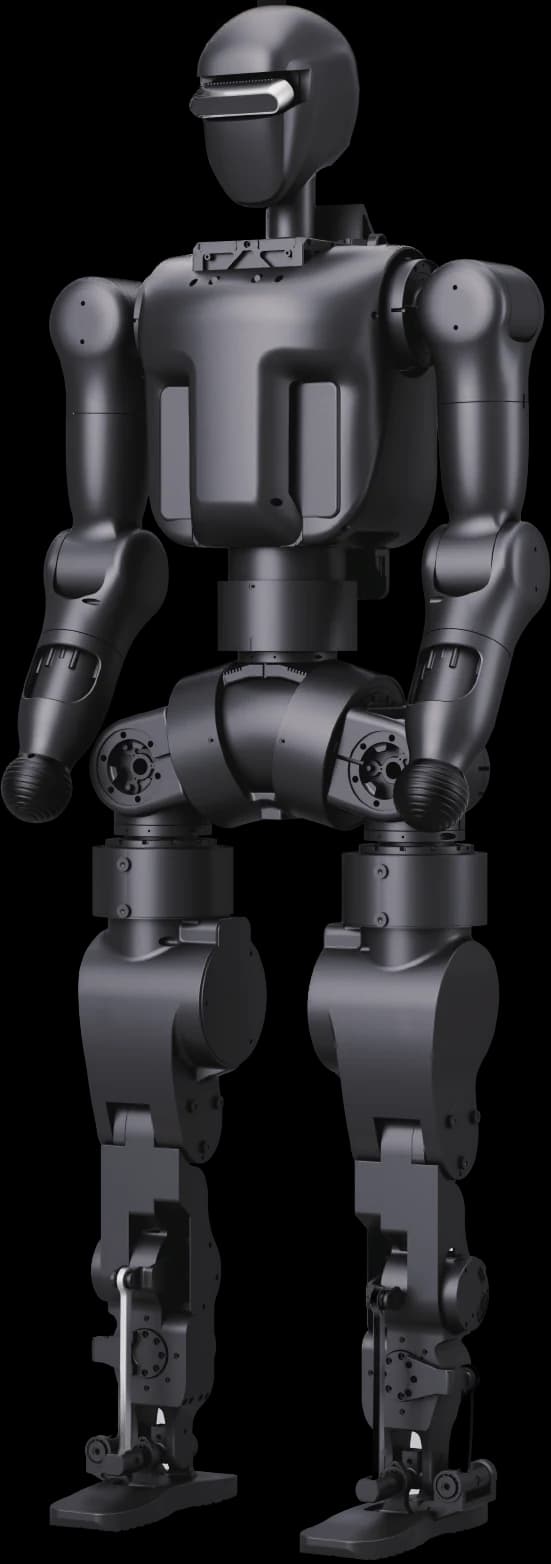
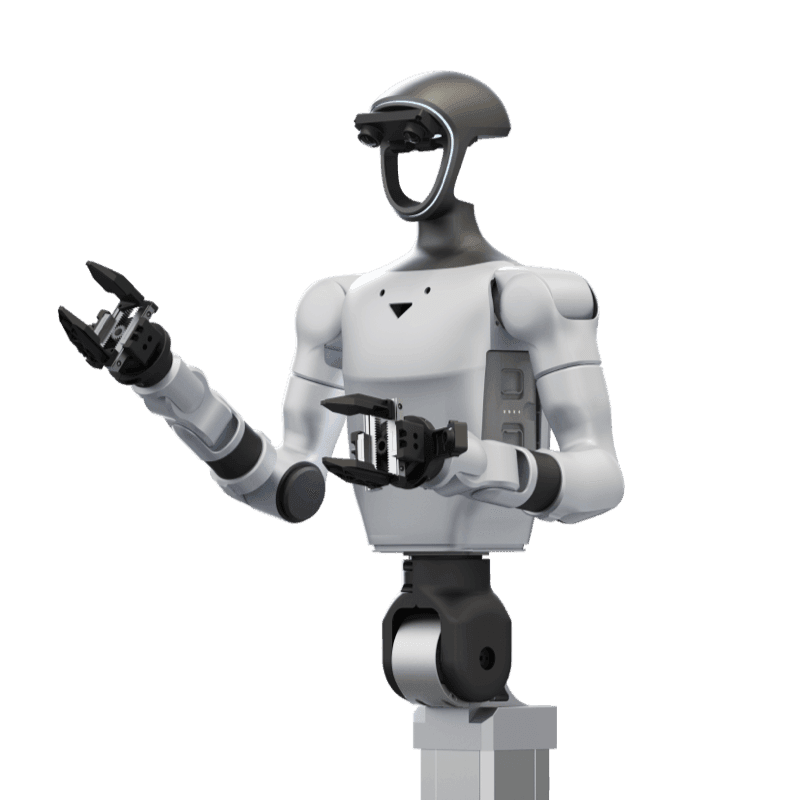
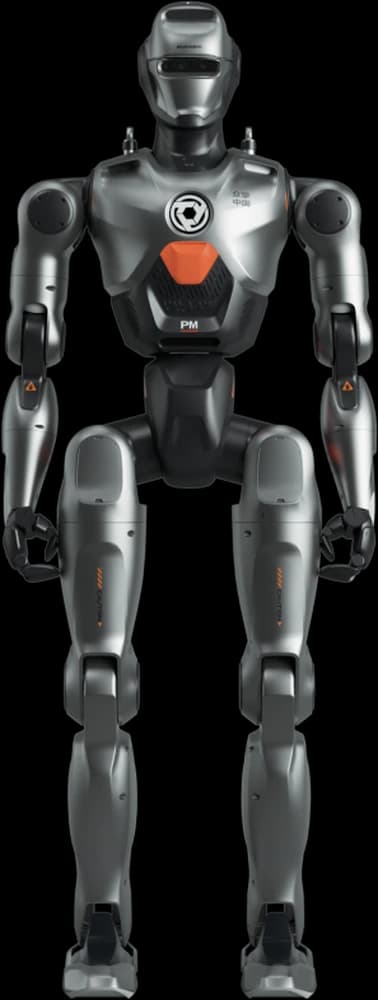

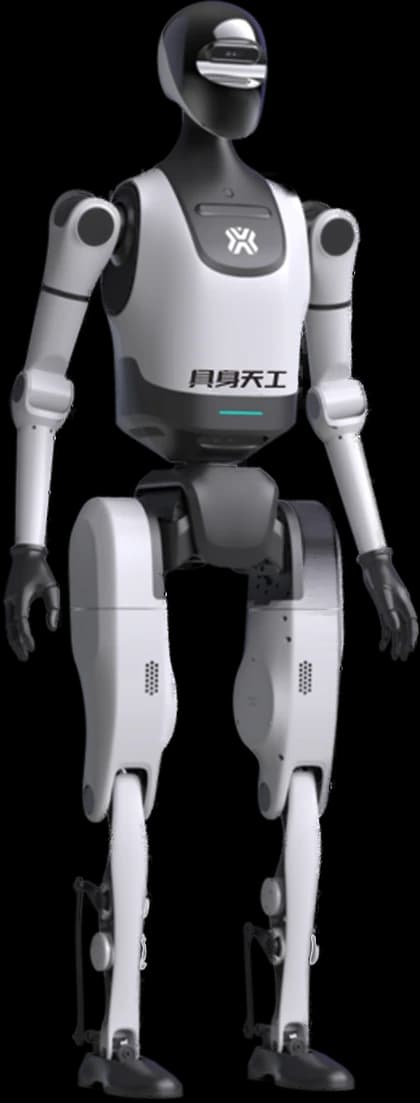
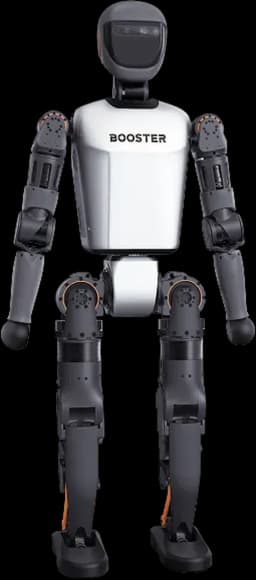
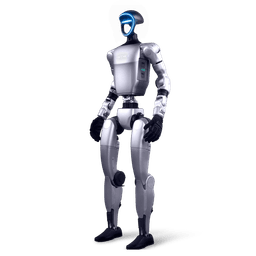

Body: 118 cm / 30 kg and 132 cm / 35 kg
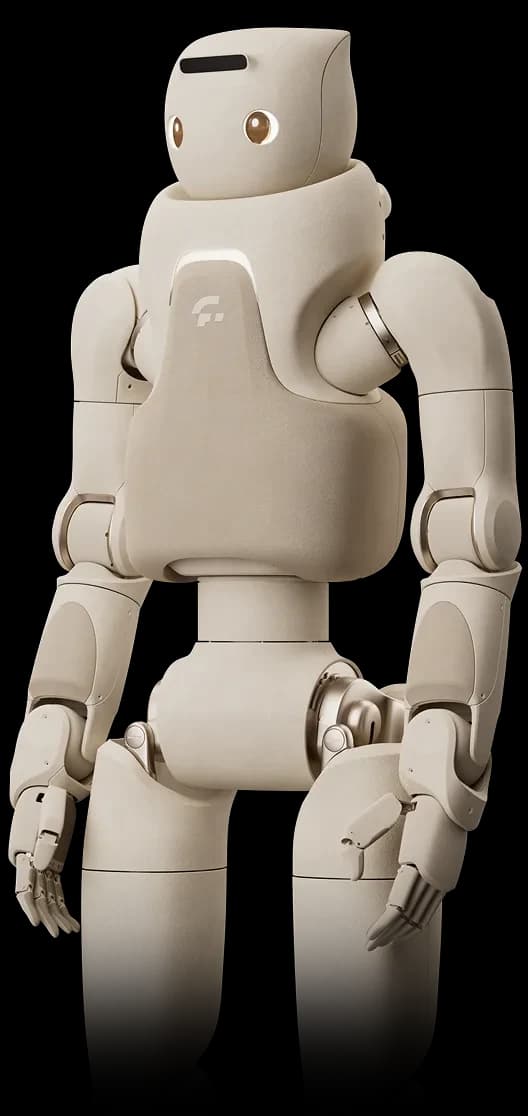
The Booster T1 stands 118 × 47 × 23 cm and weighs about 30 kg, with a 57 cm leg and a 45 cm arm. The Unitree G1 stands 1320 × 450 × 200 mm at 35 kg and folds to 690 × 450 × 300 mm. The 14 cm and 5 kg gap is not decisive in a lab, but transport differs: the G1's folding body is easier to take on site, while the T1 is a body sized around competition rules.
| Measure | Booster T1 | Unitree G1 |
|---|---|---|
| Size | 118 × 47 × 23 cm | 132 × 45 × 20 cm (folded 69 × 45 × 30 cm) |
| Weight | About 30 kg | 35 kg |
| Total degrees of freedom | 23 / 31 / 41 | 23 (G1) / 23-43 (G1 EDU, with Dex3-1 hand) |
| Peak torque | 130 N·m | Knee 90 N·m (G1) / 120 N·m (G1 EDU) |
| Compute | NVIDIA AGX Orin 200 TOPS (all editions) | 8-core CPU; Jetson Orin 100-157 TOPS on the G1 EDU |
| Battery | 10.5 Ah; 2 h walking, 4 h standing | 9000 mAh quick-release; about 2 h |
| Manufacturer warranty | 1 year | 8 months (G1) / 18 months (G1 EDU) |
Values are taken from the robots.ts product records (Booster: booster.tech and docs.booster.tech; Unitree: manufacturer product page).
Degrees of Freedom and Torque
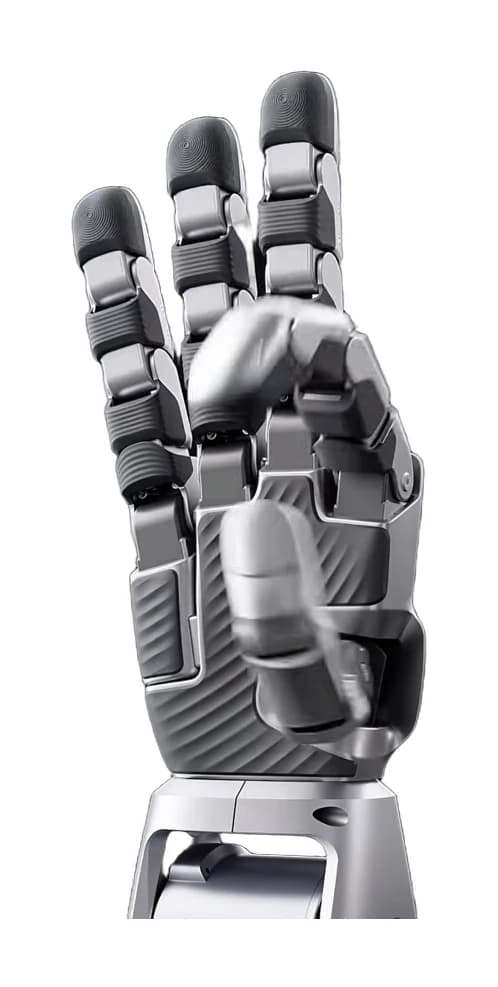
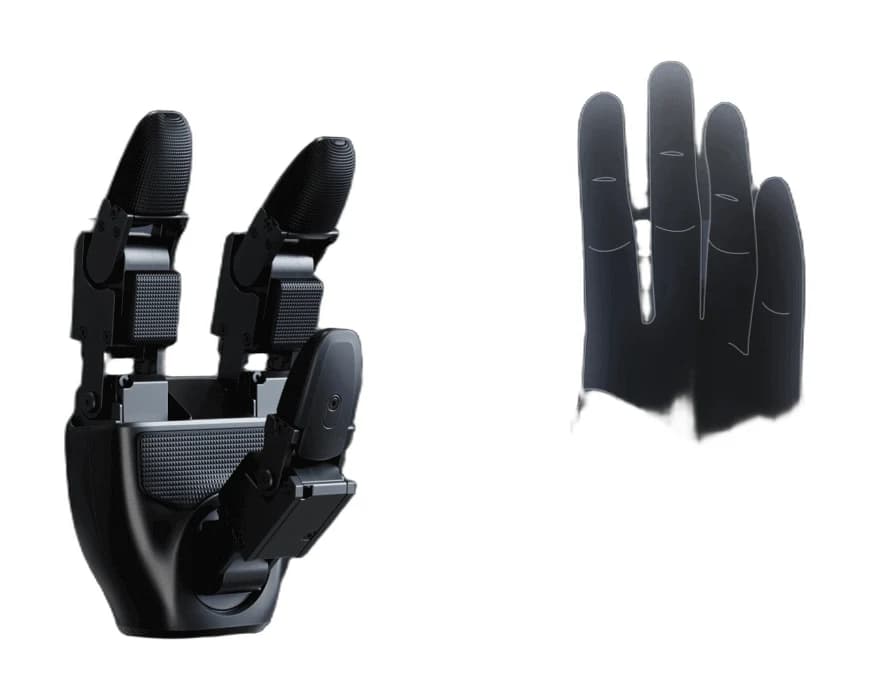
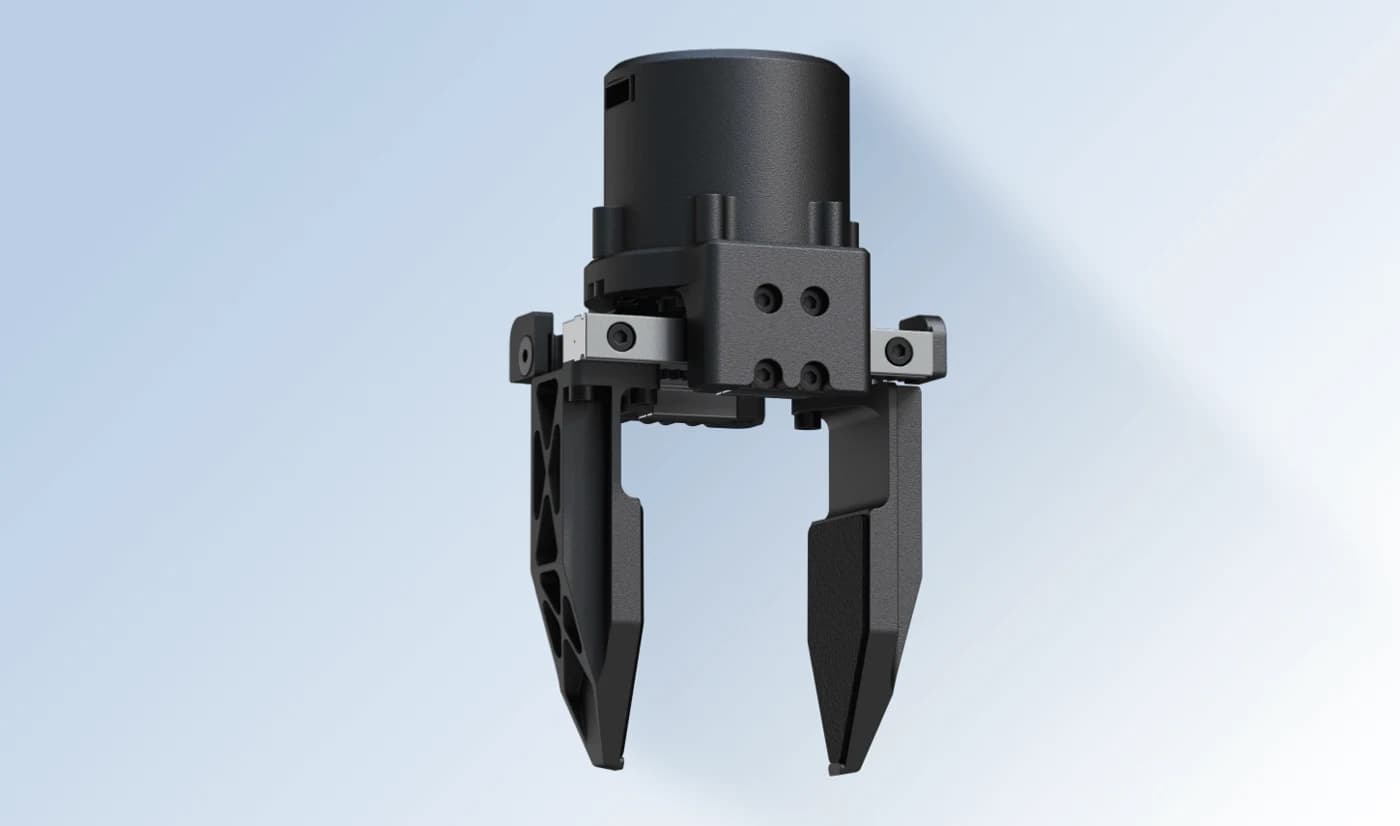
The T1 base body has 23 degrees of freedom: 6 per leg, 1 in the waist, 4 per arm and 2 in the head. With a gripper it rises to 7 axes per arm and 31 in total, and with a 6-DoF dexterous hand to 41. All three editions share the same 130 N·m peak torque and dual-encoder joints.
The standard G1 ships with 23 degrees of freedom (5 per arm, 1 in the waist); the G1 EDU reaches up to 43 with the Dex3-1 hand. Knee torque is 90 N·m on the G1 and 120 N·m on the EDU. Arm payload is 2 kg on the G1 and 3 kg on the EDU. In practice the T1 brings more torque headroom on its base body, which leaves a wider envelope for the control policy in dynamic tasks such as kicking, falling and getting up, and push recovery. The G1 EDU offers the richer hand option.
Compute: AGX Orin 200 TOPS and Jetson Orin
This is the clearest split. All three T1 editions carry an NVIDIA AGX Orin rated at 200 TOPS; the Standard and Customized editions add an Intel i7 1370p, so x86-bound perception stacks and ROS nodes run on the robot. The Basic edition has no separate x86 processor and computes on the AGX Orin alone.
On the G1 it depends on the edition: the standard G1 has an 8-core high-performance CPU, while the NVIDIA Jetson Orin module (100-157 TOPS) and full secondary-development access come with the G1 EDU. If you want to run your own models on the robot, compare any T1 edition against the G1 EDU.
Software: Booster SDK and Gym, Unitree SDK2 and RL Gym
On the Booster side, the C++ SDK (with the pip package booster_robotics_sdk_python for Python), a ROS 2 interface package and the Booster Gym reinforcement learning framework are open on GitHub; the SDK is Apache-2.0 licensed and builds on Ubuntu 22.04 for aarch64 and x86_64. Booster Gym ships pre-configured for the T1: training in Isaac Gym, cross-simulation testing in MuJoCo and pre-deployment checks in Webots. See the Booster SDK development guide and the Booster Gym guide.
On the G1 side, Unitree SDK2, ROS 2 support and the unitree_rl_gym repository do the same job; in community size and number of examples, the G1 ecosystem is broader. We summarise the Unitree reinforcement learning workflow on our RL Gym page.
RoboCup and Competition Record
The T1 is the de facto standard body of the large-size category in the RoboCup humanoid league. At RoboCup 2025 (Salvador, Brazil), Tsinghua's Hephaestus team won the AdultSize final with the T1, and the runner-up, China Agricultural University's Mountain & Sea team, also used the T1. According to Booster's 9 July 2026 announcement, the top three places in the 2026 Large category went to teams on the T1. If you are thinking of building a football team, that means a ready starting point for rule compliance and open-source match software (robocup_demo); details are in our humanoid football robot guide.
The G1 stands out elsewhere: dynamic motion demos, data collection through teleoperation and manipulation research.
Supply and Service in Turkey
Both brands are in the Robotlar.org portfolio; the choice comes down to body, budget and research agenda.
Robotlar.org is an authorized distributor of Booster Robotics products in Turkey. The T1 is invoiced in Turkey and quoted on a proforma that includes taxes and freight; on-site commissioning, developer training, a 1-year warranty and authorized service are delivered in Turkey. Lead time depends on edition and configuration and is stated in the quote. For the ordering steps see the Booster buying guide, and for pricing structure the T1 pricing page.
On the G1 side, Robotlar.org, the Unitree Turkey Partner, handles supply, installation and training; see the G1 pricing page for scope.
The Decision
If you want on-robot compute from the base edition, the work is walking, balance, kicking and RoboCup, and torque headroom matters, choose the Booster T1. If a folding body, a large community, a dexterous hand option and manipulation-focused research come first, choose the G1 EDU. To see the other bodies in this class side by side, look at our G1 alternatives comparison, and for a larger body the G1 EDU and Booster T2 Pro comparison.