Irrigation System Pipeline Leak Detection
Scenario record: it defines the environment, the mission flow and a proposed hardware and software configuration. The list below is a configuration proposal, not an installation inventory. Field projects lists deployed systems and their measurements.
- Environment
- Outdoor field
- Operating mode
- Supervised autonomy
- Proposed robot
- Unitree B2-W
The problem addressed
Hidden leaks in kilometres-long irrigation lines causing water loss that goes unnoticed.
Draft mission flow
- 1The robot walks autonomously along the irrigation pipeline route; acoustic sensor listens for water leak sounds in underground pipes.
- 2Scans surface temperature differences with thermal camera; detects cold zones caused by leaks.
- 3Soil moisture sensor validates abnormal moisture above pipe; leak point marked with GPS.
- 4Leak report transmitted to smart irrigation system; location and estimated water loss amount reported to maintenance team.
Proposed hardware
- Acoustic Leak Sensor
- Thermal Camera
- Soil Moisture Sensor
- RTK-GPS
Proposed software
- Navigation
- Terrain-adaptive autonomous walking along irrigation pipeline route
- Model
- Acoustic Leak Frequency Detection and Soil Moisture Anomaly Correlation
- Integration
- Smart Irrigation Management System and Water Resources Administration
The robot's real operating limits
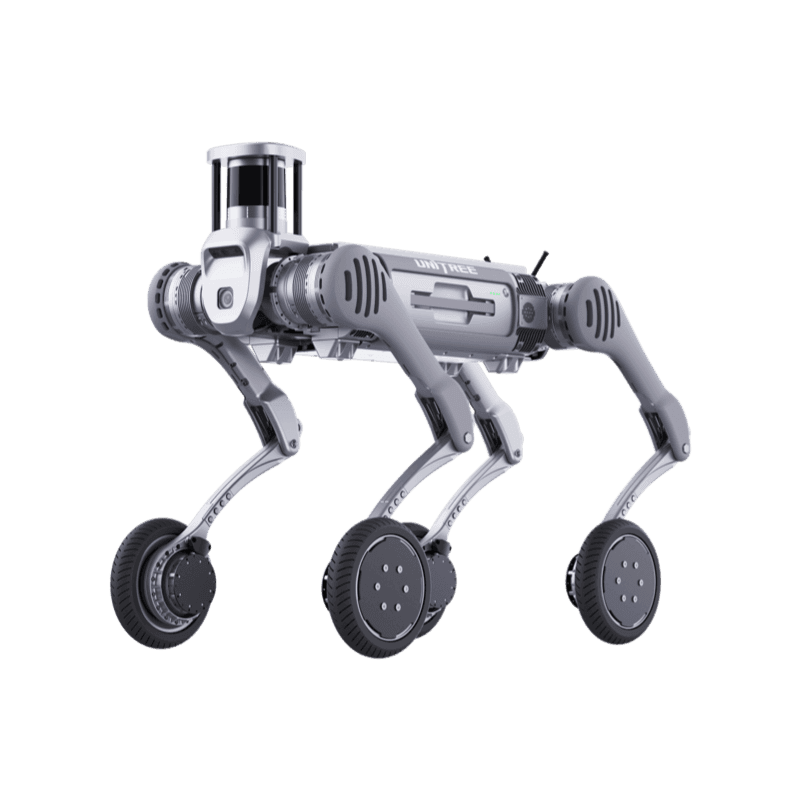
Unitree B2-W
Wheeled industrial robot dog: IP67
Product page- Ingress rating
- IP67
- Operating temperature
- -20°C to 55°C
- Payload
- 120 kg
- Max speed
- 15
- Climb
- 45°
- Weight
- 85 kg
Values are manufacturer data. Scenario fit is determined by comparing these limits with site conditions.
From scenario to installation
Feasibility is determined by the site survey: floor and route, network coverage, the charging point, intervention responsibilities and the conditions under which the robot must stop. The survey report defines the scope, the constraints and the commissioning steps.