01
Insufficient High-Quality Demonstration Data
High-quality interaction data is difficult to obtain in complex physical environments, making it hard to keep building training datasets that cover multiple tasks and scenarios.
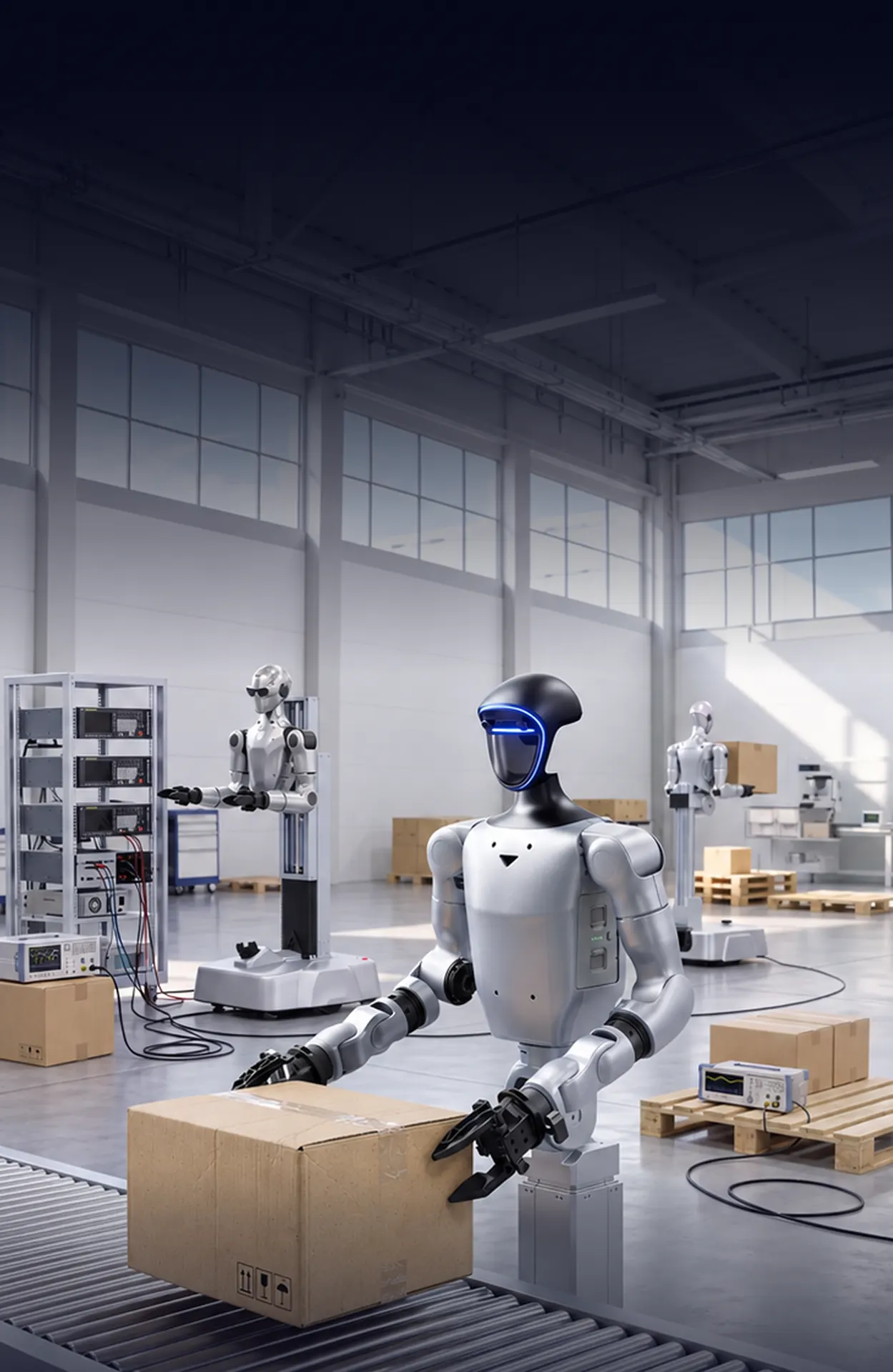
Unitree Humanoid Robots
Turn Real-World Task Data into Deployable Robot Capabilities Faster
Unitree's full-stack solution for embodied data collection and training: teleoperation, a data platform, training tools and humanoid robot bodies together.
Embodied AI robots must keep learning in real physical environments through perception, action and feedback. According to Unitree, high-quality, diverse data is the foundation for advancing robot capabilities and iteratively improving models.
01
High-quality interaction data is difficult to obtain in complex physical environments, making it hard to keep building training datasets that cover multiple tasks and scenarios.
02
Collection equipment, task workflows and data management lack a unified platform. Fragmented workflows and heavy manual effort make large-scale, standardized data production difficult.
03
Disconnected data processing, model training and deployment, plus the lack of an efficient training and inference toolchain, hinder rapid data-to-model conversion and continuous iteration.
From real-world embodied data collection to model deployment, four core capabilities form a closed-loop data workflow that, according to Unitree, accelerates capability iteration and real-world application.
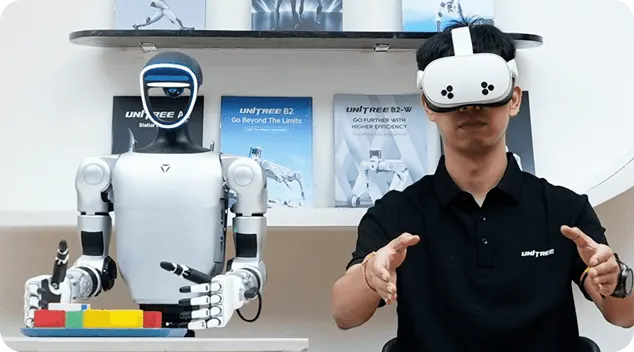
Enables remote interaction between people and robots, providing an operator interface for task execution and data collection.
Learn more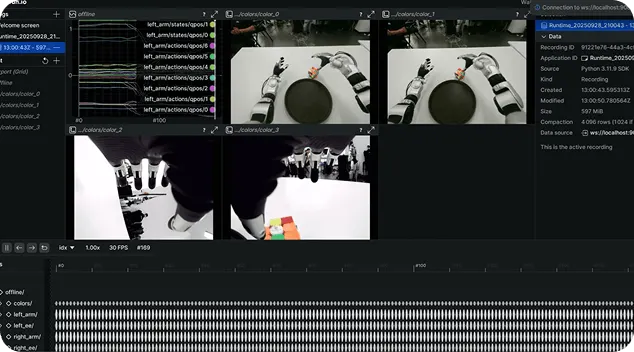
A one-stop platform covering collection, processing, annotation, review and data asset management.
Learn more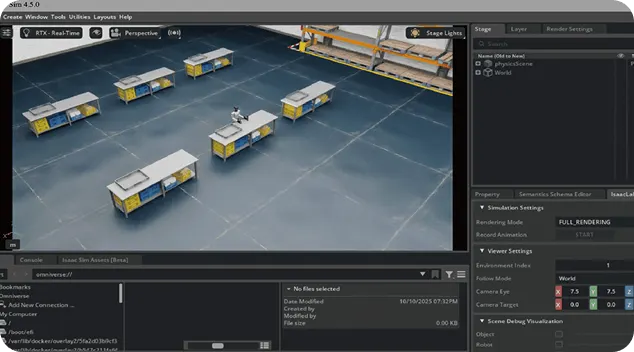
Supports distributed training, custom model development and deployment, compatible with mainstream open-source frameworks.
Learn more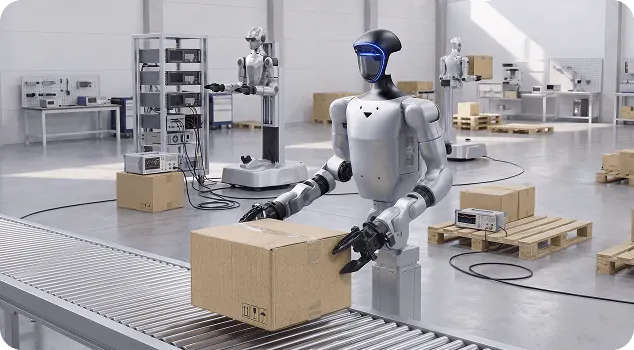
Several in-house humanoid platforms with Unitree's own motors, reducers, encoders and sensors meet task requirements across form factors.
Learn moreLow-latency, high-precision full-body motion interaction enables real-time remote control of robots and provides a stable entry point for embodied data collection.
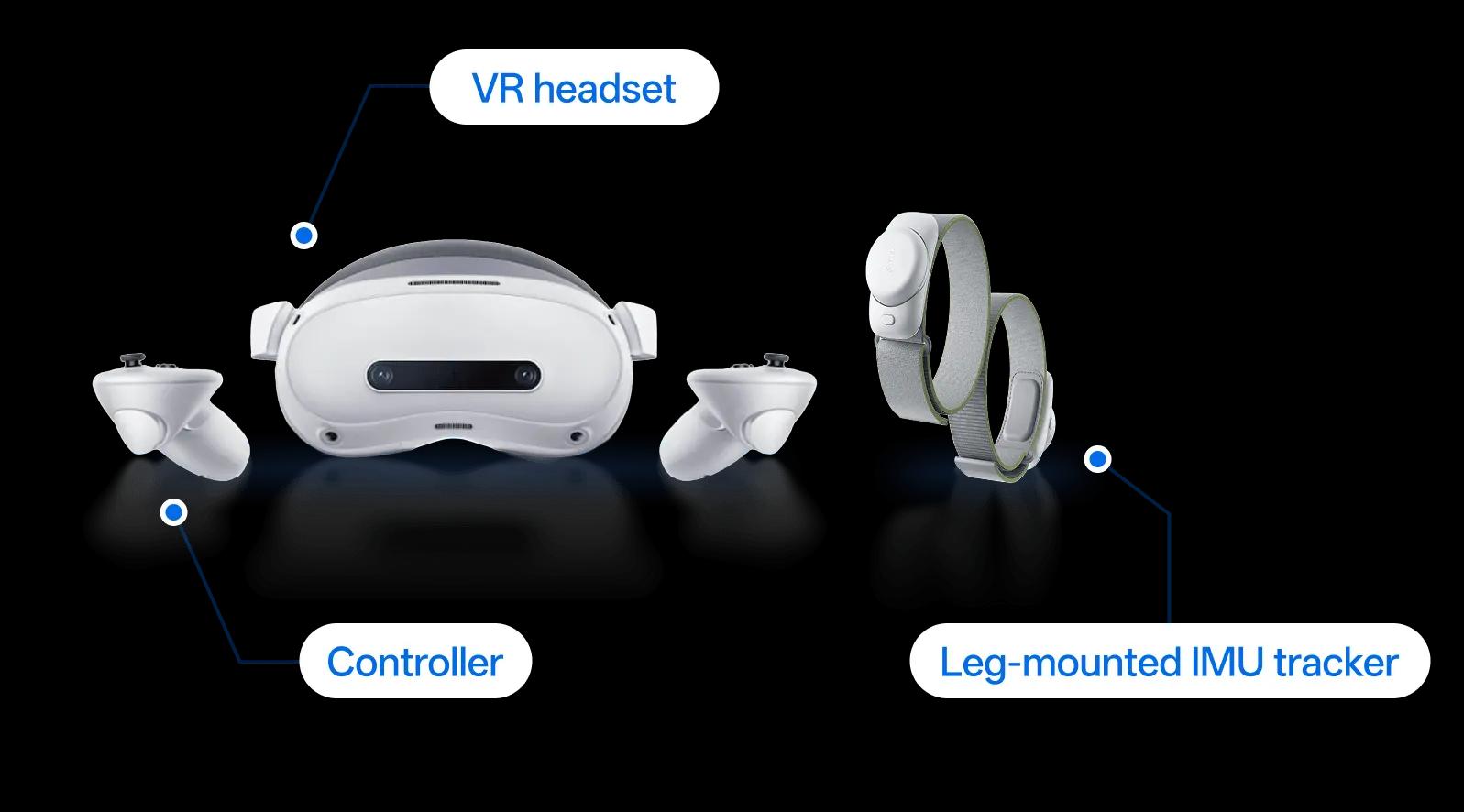
A low-latency control link transmits commands in real time and the robot responds quickly, keeping human and robot movements synchronized for smoother teleoperation.
Fully captures the operator's upper-limb operations and lower-limb movement and maps them precisely to the robot's joints for high-fidelity, consistent motion.
During teleoperation it synchronously records first-person video, pose, environmental perception and robot state, forming complete demonstration data covering scene, behaviour and control commands.
Standardized processes and reconfigurable scenarios improve the efficiency of scenario-based data collection and reduce the cost of traditional collection methods.
Project management, task assignment, progress tracking and status analysis in one place; template-based configuration creates collection tasks with one click and tracks status in real time.
Supports data collection with diverse robot and end-effector configurations and standardizes the data, so data from different devices is ready for model training.
Supports multiple robots collecting data at the same time; a high-concurrency architecture and load-balanced scheduling receive and process large data streams in real time.
Built on a highly available service architecture; data can be exported directly or converted into mainstream training formats.
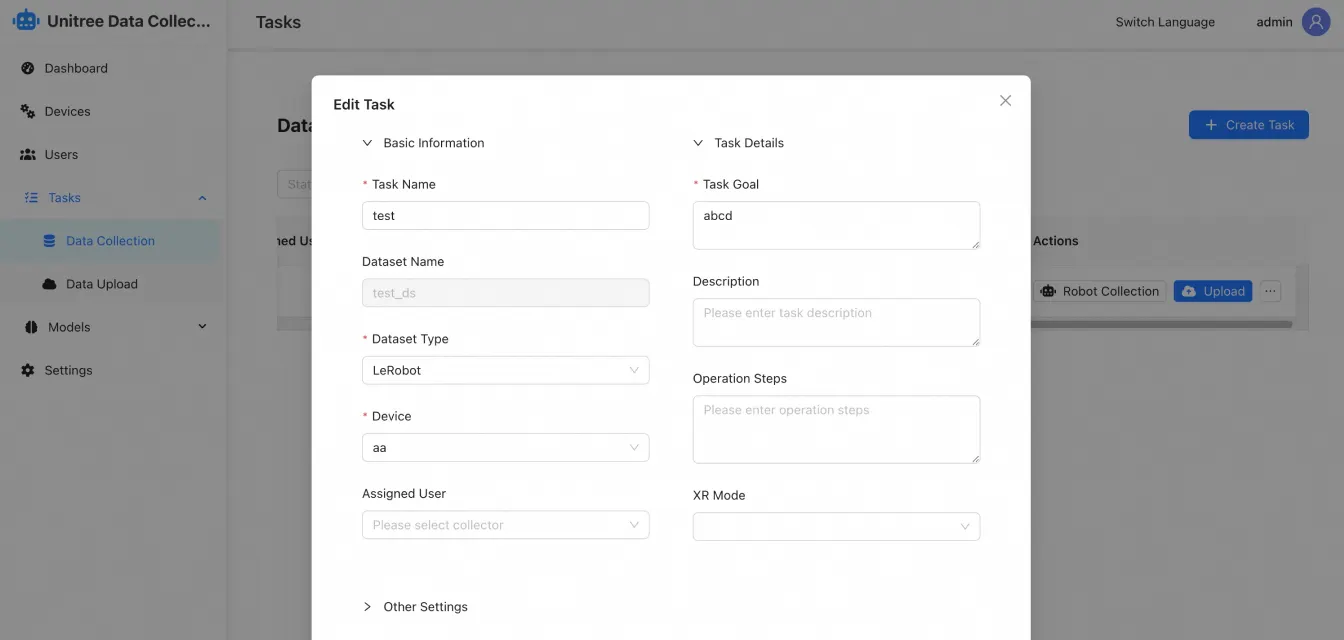
01 / 05 Task design: Establish repeatable task templates and collection standards.
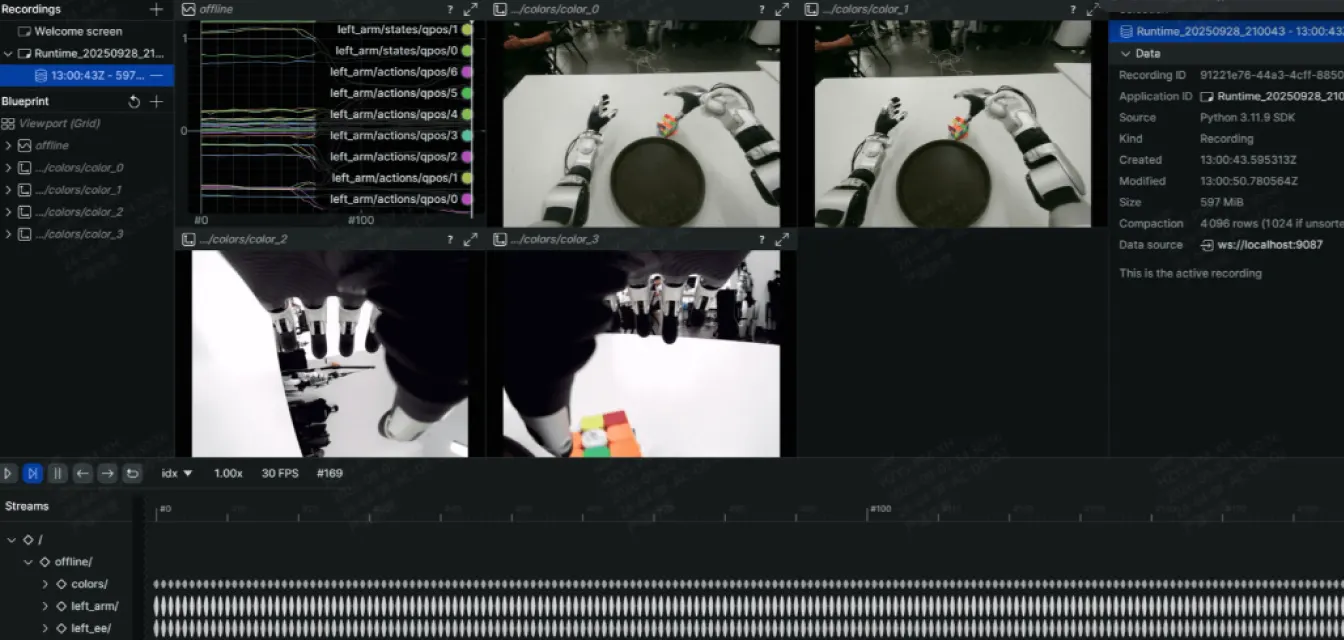
02 / 05 Embodied data collection: Synchronously collect multimodal data such as video, motion and robot state.
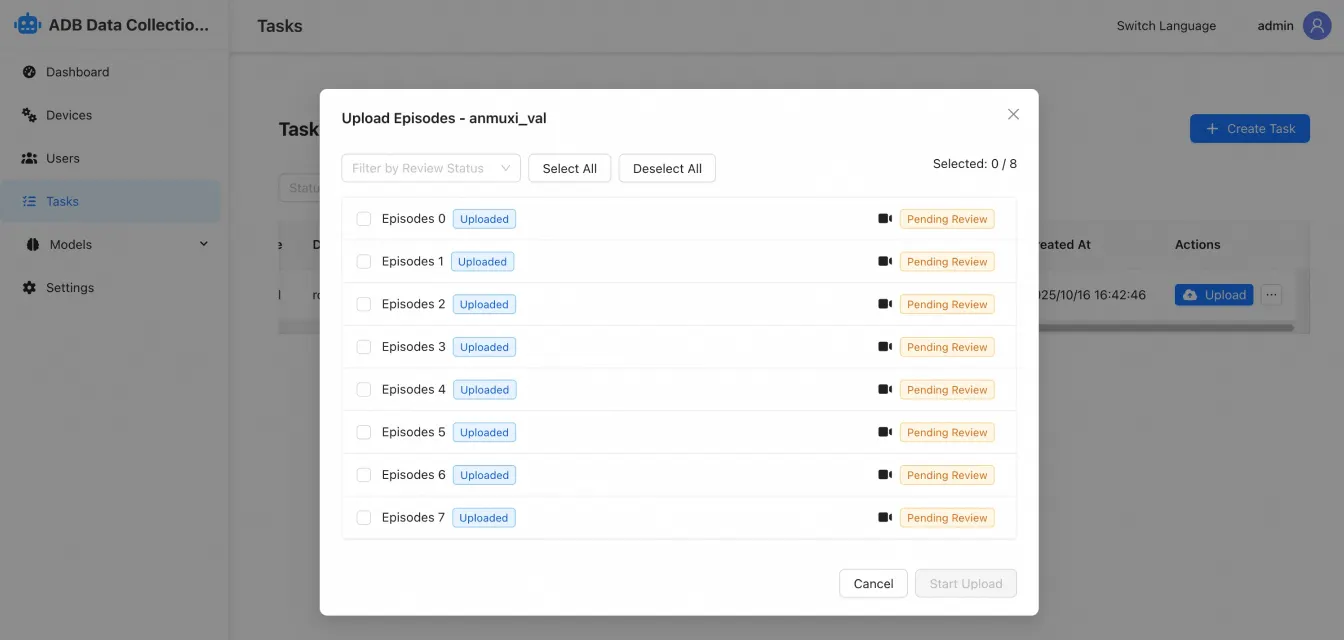
03 / 05 Quality control: Check completeness, synchronization and consistency to obtain data that meets acceptance criteria.
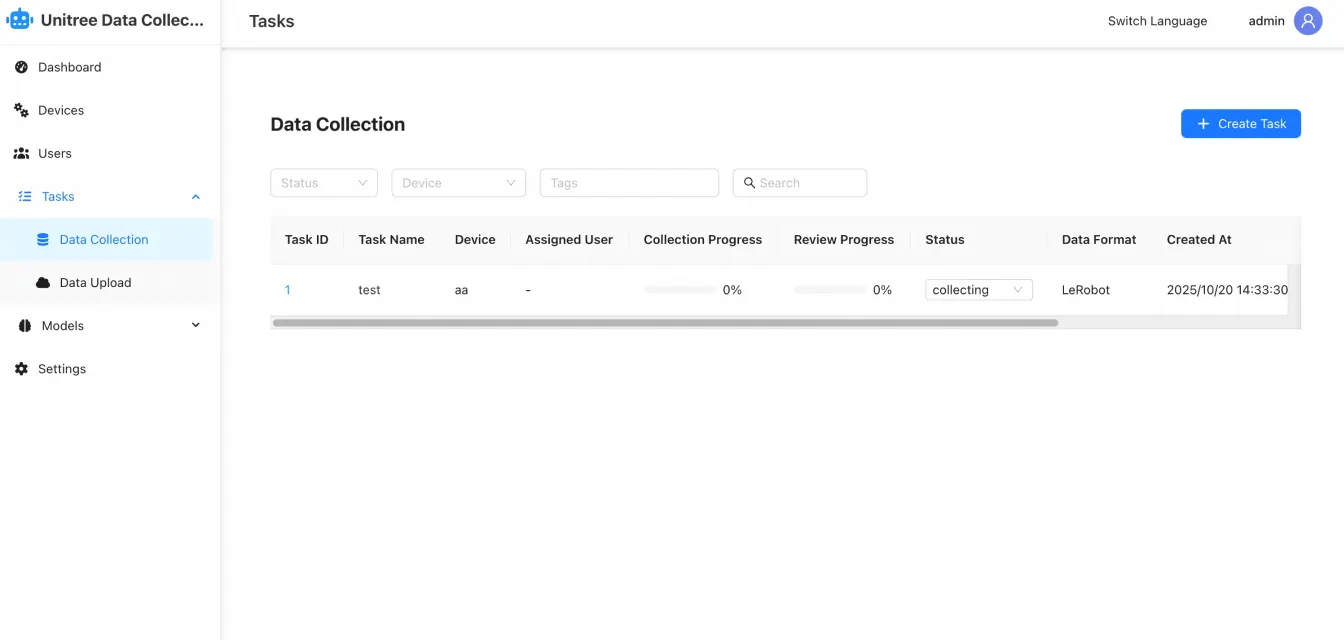
04 / 05 Data asset management: Consolidate data into categorizable, traceable, version-controlled assets.
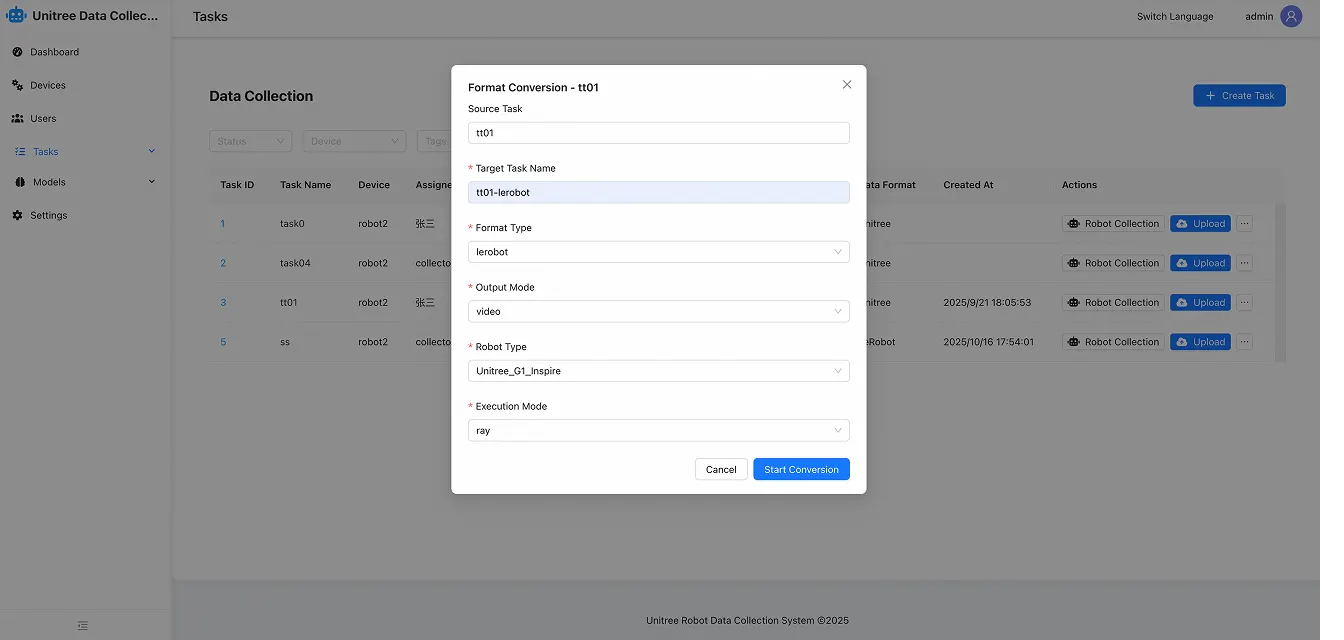
05 / 05 Training-format delivery: Output standardized data packages according to the customer's training requirements.
Supports workflows from data processing through model training, simulation evaluation and one-click deployment, integrating mainstream open-source robot model frameworks on one platform.
Built-in community datasets, training on open-source datasets and, according to Unitree, deep integration with open-source models such as PI, GR00T and Unitree UnifoLM.
A high-fidelity 3D asset library and simulation environments generate evaluation plans quickly and support algorithm validation.
Ready out of the box: "one-click training" starts model development, simulation tools evaluate it and the algorithm moves to the real robot.
A distributed training architecture schedules and parallelizes compute, scales resources with workload and, according to Unitree, reaches 90% GPU utilization.
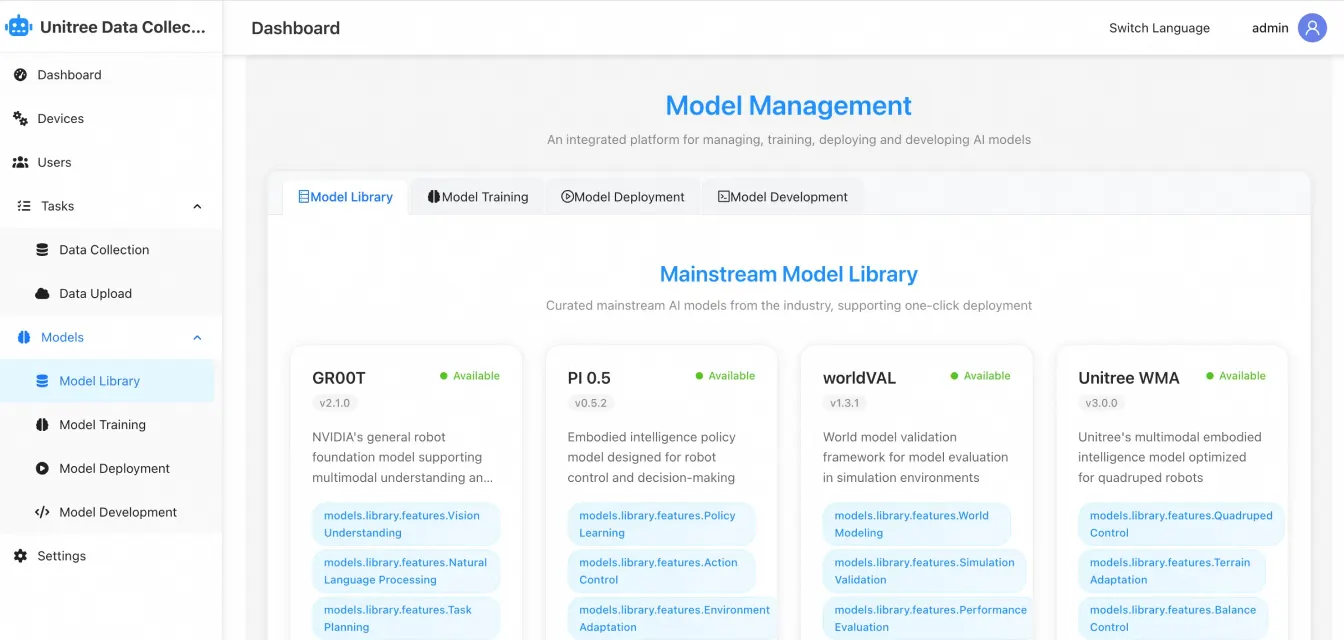
01 / 06 Model architecture selection: Select the model architecture and technical approach suited to the task.
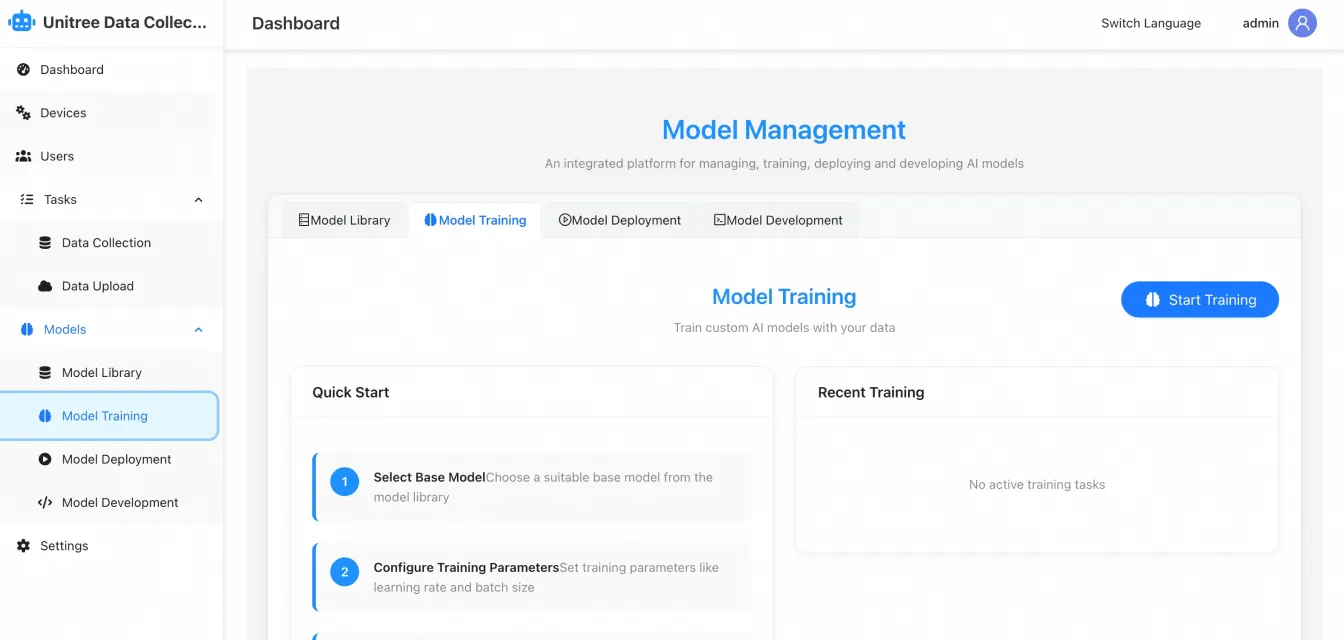
02 / 06 Training configuration: Develop a reusable, iterative training plan.
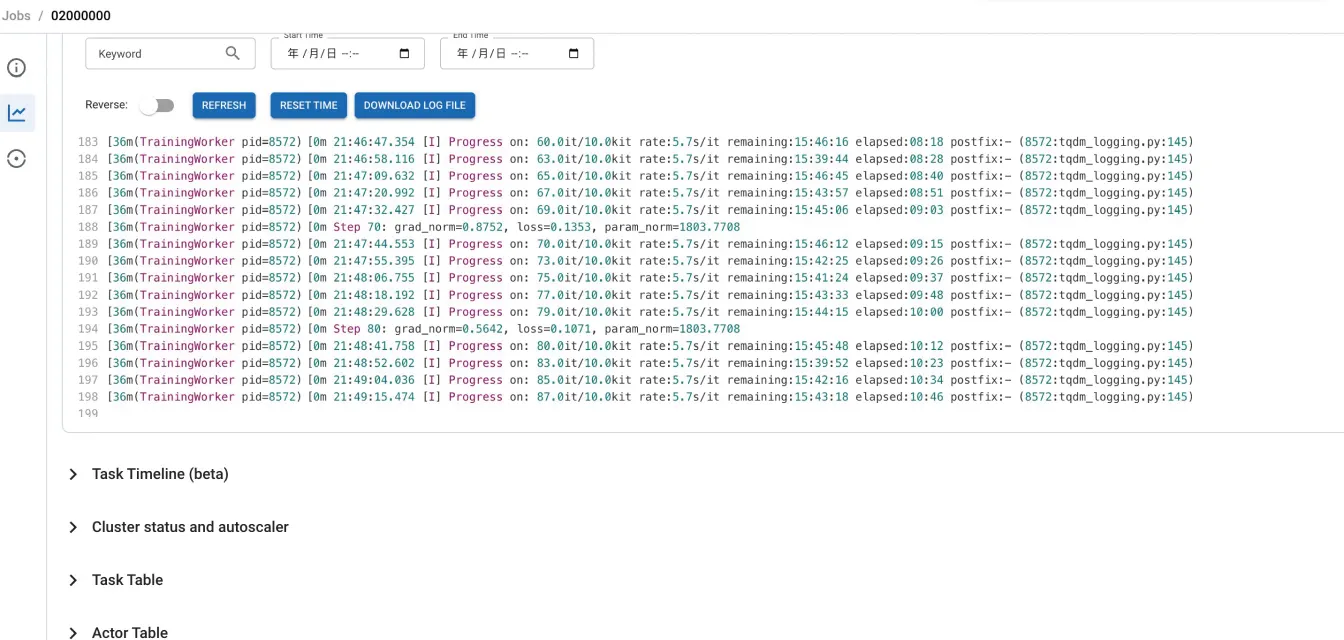
03 / 06 Real-time monitoring: Monitor training in real time and identify anomalies promptly.
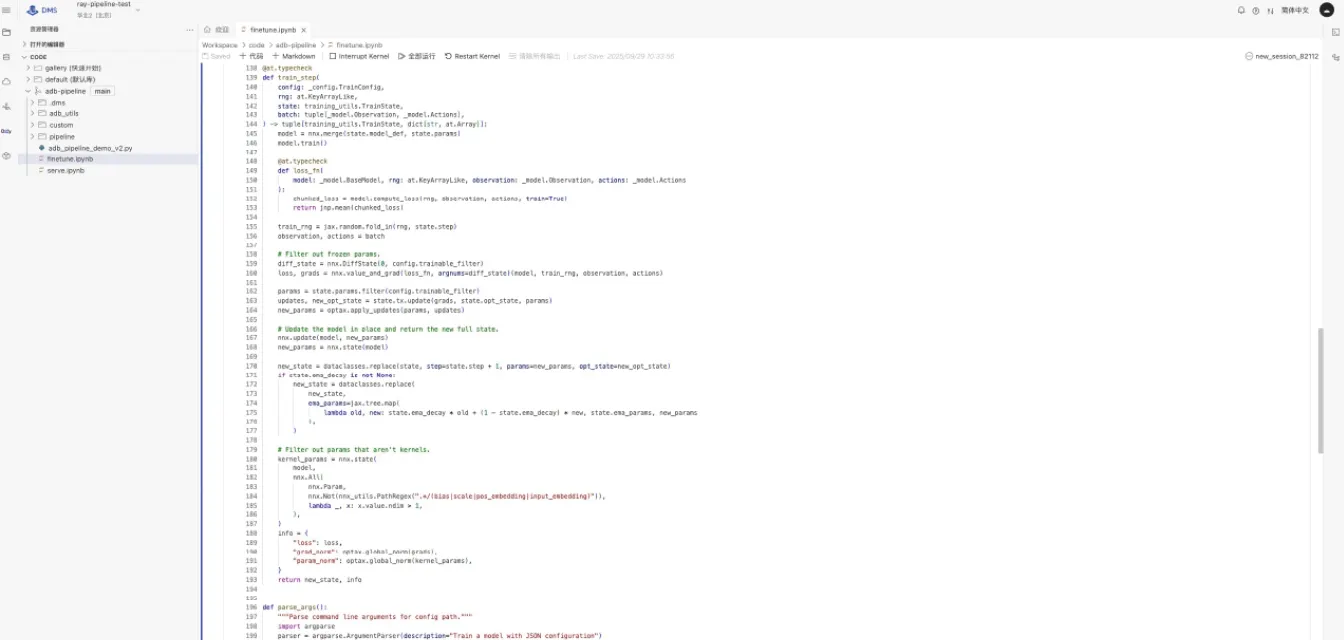
04 / 06 Parameter optimization: Fine-tune hyperparameters and model strategies to produce better-performing, more stably converging candidate models.
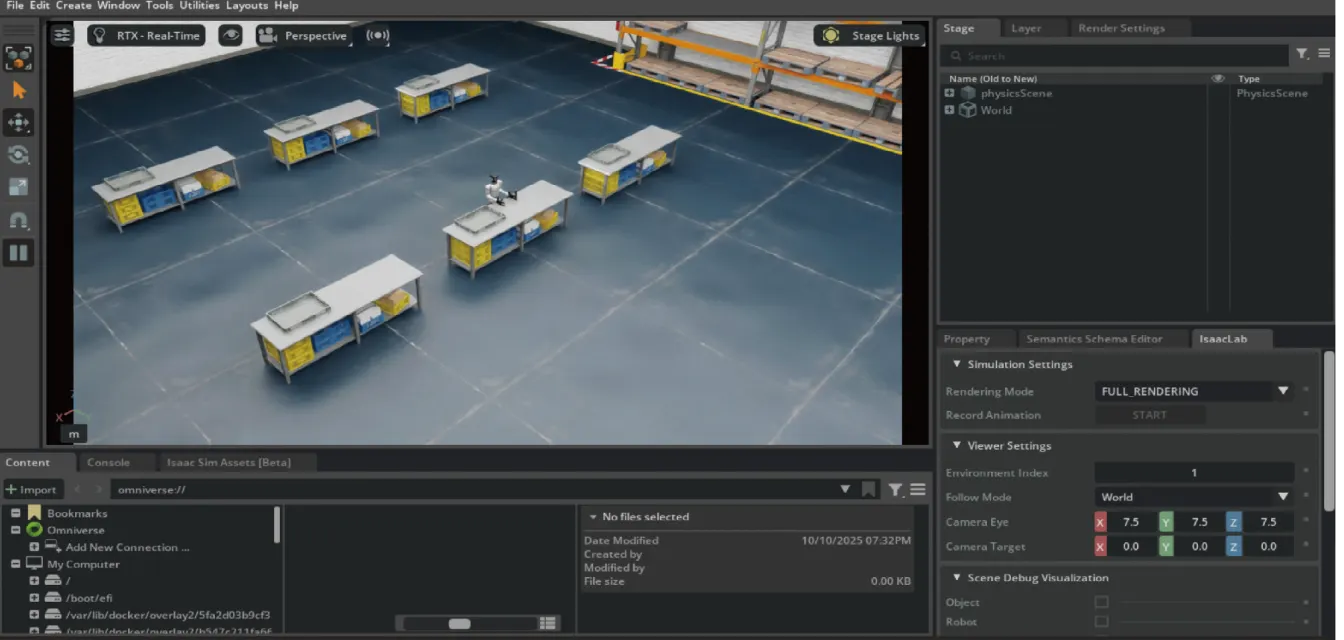
05 / 06 Simulation testing: Validate effectiveness, stability and generalization, reducing the cost of real-robot testing.
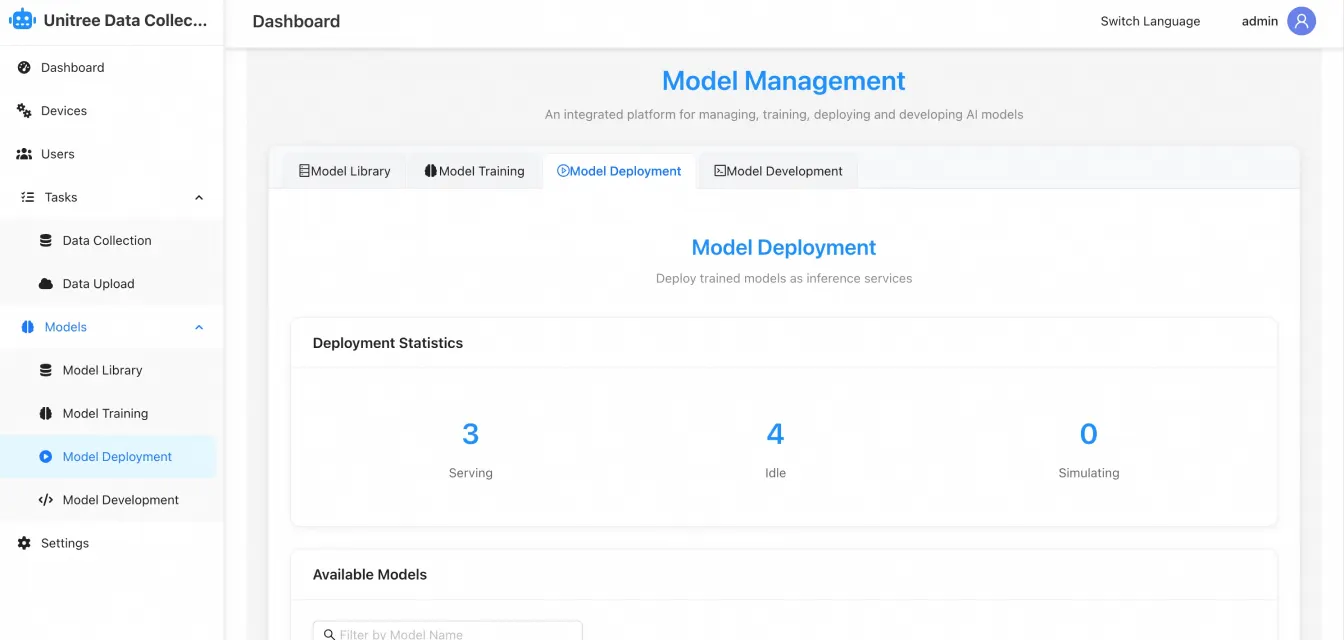
06 / 06 Model export and deployment: Produce a deployable model to run on a real robot.
Four series, six bodies. Figures are the ranges Unitree publishes; exact values depend on the chosen version.
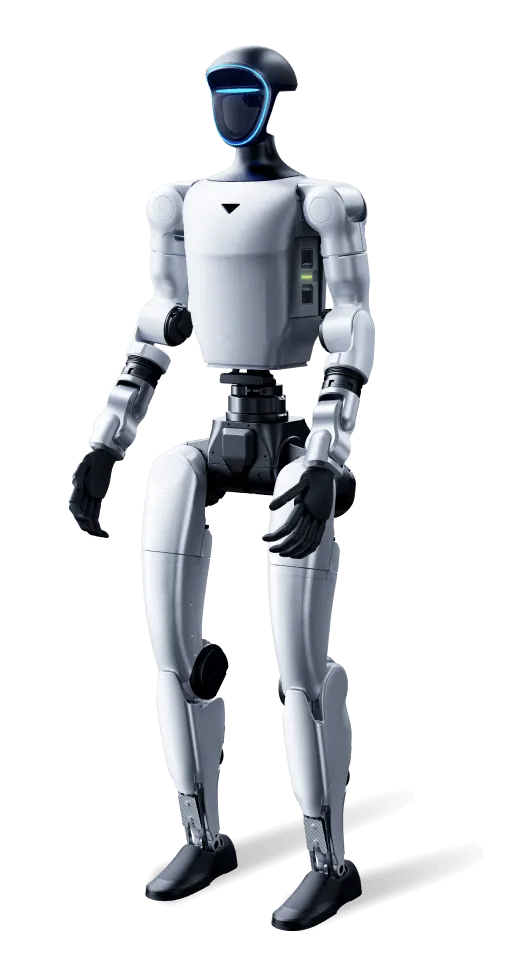
G1 Series
A highly agile humanoid platform for embodied intelligence research and commercial application validation
Full-body motion with many degrees of freedom, dexterous manipulation, multimodal perception and open development.
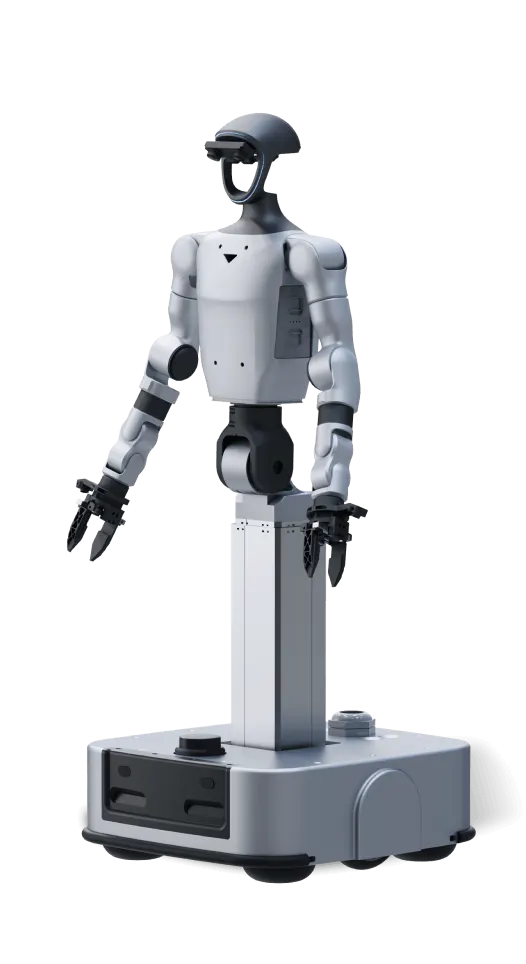
G1 Series
A highly agile humanoid platform for embodied intelligence research and commercial application validation
Multi-form-factor task deployment, an expanded workspace and stable, continuous execution.
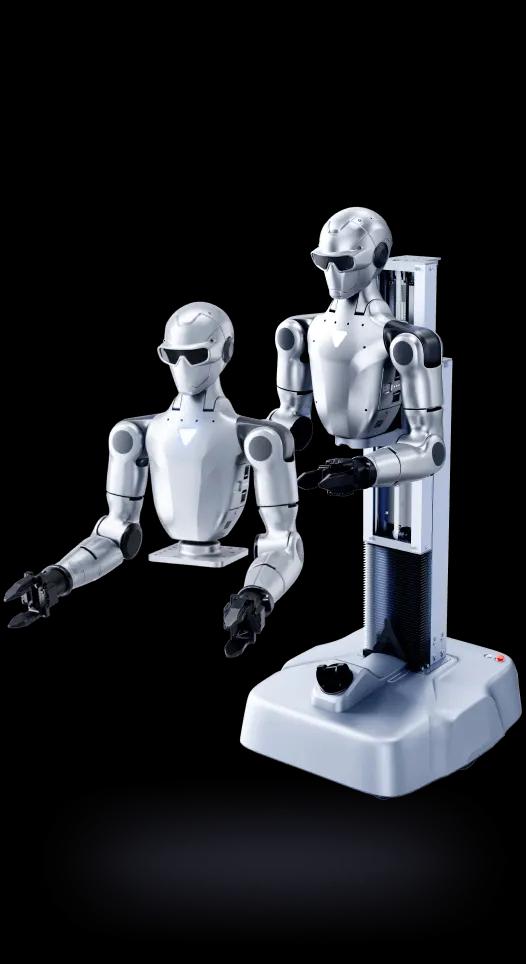
R1 Series
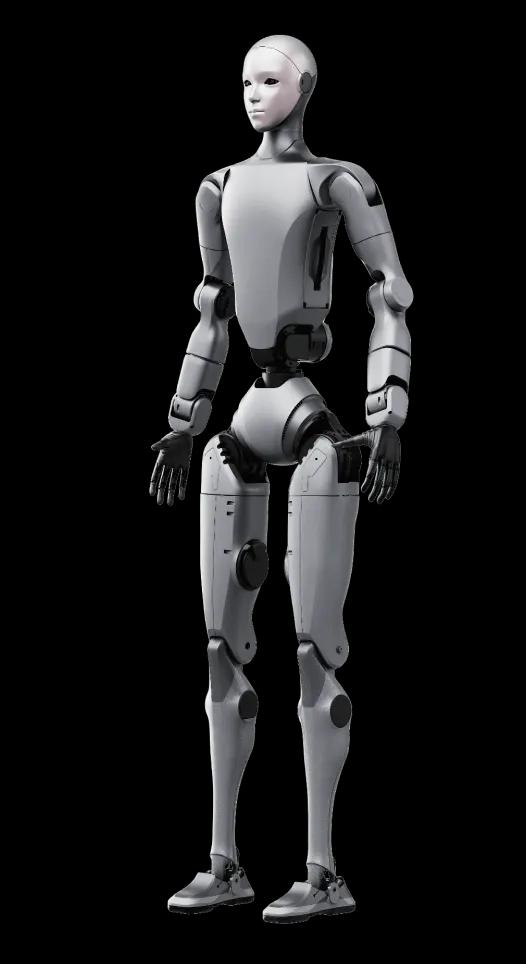
A lightweight humanoid platform for algorithm validation, teaching and commercial use
Rapid task deployment, data collection for dual-arm manipulation and open development.
H2 Series
A full-size humanoid platform for precision industrial operations and intelligent manufacturing
Human-scale suitability for industrial use, with highly dynamic and high-payload tasks.
H2 Series
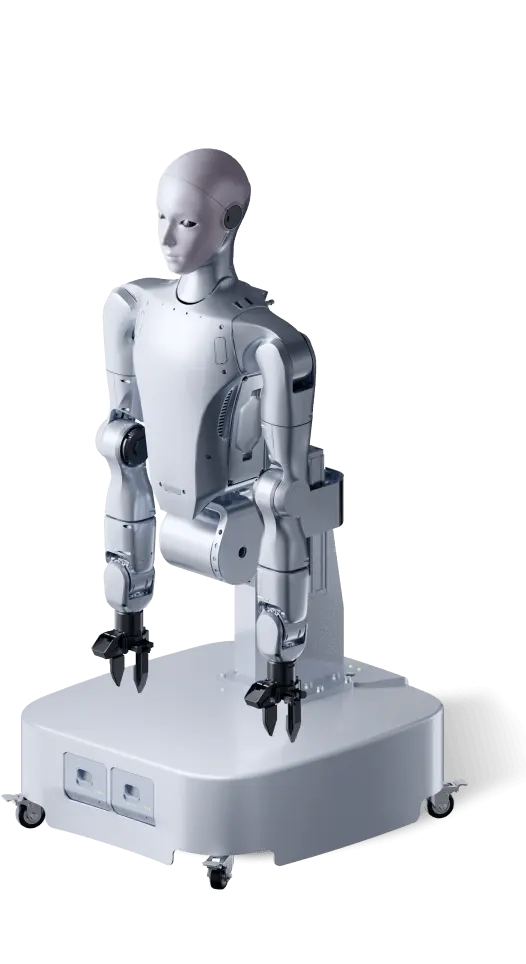
A full-size humanoid platform for precision industrial operations and intelligent manufacturing
Multi-form-factor industrial deployment, a wide workspace and stable long-duration operation.
H2-X Series
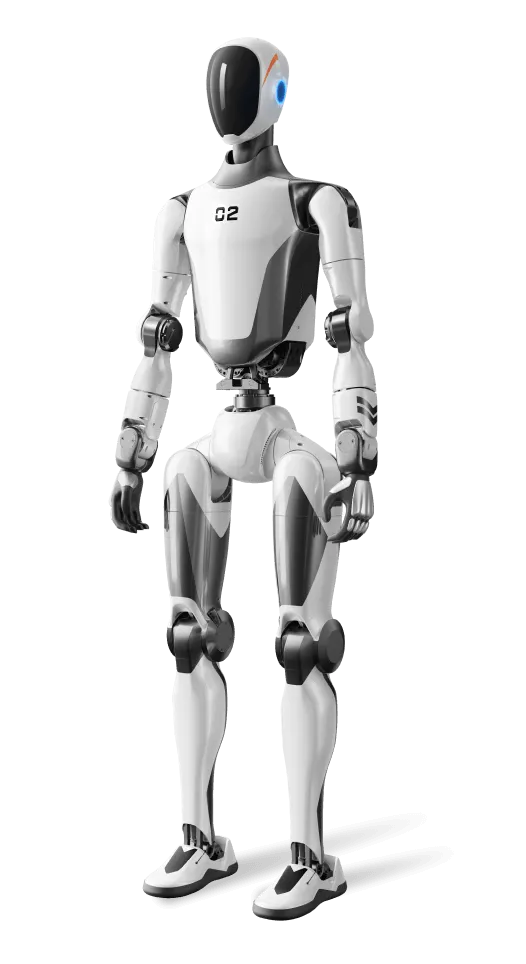
A new generation of full-size humanoids for demanding industrial applications
Exceptional mobility and an efficient power supply system.
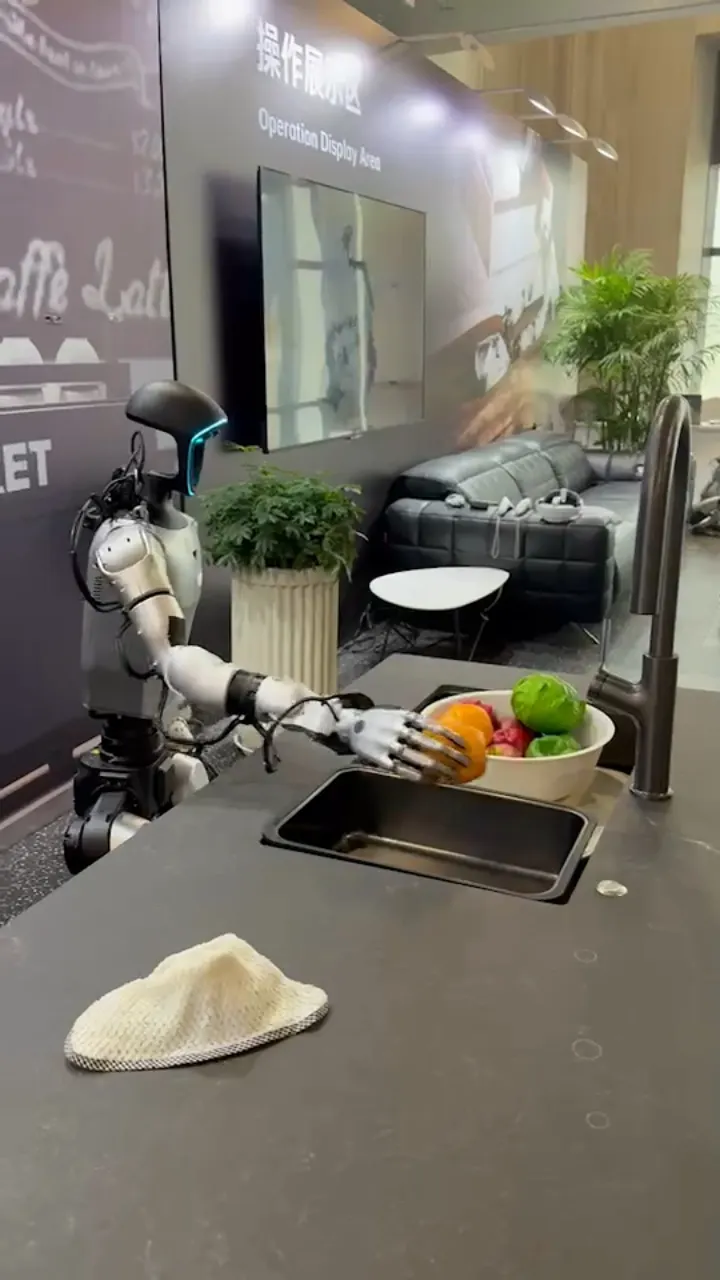
Combine components freely, with hardware and software supplied in one place. Ready-to-use infrastructure lets you focus on your core business.
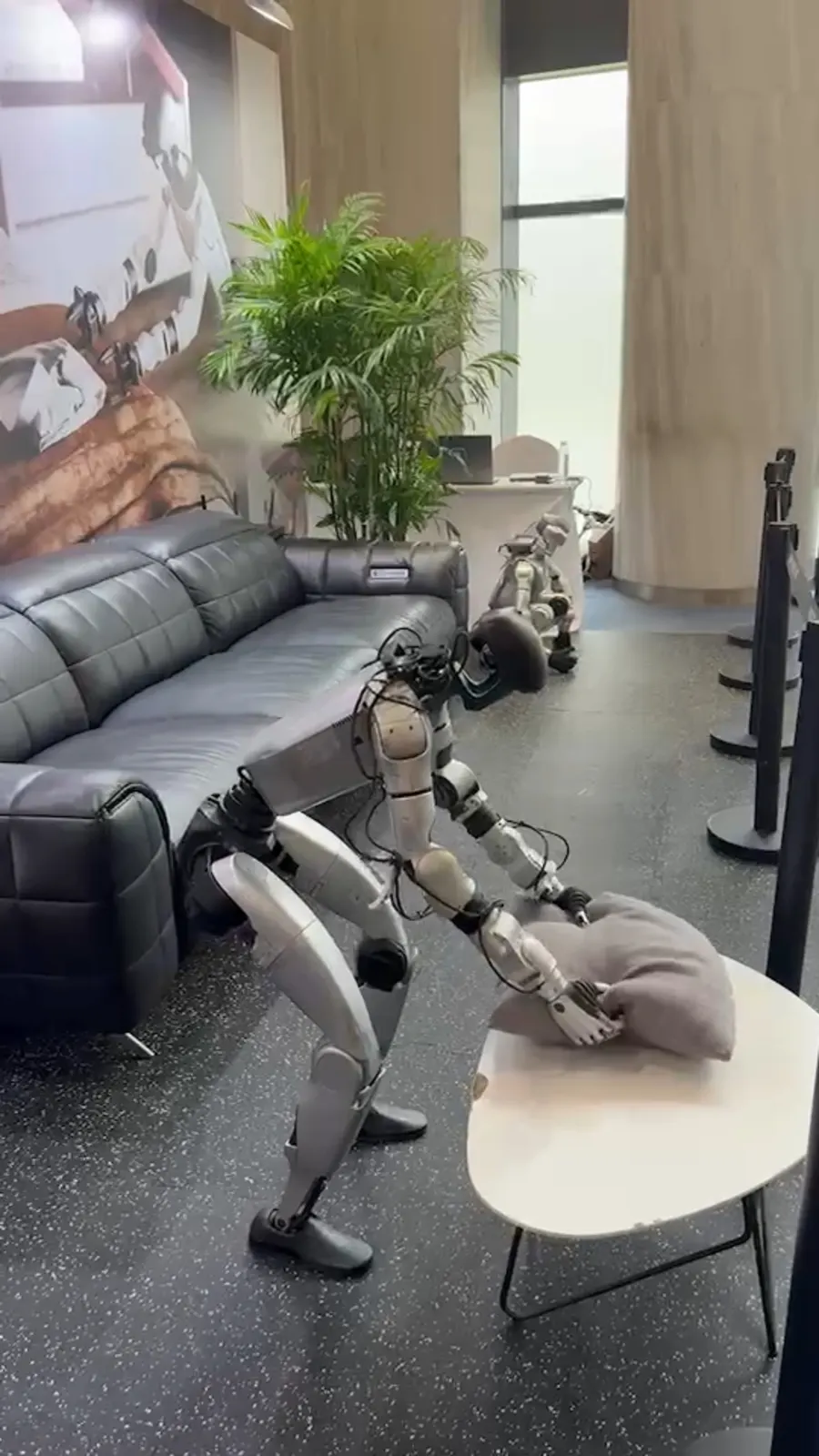
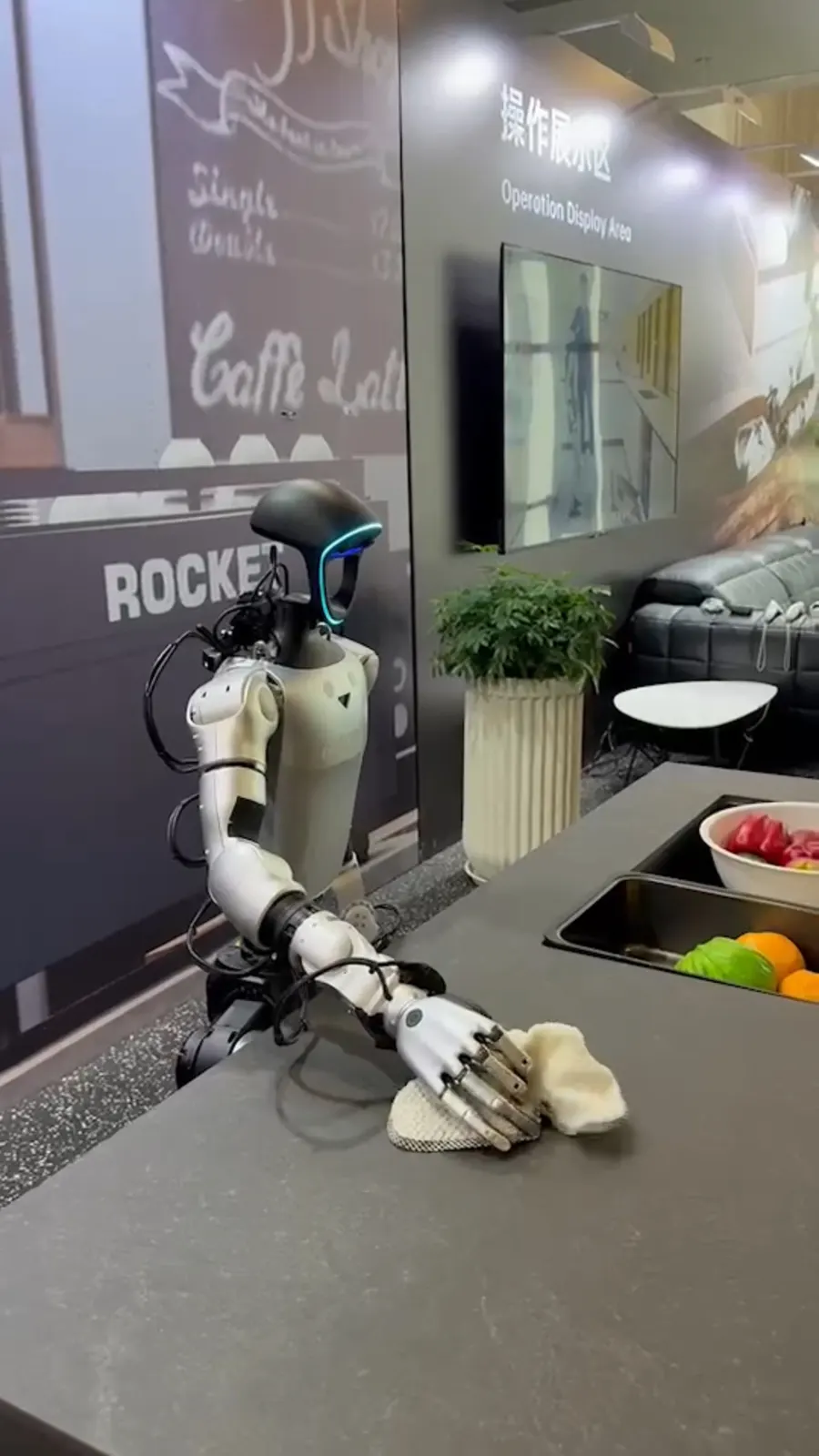
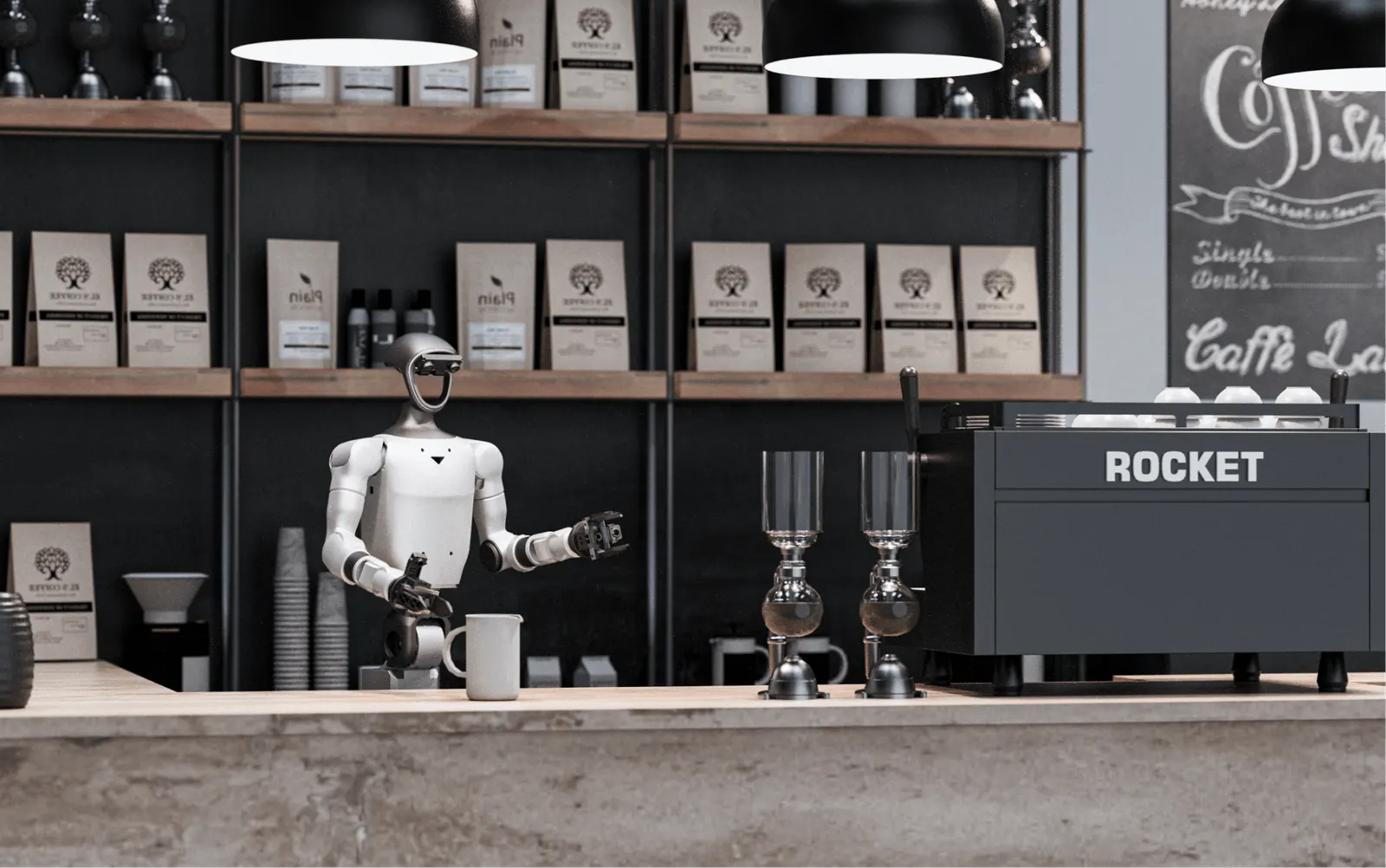
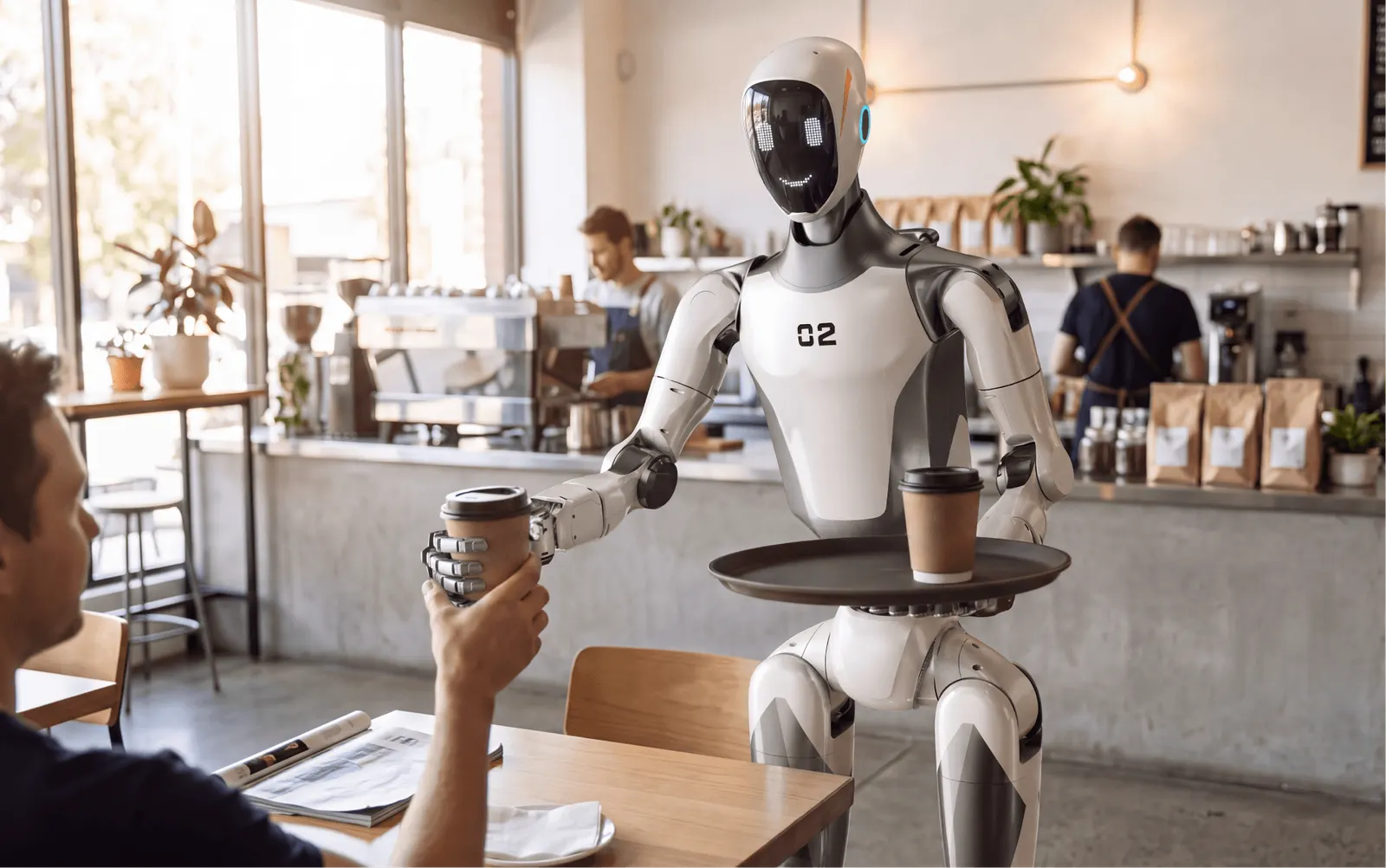
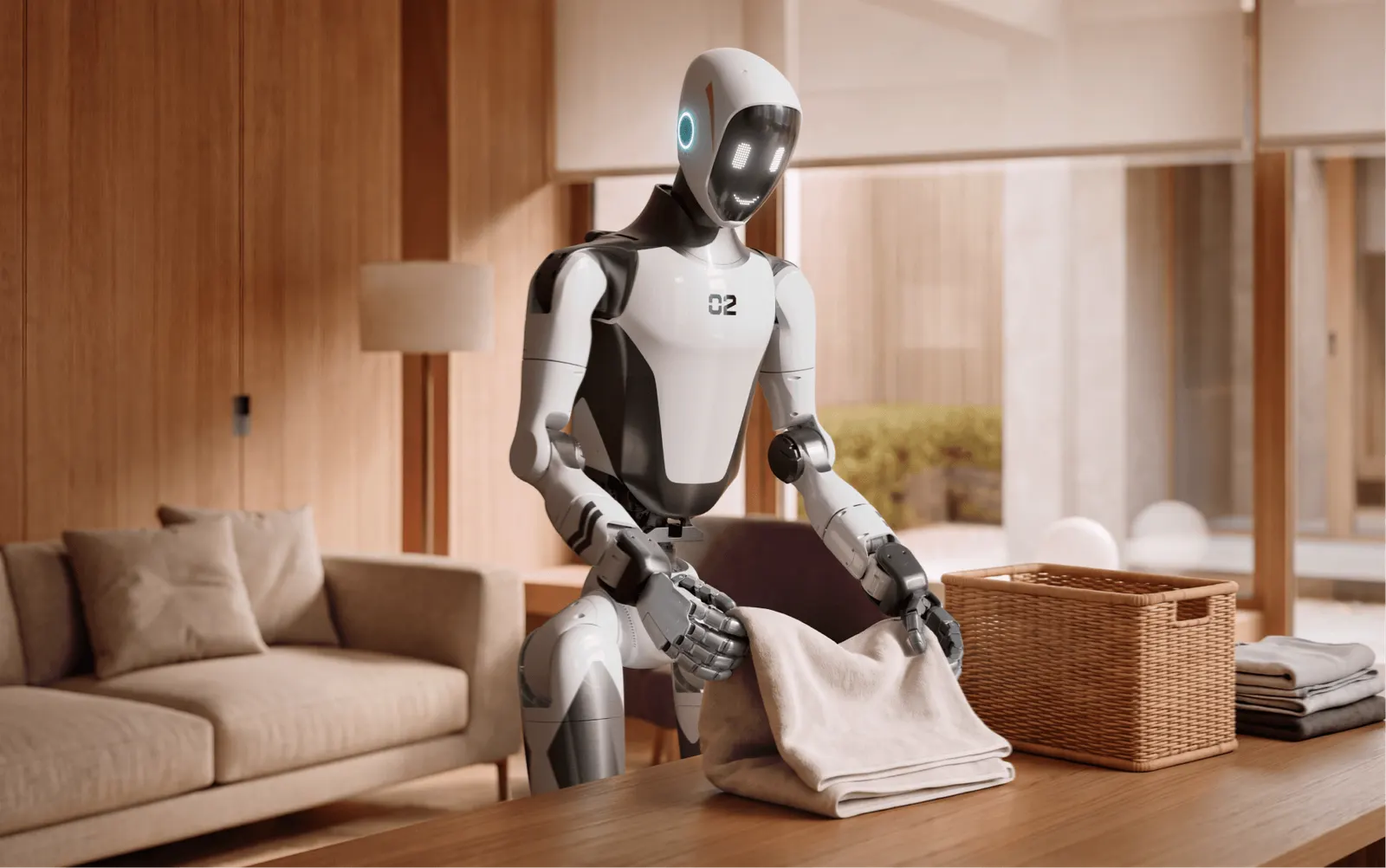

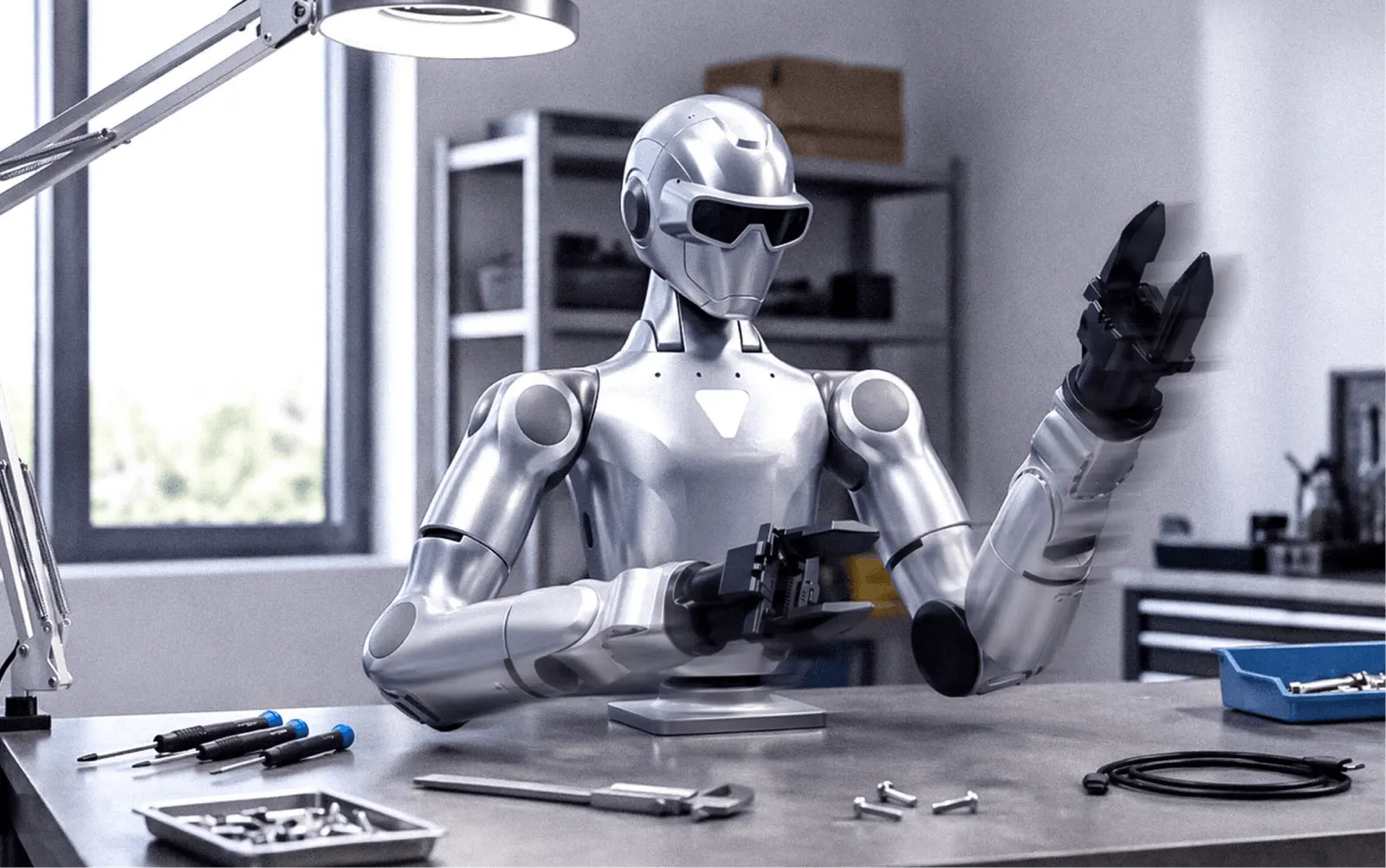
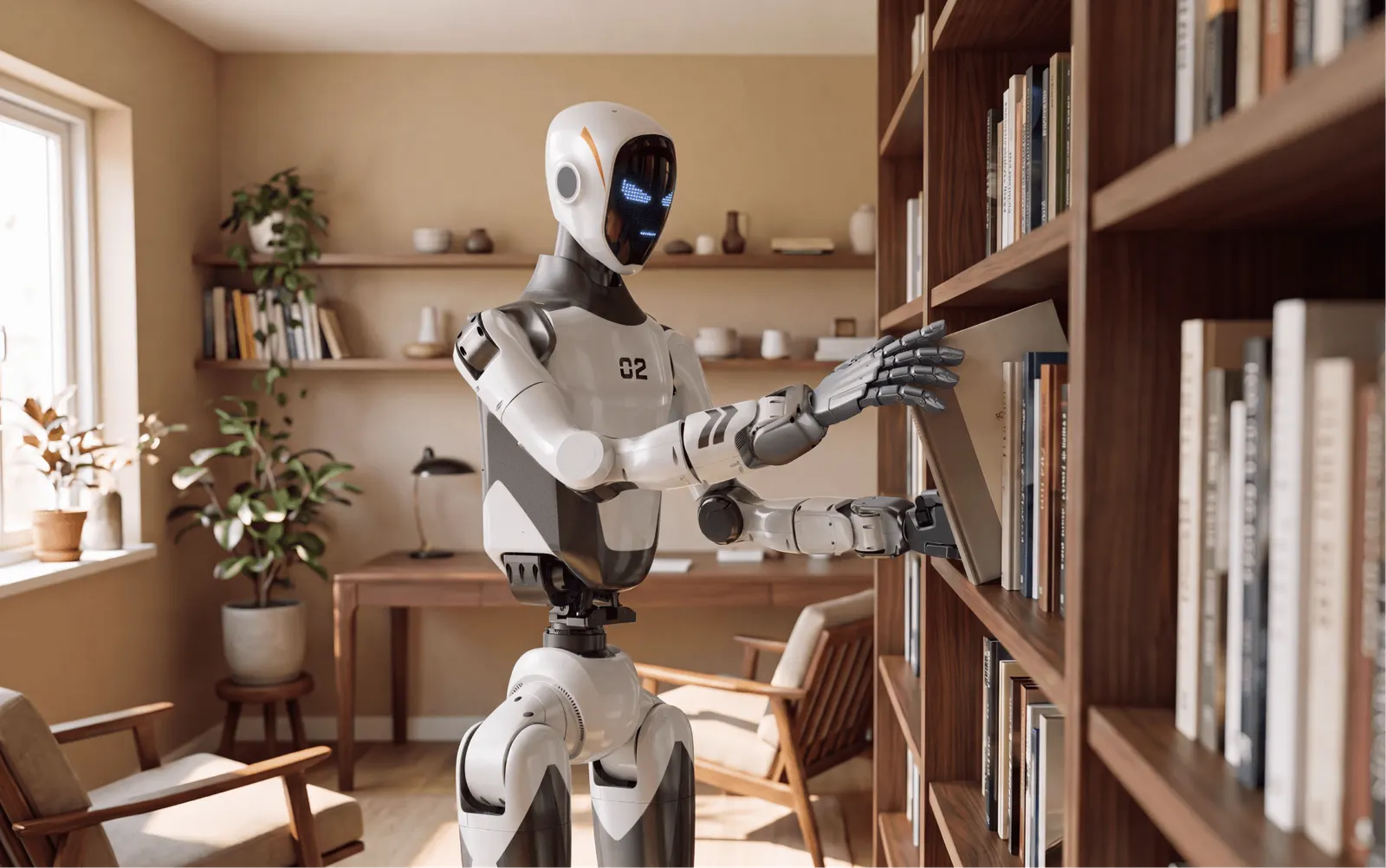
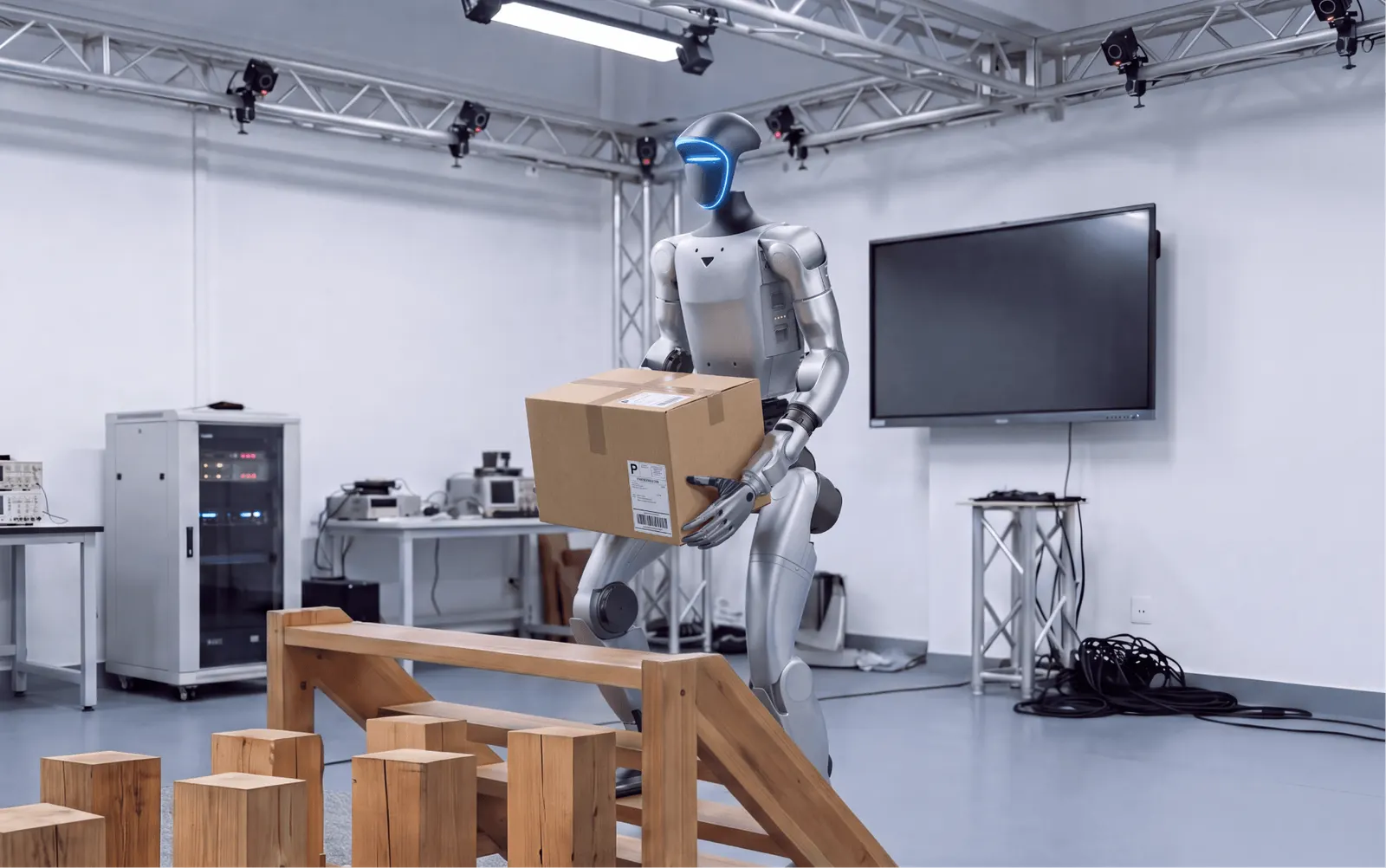
Tell us your company name, contact person and details, target robot form factor, target tasks, expected data volume and delivery timeline. We will work out the collection method, equipment combination, delivery standard and implementation plan with you.
Recording the demonstration data a humanoid robot needs to learn a task. An operator controls the robot through teleoperation while video, pose, environmental perception and robot state are recorded together. The data is then used to train models, for example through imitation learning.
Four parts: a high-precision teleoperation interface, a data collection platform (task design, quality control, data asset management), model training and inference tools, and the humanoid robot body. Configuration modules include a full-body teleoperation kit, a private data collection platform and a compute server.
By Unitree's figures, system response latency is under 100 ms and full-body motion capture latency is about 20 ms. Data is collected at 60 Hz and motion tracked at 200 Hz, with average position error of 5 cm or less and angular error of 6 degrees or less.
According to Unitree, the platform includes the ACT, PI0.5, PI0 and GR00T training algorithms, 7 UnifoLM foundation models and over 200 task datasets. See our Unitree G1 and Isaac GR00T guide for first steps.
Pricing is quoted per project based on the robot body, the teleoperation kit, data platform setup, compute server and expected data volume. Share your target tasks and timeline and we will work out the configuration with you.
Robotlar.org, Official Distributor of Unitree Robotics in Turkey
We plan data collection setups with G1-D, H2-D and the teleoperation kit for university labs, R&D centres and production sites. Our team will reach out with a configuration proposal, a quote and a live demo.