Concept scenario
Airport Runway Perimeter Bird Flock Deterrence Patrol
Scenario record: it defines the environment, the mission flow and a proposed hardware and software configuration. The list below is a configuration proposal, not an installation inventory. Field projects lists deployed systems and their measurements.
- Environment
- Indoor, public area
- Operating mode
- Supervised autonomy
- Proposed robot
- Unitree AS2
The problem addressed
Aircraft damage and flight safety risks from bird strikes at airport runways.
Draft mission flow
- 1The robot patrols autonomously in the runway perimeter security zone; detects bird flocks with radar and camera.
- 2Bird species classified; high-risk large species for jet engines (geese, gulls) generate priority alarm.
- 3Species-specific threat sounds (predator bird calls) directed with bio-acoustic deterrent; supported by LED strobe.
- 4Instant bird risk report transmitted to ATC system; runway approach warning given when necessary.
Proposed hardware
- HD PTZ Camera
- Directional Acoustic Deterrent (Bio-Acoustic)
- LED Strobe
- Radar Bird Detector
Proposed software
- Navigation
- Aviation authority approved autonomous route in runway perimeter security zone
- Model
- Bird Species Classification and Flock Size Estimation; Deterrence Strategy by Risk Level
- Integration
- Air Traffic Control (ATC) System and Airport Operations Center
The robot's real operating limits
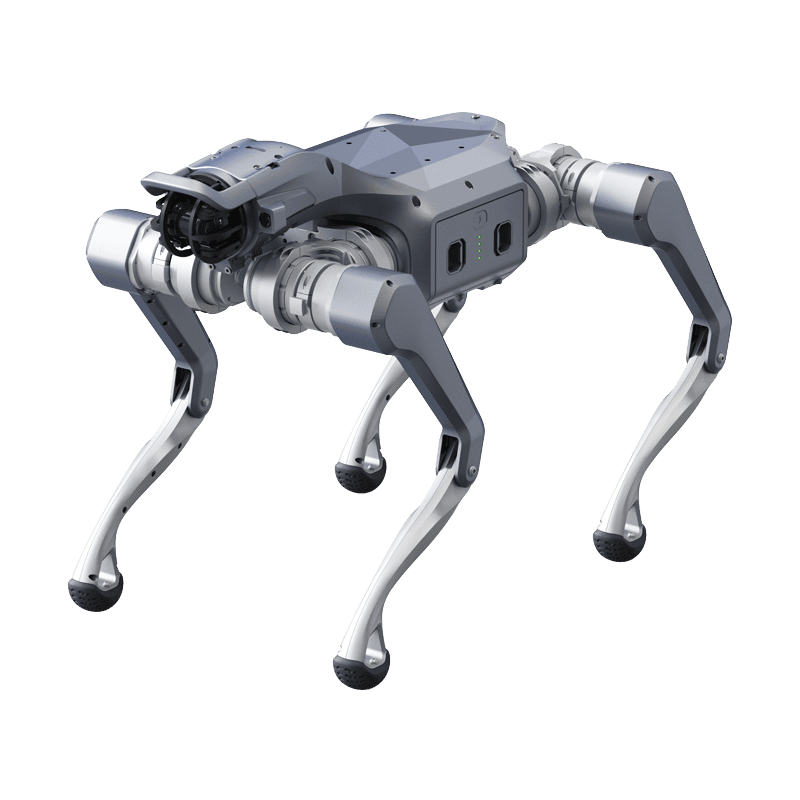
Unitree AS2
Compact industrial robot dog
Product page- Ingress rating
- IP54
- Runtime
- >4 hours (No load)
- Operating temperature
- -20°C to 50°C
- Payload
- Up to 65 kg
- Max speed
- >5 m/s
- Climb
- 40°
Values are manufacturer data. Scenario fit is determined by comparing these limits with site conditions.
From scenario to installation
Feasibility is determined by the site survey: floor and route, network coverage, the charging point, intervention responsibilities and the conditions under which the robot must stop. The survey report defines the scope, the constraints and the commissioning steps.