City Lighting Pole Fault Detection and Energy Theft Audit
Scenario record: it defines the environment, the mission flow and a proposed hardware and software configuration. The list below is a configuration proposal, not an installation inventory. Field projects lists deployed systems and their measurements.
- Environment
- Outdoor field
- Operating mode
- Supervised autonomy
- Proposed robot
- Unitree A2
The problem addressed
Massive human resources needed for fault detection of thousands of lighting poles and oversight of energy theft.
Draft mission flow
- 1The robot patrols autonomously on city streets at night; scans lighting performance of each pole with optical camera and lux meter.
- 2Marks non-functional, flickering, or sub-standard illuminating poles with GPS coordinates.
- 3Reads electrical consumption of poles with clamp meter to identify points with higher than expected (theft) or lower than expected (fault) consumption.
- 4Automatic fault notification and theft suspicion report transmitted to municipal smart city platform.
Proposed hardware
- High Resolution Optical Camera
- Lux Meter Sensor
- Electrical Current Clamp Meter
- RTK-GPS
Proposed software
- Navigation
- Nighttime autonomous long-range patrol on urban sidewalks and roadsides
- Model
- Illumination Level Anomaly Detection and Illegal Power Consumption Pattern Analysis
- Integration
- Municipal Smart City Lighting Management Platform
The robot's real operating limits
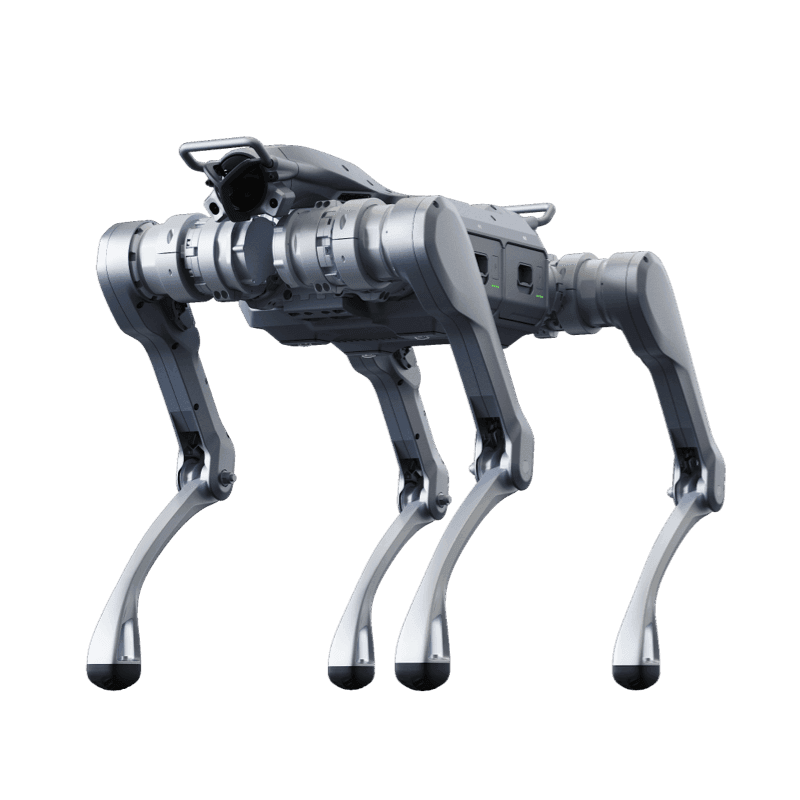
Unitree A2
Industrial robot dog: 100 kg static payload
Product page- Ingress rating
- IP56-IP67
- Runtime
- >5 hours (No load) / >3 hours (25kg Load)
- Operating temperature
- -20°C to 55°C
- Payload
- 100 kg
- Max speed
- 5 m/s
- Climb
- 45°
Values are manufacturer data. Scenario fit is determined by comparing these limits with site conditions.
From scenario to installation
Feasibility is determined by the site survey: floor and route, network coverage, the charging point, intervention responsibilities and the conditions under which the robot must stop. The survey report defines the scope, the constraints and the commissioning steps.