Festival Area Lost Child Finding and Guidance Robot
Scenario record: it defines the environment, the mission flow and a proposed hardware and software configuration. The list below is a configuration proposal, not an installation inventory. Field projects lists deployed systems and their measurements.
- Environment
- Outdoor field
- Operating mode
- Supervised autonomy
- Proposed robot
- Unitree A2
The problem addressed
Inability to quickly resolve lost child cases at large festivals; parent panic and security concerns.
Draft mission flow
- 1The robot patrols the festival area detecting alone, crying, or confused-looking children with AI.
- 2Approaches detected child with child-friendly tone of voice; builds trust by showing 'help' animations on LED display.
- 3Child's photo sent to security coordination center; parent matching performed in lost child notification network.
- 4Robot stays with the child or escorts to nearest security point until parent found.
Proposed hardware
- HD Face Camera
- Multi-Language Speaker
- LED Display
- 5G Communication
Proposed software
- Navigation
- Safe and child-friendly slow speed SLAM within festival crowd
- Model
- Alone/Crying Child Detection and Parent Matching (Clothing Color/Face Similarity)
- Integration
- Festival Security Coordination Center and Lost Child Notification Network
The robot's real operating limits
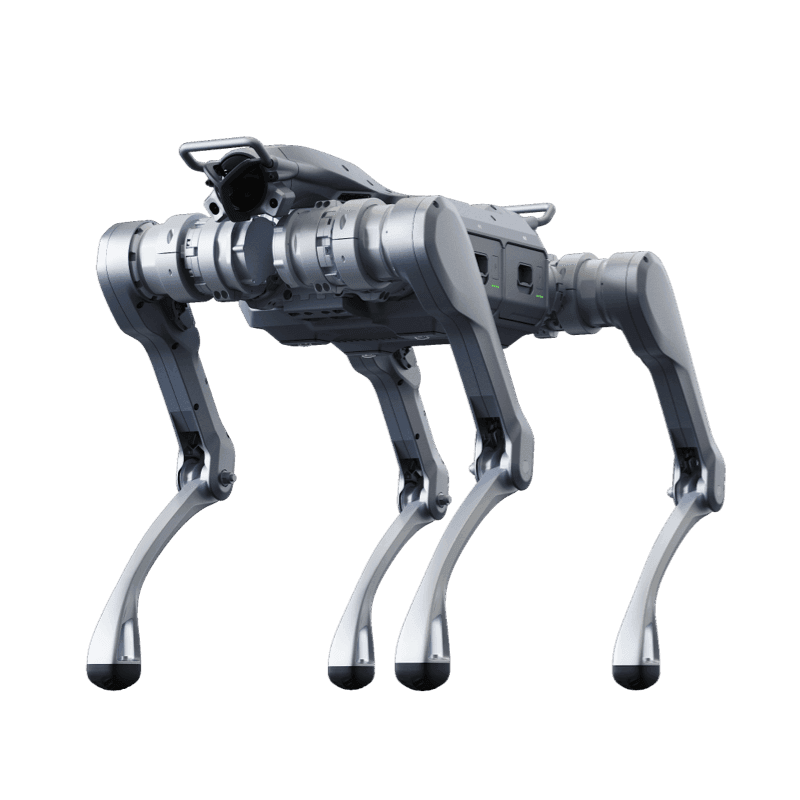
Unitree A2
Industrial robot dog: 100 kg static payload
Product page- Ingress rating
- IP56-IP67
- Runtime
- >5 hours (No load) / >3 hours (25kg Load)
- Operating temperature
- -20°C to 55°C
- Payload
- 100 kg
- Max speed
- 5 m/s
- Climb
- 45°
Values are manufacturer data. Scenario fit is determined by comparing these limits with site conditions.
From scenario to installation
Feasibility is determined by the site survey: floor and route, network coverage, the charging point, intervention responsibilities and the conditions under which the robot must stop. The survey report defines the scope, the constraints and the commissioning steps.