Municipal Park Night Security and Vandalism Prevention
Scenario record: it defines the environment, the mission flow and a proposed hardware and software configuration. The list below is a configuration proposal, not an installation inventory. Field projects lists deployed systems and their measurements.
- Environment
- Outdoor field
- Operating mode
- Supervised autonomy
- Proposed robot
- Unitree A2
The problem addressed
Vandalism, environmental destruction, and security threats in parks during nighttime hours.
Draft mission flow
- 1The robot patrols autonomously in park areas throughout the night; detects vandalism acts with thermal and night vision camera.
- 2Behaviors like spray painting, bench/lighting breaking or flower bed destruction detected by AI.
- 3Deterrent alarm with siren and LED strobe when vandalism detected; live footage transmitted to enforcement center.
- 4Night patrol summary and damage report presented to municipal parks directorate in the morning.
Proposed hardware
- Radiometric Thermal Camera
- HD Night Vision Camera
- High Decibel Siren
- LED Strobe
Proposed software
- Navigation
- Night autonomous patrol SLAM on park walkways and playgrounds
- Model
- Vandalism Behavior Detection (Spray Painting, Breaking, Removal) and Suspicious Gathering Analysis
- Integration
- Municipal Enforcement Center and Smart City Security Platform
The robot's real operating limits
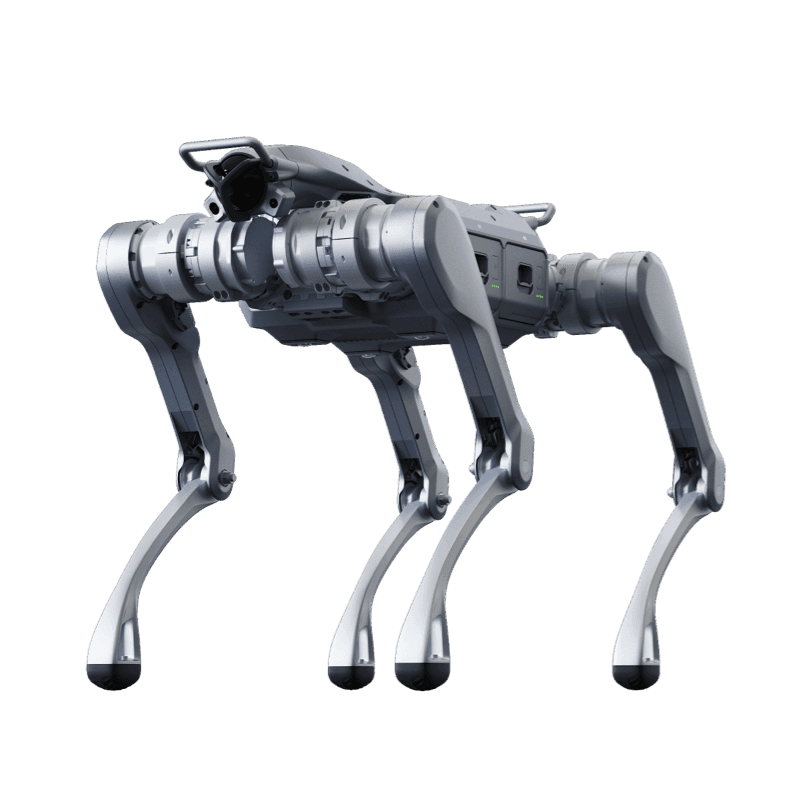
Unitree A2
Industrial robot dog: 100 kg static payload
Product page- Ingress rating
- IP56-IP67
- Runtime
- >5 hours (No load) / >3 hours (25kg Load)
- Operating temperature
- -20°C to 55°C
- Payload
- 100 kg
- Max speed
- 5 m/s
- Climb
- 45°
Values are manufacturer data. Scenario fit is determined by comparing these limits with site conditions.
From scenario to installation
Feasibility is determined by the site survey: floor and route, network coverage, the charging point, intervention responsibilities and the conditions under which the robot must stop. The survey report defines the scope, the constraints and the commissioning steps.