Concept scenario
Gym and Pool Air Quality (CO₂/Chlorine) Monitoring
Scenario record: it defines the environment, the mission flow and a proposed hardware and software configuration. The list below is a configuration proposal, not an installation inventory. Field projects lists deployed systems and their measurements.
- Environment
- Indoor, public area
- Operating mode
- Supervised autonomy
- Proposed robot
- Unitree AS2
The problem addressed
CO₂ buildup during peak hours in gyms and chlorine gas exposure in pool areas.
Draft mission flow
- 1The robot patrols autonomously in gym areas and around indoor pool; continuously measures CO₂, chlorine gas, humidity, and temperature.
- 2Monitors CO₂ level exceeding health threshold (1000ppm) during peak exercise hours; sends fan increase command to HVAC.
- 3Checks chlorine gas concentration in pool area; alarm and ventilation increase triggered at respiratory risk threshold.
- 4Hourly air quality report transmitted to facility management system; correlation analysis with member satisfaction score conducted.
Proposed hardware
- CO₂ Sensor (NDIR)
- Chlorine Gas Detector
- Humidity/Temperature Sensor
- Compact LiDAR
Proposed software
- Navigation
- Gym floor areas and pool perimeter wet floor compatible navigation
- Model
- Air Quality Comfort Index and HVAC Performance Correlation
- Integration
- Facility Management System and HVAC Automation
The robot's real operating limits
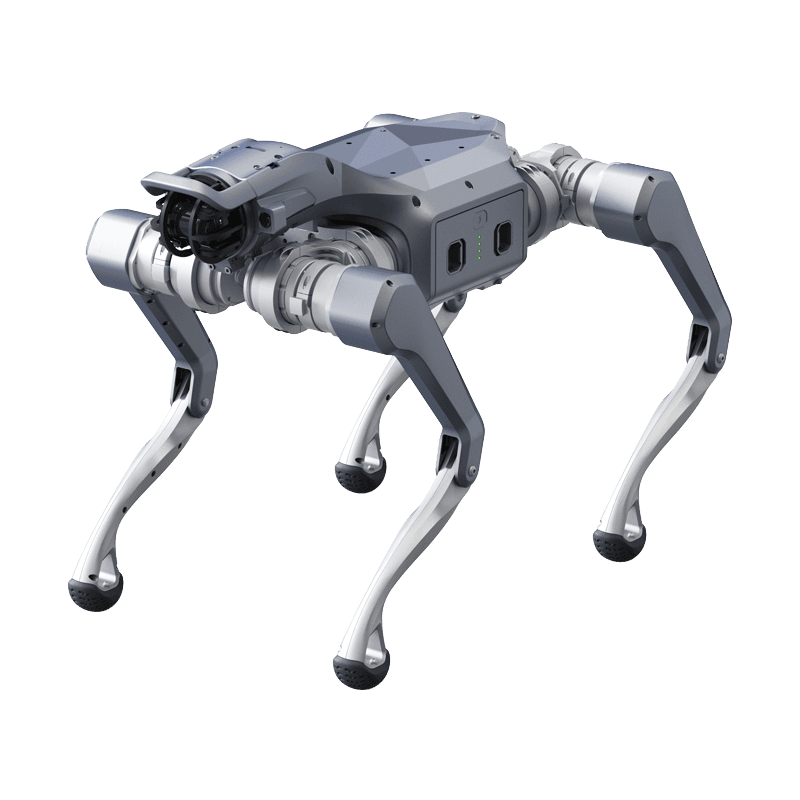
Unitree AS2
Compact industrial robot dog
Product page- Ingress rating
- IP54
- Runtime
- >4 hours (No load)
- Operating temperature
- -20°C to 50°C
- Payload
- Up to 65 kg
- Max speed
- >5 m/s
- Climb
- 40°
Values are manufacturer data. Scenario fit is determined by comparing these limits with site conditions.
From scenario to installation
Feasibility is determined by the site survey: floor and route, network coverage, the charging point, intervention responsibilities and the conditions under which the robot must stop. The survey report defines the scope, the constraints and the commissioning steps.