Wastewater Treatment Plant Hydrogen Sulfide and Toxic Gas Inspection
Scenario record: it defines the environment, the mission flow and a proposed hardware and software configuration. The list below is a configuration proposal, not an installation inventory. Field projects lists deployed systems and their measurements.
- Environment
- Outdoor field
- Operating mode
- Supervised autonomy
- Proposed robot
- Unitree A2
The problem addressed
H₂S poisoning causing dozens of workplace accidents and deaths annually in treatment plants.
Draft mission flow
- 1The robot patrols autonomously throughout the treatment plant site; continuously measures H₂S, methane, ammonia, and oxygen levels.
- 2Gas concentration map generated; leak sources localized by compensating with wind data.
- 3Automatic alarm triggered when H₂S level exceeds 10 ppm threshold; personnel evacuation warning given via siren.
- 4Pool and pipe surface temperatures checked with thermal camera; anaerobic decomposition anomalies reported to SCADA.
Proposed hardware
- Multi-Gas Detector (H₂S/CH₄/NH₃/O₂)
- IP67 Protection Kit
- Thermal Camera
- RTK-GPS
Proposed software
- Navigation
- Adaptive SLAM on wet surfaces between treatment pools and sludge drying areas
- Model
- Gas Concentration Map and Wind-Compensated Source Localization
- Integration
- Treatment Plant SCADA and OHS Gas Alarm Network
The robot's real operating limits
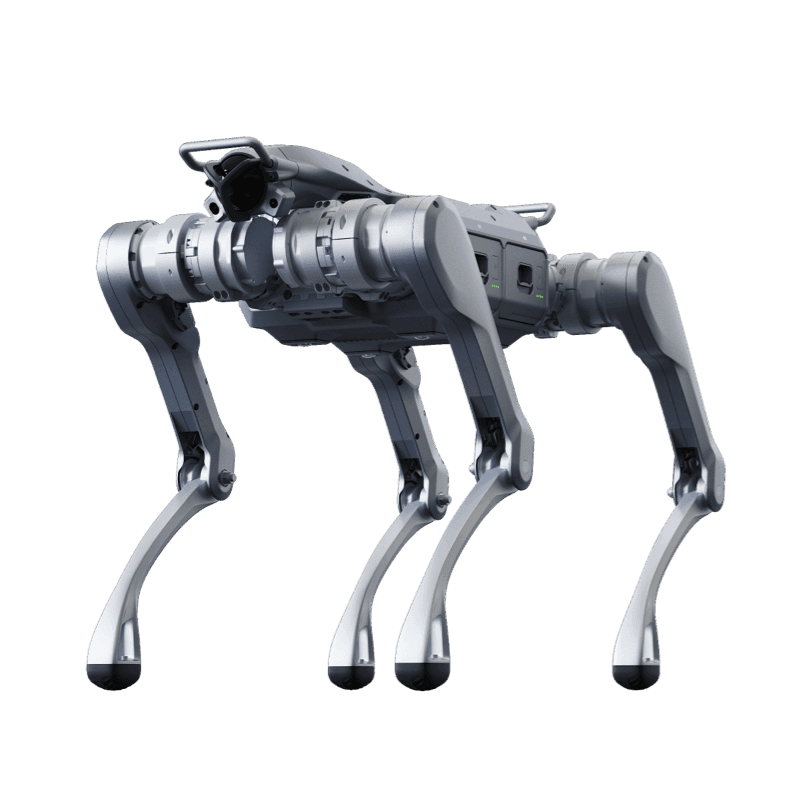
Unitree A2
Industrial robot dog: 100 kg static payload
Product page- Ingress rating
- IP56-IP67
- Runtime
- >5 hours (No load) / >3 hours (25kg Load)
- Operating temperature
- -20°C to 55°C
- Payload
- 100 kg
- Max speed
- 5 m/s
- Climb
- 45°
Values are manufacturer data. Scenario fit is determined by comparing these limits with site conditions.
From scenario to installation
Feasibility is determined by the site survey: floor and route, network coverage, the charging point, intervention responsibilities and the conditions under which the robot must stop. The survey report defines the scope, the constraints and the commissioning steps.