Sensitive Product Warehouse Micro-Climate and Humidity Monitoring
Scenario record: it defines the environment, the mission flow and a proposed hardware and software configuration. The list below is a configuration proposal, not an installation inventory. Field projects lists deployed systems and their measurements.
- Environment
- Indoor, facility
- Operating mode
- Supervised autonomy
- Proposed robot
- PUDU T300
The problem addressed
Micro-climate deviations between shelves that fixed sensors cannot measure and unconditional spoilage of sensitive products.
Draft mission flow
- 1The robot measures temperature, humidity, dust, and CO₂ values in 'blind spots' unreachable by fixed sensors while roaming between shelf aisles.
- 23D micro-climate map created; HVAC system performance evaluated by cross-checking with BMS data.
- 3Micro-zones exceeding defined threshold values instantly reported to BMS; HVAC parameters automatically adjusted when needed.
- 4Risk map updated by correlating with shelf life and quality data of sensitive products (electronics, pharmaceuticals, food).
Proposed hardware
- High Precision Humidity/Temperature Sensor (±0.1%RH)
- Dust Particle Counter
- CO₂ Sensor
- LiDAR L2
Proposed software
- Navigation
- Compact SLAM navigation fitting between shelf aisles; multi-floor warehouse support
- Model
- 3D Micro-Climate Map Generation and Climate Deviation Trend Analysis
- Integration
- BMS (Building Management System) and HVAC Control API
The robot's real operating limits
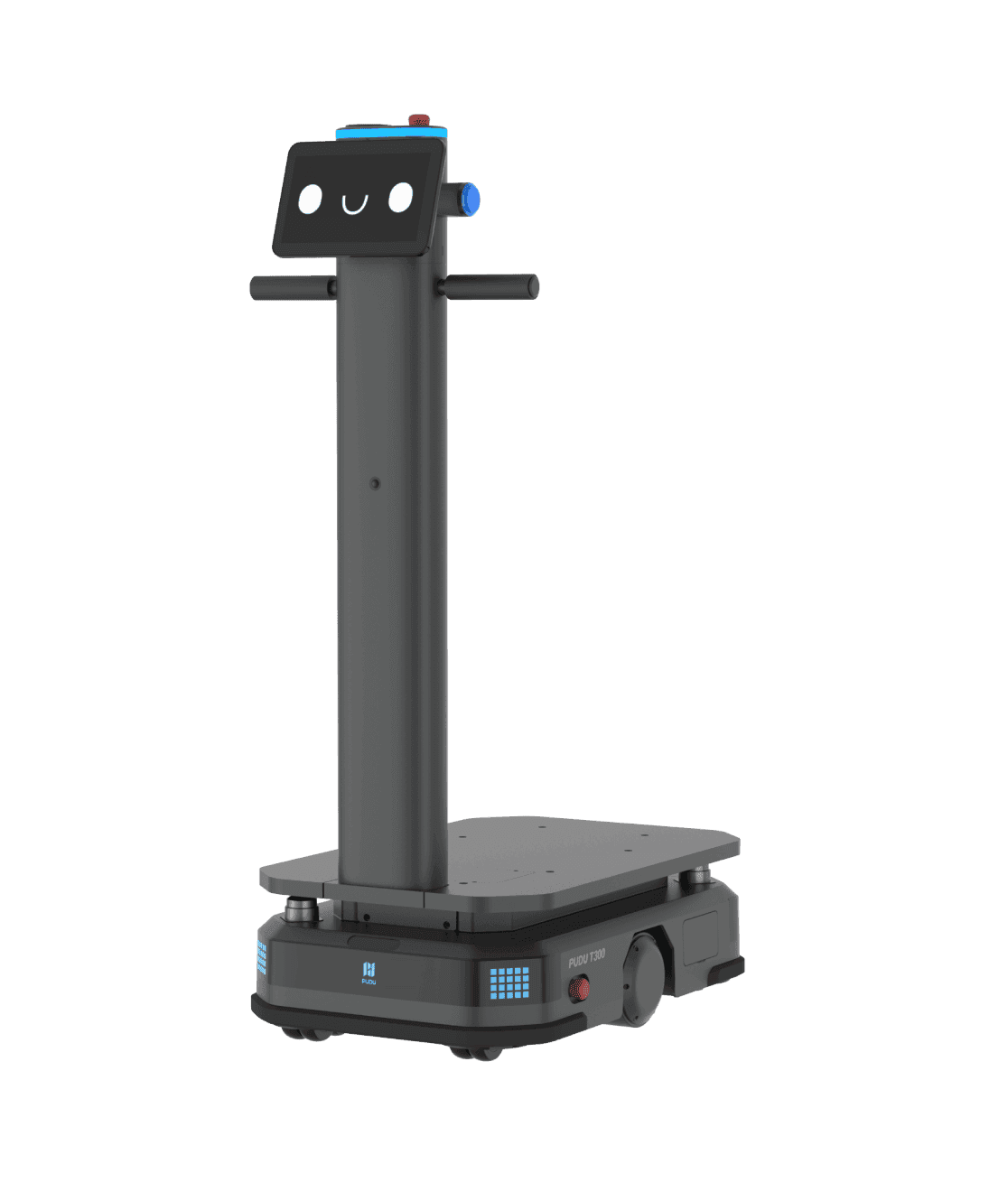
PUDU T300
Industrial Delivery Robot
Product page- Runtime
- 12 h (no load), 8 h (fully loaded)
- Operating temperature
- 0°C ~ 40°C
- Payload
- 300 kg
- Max speed
- 1.2 m/s
- Climb
- 5°
- Weight
- 65 kg (standard mode)
Values are manufacturer data. Scenario fit is determined by comparing these limits with site conditions.
From scenario to installation
Feasibility is determined by the site survey: floor and route, network coverage, the charging point, intervention responsibilities and the conditions under which the robot must stop. The survey report defines the scope, the constraints and the commissioning steps.