HVAC Duct Interior Visual and Biological Inspection
Scenario record: it defines the environment, the mission flow and a proposed hardware and software configuration. The list below is a configuration proposal, not an installation inventory. Field projects lists deployed systems and their measurements.
- Environment
- Outdoor field
- Operating mode
- Teleoperation
- Proposed robot
- Unitree A2
The problem addressed
Contamination and mold in HVAC ducts degrading indoor air quality and threatening employee health.
Draft mission flow
- 1The robot approaches HVAC access points; images duct interior surfaces with endoscopic camera.
- 2Dust accumulation thickness, mold formation, and insulation damage classified and scored by AI.
- 3Air quality at duct outlet measured with particle counter; cleaning need determined.
- 4Duct-level cleaning priority report transmitted to BMS; cleaning plan created by zone and urgency.
Proposed hardware
- HD Endoscopic Camera
- Particle Counter (PM2.5/PM10)
- Humidity/Temperature Sensor
- Compact LiDAR
Proposed software
- Navigation
- Compact navigation on building technical floor and HVAC access points
- Model
- Duct Interior Contamination Level, Mold Formation, and Insulation Damage Detection
- Integration
- Building Management System (BMS) and HVAC Maintenance Planning
The robot's real operating limits
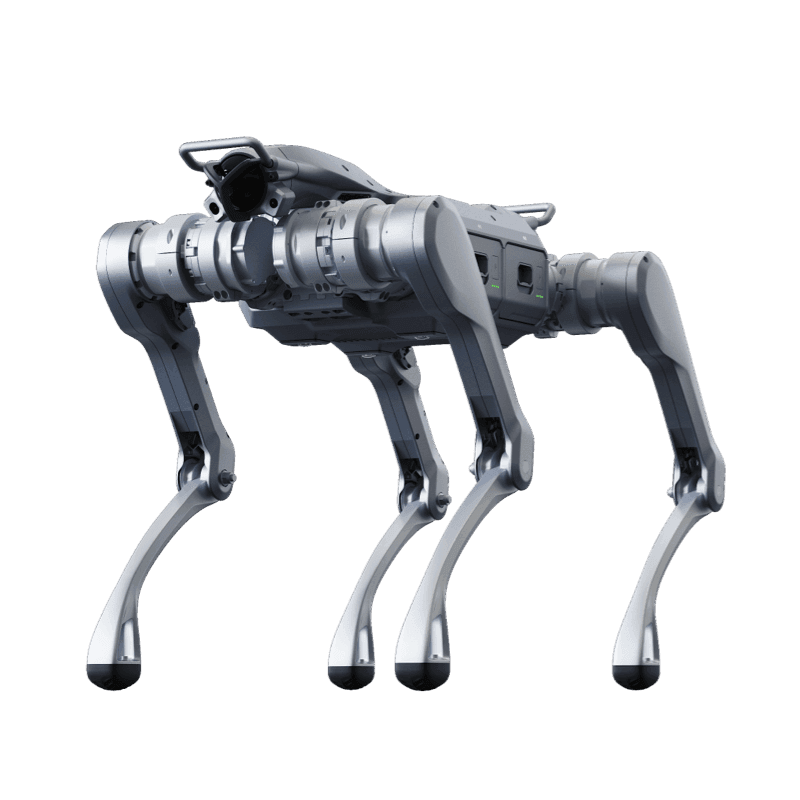
Unitree A2
Industrial robot dog: 100 kg static payload
Product page- Ingress rating
- IP56-IP67
- Runtime
- >5 hours (No load) / >3 hours (25kg Load)
- Operating temperature
- -20°C to 55°C
- Payload
- 100 kg
- Max speed
- 5 m/s
- Climb
- 45°
Values are manufacturer data. Scenario fit is determined by comparing these limits with site conditions.
From scenario to installation
Feasibility is determined by the site survey: floor and route, network coverage, the charging point, intervention responsibilities and the conditions under which the robot must stop. The survey report defines the scope, the constraints and the commissioning steps.