Precise Scanning Before Historical Artifact Restoration
Scenario record: it defines the environment, the mission flow and a proposed hardware and software configuration. The list below is a configuration proposal, not an installation inventory. Field projects lists deployed systems and their measurements.
- Environment
- Outdoor field
- Operating mode
- Supervised autonomy
- Proposed robot
- Unitree A2
The problem addressed
Humans damaging historical artifacts or experiencing danger of collapse while performing manual measurements.
Draft mission flow
- 1The robot enters historical buildings where scaffolding cannot be installed or there is a risk of collapse.
- 2It scans cracks in walls, original carving details, and ceiling collapses millimeter by millimeter with a laser.
- 3By creating a 1:1 digital twin of the building structure, it provides perfect data to architects before restoration.
Proposed hardware
- Millimetric Precision Lidar L2
- HD RGB Camera
- Lighting Kit
Proposed software
- Navigation
- Non-contact Lidar SLAM in sensitive ancient structure remains with poor ground
- Model
- 3D Photogrammetry and Point Cloud Merging
- Integration
- Cultural Heritage Digital Archiving Network
The robot's real operating limits
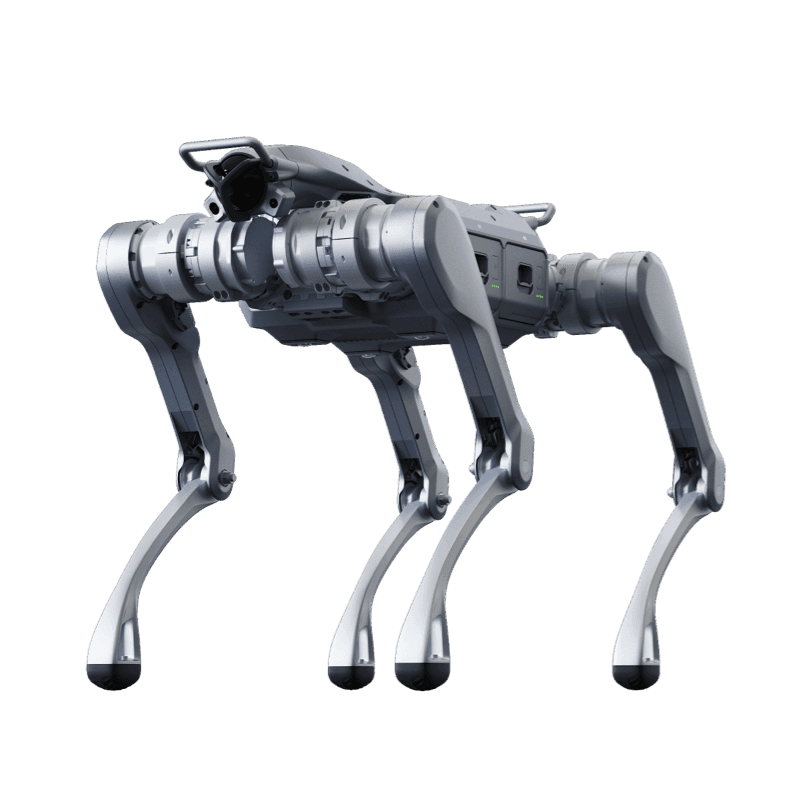
Unitree A2
Industrial robot dog: 100 kg static payload
Product page- Ingress rating
- IP56-IP67
- Runtime
- >5 hours (No load) / >3 hours (25kg Load)
- Operating temperature
- -20°C to 55°C
- Payload
- 100 kg
- Max speed
- 5 m/s
- Climb
- 45°
Values are manufacturer data. Scenario fit is determined by comparing these limits with site conditions.
From scenario to installation
Feasibility is determined by the site survey: floor and route, network coverage, the charging point, intervention responsibilities and the conditions under which the robot must stop. The survey report defines the scope, the constraints and the commissioning steps.