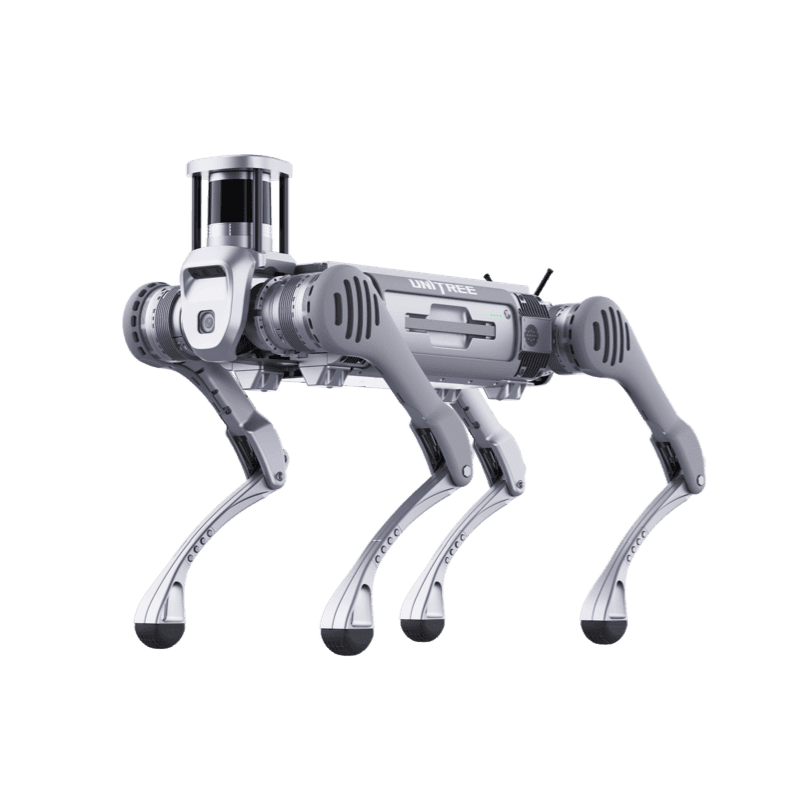
Why robot sensors run into export controls
Procurement teams tend to focus on the robot platform itself, yet the item that delays a project is often the sensor mounted on it. Thermal cameras, gimbal-mounted electro-optical heads and CBRN (chemical, biological, radiological, nuclear) detectors are treated as dual-use goods: they serve civil industry but could also have military uses. The exporting country's rules may therefore require a permit, a licence or an end-user certificate before the product can be shipped to Türkiye.
Three regimes show up in practice: the US Export Administration Regulations (EAR) and ITAR if the product or its core is of US origin; EU Regulation 2021/821 if the supplier is in the European Union; and notices of China's Ministry of Commerce (MOFCOM) and General Administration of Customs (GAC) if the supplier is in China. Türkiye's own import-side documents come on top. The common root is the Wassenaar Arrangement, in which Türkiye is a participating state, but each jurisdiction applies its own lists and thresholds.
Important: This article is general information and not legal advice. Only the exporter and the competent authority can classify a product definitively. For a specific transaction, consult licensed legal counsel and the Turkish Ministry of Trade; do not rely on any statement here without having counsel confirm it. Regulatory references reflect our reading of the official texts listed under Sources on 14 November 2026; rules can change.
US EAR: ECCN 6A003 and 6A993 for thermal cameras
Thermal cores and cameras of US origin (or with US content) fall under ECCN 6A003 on the Commerce Control List (CCL). For thermal cameras used as robot sensors the key entry is 6A003.b.4.b, which covers imaging cameras incorporating focal plane arrays (FPAs) controlled by 6A002.a.3.f. Manufacturers state the classification themselves; for example, the manufacturer FAQ page of an OEM thermal core family says the product is dual-use under US Department of Commerce jurisdiction and classified as ECCN 6A003.b.4.b (FLIR OEM, Hadron 640R FAQ).
The 9 Hz threshold. Note 3.a to 6A003.b.4.b excludes imaging cameras with a maximum frame rate of 9 Hz or less. These fall under ECCN 6A993.a. 6A993 is controlled for anti-terrorism (AT) reasons only, and in the Commerce Country Chart the AT Column 1 is not marked for Türkiye, so no licence requirement arises from the ECCN itself. 6A993.a covers cameras meeting any of the Note 3 criteria. Note 3.b also excludes cameras meeting all of the following: an IFOV of at least 2 mrad, a fixed focal-length lens not designed to be removed, no 'direct view' (near-to-eye micro display), and either no facility to obtain a viewable image or a design for a single kind of application not meant to be user modified. Note 3.c concerns cameras specially designed for civilian passenger vehicles solely to assist the driver. Each condition must be verified separately.
Cameras above 9 Hz. The whole 6A003 entry is controlled under NS Column 2 and AT Column 1, and 6A003.b.4.b falls under RS Column 1 or RS Column 2 depending on its parameters. In the Country Chart, NS Column 2, RS Column 2 and AT Column 1 are not marked for Türkiye, while RS Column 1 is. Reading the 6A003 entry together with §742.6(a)(2), the picture is:
| Camera characteristic | Control column | Outcome for Türkiye (per the text) |
|---|---|---|
| 9 Hz or less, Note 3.a | 6A993.a, AT Column 1 | No licence requirement arising from the ECCN |
| Above 9 Hz, up to 60 Hz, FPA up to 111,000 elements, not embedded in a civil product | RS Column 2 | Not marked for Türkiye |
| Above 9 Hz, up to 60 Hz, FPA over 111,000 elements (for example 640x512 = 327,680) | RS Column 1 | Licence required (all destinations other than Australia, Canada and the United Kingdom) |
| Above 60 Hz | RS Column 1 | Licence required |
| Any frame rate, exported to be embedded in a civil product | RS Column 1 | Licence required |
This table does not replace the supplier's classification. Whether a camera integrated into a robot counts as "embedded in a civil product", and which ECCN applies, is the exporter's responsibility; as a buyer you should still obtain written confirmation of frame rate, FPA size and end use. Practical consequence: a 640x512 core at 30 Hz or 60 Hz needs an authorisation at ECCN level, which the exporter covers either with an individual licence or, where its conditions are met, License Exception STA (see below). 9 Hz variants sit in a different category.
End-user provisions. §744.9 adds licence requirements for 6A003 and for 6A993.a cameras of 9 Hz or less when destined for a military end-user or for incorporation into a military commodity (ECCN 0A919). For thermal cameras the military end-user paragraph (§744.9(a)(1)(ii)) carves out Country Group A:1, which includes Türkiye, whereas the exemption in the incorporation paragraph (§744.9(a)(1)(iii)) covers only Australia, Canada and the United Kingdom. Under §744.9(d), "military end-user" covers not only the national armed services but also the national guard and national police, government intelligence or reconnaissance organisations, and any person or entity whose functions are intended to support military end uses. Under §744.9(e), no licence exception other than GOV (for official US Government use) applies to these requirements. For projects with defence-industry or law-enforcement use, have counsel assess this distinction.
License Exception STA and Türkiye's status
License Exception Strategic Trade Authorization (STA), §740.20, allows some exports that would normally require a licence to proceed without one. In Supplement No. 1 to Part 740 (Country Groups), Türkiye is listed in A:1, A:2, A:3, A:4 and A:5, and not in A:6. This matters because the STA special condition in the 6A003 entry prohibits STA for 6A003.b.3 and b.4 items only when shipped to A:6 destinations. In addition, §740.20(c)(1)(i) authorises exports controlled only for reasons such as NS, RS and NP to A:5 countries.
So the text does not close STA for a thermal camera going to Türkiye. STA is, however, not automatic:
- STA cannot replace licence requirements arising from Part 744 (end-user and end-use) or Part 746 (embargoes) (§740.20(b)(2)(i)). A military end-user is not resolved by STA; §744.9(e) separately rules out licence exceptions for these camera provisions.
- The exporter must furnish the ECCN to the consignee and obtain a written prior consignee statement (§740.20(d)). The statement covers awareness that the item ships under STA, receipt of the ECCN, agreement to obtain the same statement for later reexports and transfers, agreement not to export, reexport or transfer to any destination, use or user prohibited by the EAR, and agreement to permit a US Government end-use check. Government consignees in Country Groups A:5 and A:6 are not required to sign it.
- Some ECCNs are excluded from STA altogether (for example 6A002, and development and production technology for 6A002 and 6A003); 6A003 cameras are not among them, but whether to use STA or apply for a licence is the exporter's decision. Ask the supplier in writing which route it intends to use.
For procurement this means STA is not something you apply for; it is an exception used by the exporter. What you will be asked to do is sign the consignee statement and accept the reexport limits.
ITAR versus EAR: which regime covers the camera?
Whether a camera is subject to the ITAR or the EAR changes the type of licensing process; the EAR is administered by BIS of the US Department of Commerce, while the ITAR is a separate State Department regime. Category XII(c) of the US Munitions List (USML) lists, among imaging systems: binoculars, goggles and head-mounted imaging systems with an infrared focal plane array or infrared camera that are specially designed for a military end user; electro-optical reconnaissance, surveillance, target detection or target acquisition systems specially designed for a military end user; and gimbaled infrared systems with stabilisation better than 30 microradians RMS and a ball diameter of 15 inches or more, or specially designed for a military end user. Category XII(e) covers infrared cameras (including camera cores) and focal plane arrays specially designed for articles in that category. The EAR 6A003 entry carries a related-controls note pointing to USML Category XII(c) and (e), and states that items not subject to the ITAR but of the type described in XII(c) are controlled under 6A003 when they incorporate a 6A003 camera.
In practice, the same sensor core can move into ITAR when specially designed for a military end user or for USML articles, while its commercial general-purpose variant stays under the EAR. Ask the supplier for two things in writing: whether the product is under the EAR or the ITAR, and, if EAR, the exact ECCN. If you see conflicting statements for a product family across sources, put the question to the supplier's export compliance function in writing; a verbal answer from a reseller is not enough. Some European manufacturers advertise products as non-ITAR; that statement concerns the US arms regime and does not remove EU or other national dual-use controls.
China: from Announcement 2024 No. 31 to the unified dual-use list
A large share of gimbal cameras and compact electro-optical heads comes from Chinese manufacturers. Under China's Export Control Law, MOFCOM, the General Administration of Customs (GAC) and the Equipment Development Department of the Central Military Commission issued Announcement 2024 No. 31 on UAV export control measures on 31 July 2024, effective 1 September 2024, repealing Announcements 2023 No. 27 and No. 28. MOFCOM's legal database now shows the time status of this announcement as "no longer in force".
Current framework. Since 1 December 2024 China applies the Regulations on the Export Control of Dual-Use Items, promulgated by State Council Decree No. 792, together with the unified Dual-Use Items Export Control List published by MOFCOM, the Ministry of Industry and Information Technology, GAC and the State Cryptography Administration in Announcement 2024 No. 51. According to MOFCOM, the list consolidates items previously controlled under various regulations and announcements into one coding system and does not change the scope of control.
Where UAV payloads sit now. In the list text published by MOFCOM, the former 2024 No. 31 items appear under entry 9A012. 9A012.c covers payloads specially designed for UAVs or unmanned airships controlled by 9A012.a and meeting certain technical criteria: infrared imaging equipment, synthetic aperture radar, target-designation lasers and inertial measurement equipment. The infrared imaging equipment in 9A012.c.1 has both of these characteristics:
- a wavelength range of 780 nm to 30,000 nm;
- an instantaneous field of view (IFOV) of less than 2.5 mrad.
9A012.a in turn defines UAVs and unmanned airships capable of controlled flight beyond the operator's natural line of sight with a maximum endurance of at least 1 hour, or of 30 minutes to less than 1 hour combined with take-off and stable controlled flight in gusts of 46.3 km/h (25 knots) or more. You can estimate IFOV roughly as pixel pitch divided by focal length: a 12 µm pixel with a 25 mm lens gives about 0.48 mrad, below the threshold. The two characteristics are cumulative; a low IFOV alone does not create coverage.
Points that need care:
- Scope: 9A012.c defines the items as payloads "specially designed" for 9A012.a UAVs. Whether a gimbal used on a robot falls inside this scope is for the supplier and, if needed, the Chinese authority to decide; the numerical threshold alone is not conclusive.
- Integrated products: Under the list's general notes, listed items include items integrated into another product as a main component that can be removed and used for other purposes.
- Documents: Under Announcement 2024 No. 31, applications went through the provincial commerce authority to MOFCOM and the documents included an end-user and end-use certificate. Ask the supplier in writing for the document list and procedure under the current regulations.
The list can be updated. When buying from a Chinese supplier, ask in writing for the product's current Chinese control code (for example whether it falls under 9A012.c.1) and whether a licence is required; do not assume on the basis of the older announcement.
EU Regulation 2021/821: relevant Annex I categories
If the supplier is in the EU, Regulation (EU) 2021/821 governs exports to Türkiye. Under Article 3, an authorisation is required for the export of dual-use items listed in Annex I. Article 4 adds a requirement for non-listed items when the exporter is informed by the competent authority of certain end-uses, such as weapons of mass destruction or military end-use in a country under an arms embargo. Article 12 defines individual, global, national general and Union general authorisations. The Union general authorisation EU001 covers Australia, Canada, Iceland, Japan, New Zealand, Norway, Switzerland, the United Kingdom and the United States; it does not include Türkiye, so exports to Türkiye involve an individual or global authorisation. Individual and global authorisations are valid for up to two years unless the competent authority decides otherwise (Article 12(3)); individual export authorisations are subject to an end-use statement, and exporters must supply complete information in particular about the end user, the country of destination and the end use (Article 12(4)).
Annex I is updated regularly by delegated acts under Article 17. For this article we read Commission Delegated Regulation (EU) 2025/2003, which replaced the full text of Annex I (Official Journal 14.11.2025, in force 15.11.2025); the 2026/1405 correction only fixes certain language versions. Relevant Annex I entries for robot sensors:
- 6A003: Cameras. Note 3.a to 6A003.b.4.b excludes cameras of 9 Hz or less, with the same wording as the US text.
- 1A004.c: Detection systems specially designed or modified for the detection or identification of biological agents, radioactive materials or chemical warfare agents. The notes exclude personal radiation monitoring dosimeters and occupational health or safety equipment limited by design or function to hazards specific to residential safety or civil industries such as mining and agriculture; however, Technical Note 1 states that equipment identified, successfully tested to national standards or otherwise proven effective against these agents is included even if used in civil industries. Technical Note 3 defines 'radioactive materials' for this entry as those selected or modified to increase their effectiveness in producing casualties in humans or animals, degrading equipment or damaging crops or the environment; this definition matters when classifying a radiation detector.
- 2B351: Toxic gas monitors, monitoring systems and detectors other than those in 1A004 that are (a) designed for continuous operation and usable for detecting chemical warfare agents or chemicals in 1C350 with a 'minimum detection limit' below 0.3 mg/m³, or (b) designed for detecting cholinesterase-inhibiting activity.
Article 15 states that the end-use and risk of diversion are considered in authorisation decisions. Because Annex I can be updated every year, ask the supplier in writing for its classification against the Annex I version in force on the shipment date.
Türkiye side: The Turkish Ministry of Trade, Directorate General for Imports, approves the "End-Use Certificate" and the Import Certificate requested by exporting-country authorities. Applications are made by an e-signature holder of the company through the "Import Document Procedures Application", under the communiqué "on the Approval of Documents Concerning Dual-Use Materials and Technologies (İthalat: 2025/12)", published in the Turkish Official Gazette of 31.12.2024 (3rd duplicate issue). The Ministry page also notes that these documents do not replace other documents and permits required for import and are not a basis for completing customs procedures.
End-user certificates and re-export clauses
An end-user certificate (EUC) or end-use statement is a core part of a licence application in all three jurisdictions: in the EU individual authorisations are subject to an end-use statement, in China an end-user and end-use certificate was required under Announcement 2024 No. 31, and under US STA the consignee provides a prior consignee statement. The content and signatory depend on the exporter's template; the following elements are common:
- The buyer, end user, place of use and purpose (civil, not military).
- A commitment not to re-export or transfer the item to third countries, or to obtain permission first.
- A commitment not to supply the item to prohibited destinations, uses or users.
- Making relevant records available on request of the exporter or the authority.
The re-export clause matters especially for robot projects. If the sensor arrived as a US EAR item, shipping it from Türkiye to a third country, or passing the same sensor to another customer as part of a robot kit, may count as a reexport and may need separate authorisation. Define the chain of project partners, subcontractors and the final customer in writing from the start, and make sure the information in the certificate is accurate and complete; Article 12(4) of the EU Regulation also requires exporters to supply complete information about the end user, the country of destination and the end use. On the US side, §744.21 and §744.22 add licence requirements for military or military-intelligence end uses in certain countries such as China, Russia, Belarus, Burma, Cambodia, Nicaragua and Venezuela; Türkiye is not on these lists, but the provisions become relevant if a reexport from Türkiye to those countries is planned.
Buyer checklist
At the quotation stage, ask for the following in writing:
| Item | What to request | Why |
|---|---|---|
| Classification | ECCN (US), EU Annex I entry, a Chinese export control code if applicable; plus the customs tariff (HS) code | An HS code alone does not fix the export control class; ask for both |
| Technical parameters | Maximum frame rate, FPA element count, IFOV, lens type, radiometry | Thresholds depend on these |
| Legal regime | EAR or ITAR; which authority issues the licence | Process and duration differ |
| Licence route | Individual licence, STA or general authorisation; who applies | Defines the documents expected from you |
| Lead time impact | A written delivery estimate that includes the licensing period; refund and cancellation terms if refused | The duration is outside the supplier's control |
| Civil versus defence end use | Whether the end user is military or defence industry | Military end-user provisions can add licences |
| Re-export | Which transfers are prohibited or need permission | Affects project exports and spare-part flow |
| Documents | EUC template, consignee statement, Turkish End-Use Certificate requirement | Prepare in time |
| Written record | Keep all answers as e-mail or documents | Audit and later transfers |
Comparison table: three jurisdictions
| US (EAR / ITAR) | EU (2021/821) | China (MOFCOM / GAC) | |
|---|---|---|---|
| When it applies | US-origin item or US content | Supplier in the EU | Supplier in China |
| Thermal camera threshold | 6A003.b.4.b above 9 Hz; 6A993 at 9 Hz and below | 6A003.b.4.b, same 9 Hz note | Unified list 9A012.c.1: payload specially designed for 9A012.a UAVs, IFOV below 2.5 mrad, 780 to 30,000 nm |
| Chemical and radiological detectors | Applicable ECCN (obtain from supplier in writing) | 1A004.c, 2B351 | Ask the supplier for the current code |
| Ready exception for Türkiye | STA possible on the text (A:5), subject to exporter use | EU001 does not cover Türkiye | Not verified |
| End-user document | Prior consignee statement under STA | End-use statement for individual authorisations | End-user and end-use certificate under 2024 No. 31; ask the supplier for the current list |
Effect on robot projects and fit table
The sensor class does not change the choice of robot, but it changes the project plan. Three practical decisions stand out:
- 9 Hz cores: For static or slow inspection tasks (panels, motors, pipe temperature checks) a 9 Hz frame rate can be sufficient, and the ECCN position differs. For fast scenes or a fast-moving robot, smooth imagery requires a higher frame rate, so define the mission profile first. Remember that the §744.9 military end-user and military-commodity provisions also apply to 9 Hz cameras.
- European alternatives: Thermal cores without US-origin components or technology may be independent of the US licensing process; get written confirmation of component and technology origin from the manufacturer. They may still fall under EU Annex I 6A003 and need an EU authorisation for Türkiye; non-ITAR does not mean unlicensed.
- Delivery planning: Start licence-dependent items before the main robot order. Plan a quickly obtainable option for the pilot (for example a 9 Hz core, or a product with parameters outside the licence-triggering ranges) and stage the final high-resolution sensor.
| Sensor | Typical control framework | Planning note | Suitable robot |
|---|---|---|---|
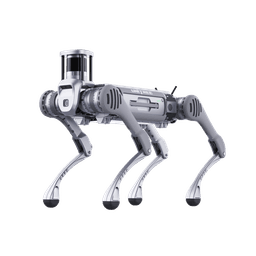
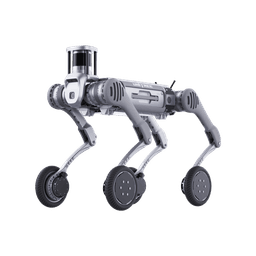
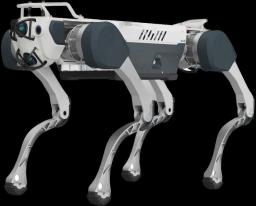
| Radiometric thermal camera (permanently mounted, integrated) | US ECCN 6A003 or 6A993; EU Annex I 6A003 | Frame rate and FPA size set the class | Unitree B2, B2-W, DEEP Robotics X30 |
| Gimbal electro-optical head (Chinese origin) | Chinese unified list (9A012.c if a UAV payload) | Get the current code and licence route in writing | Unitree B2, X30 |
| CBRN detector (with a permanent robot mounting kit) | EU Annex I 1A004.c and 2B351; US ECCN from supplier | Prepare end-user documents and the public-buyer process | Unitree B2, X30 |
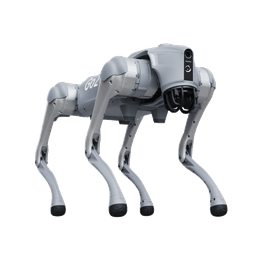
| Light research thermal module | 9 Hz core, 6A993 path | No ECCN-based licence if there is no military end user or military-commodity incorporation | Unitree Go2 |
Example manufacturer pages: ViewPro for gimbals and payloads, Bertin Environics for chemical reconnaissance and Kromek for RIID products.
See the product pages for payload capacity, mounting and IP rating. For integration details, see also the CBRN reconnaissance robot guide, the acoustic camera and gas leak guide and the field robot computer guide.
How Robotlar.org helps
Robotlar.org is the official Turkish distributor of Unitree and Booster, an authorised distributor of Pudu, and an integration provider for DEEP Robotics. It is not an authorised representative of thermal camera, gimbal or CBRN detector manufacturers (FLIR, Workswell, ViewPro, Bertin Environics, Kromek and others); for these sensors it provides integration and corporate sourcing services.
- Mission definition and robot selection; matching sensor parameters (frame rate, resolution, IFOV) to the task.
- Preparing classification, licence route and lead time questions for supplier discussions.
- Mounting bracket, power and data interface design; pilot field trial and operator training.
- Support in organising project information for the end-user certificate process. Legal assessment remains with the customer and its counsel.
For a preliminary assessment, fill in the quote form.
Disclaimer
This guide is general information. It is not legal advice, a product classification or a licensing opinion. Export control rules change frequently; classification by product belongs to the exporter and the competent authority. For a specific transaction, consult licensed legal counsel and the Turkish Ministry of Trade.
Sources
- US EAR, CCL ECCN 6A003, 6A993 (Supplement No. 1 to Part 774, eCFR, current as of 9 November 2026): https://www.ecfr.gov/current/title-15/subtitle-B/chapter-VII/subchapter-C/part-774/appendix-Supplement%20No.%201%20to%20Part%20774
- License Exception STA, 15 CFR 740.20: https://www.ecfr.gov/current/title-15/subtitle-B/chapter-VII/subchapter-C/part-740/section-740.20
- Country Groups, Supplement No. 1 to Part 740: https://www.ecfr.gov/current/title-15/subtitle-B/chapter-VII/subchapter-C/part-740/appendix-Supplement%20No.%201%20to%20Part%20740
- Commerce Country Chart, Supplement No. 1 to Part 738: https://www.ecfr.gov/current/title-15/subtitle-B/chapter-VII/subchapter-C/part-738/appendix-Supplement%20No.%201%20to%20Part%20738
- 15 CFR 742.6, regional stability controls: https://www.ecfr.gov/current/title-15/subtitle-B/chapter-VII/subchapter-C/part-742/section-742.6
- 15 CFR 744.9, restrictions on certain cameras: https://www.ecfr.gov/current/title-15/subtitle-B/chapter-VII/subchapter-C/part-744/section-744.9
- 15 CFR 744.21, certain military end uses and end users: https://www.ecfr.gov/current/title-15/subtitle-B/chapter-VII/subchapter-C/part-744/section-744.21
- 15 CFR 744.22, military-intelligence end uses and end users: https://www.ecfr.gov/current/title-15/subtitle-B/chapter-VII/subchapter-C/part-744/section-744.22
- ITAR, 22 CFR 121.1, USML Category XII: https://www.ecfr.gov/current/title-22/chapter-I/subchapter-M/part-121/section-121.1
- BIS home page: https://www.bis.gov/
- Regulation (EU) 2021/821: https://eur-lex.europa.eu/eli/reg/2021/821/oj
- Commission Delegated Regulation (EU) 2025/2003, current Annex I: https://eur-lex.europa.eu/eli/reg_del/2025/2003/oj
- MOFCOM, GAC and CMC Equipment Development Department, Announcement 2024 No. 31 (MOFCOM legal database): https://policy.mofcom.gov.cn/claw/clawContent.shtml?id=100428
- MOFCOM, Dual-Use Items Export Control List (2024 No. 51), spokesperson Q&A: https://www.gov.cn/zhengce/202411/content_6987850.htm
- MOFCOM, Dual-Use Items Export Control List text (9A012): https://aqygzj.mofcom.gov.cn/cms_files/filemanager/600926013/attach/20252/5fb5f7785024437f8b9b9ab15da817b0.pdf
- Regulations on the Export Control of Dual-Use Items, State Council Decree No. 792 (People's Daily text): https://paper.people.com.cn/rmrb/html/2024-10/29/nw.D110000renmrb_20241029_1-14.htm
- Turkish Ministry of Trade, Import Certificate and End-Use Certificate: https://ticaret.gov.tr/ithalat/ithal-sehadetnamesi-ve-nihai-kullanim-sertifikasi
- FLIR OEM, Hadron 640R FAQ: https://oem.flir.com/learn/discover/faq---everything-you-need-to-know-about-hadron-640r/
- ViewPro gimbals and payloads: https://viewprouav.com/gimbals-payload/
- Bertin Environics, unmanned chemical reconnaissance: https://www.environics.fi/cbrn-solutions/unmanned-chemical-reconnaissance/
- Kromek RIID products: https://www.kromek.com/riids/