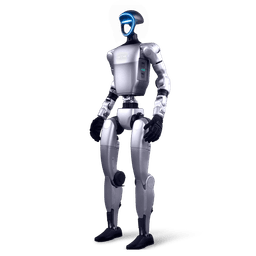
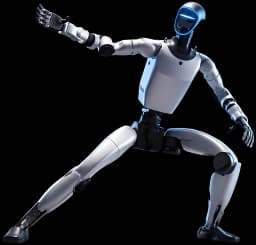
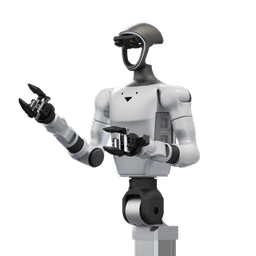
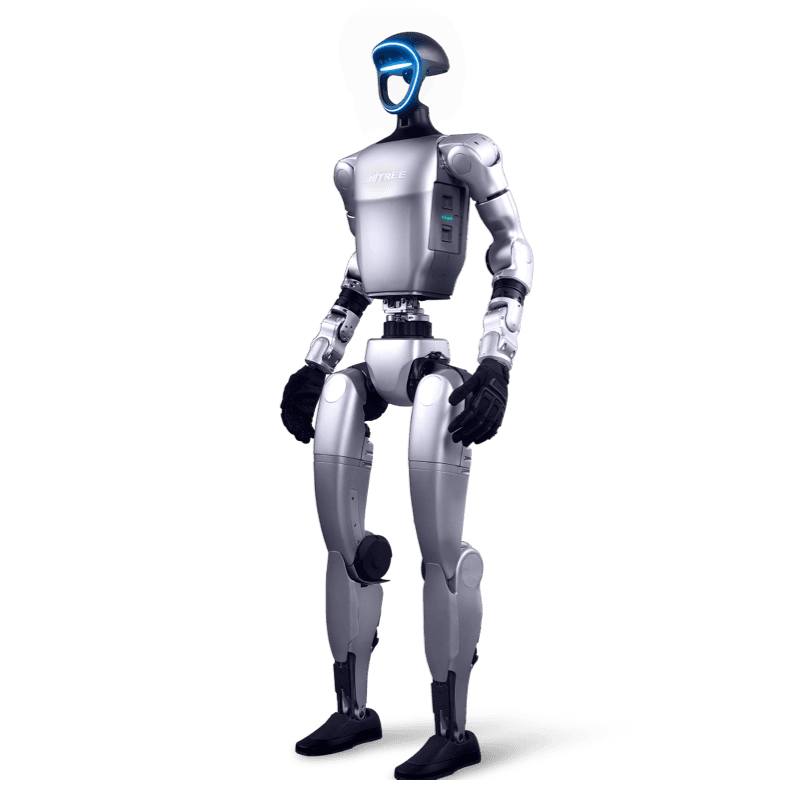
How do the nine projects connect?
The shared language that connects the projects is the SOMA body model. All three GEM-X models use SOMA geometry, BONES-SEED motions come in SOMA BVH format, and SOMA Retargeter turns a SOMA-skeleton BVH file into robot joint animation. The second common point is the Unitree G1. MotionBricks, Kimodo and ARDY have models trained for the G1 skeleton, and GEAR SONIC ships with three G1 checkpoints.
These are the relationships written in the README files:
- The MotionBricks G1 model was trained on Bones RigPlay 1 data retargeted to the G1 with SOMA Retargeter.
- According to the Kimodo README, ARDY builds on top of Kimodo.
- A motion generation model such as Kimodo or ARDY can also prepare the target poses in the MotionBricks editors.
- Kimodo's NPZ and CSV outputs are compatible with ProtoMotions.
- ProtoMotions transfers the tracking policy it trains on the entire BONES-SEED dataset directly to the G1.
- You can train GEAR SONIC from scratch on the G1-retargeted CSV motions of BONES-SEED or finetune it from the released checkpoint.
- In the GEM-X robotics showcase, SOMA motion recovered from video goes to the G1 through SOMA Retargeter.
Pipeline: from video and data to a real G1
The order below follows the path a human motion takes from a video or a dataset until it reaches the G1's joints. Each project handles one step of that path. In most projects, the data you already have decides which step you enter at.
1. GEM: human motion from video
The pipeline often starts with a camera. GEM-X estimates body and hand pose from a single image, and camera-space and world-space human motion from monocular video. The Body Motion model combines person tracking, 2D keypoint observations and Body Pose features in a temporal model. All three models output SOMA geometry. In NVIDIA's robotics showcase, this motion recovered from video is retargeted to the G1 with SOMA Retargeter. Details are in our GEM-X guide and the nvidia-gem-x-turkce Turkish repository.
2. SOMA: the shared body model
SOMA-X provides a canonical, differentiable representation for parametric human bodies and hands. It maps identity models such as MHR, Anny, the SMPL family and MANO to a shared SOMA topology and rig conventions, so one animation and retargeting pipeline is reused across model families. Since 19 March 2026, Kimodo's SOMA models have used SOMA's 77-joint skeleton (somaskel77) for their inputs and outputs. The package installs with pip install py-soma-x, and assets download from Hugging Face on first use. Details are in our SOMA guide and the nvidia-soma-govde-modeli-turkce Turkish repository.
3. BONES-SEED: ready motion data
Without your own capture, you enter the data side with BONES-SEED. According to its dataset card, this open dataset curated from Bones Studio's motion capture library holds 142,220 annotated motions from 522 actors (71,132 original, 71,088 mirrored), about 288 hours at 120 fps. Motions are distributed as SOMA Proportional BVH, SOMA Uniform BVH and MuJoCo-compatible CSV for the Unitree G1. NVIDIA created the temporal segmentation labels for the Kimodo project. The Hugging Face repository opens once you accept its access conditions. Details are in our BONES-SEED guide and the bones-seed-hareket-veri-seti-turkce Turkish repository.
4. Kimodo and ARDY: motion generation from text and constraints
Kimodo is a kinematic motion diffusion model trained on 700 hours of optical motion capture data. You control it with text prompts and constraints such as full-body keyframes, end-effector positions and 2D paths. There are separate model versions for the SOMA, G1 and SMPL-X skeletons, and the G1 models save motion in MuJoCo qpos CSV format. ARDY is an autoregressive diffusion model. According to the Kimodo README, ARDY builds on top of Kimodo and brings controllable motion generation to real time. NVIDIA describes Kimodo as aimed at offline motion authoring and ARDY at interactive applications. Details are in our Kimodo guide and the nvidia-kimodo-turkce Turkish repository, and for ARDY in our ARDY guide and the nvidia-ardy-turkce Turkish repository.
5. MotionBricks: real-time inbetweening
MotionBricks takes the character's four most recent poses as context poses and one to four poses as target poses, and fills in the motion between them at 30 Hz. According to the GR00T Whole-Body Control README, it delivers zero-shot motion synthesis at 15,000 FPS. The G1 model, MotionBricks-G1-RP-v1, was trained on Bones RigPlay 1 data retargeted to the G1 with SOMA Retargeter. NVIDIA notes that a model such as Kimodo or ARDY could generate the target poses that the editors sample from clips. The output is kinematic reference motion for a tracking controller on the robot to follow. Details are in our MotionBricks guide and the unitree-g1-motionbricks-turkce Turkish repository.
6. SOMA Retargeter: bringing human motion to the G1
A human and a robot have different proportions and joints. SOMA Retargeter reads a SOMA-skeleton BVH file, retargets human-scale joints to the robot's proportions and solves inverse kinematics for each frame. It then stabilizes contacts, clamps the configured joint limits and writes the robot's root pose and actuated joint values to a CSV file. Among the five bundled robots, the default target is unitree_g1. The project is in active beta and its output is kinematic, so NVIDIA asks you to validate it in simulation before hardware use. Details are in our SOMA Retargeter guide and the unitree-g1-soma-retargeter-turkce Turkish repository.
7. ProtoMotions: physics-based training in simulation
Kinematic motion becomes useful on a robot once a policy that tracks it has been trained. ProtoMotions 3 is a GPU-accelerated simulation and learning framework for training physically simulated digital humans and humanoid robots, and it runs on the Newton, Isaac Lab, Isaac Gym and MuJoCo backends. According to the README, it trains one General Tracking Policy on the entire BONES-SEED dataset (about 142K motions) and transfers it directly to the Unitree G1. You can also train policies for the SOMA character and the G1 from motions you generate from text with Kimodo. Metatron, released on 28 October 2026, is a G1 whole-body policy that brings many jobs, from motion tracking to getting back up after a fall, into one network. Details are in our ProtoMotions guide and the nvidia-protomotions-turkce Turkish repository.
8. GEAR SONIC: whole-body control on the real robot
GEAR SONIC is NVIDIA's behavior foundation model for physical humanoid robots. It uses motion tracking as a scalable training task, and a single unified policy produces behaviors ranging from walking and crawling to teleoperation and multi-modal control. The repository contains three Unitree G1 checkpoints, a C++ and TensorRT deployment stack, whole-body teleoperation with a PICO VR headset and a kinematic planner. The controller runs at 50 Hz and takes SMPL pose, G1 motion reference or teleoperation input. According to the ARDY README, ARDY can be used as a planner that generates the motions given to SONIC. Kimodo was also added to NVIDIA's interactive SONIC demo, where SONIC tracks in simulation the motion Kimodo generates on the G1 skeleton. Details are in our GEAR SONIC guide and the unitree-g1-gear-sonic-turkce Turkish repository.
9. Unitree G1: the last link in the chain
In the last step, the policy moves onto the robot's own computer. GEAR SONIC's deployment documentation requires JetPack 6 and TensorRT 10.7 for the G1's onboard Orin. The ProtoMotions team tested its tracking policy, exported as a single ONNX model, on the G1 through the RoboJuDo framework and published a tutorial from data preparation to the real robot. The GEAR SONIC README asks you to test a checkpoint in simulation before using it on a physical robot. For research and controller development the Unitree G1 EDU fits this step, and for collecting demonstration data the Unitree G1-D.
Comparing the nine projects
The table summarizes each project's input, output and G1 support as written in the source READMEs. The licence column shows only the main parts, and dependencies and third-party assets keep their own licences.
| Project | What it does | Input | Output | G1 support (per source) | Licence |
|---|---|---|---|---|---|
| GEM-X | Estimates body and hand pose from images and temporal body motion from video | Image, video | Pose and motion predictions in SOMA geometry | Motion recovered from video is retargeted to the G1 with SOMA Retargeter | Code Apache 2.0, some files OpenMDW-1.1, weights under their own terms |
| SOMA | Unifies parametric body and hand models on a shared SOMA skeleton | Pose and identity parameters | Vertices and joints | Human body model, reaches the G1 through SOMA Retargeter | Apache-2.0 |
| BONES-SEED | Motion capture dataset of 142,220 annotated motions | Motion capture recordings | SOMA BVH, G1 CSV, metadata and temporal labels | MuJoCo-compatible CSV for the G1 | bones-seed-license (Bones Studio) |
| Kimodo | Generates kinematic motion controlled by text and constraints | Text prompt, keyframe, path and end-effector constraints | NPZ, MuJoCo qpos CSV for the G1, AMASS NPZ for SMPL-X | Kimodo-G1-RP-v1 and Kimodo-G1-SEED-v1 models | Code Apache-2.0, models NVIDIA Open Model (SMPL-X model NVIDIA R&D Model) |
| ARDY | Generates real-time, interactive motion | Streaming text prompts, root paths, waypoints, keyframes | NPZ, MuJoCo qpos CSV for the G1 | ARDY-G1-RP-25FPS-Horizon52 and ARDY-G1-RP-25FPS-Horizon8 models | Code Apache-2.0, models NVIDIA Open Model |
| MotionBricks | Real-time inbetweening between context and target poses | Last four poses and one to four target poses | Kinematic reference motion at 30 Hz | MotionBricks-G1-RP-v1 (ONNX) | Code Apache-2.0, models NVIDIA Open Model Agreement, documentation CC-BY-4.0 |
| SOMA Retargeter | Retargets SOMA motion to humanoid robots | SOMA-skeleton BVH | Robot CSV with root pose and joint values | Default target unitree_g1 | Code Apache-2.0, sample motions NVIDIA Sample Data Evaluation License, G1 assets BSD-3-Clause |
| ProtoMotions | Trains simulated humans and humanoids in physics-based simulation | Motion datasets (AMASS, BONES-SEED, Kimodo output) | Trained policy, a single ONNX model for deployment | G1 tracking policy, Metatron, G1 deployment tutorial | Code Apache-2.0, models NVIDIA Open Model License |
| GEAR SONIC | Behavior foundation model and whole-body control for humanoid robots | SMPL pose, G1 motion reference, teleoperation | Whole-body control at 50 Hz through 64-dimensional latent motion tokens | Three G1 checkpoints, C++ deployment stack | Code Apache 2.0, weights NVIDIA Open Model License |
If you plan a commercial project, read the licence of each component separately. According to the GEAR SONIC README, the NVIDIA Open Model License permits commercial use with attribution and requires compliance with NVIDIA's Trustworthy AI terms. The NVIDIA Sample Data Evaluation License of the sample motions is for evaluation and testing.
Which project for which job?
You can use the same project for more than one job. The table shows the starting project and the hardware side for each job.
| Job | Project | Starting point | Related page |
|---|---|---|---|
| Animation and motion authoring | Kimodo, ARDY, MotionBricks | Workstation with an NVIDIA GPU, no robot needed | Kimodo guide, MotionBricks guide |
| Collecting motion data | GEM-X (from video), BONES-SEED (ready data), GEAR SONIC teleoperation (from the robot) | Camera, PICO VR, Unitree G1-D | GEM-X guide, BONES-SEED guide, G1-D |
| Bringing human motion to the G1 | SOMA, SOMA Retargeter | Workstation, SOMA BVH input | SOMA Retargeter guide, SOMA guide |
| Policy training in simulation | ProtoMotions, GEAR SONIC training stack | Multi-GPU server, Isaac Lab or Newton | ProtoMotions guide, RL Gym |
| Whole-body control on the real robot | GEAR SONIC, ProtoMotions deployment pipeline | Unitree G1 EDU, G1 research platform | GEAR SONIC guide, G1 EDU quote, G1 research platform |
The first three jobs run without a robot. MotionBricks animates the G1 in a Newton scene, Kimodo and ARDY output G1 motion as MuJoCo qpos CSV, and SOMA Retargeter shows the result in its own viewer. The robot comes in for the last two jobs, when you move a trained policy onto the hardware.
Hardware: NVIDIA GPUs and the Jetson Orin on the G1
Most of the projects accelerate on an NVIDIA GPU, and each one states different requirements. The table below collects only what the sources say. BONES-SEED is a dataset, so it is not listed.
| Project | Hardware and software stated in the source |
|---|---|
| GEM-X | Python 3.10 or newer, PyTorch 2.10, CPU or CUDA setup, Linux ARM64 CUDA inference, Linux x86-64 for rendering |
| SOMA | pip package, quick-start examples on CPU (device="cpu"), skinning and fitting accelerated with NVIDIA Warp |
| Kimodo | About 17 GB of VRAM fully on GPU, under 3 GB with TEXT_ENCODER_DEVICE=cpu, most extensively tested on GeForce RTX 3090, GeForce RTX 4090 and NVIDIA A100 |
| ARDY | Tested on Ubuntu 22.04 with RTX 4090, nvidia-driver-575 and Python 3.11, PyTorch 2.4 or newer, driver 525 or newer for the TensorRT extra, about 14 GB of VRAM for the text encoder on cuda/bfloat16 |
| MotionBricks | NVIDIA GPU for TensorRT, demos run on Windows and Linux (x86-64) with a GeForce RTX 4090 |
| SOMA Retargeter | NVIDIA GPU of Maxwell architecture or newer, NVIDIA driver 545 or newer, Python 3.12 |
| ProtoMotions | AMASS (40+ hours) in 12 hours on 4 A100s, a training example on 24 A100s with BONES data |
| GEAR SONIC | TensorRT 10.13 on an x86_64 desktop, JetPack 6 and TensorRT 10.7 for the G1's onboard Orin, JetPack 7.1 and TensorRT 10.13 for Jetson AGX Thor, 64+ GPUs recommended for finetuning |
The GEAR SONIC documentation requires these exact TensorRT versions. According to the documentation, a different version produces incorrect inference results, the planner outputs wrong motion, and this can cause dangerous robot behavior.
The G1 EDU development computer: Jetson Orin
According to our product records, the Unitree G1 EDU carries an NVIDIA Jetson Orin NX as its second computer (PC2). GEAR SONIC's JetPack 6 flashing guide covers this Orin NX module, and the C++ deployment stack runs on this computer on the robot. In this setup, training runs on a workstation or server, and the ONNX and TensorRT deployment files go onto the robot. For Jetson Orin compute modules, see our Jetson Orin guide.
Results on real robots (NVIDIA and the community)
The family's results on real robots appear in NVIDIA's publications and in community write-ups. Each item below names its source.
- GEAR SONIC: According to NVIDIA's SONIC paper (arXiv 2511.07820), the method was evaluated with 124 different motion sequences deployed to a 29-joint Unitree G1. According to Classmethod's Japanese article from August 2026, a real G1 stayed standing and followed the operator's whole-body motion during whole-body teleoperation with a PICO 4 and body trackers.
- MotionBricks: According to NVIDIA's MotionBricks paper (arXiv 2604.24833), the G1 deployment used a Jetson Orin and Unitree's official SDK, with 5 ms per inference on the Orin.
- SOMA Retargeter: According to the README, ready configurations ship for five robots, including the Unitree G1, Unitree H2 and Booster T1. NVIDIA's robot configurator document walks through setting up a configuration for a new robot.
Robotlar.org is the official distributor of Booster Robotics in Turkey. For the Booster T2, a new configuration is set up in SOMA Retargeter with the robot configurator. The details are in our SOMA Retargeter guide, and the full real-G1 results are in our GEAR SONIC and MotionBricks guides.
Relation to Isaac GR00T, teleoperation, LeRobot and RL Gym
The GR00T-WholeBodyControl repository hosts two controller families. Decoupled WBC is a decoupled controller that uses reinforcement learning for the lower body and inverse kinematics for the upper body, and NVIDIA used it in the GR00T N1.5 and N1.6 models. GEAR SONIC is the latest general-purpose whole-body controller in the same repository. According to the announcement of 7 May 2026, teleoperation data collection on the G1, fine-tuning of Isaac-GR00T N1.7 and deployment with SONIC came together in one workflow. Our Unitree G1 and Isaac GR00T guide covers the Isaac GR00T side.
Teleoperation comes in two ways. SONIC supports real-time whole-body teleoperation with a PICO VR headset and received IsaacTeleop 1.4 and Jetson AGX Orin support on 14 September 2026. For Unitree's own XR teleoperation workflow, see the G1 teleoperation page and the unitree-teleoperasyon-turkce repository.
To bring collected demonstration data into imitation learning, our LeRobot guide shows the way. If you want to start reinforcement learning in simulation with Unitree's own tool, the RL Gym page is ready. ProtoMotions trains motion tracking policies on BONES-SEED and Kimodo data and runs sim2sim tests across several physics engines, MuJoCo included.
Frequently asked questions
Do I need a Unitree G1 to work with these projects?
The first steps run on a workstation. GEM-X and SOMA work on the human side, and Kimodo, ARDY, MotionBricks and SOMA Retargeter show G1 results in MuJoCo, Newton or their own viewers. The robot is needed when you move a GEAR SONIC or ProtoMotions policy onto the hardware.
Which projects offer ready models for the G1?
MotionBricks-G1-RP-v1, Kimodo-G1-RP-v1 and Kimodo-G1-SEED-v1, two ARDY-G1 models, GEAR SONIC's three G1 checkpoints and ProtoMotions' Metatron-v1 policy. BONES-SEED provides CSV data for the G1, and SOMA Retargeter a ready unitree_g1 configuration.
What is the difference between kinematic motion and robot control?
Kimodo, ARDY, MotionBricks and SOMA Retargeter produce kinematic reference motion, the positions of the joints over time. On the real robot, a tracking controller such as GEAR SONIC or a ProtoMotions policy handles balance, actuator limits and contacts.
Can I use them in a commercial project?
Most of the code is Apache-2.0, and the models come under the NVIDIA Open Model licence or agreement. The sample motions are licensed for evaluation, BONES-SEED has its own licence, and Kimodo's SMPL-X model carries the NVIDIA R&D Model licence. Review each component separately with your legal team.
Which graphics card is enough?
Motion generation starts with a single strong desktop card. MotionBricks and ARDY were run on a GeForce RTX 4090, and Kimodo runs with under 3 GB of VRAM when you move the text encoder to the CPU. SOMA Retargeter requires an NVIDIA GPU of Maxwell architecture or newer. Large-scale policy training in the ProtoMotions and GEAR SONIC examples uses several A100-class GPUs.
Is there a Turkish resource?
Yes. For each of the nine projects we published a Turkish repository in the Unitree-Turkiye GitHub organisation and a Turkish guide on robotlar.org. All the links are in the last section.
NVIDIA humanoid motion projects with the Unitree G1 in Turkey
As Unitree Robotics' official distributor in Turkey, Robotlar.org works with teams researching on the G1 family. We translated the documentation of the nine projects into Turkish and published it in the Unitree-Turkiye GitHub organisation. The translations are based on the original documentation of NVIDIA and Bones Studio and shared under the attribution terms of their licences.
- GEM-X: the nvidia-gem-x-turkce repository and the guide
- SOMA: the nvidia-soma-govde-modeli-turkce repository and the guide
- BONES-SEED: the bones-seed-hareket-veri-seti-turkce repository and the guide
- Kimodo: the nvidia-kimodo-turkce repository and the guide
- ARDY: the nvidia-ardy-turkce repository and the guide
- MotionBricks: the unitree-g1-motionbricks-turkce repository and the guide
- SOMA Retargeter: the unitree-g1-soma-retargeter-turkce repository and the guide
- ProtoMotions: the nvidia-protomotions-turkce repository and the guide
- GEAR SONIC: the unitree-g1-gear-sonic-turkce repository and the guide
In a discovery call we decide with you at which link of the pipeline your project starts. Some teams begin with motion generation on a workstation, others go straight to whole-body control on the Unitree G1. For controller development, use the G1 EDU quote page. We recommend the G1-D data platform for teams collecting demonstration data and the G1 research platform for lab setups. Options for universities and research labs are collected on the Unitree education solutions page. For configuration and pricing, the enterprise quote form is open.
Sources
- NVlabs/GEM-X README
- NVlabs/SOMA-X README
- BONES-SEED veri kartı / dataset card (Hugging Face)
- nv-tlabs/kimodo README
- nv-tlabs/ardy README
- NVlabs/motionbricks README
- NVIDIA/soma-retargeter README
- SOMA Retargeter installation
- NVlabs/ProtoMotions README
- NVlabs/GR00T-WholeBodyControl README (GEAR SONIC)
- GEAR SONIC Installation (Deployment)
- G1 JetPack 6 Flashing Guide
- arXiv 2511.07820, SONIC: Supersizing Motion Tracking for Natural Humanoid Whole-Body Control
- nvidia/GEAR-SONIC (Hugging Face)
- GEAR-SONIC project page
- Classmethod, GEAR SONIC G1 teleoperation (Japanese, August 2026)
- arXiv 2604.24833, MotionBricks
- SOMA Retargeter Robot Configurator